A successful prom leaves students with more than great photos; it gives your committee useful direction for the next celebration. Thoughtful prom survey questions reveal how music, activities, communication, and comfort shaped the evening.
The most helpful responses connect honest feedback with decisions your school can make. A clear survey gives students room to share different experiences without turning the review into a popularity contest.
Start by deciding what your committee needs to learn, then ask questions that support practical improvements.
Key Takeaways
- Connect each question to a decision the committee can make, and focus on practical improvements within school policy and budget.
- Use clear, neutral wording and answer choices that match each experience; let students skip questions that don’t apply.
- Ask about music, event flow, comfort, logistics, and ticket value, and give attendees and nonattendees relevant ways to respond.
- Protect student privacy, make participation accessible and voluntary, and report results without treating respondents as representative of everyone.
- Review patterns with the people responsible for each area, assign feasible changes, and share a brief summary of what the committee will do next.
Start With Decisions Your Committee Can Make
Student feedback is most useful when each question connects to a planning responsibility. Music comments can guide the entertainment discussion, check-in concerns can inform staffing, and ticket-value responses can help your committee review spending priorities.
Before building the form, identify which decisions are open for next year. Avoid inviting students to choose arrangements that school policy, venue restrictions, or the budget won’t support.
Begin with one broad question: “How would you rate your overall prom experience?” Use a balanced scale such as Very poor, Poor, Neither good nor poor, Good, and Very good.
That overall rating provides context, but it won’t explain what needs attention. Follow it with questions about individual parts of the evening.
Keep a few questions consistent across future proms. Your committee can compare those responses while adding questions about new activities, venues, or arrangements.
Write Prom Survey Questions Students Can Answer Clearly
Reliable feedback starts with straightforward wording. Students shouldn’t need to interpret event-planning terminology or guess what answer the committee wants.
Ask About One Experience at a Time
“How satisfied were you with the music and lighting?” combines two experiences that students may rate differently. Separate music selection, sound level, and lighting comfort so each answer points toward a clear decision.
Avoid promotional wording such as “How much did you enjoy our amazing DJ?” Ask, “How satisfied were you with the music selection?”
Pew Research Center’s survey-question guidance explains how wording and question order affect responses. Place general ratings before detailed comments so students can give an overall impression first.
Match the Answer Choices to the Question
Use satisfaction choices for music selection, comfort choices for participation, and volume choices for sound. A generic agreement scale doesn’t fit every experience.
Include “Didn’t use this,” “Don’t remember,” or “Not applicable” where needed. A student who skipped the food service shouldn’t have to rate it.
The Institute of Education Sciences survey guide covers common question-design problems. Have students review the draft for unclear wording and missing choices before sending it schoolwide; check its phone layout too.
Ask About Music, Sound, and Event Flow
Entertainment feedback should cover more than favorite songs. A professional music plan balances student preferences, school-approved content, announcements, and the changing energy of the room.
These questions help separate musical taste from production and timing.
| Survey question | Suggested response format |
|---|---|
| How satisfied were you with the music selection? | Very dissatisfied, Dissatisfied, Neither satisfied nor dissatisfied, Satisfied, Very satisfied. |
| Which music styles would you like to hear more often? | Select any: pop, hip-hop, EDM, country, Latin music, throwbacks, Other. |
| How was the music volume on the dance floor? | Much too quiet, Slightly too quiet, About right, Slightly too loud, Much too loud. |
| How comfortable were you with the lighting effects? | Very uncomfortable, Uncomfortable, Neither comfortable nor uncomfortable, Comfortable, Very comfortable. |
| How easy was it to understand announcements? | Very difficult, Difficult, Neither easy nor difficult, Easy, Very easy, Didn’t hear any. |
| How did the amount of time available for dancing feel? | Too short, About right, Too long, Didn’t dance. |
Together, these answers show whether students wanted different music, clearer sound, or a different schedule. Those require different adjustments.
Use music preferences to support a school-appropriate prom playlist. Requests remain suggestions, not promises; staff and the DJ still need to review lyrics, versions, and suitability for the event.
Ask About Comfort, Logistics, and Ticket Value
A memorable prom depends on the experience beyond the dance floor. Students also notice arrival lines, seating, food options, clear instructions, and whether they feel comfortable participating.
Use these questions to review those arrangements separately.
| Survey question | Suggested response format |
|---|---|
| How easy was the check-in process? | Very difficult, Difficult, Neither easy nor difficult, Easy, Very easy. |
| How satisfied were you with the available food choices? | Very dissatisfied, Dissatisfied, Neither satisfied nor dissatisfied, Satisfied, Very satisfied, Didn’t use food service. |
| How easy was it to move between event areas? | Very difficult, Difficult, Neither easy nor difficult, Easy, Very easy. |
| How comfortable did you feel taking part in prom? | Very uncomfortable, Uncomfortable, Neither comfortable nor uncomfortable, Comfortable, Very comfortable, Prefer not to answer. |
| How would you rate the value of the prom ticket? | Very poor, Poor, Neither good nor poor, Good, Very good, Don’t know. |
| How clear were the prom instructions shared before the event? | Very unclear, Unclear, Neither clear nor unclear, Clear, Very clear, Didn’t see them. |
The follow-up discussion should connect ratings with practical changes. Review arrival procedures, food communication, seating locations, and pathways rather than treating every concern as a request for more spending.
For broader participation planning, creating a welcoming prom includes comfortable social spaces, varied activities, and clear expectations about attending alone or with friends.
Make Room for Suggestions and Nonattendees
Ratings make patterns easier to review, while optional comments explain what students want preserved or changed. Include students whose experiences aren’t fully captured by the standard questions.
Invite Specific, Optional Suggestions
Ask, “What part of prom should we keep next year?” This helps the committee recognize successful arrangements before replacing them.
Follow with, “What one change would most improve the next prom?” A focused prompt gives students a clear starting point without asking for a lengthy review.
A separate optional question can ask, “What activity or space would help you enjoy prom more?” Students may suggest a photo area, supervised games, additional seating, or a quieter place to socialize.
Don’t ask students to identify classmates or describe private circumstances in these comments.
Give Students Who Didn’t Attend a Relevant Path
A survey limited to attendees can’t explain why other students stayed home. Begin with an attendance question and direct nonattendees to a separate section.
Ask, “What influenced your decision not to attend?” Offer choices such as ticket cost, transportation, schedule conflict, lack of interest, comfort concerns, Other, and Prefer not to answer.
Allow multiple selections; more than one factor may apply. Follow with an optional question about what could make a future prom more appealing or practical. Keep these answers separate from ratings of the event itself.
Collect Honest Feedback Without Exposing Students
Distribute the survey within a few days of prom, while students can still recall the evening. Use a school-approved tool, such as Google Forms or Microsoft Forms, and provide access beyond a public social media post.
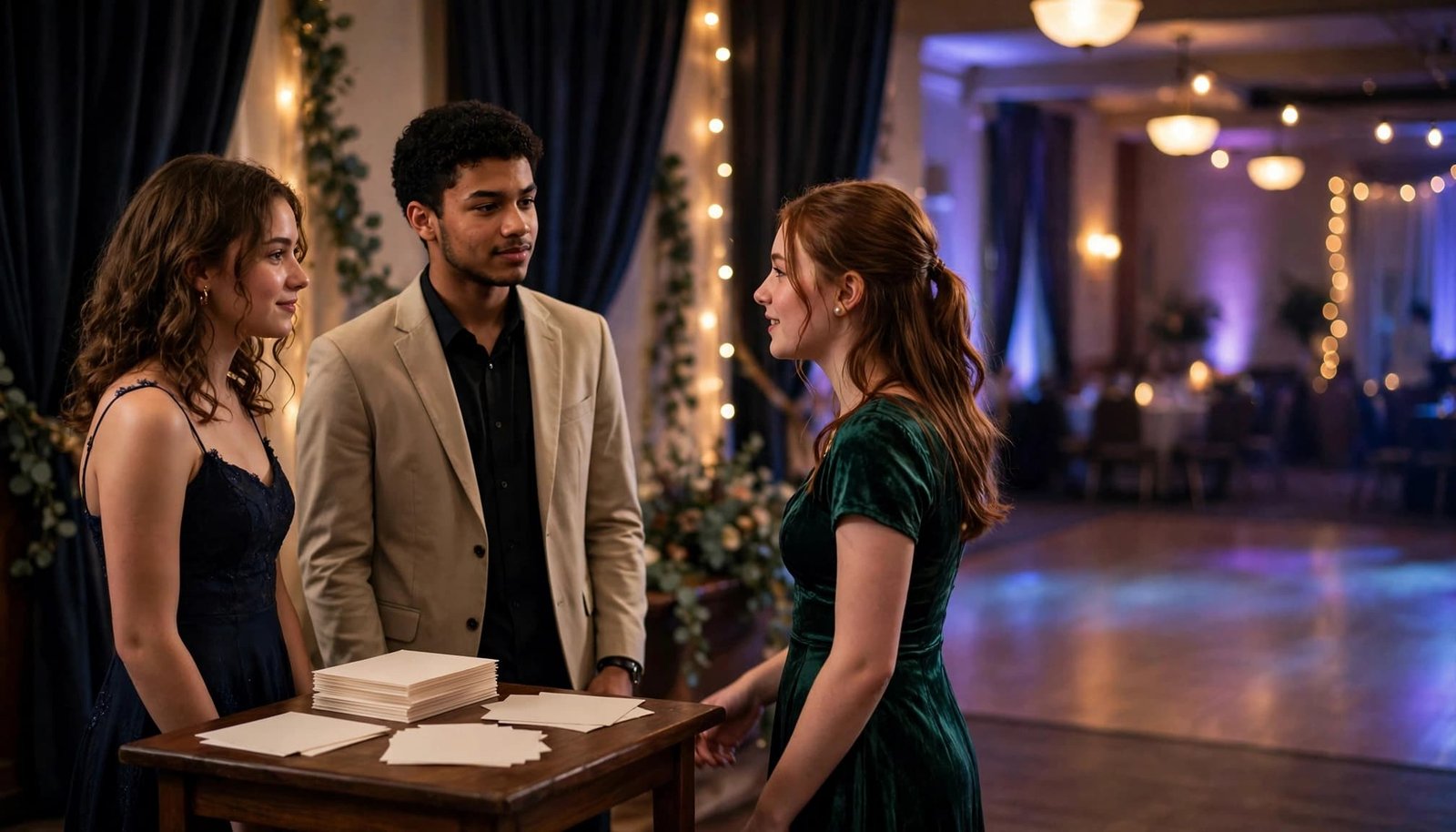
Check Privacy Settings Before Promising Anonymity
Confirm whether the form records names, email addresses, or other identifying details. Don’t describe it as anonymous unless the collection process supports that promise.
Explain who will review the responses and how results will be shared. Avoid unnecessary demographic questions that could identify students in small groups.
Follow district procedures for access, retention, and disclosure. The Department of Education’s student-privacy FAQ explains FERPA protections for maintained education records and personally identifiable information; staff should evaluate their own survey arrangements under school policy.
Make Participation Accessible and Voluntary
Let students skip questions and provide a paper or staff-assisted option when needed. Test the form on a phone, use plain wording, and check that response choices are easy to select.
Don’t require a detailed explanation of financial, cultural, or sensory concerns. Students should be able to share planning needs without disclosing personal history.
An anonymous survey also isn’t a dependable channel for urgent help. Include a school-approved contact method for safety concerns or individual support, separate from general event feedback.
Turn Survey Answers Into Next Year’s Plan
Schedule a review while staff and student organizers still remember the event. Bring together the advisor, student representatives, and the people responsible for the areas being discussed.
Report how many students responded alongside the ratings. Exclude “Didn’t use this” answers from satisfaction calculations, and don’t present respondent opinions as the views of every eligible student. AAPOR’s survey best practices provide useful guidance on collecting and reporting survey information responsibly.
Organize the review around three actions:
- Preserve arrangements students valued, including activities and spaces beyond dancing.
- Investigate repeated concerns with the staff member or vendor responsible for that area.
- Assign feasible changes to a named owner and record them for the next planning cycle.
Look for patterns without overlooking individual access concerns.
A comfort or accessibility concern doesn’t need a majority vote before staff review it.
Use clear prom committee responsibilities to assign follow-up work. Share entertainment findings with the DJ and designated school contact; discuss playlist variety, sound levels, lighting, announcements, and timing separately.
DJ Steve Neff Entertainment LLC provides clean music, professional sound, lighting, and MC coordination for New Hampshire school celebrations. Student supervision and school-policy decisions remain with school staff.
Close the feedback loop with a brief student-facing summary of what worked, what will be reviewed, and which changes are planned. Share themes rather than identifiable comments.
Frequently Asked Questions
What questions should a prom survey include?
Ask about the overall experience, then cover specific areas such as music, sound, check-in, food, comfort, instructions, and ticket value. Include optional prompts about what to keep and what one change would improve next year’s event.
When should we send the prom survey?
Distribute it within a few days of prom, while students can still recall the event. Give students enough time to respond and make the form easy to use on a phone.
Should a prom survey be anonymous?
Only call the survey anonymous if its settings and collection process don’t record identifying information. Explain who will review responses and follow school procedures for access, retention, and disclosure.
How can we hear from students who didn’t attend prom?
Ask an attendance question first, then direct nonattendees to a separate section about factors that influenced their decision. Let them select more than one reason and offer an optional question about what could make a future prom more appealing or practical.
Build the Next Prom Around Useful Feedback
Effective prom survey questions give your committee more than an overall approval rating. They identify the arrangements students enjoyed and the practical barriers that deserve attention.
Keep questions clear, participation voluntary, and results connected to specific planning decisions. A dependable review process helps the next committee preserve successful details while improving music, comfort, communication, and event flow.
The celebration ends with the final song; thoughtful student feedback helps preparation for the next one begin.