A packed dance floor at a high school prom comes from more than playing every current hit in a row. It needs a thoughtful mix of familiar favorites, big sing-alongs, line dances, and slow songs that give everyone a reason to stay in the room.
The right approved prom music helps students feel comfortable, keeps chaperones confident, and gives everyone a night that feels like their own. A little preparation goes a long way when the music has to be fun, school appropriate, and ready for a crowd with very different tastes.
Key Takeaways
- Build the playlist in sections, moving from recognizable early songs to high-energy favorites, group dances, reset moments, and a meaningful final song.
- Review the full version, clean edit, and overall subject matter of every song before adding it to the approved prom playlist.
- Mix current pop, throwbacks, sing-alongs, line dances, and one or two slow songs so students with different tastes all have a reason to join the dance floor.
- Use a Google form and a clear request policy to gather student input while keeping final music choices organized and school appropriate.
- Download approved songs in advance and prepare backup devices, cables, and equipment so technical problems do not interrupt the night.
How to Build a Playlist of Clean Prom Songs
A four-hour prom is not a four-hour sprint. Students arrive, take photos, find friends, eat, and warm up before filling the dance floor. Begin your prom playlist with recognizable popular songs at a comfortable volume, then build toward higher-energy tracks once the room settles.
Keep your playlist organized in sections instead of arranging every song in one long list. This gives the person running the dance music room to read the crowd and adjust the energy without scrambling for the next track.
A balanced prom playlist can include:
- Early arrivals: “Flowers” by Miley Cyrus, “Espresso” by Sabrina Carpenter, “Levitating” by Dua Lipa, and “As It Was” by Harry Styles.
- Main Energy: “Uptown Funk” by Mark Ronson featuring Bruno Mars, “Party in the U.S.A.” by Miley Cyrus, “Shut Up and Dance” by WALK THE MOON, and “Dance the Night” by Dua Lipa.
- Group participation: “Cupid Shuffle,” “Cha Cha Slide,” “Wobble,” and “YMCA.”
- Reset moments: a lower-energy song or a big sing-along after 35 to 45 minutes of upbeat songs.
- Final stretch: the songs the senior class knows every word to, followed by one meaningful final song.
A radio edit removes obvious language, but it does not automatically make a song right for every school’s rules. Listen to the full version you plan to play.
Build a clear approval process before the event. Check the lyrics, the official clean edit, and whether the song’s overall subject matter is school appropriate. This is especially important for current hip-hop and pop tracks, where a clean edit may still have themes your school prefers to avoid.
Upbeat Songs for the Biggest Dance Floor Moments
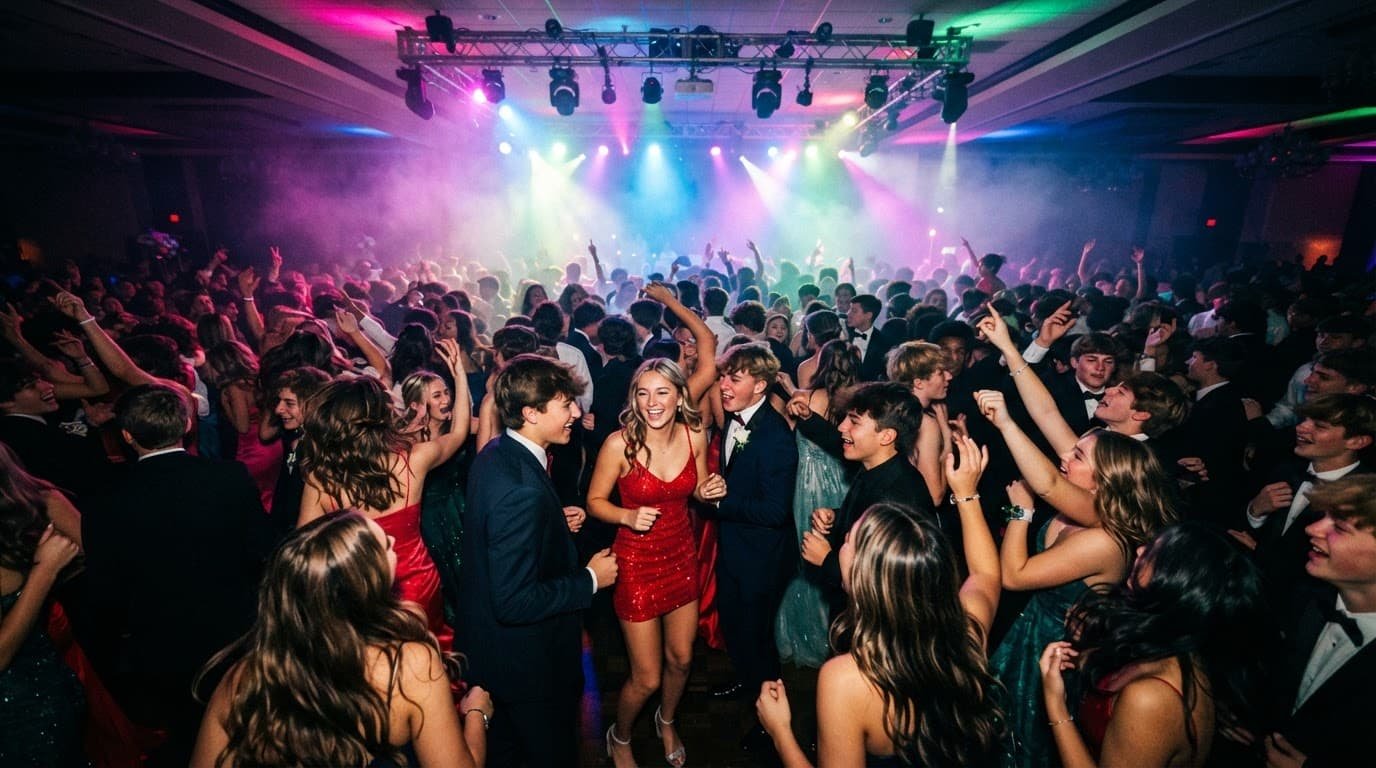
Start your set with popular songs that students recognize immediately. “Uptown Funk” remains reliable because it has a strong beat, a simple chorus, and room for students to dance without choreography. “I Wanna Dance with Somebody” by Whitney Houston and “Dancing Queen” by ABBA create the same response across age groups.
For modern pop, “Don’t Start Now” by Dua Lipa, “Shake It Off” by Taylor Swift, “Firework” by Katy Perry, and “Good Time” by Owl City and Carly Rae Jepsen are upbeat, recognizable, and generally school-friendly. “Beautiful Things” by Benson Boone can work as a dramatic sing-along, but use the official clean version if your school avoids mild language.
Mix newer dance tracks with proven party favorites. The room can cool down quickly when a DJ or student volunteer plays five unfamiliar songs in a row. The strongest sets move between a newer favorite, a throwback, a line dance, and a big chorus everyone can sing.
Party songs such as “Give Me Everything” by Pitbull can bring high energy when you use the official approved edit. “Lovin On Me” by Jack Harlow, “Yeah!” by Usher, and “Low” by Flo Rida also require verified clean or radio edits. Keep unapproved versions out of the queue entirely. The school dance request list shared with a DJ is a good reminder that students enjoy a wide mix of pop, indie, and sing-along music, not only the newest viral tracks.
Throwback Songs That Bring Every Grade Together
Throwbacks are where the room often becomes one crowd, as popular songs from earlier eras help different grades connect. Students may not know every song from the 2000s or 2010s, but they know the hooks, the dances, and the moments when everyone rushes back to the floor.
“Since U Been Gone” by Kelly Clarkson, “I Want It That Way” by Backstreet Boys, “Mr. Brightside” by The Killers, and “Don’t Stop Believin'” by Journey are strong group sing-alongs. “September” by Earth, Wind & Fire and “Take On Me” by a-ha add a lighter retro feel without slowing momentum.
For a more current throwback section, play “Call Me Maybe” by Carly Rae Jepsen, “DJ Got Us Fallin’ in Love” by Usher, “Dynamite” by Taio Cruz, “Sorry” by Justin Bieber, “Can’t Stop the Feeling!” by Justin Timberlake, and “Happy” by Pharrell Williams. Use an approved version where needed. Each song has a clear beat and a chorus that works even for students who are not regular dancers.
Alternative and indie songs can also give this section more personality. Throwback tracks such as “Unwritten” by Natasha Bedingfield, “Tongue Tied” by Grouplove, “On Top of the World” by Imagine Dragons, and “Dog Days Are Over” by Florence + the Machine work well during a sing-along stretch. They provide a welcome change from nonstop Top 40 without losing the room.
Slow Dance Songs Couples Will Actually Want to Hear
These moments are not filler. They give couples a moment together, let friends take a breath, and help the event feel like prom rather than a regular school dance. Choose songs with a warm, familiar melody and avoid scheduling too many back-to-back.
“Perfect” by Ed Sheeran, “A Thousand Years” by Christina Perri, “Lover” by Taylor Swift, and “Thinking Out Loud” by Ed Sheeran are dependable choices. “Die With a Smile” by Lady Gaga and Bruno Mars offers a newer option with a classic ballad feel. “All My Life” by K-Ci & JoJo is another strong choice for a more traditional prom moment.
One slow dance is usually enough before returning to a livelier track. If the room stays full, follow it with a mid-tempo sing-along such as “Love Story” by Taylor Swift or “Adore You” by Harry Styles. That transition keeps the atmosphere warm without letting the night lose its pace.
Use a Google form to Manage Student Requests
A Google form gives the entire senior class a voice without giving control to whoever submits the loudest request. Keep it simple: ask for the song title, artist, preferred version, and a short reason students want to hear it.
Set a deadline about two weeks before prom. Then sort submissions into approved, clean-edit required, duplicate, and not approved. A committee member and staff advisor should review every final music selection, even when a song appears in a streaming playlist.
Use a Spotify playlist such as the linked high school dance essentials playlist for song suggestions, but treat it as a starting point for the prom playlist. Streaming playlists can change, and an app may offer a different version than the one your school approved.
Create a short request policy for the night itself. Students can submit songs, but the person running music decides when, or whether, a request fits the event. This avoids sudden mood changes, repeated songs, and unchecked submissions.
A DIY Prom Sound Setup Needs a Backup Plan
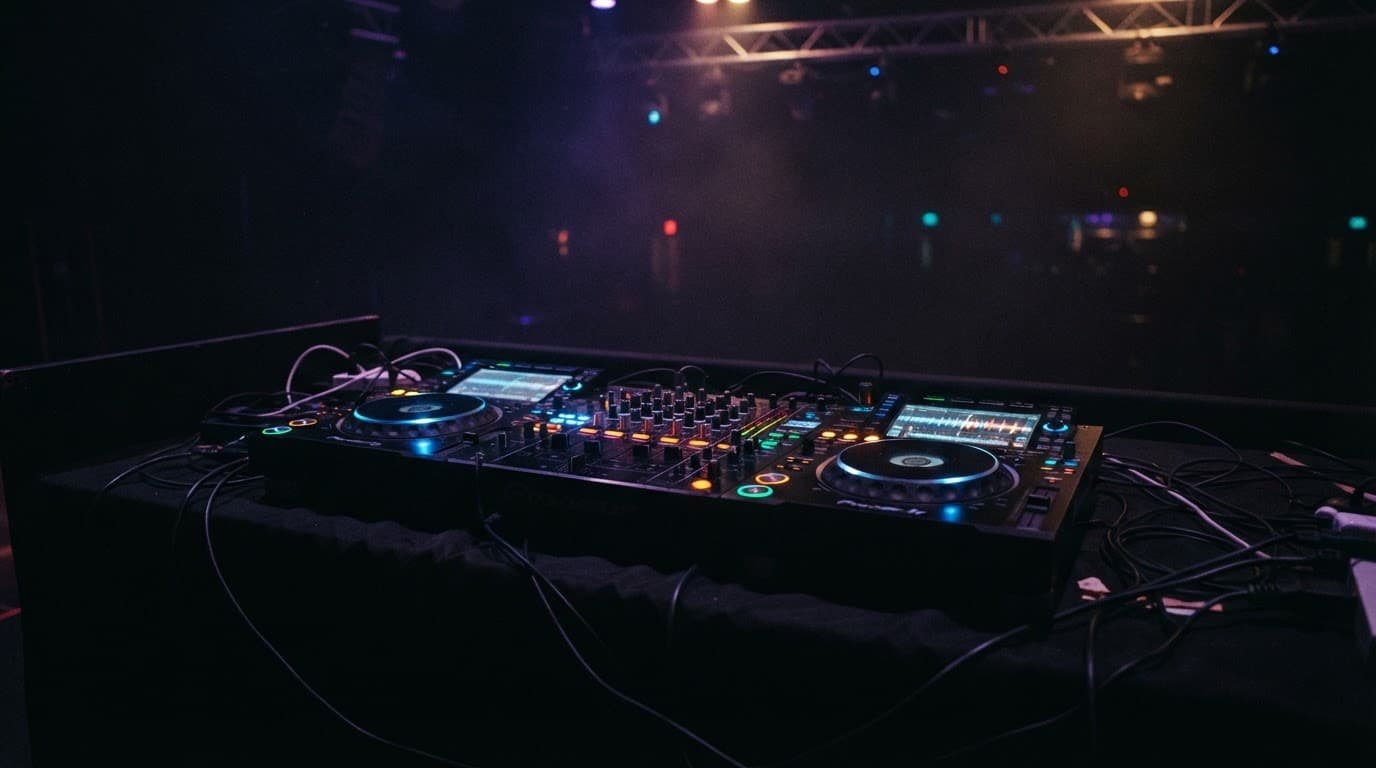
A student-run DJ playlist can work well when the sound setup is reliable. Use two powered speakers on stable stands, a mixer or controller with clear volume controls, and a dedicated laptop or tablet. Download the approved dance music in advance so weak Wi-Fi cannot interrupt the party.
Bring backup cables, extension cords, a charging cable, and a second device loaded with the playlist. Assign one person to music and another to requests, announcements, and equipment checks. Nobody should be trying to fix a connection problem while managing a crowded dance floor.
A professional DJ adds more than a song library. Experienced event DJs can adjust volume, read the room, make announcements, manage transitions, and keep the evening on schedule. Committees handling music themselves should follow the same principle: preparation creates a calmer, more polished event.
Frequently Asked Questions
How many songs should a prom playlist include?
A four-hour prom needs more music than the event will actually play because students arrive gradually, take breaks, and make requests. Prepare several organized sections with extra approved songs so the person running the music can adjust to the crowd.
How can we make sure every song is clean enough for prom?
Listen to the complete version you plan to play, not only the title or playlist label. Check the official clean edit and review the song’s overall themes against your school’s rules before approving it.
Should a prom playlist include slow songs?
Yes, one or two slow songs can give couples and friends a chance to pause while making the event feel more like prom. Avoid playing too many in a row, and follow a slow song with a familiar mid-tempo sing-along to keep the room moving.
How should students submit song requests?
A simple Google form can ask for the song title, artist, preferred version, and reason for the request. Review submissions before prom, then let the person running the music decide whether a request fits the timing and school guidelines.
What equipment does a DIY prom DJ setup need?
Use powered speakers, stable stands, a mixer or controller, and a dedicated laptop or tablet with the approved music downloaded. Bring backup cables, power supplies, and a second device so a connection or equipment problem does not stop the dance.
Keep the Night Moving With Music Everyone Can Enjoy
The best approved prom music combines fun, familiarity, and good judgment. A playlist full of approved songs matters, but timing matters too. Start with approachable favorites, bring in group dances at the right moment, leave room for a slow dance, and finish with the biggest sing-alongs.
When the music feels personal and the flow stays organized, students remember more than the songs. They remember a prom night where the dance floor stayed full, the atmosphere stayed positive, and everyone had a reason to join in.