Catholic wedding music should support worship during the ceremony, while reception music can reflect your personalities, favorite artists, and celebration style. A clear division between parish music responsibilities and DJ coverage keeps both parts of the day organized.
Your church musician and reception DJ need different instructions, but they should work from one coordinated schedule. Start with the ceremony format, then connect each musical moment to the people responsible for it.
Key Takeaways
- Build ceremony selections around the liturgy and the parish’s approved repertoire.
- Give each entrance, musical transition, and reception formality a clear cue and an assigned leader.
- Keep reception preferences focused, with meaningful songs, do-not-play selections, and room for guest response.
Plan Catholic Wedding Music Around the Liturgy

Sacred Music Supports the Celebration
Ceremony music should be sacred and appropriate to its place in worship. A romantic lyric or familiar melody alone doesn’t make a song suitable for a Catholic wedding.
St. Patrick’s wedding music guidelines connect musical choices with faith and the vocation of marriage. Parish requirements and approved repertoire vary, so ask the priest and parish music director about selections early in planning. Secular favorites can have a meaningful place at the reception.
Live musicians, including an organist, pianist, string players, or cantor, can follow entrances and respond naturally to the ceremony’s pace.
Mass and a Ceremony Without Mass Differ
A wedding within Mass includes the Liturgy of the Eucharist, with music for the preparation of gifts and Communion. A ceremony without Mass has no music for the Eucharistic portion.
The USCCB’s explanation of the parts of the Mass helps distinguish those Eucharistic moments from the readings and marriage rite.
Map music for a wedding within Mass from guest arrival and the wedding-party entrance through the readings and responses. Then list the preparation of gifts, the Eucharistic portion, any optional Marian devotion, and the couple’s exit. A ceremony without Mass omits the Eucharistic portions.
Prelude and Processional Music for Church Entrances
Prelude Music Welcomes Guests
Prelude music creates a prayerful atmosphere while guests arrive and take their seats. Jesu, Joy of Man’s Desiring by J.S. Bach is a familiar choice, with a flowing melody that suits organ or an appropriate ensemble arrangement.
Parish-approved organ music or another arrangement of instrumental music can maintain a consistent atmosphere before the entrance begins. The prelude should remain separate from the processional cue; guests arriving late shouldn’t determine when the wedding party starts.
List the scheduled entrance time, the person signaling readiness, and the musical transition on the ceremony plan.
Processional Music Needs the Right Length
Canon in D by Johann Pachelbel is a common processional, particularly for bridesmaids or a continuous entrance that includes the bride. Its gentle opening and extended development can feel too soft and too long for a bride’s short walk alone.
The arrangement matters as much as the title. A live musician can select an appropriate passage and finish at a natural musical stopping point.
Bach’s Jesu, Joy of Man’s Desiring also works here. For a brighter entrance, Prince of Denmark’s March, commonly called Trumpet Voluntary, is by Jeremiah Clarke, although it was formerly credited to Purcell.
Time the walk during rehearsal so the music supports a comfortable pace.
Responsorial Psalms and Congregational Hymns
The responsorial psalm follows the first reading, normally between the first and second readings at a wedding Mass. It is a response to Scripture, rather than a space for a favorite solo.
The Diocese of Albany’s wedding music guidelines describe the psalm as sung after a brief reflective silence following the first reading.
Common wedding psalm options include Psalms 33, 34, 103, 112, 128, 145, and 148. Use the parish’s approved text and musical setting; the cantor can lead the verses while the congregation joins the response.
Approved wedding hymns can support participation elsewhere in the celebration. How Great Thou Art, Be Thou My Vision, One Bread One Body, and Here I Am Lord appear in wedding music repertoires.
Their placement depends on the text and liturgical moment. A hymn suited to the distribution of the Eucharist doesn’t automatically belong at every other point in the ceremony.
Offertory and Communion Music Within Mass
Offertory Selections Accompany the Preparation of Gifts
The offertory accompanies the preparation of the altar and gifts. Music should fit that action without requiring an extended pause for a performance.
The Servant Song by Richard Gillard is a frequent option because its text emphasizes service and companionship. When Love Is Found, commonly sung to the tune O Waly Waly, also appears in wedding offertory repertoires.
Bach’s Jesu, My Joy of Man’s Desiring is another possibility where the parish includes it. Avoid repeating the same piece merely because it fits several categories; a balanced program provides variety without becoming a concert.
Communion Music Supports Prayer and Participation
Panis Angelicus by Cesar Franck is a common choice for the Eucharistic liturgy. One Bread One Body offers a congregational option, while When Love Is Found appears in some parish music lists.
The music plan should accommodate the actual distribution of the Eucharist rather than a fixed recording length. The musician needs a suitable ending and, when necessary, additional approved music.
Leave room for silence afterward. Every quiet moment doesn’t need another song, particularly when the congregation is praying.
Marian Veneration and Recessional Selections
Ave Maria for an Optional Marian Devotion
When the celebration includes presenting flowers to Mary, Ave Maria by Franz Schubert is the usual musical choice. This devotion is optional and should have its own place in the parish’s ceremony plan.
Keep the movement, music, and return to the wedding party clearly coordinated. The singer needs to know when the couple begins moving and when the devotion concludes.
A devotional solo shouldn’t displace the responsorial psalm or another required part of the liturgy simply because it is meaningful to the family.
A Joyful Recessional Marks the Departure
Ode to Joy from Beethoven’s Ninth Symphony offers a recognizable, celebratory choice. Other options include Handel’s Hornpipe from Water Music and Arrival of the Queen of Sheba.
Mendelssohn’s Wedding March is another well-known selection, although some parishes restrict it. Its inclusion depends on the specific parish’s approval, rather than its popularity at weddings generally.
Give the musician a clear departure cue tied to the officiant’s conclusion. The final music should support the couple’s exit and the wedding party’s movement, without covering final spoken instructions.
Coordinate the Parish Musician and Reception DJ
A live ceremony musician and reception DJ can provide distinct coverage without performing together. Assign responsibilities, timing, and the transition between locations.
Our guidance on DJ and ceremony musician coordination separates performance duties, sound arrangements, and coverage during transitions.
Confirm parish rules and responsibilities early in planning. Finalize approved music and the shared cue sheet several weeks before the wedding. Verify entrance and couple’s exit cues at rehearsal.
Use one shared cue sheet that identifies:
- Who leads ceremony music, operates parish microphones, and signals entrances and the couple’s exit.
- When cocktail music begins, where reception equipment belongs, and when setup must be complete.
- Who can approve timing changes and communicate the updated plan to the entertainment team.
Church sound isn’t an assumed extension of the DJ booking. Assign clear operators for parish equipment, visiting musicians, and any additional audio support.
For separate church and reception locations, allow time for travel, parking, unloading, and sound testing. Our wedding sound checklist covers microphone and speaker planning. Church audio arrangements must follow parish requirements.
A printed cue sheet provides a dependable reference when messages are missed or phone service is limited.
Build a Personalized Reception Music Plan
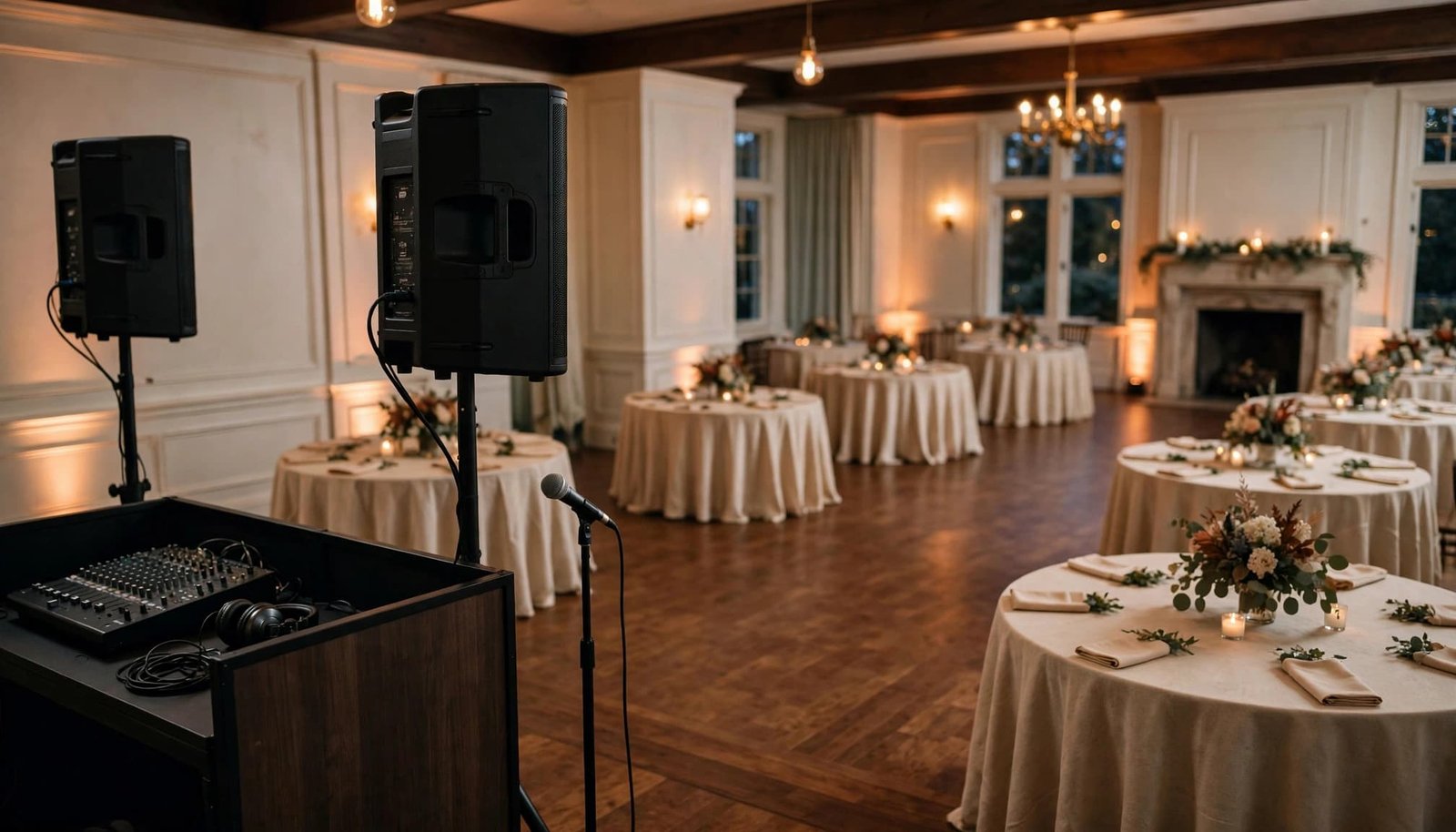
Give Formal Moments Clear Instructions
Reception music can include meaningful secular songs that aren’t part of the liturgy. Choose exact recordings for introductions, your first dance, parent dances, cultural traditions, and the final song.
Provide artist names, preferred versions, starting points, and any shortened endings. Include phonetic spellings for everyone introduced or invited to speak.
A flexible flow might start with cocktail-hour and dinner music, then move to introductions and dances. Open dancing and your chosen final song can follow. Our reception timeline with music cues connects these selections with dinner, photography, and announcements. The order can change, so the DJ should coordinate adjustments with you and relevant vendors.
Leave Room for a Comfortable Guest Experience
Cocktail-hour and dinner music should support conversation. Open dancing can build energy through shared favorites, different decades, and selections that suit the guests present.
We offer customized music planning alongside DJ and MC services, with preferences and announcements tailored to your celebration. A focused must-play list gives direction without prescribing every track.
Keep do-not-play selections separate and establish how guest requests will be handled. Requests shouldn’t override your restrictions or interrupt planned formalities.
Frequently Asked Questions
Can Organ or Violin Replace Sung Hymns?
Organ and violin can accompany entrances, the recessional, and other suitable moments within the parish’s music plan. However, music without singing doesn’t replace every sung part of the liturgy.
The responsorial psalm, Gospel acclamation, and Mass responses have their own purposes. Build the program around those functions before adding additional performance pieces.
What Happens If the Ceremony Runs Late?
The designated planner or day-of contact should approve a revised reception schedule with the venue, caterer, photographer, and DJ. A delay doesn’t require moving every later event by the same amount.
Background music can continue while preparations finish. Dinner-service commitments, photography coverage, and the venue’s closing time remain important boundaries when adjusting the evening.
A Clear Music Plan Supports the Whole Celebration
Thoughtful Catholic wedding music planning gives worship its proper place and allows the reception to feel personal and welcoming. The strongest plan combines appropriate selections with clear responsibilities and dependable cues.
Keep one current schedule, identify the people leading each transition, and give your entertainment team the details that matter. Careful preparation leaves fewer decisions for the wedding day and more time to enjoy the celebration together.