A beautiful ceremony can lose its meaning when guests can’t hear the vows. Wind, weak microphones, distant speakers, or a last-minute power issue can turn an emotional moment into frustration.
This wedding sound checklist covers reliable microphones, speakers, power planning, and testing for clear indoor and outdoor ceremony audio. Good sound should feel natural, dependable, and almost invisible.
Start planning early, then test every spoken word and music cue before the first guest takes a seat.
Start With the Venue
Every wedding venue creates its own audio challenges. A quiet historic barn, a lively waterfront lawn, a ballroom with hard walls, and a tented garden can all require different equipment and speaker placement.
Ask for the venue’s event rules as soon as you book. Confirm setup access, volume limits, available outlets, rain plans, loading areas, and the exact ceremony location.
Walk the Ceremony Space Before Finalizing the Layout
Visit the ceremony site with your DJ, planner, or AV provider when possible. Stand where the first row will sit, then walk to the middle and back rows. Can you hear normal speaking voices? Is traffic nearby? Are there fountains, HVAC units, kitchen doors, or other noise sources?
Indoor spaces may create echo, especially with high ceilings, glass, stone, or bare walls, so echo control matters. Outdoor settings often lose sound into open air and may need wider speaker coverage plus wind protection.
Ceremony audio should match the guest count and space, not be selected simply because it is the biggest or loudest option available. A properly sized system supports clear vows, readings, and ceremony music without overwhelming nearby guests.
A helpful wedding ceremony sound system guide explains how properly sized coverage supports clear vows, readings, and ceremony music indoors or outdoors.
Confirm Outdoor Conditions and Venue Rules
For an outdoor wedding, ask where the sun will be during the ceremony, where wind normally comes from, and whether the site has reliable power. A beautiful overlook may be perfect for photos but difficult for clear audio if it’s exposed to wind or far from a protected outlet.
Also confirm whether the venue has separate volume limits for the ceremony, cocktail hour, and reception. Nearby homes, public parks, hotels, and waterfront properties may have strict restrictions or earlier outdoor music curfews.
Outdoor sound needs coverage, not excessive volume. A well-placed speaker system lets every guest hear without making the front row uncomfortable.
Build the Sound System Around Clear Voices
Wedding ceremony music matters, but the spoken moments are what guests have come to hear. The officiant, couple, readers, and musicians all need a plan suited to the ceremony format.
A professional ceremony audio system combines microphones, properly placed speakers, a mixer, music playback, and appropriate ceremony AV equipment. It also needs enough cables and wireless receivers for each planned role.
Choose Wired or Wireless Microphones Carefully
A wireless microphone gives the couple and officiant freedom to move. This option is especially useful when the ceremony includes a unity ritual, a large wedding party, or an officiant who moves around the ceremony space.
That convenience requires more preparation. Batteries must be fresh, radio frequencies need checking, and the receiver should sit where it gets a reliable signal. Convenience doesn’t make this choice plug-and-play.
Wired microphones are dependable and don’t rely on batteries or signal conditions. They’re a strong choice for a stationary lectern, musician, or reader who remains in one place. The tradeoff is cable management. Secure each cable and keep it out of guest pathways.
For many ceremonies, the most practical combination is:
- A lavalier or headset microphone for the officiant.
- A handheld microphone for readings or a vocalist.
- A wired microphone for a musician, lectern, or backup position.
- A discreet spare microphone ready at the sound table.
Microphone the officiant whenever possible. A microphone placed only between the couple may miss soft vows, especially if they turn away or speak quietly.
Place Speakers Where Guests Need Them
Speakers should face the guests, not the wedding party. Place them in front of the microphone line, facing away from the microphones, to reduce feedback. This placement helps guests hear evenly without making the front row uncomfortably loud.
Avoid placing one speaker beside the front row and turning it up to cover everyone. Guests near that speaker will hear too much, while those farther back may still struggle. Larger ceremonies may need two speakers set wider apart, with coverage aimed toward the seating area.
For outdoor events, speaker and microphone placement guidance also recommends keeping speakers in front of the microphone line and using windscreens to reduce wind noise.
Plan Power, Cables, and Safe Access Routes
Sound equipment is only reliable when its power and cables are planned with the same care as the music. Don’t assume the closest outlet can support speakers, microphones, a DJ controller, lighting, and other vendor equipment.
Ask the venue which outlets are approved for event use and whether dedicated circuits are available. Keep speakers and sensitive control devices on separate circuits when possible. Mixers, laptops, and wireless receivers should not share power with catering equipment, coffee stations, portable heaters, or facility equipment.
Keep Cables Out of Harm’s Way
Audio and power cables should run along approved room edges or the perimeter of the ceremony area. They should never cross emergency exits, stairways, door thresholds, or accessible routes.
If a cable must cross a guest or staff walkway, use a venue-approved cable ramp. Gaffer tape can secure a low-profile cable in a dry, low-traffic area, but it isn’t a substitute for a proper cable protector in a busy path.
During the final walkthrough, verify that the DJ or AV area doesn’t block doors, fire equipment, aisles, or wheelchair access. Good cable planning protects guests, protects equipment, and keeps the ceremony space looking polished.
Protect Outdoor Equipment From Weather
Speakers may tolerate light moisture better than laptops, mixers, power strips, and wireless receivers. Keep control equipment under a tent, porch, pavilion, or other covered area. Raise power connections off wet ground and use weather-resistant covers where needed.
Have a weather plan that’s more detailed than “we’ll move inside.” Confirm where the ceremony equipment will go, how guests will enter the backup location, and whether the indoor space has power and room for the speakers.
Wind can also affect microphones long before rain arrives. Foam windscreens, proper mic placement, and a protected officiant position can reduce distracting bursts of wind noise. A provider experienced with outdoor wedding ceremony audio should have a weather and backup plan ready before event day.
Test the Full Ceremony Before Guests Arrive
A quick check of background music isn’t enough. The complete ceremony needs a full rehearsal with the actual microphones, speakers, playback device, and people who’ll use them.
Schedule enough setup time for a complete sound check before guests arrive. This is where preparation turns into confidence.
Run Every Spoken and Musical Moment
Have the officiant speak at normal ceremony volume, and test a reader at the actual reading location. If possible, have the couple say a few words into the microphone as well. Have the musician perform from the planned location, using the actual playback device. Soft speech is common during vows, so test it before the ceremony begins.
Test each important music cue through the speakers:
- Prelude music as guests arrive.
- Wedding party processional music.
- The couple’s entrance music.
- Any unity ceremony or reflection music.
- Recessional music.
- Exit or transition music after the ceremony.
Listen from the front, center, and back of the guest seating. The goal is intelligibility and even coverage, not maximum volume. Guests should hear the officiant without strain and still feel comfortable talking before and after the ceremony.
Keep a Backup Plan Within Reach
Technology can fail, but a prepared team can keep a small problem from becoming a public interruption. Ask your wedding DJ or audio provider what happens if a microphone, speaker, cable, laptop, or wireless channel stops working.
A professional backup plan should include spare cables, spare batteries, a second microphone, alternate playback, a second playback device, and downloaded music files that don’t depend on venue Wi-Fi. Streaming may be useful, but it shouldn’t be the only source for key music cues.
If the ceremony and reception are in different locations, confirm whether each space has its own speakers. Moving speakers and cables during cocktail hour can create unnecessary pressure, especially when guests are already arriving at the next location.
Map Out Your Wedding Ceremony Music
A wedding song checklist isn’t about choosing dozens of songs. It’s about giving every meaningful transition a clear cue. Many ceremonies only need four to six planned selections, plus prelude music.
Choose songs that fit the pace of each moment. A processional song should allow enough time for the wedding party to walk without an awkward fade. A recessional can be brighter and more celebratory because it carries guests into the next part of the day.
A Simple Ceremony Music Timeline
Use this wedding song checklist to confirm each meaningful transition:
| Ceremony Moment | Cue and Approval | Edit or Timing |
|---|---|---|
| Guest arrival | The couple approves the starting order with the coordinator. | Plan 20 to 30 minutes of prelude music. No edit is needed unless the arrival period changes. |
| Seating of family | The couple and coordinator approve the optional cue. | Use one short selection, trimming it if seating ends early. |
| Wedding party entrance | The couple and coordinator approve the cue. | Choose one processional song that covers the full walk, usually 2 to 4 minutes. Prepare an edit if needed. |
| Couple’s entrance | The couple approves the cue with the officiant. | Choose a separate processional song, if desired, and edit it to match the couple’s walking time. |
| Unity ceremony or reflection | The couple and officiant approve the cue. | Use one short instrumental selection, edited to fit the reading or reflection. |
| Recessional | The couple and coordinator approve the cue. | Choose one upbeat exit song. Use the full track or prepare an edit for the guest exit. |
| Guest departure | The couple approves the final cue with the coordinator. | Continue background music until the next part of the day begins. No edit is needed unless the schedule changes. |
The main takeaway is simple: choose the moments first, then choose the songs. You don’t need a separate track for every person unless that matches your ceremony style.
For more personal choices, look beyond the usual wedding playlist. An acoustic version of a favorite song, a film score, a meaningful indie track, or a live musician’s arrangement can feel more genuine than a song chosen only because it is traditional.
Keep Reception Music and Ceremony Audio Connected
The ceremony may last 20 minutes, but its sound plan affects the entire day. Plan the full event timeline, including movement between the ceremony site and reception hall, photos, weather changes, and delays. Guests often move directly into cocktail hour or the reception. The transition should feel organized, not like music stopped while equipment was moved.
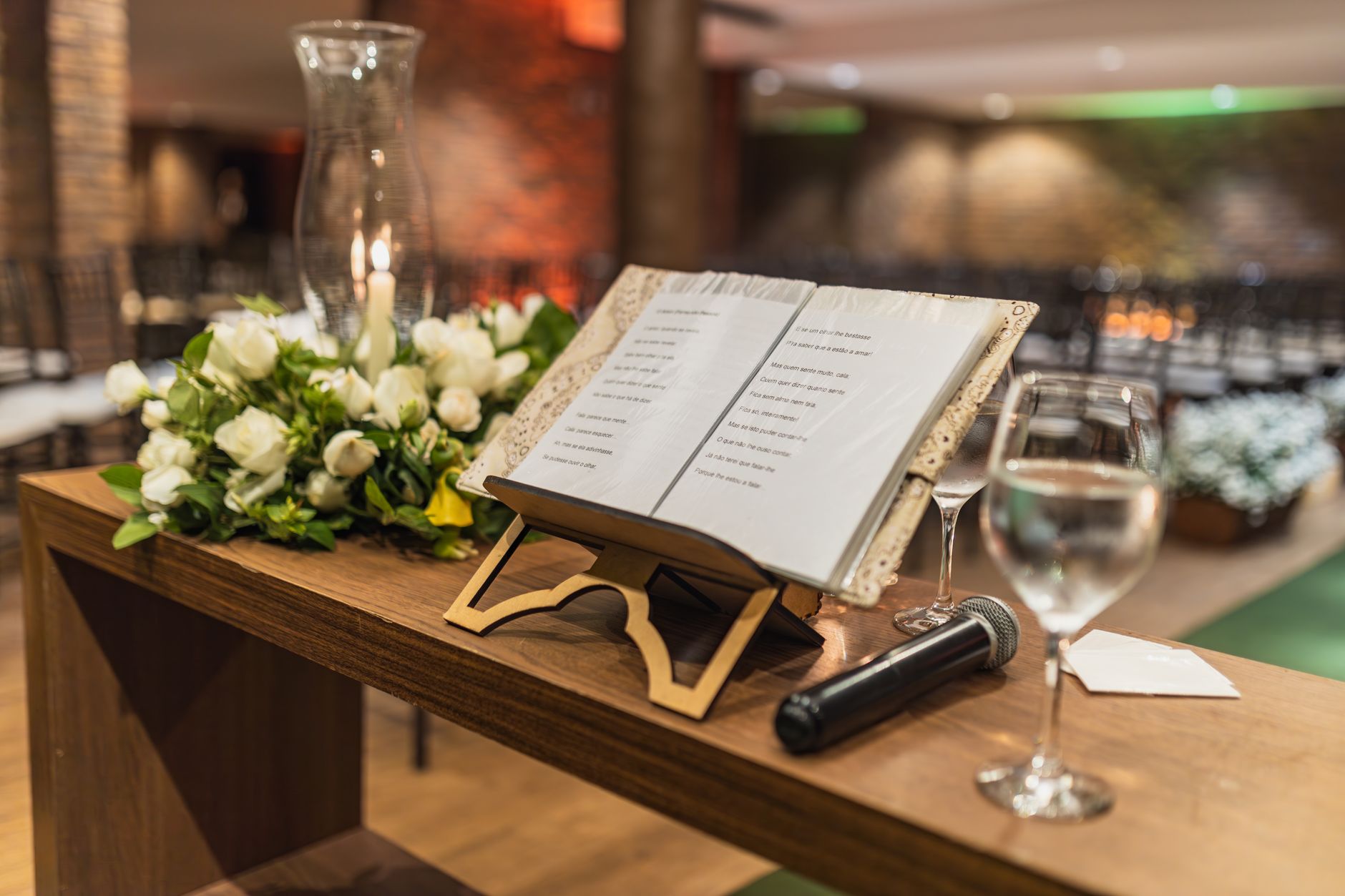
Photo by Matheus Bertelli
Plan Enough Music for Each Part of the Day
Ceremony prelude music should cover early arrivals and late guests. Cocktail hour music should cover the full scheduled time, plus an extra 15 to 30 minutes. Photos, weather changes, and dinner delays happen often, so music should keep the atmosphere comfortable while the timeline adjusts.
Wedding reception music also needs cue planning. With your DJ or band, plan the grand entrance, parent entrance, and first dance song. Plan the father daughter dance or another parent dance, mother son dance or another family dance, cake cutting song, bouquet toss if included, and last dance song. Confirm whether a parent entrance is included, since not every tradition is required, and give each planned moment an agreed cue and song version.
A live band may bring different needs than a DJ. Ask where musicians will set up, what inputs they need, whether they bring their own sound equipment, and who handles announcements. The DJ, band, planner, and venue should share the same timeline and know who handles each cue.
Questions to Ask Your Wedding Audio Provider
A written proposal should explain what is included, so your wedding planning doesn’t depend on assumptions. Ask each wedding audio vendor whether ceremony and reception coverage are bundled into one wedding package. Location, setup time, and equipment needs may require separate services.
Ask these questions before signing:
- What does the audio setup include, and which sound system, speakers, and microphones suit our guest count and ceremony location?
- Will an on-site technician or DJ remain available through the ceremony?
- How will you microphone the officiant, vows, readings, and live musicians?
- What backup equipment will be on-site if a microphone or music device fails?
- Do you provide separate coverage for cocktail hour or the reception?
- How much setup time do you need for a full sound check before guests arrive?
- What are your rain, wind, battery, and power backup procedures?
- How will cables be secured around guest walkways and venue access routes?
- Can you provide proof of insurance if the wedding venue requires it?
Professional AV support is especially important for outdoor ceremonies, guest lists over 75 people, live musicians, multiple ceremony locations, venues with limited power, or events with a detailed production schedule. These are not situations for guesswork or a small speaker placed beside the altar.
A Final Wedding Ceremony Sound Checklist
Before the wedding day, confirm these details with your venue, planner, officiant, and audio provider:
- The ceremony layout, guest count, indoor or outdoor location, audio restrictions, and weather backup plan are confirmed.
- Speakers provide even guest coverage and stay clear of microphone feedback paths.
- The officiant, readers, musicians, and couple each have an assigned microphone.
- Fresh batteries, spare cables, backup microphones, and offline music are ready.
- Approved power access is dry, accessible, and suitable for the planned equipment.
- Cables are secured away from exits, aisles, doors, stairs, and accessible routes.
- Windscreens and weather covers are ready for an outdoor ceremony.
- Every reading, vow microphone, song cue, and recessional track has been tested.
- One designated person can approve last-minute music and timeline changes.
Frequently Asked Questions
What microphones are best for a wedding ceremony?
A lavalier or headset microphone works well for the officiant, while handheld or wired microphones suit readings and musicians. Keep a spare microphone available in case a battery, cable, or wireless channel fails.
How far in advance should wedding ceremony audio be tested?
Schedule a full sound check before guests arrive, using the actual microphones, speakers, playback device, and ceremony participants. Test every reading, vow, music cue, and recessional from the front, center, and back of the seating area.
How can outdoor wedding audio be protected from wind and rain?
Use windscreens, place microphones in protected positions, and keep mixers, laptops, receivers, and power connections covered and raised off wet ground. Confirm a detailed indoor backup plan with the venue before the wedding day.
How do you prevent wedding sound equipment from becoming a safety hazard?
Run cables along approved room edges or use venue-approved cable ramps where walkways must be crossed. Keep cables away from exits, stairs, aisles, door thresholds, and accessible routes.
Clear Sound Lets the Moment Shine
The best wedding sound checklist isn’t about filling the ceremony with gear. It’s about helping every guest hear the words, music, and promises that matter most.
When the venue is reviewed, the full ceremony is tested, and backups are ready, audio supports the day without drawing attention to itself. Comfortable coverage helps every guest follow each moment with ease. That’s the kind of clear, reliable sound a wedding ceremony deserves.