Beautiful ceremony music deserves a clear handoff to the celebration that follows. A live musician can personalize your entrance, while a professional DJ supports announcements, guest movement, and reception entertainment.
When comparing packages that combine a wedding DJ and live musician, confirm whether they cover separate ceremony performances or musicians playing alongside the DJ. The strongest plan starts with clear responsibilities, shared music cues, and sound arrangements confirmed before wedding day.
Key Takeaways
- Confirm who supplies ceremony sound, operates microphones, cues the musician, and starts cocktail hour music.
- Give your DJ, musician, officiant, and planner one shared timeline with clear start and stop instructions.
- Compare written quotes for performance hours, equipment, travel, overtime, custom arrangements, and backup coverage.
- Choose a day-of contact who can handle changes without interrupting your celebration.
Choose the Right DJ and Live Music Format
Separate Ceremony and Reception Performances
Hiring a live ceremony musician and a reception DJ gives each professional a distinct role. The musician performs during guest arrivals, entrances, selected ceremony moments, and the recessional. The DJ handles the agreed cocktail hour and reception coverage.
This arrangement doesn’t require the performers to play together. It does require coordination around sound, timing, and the transition between spaces.
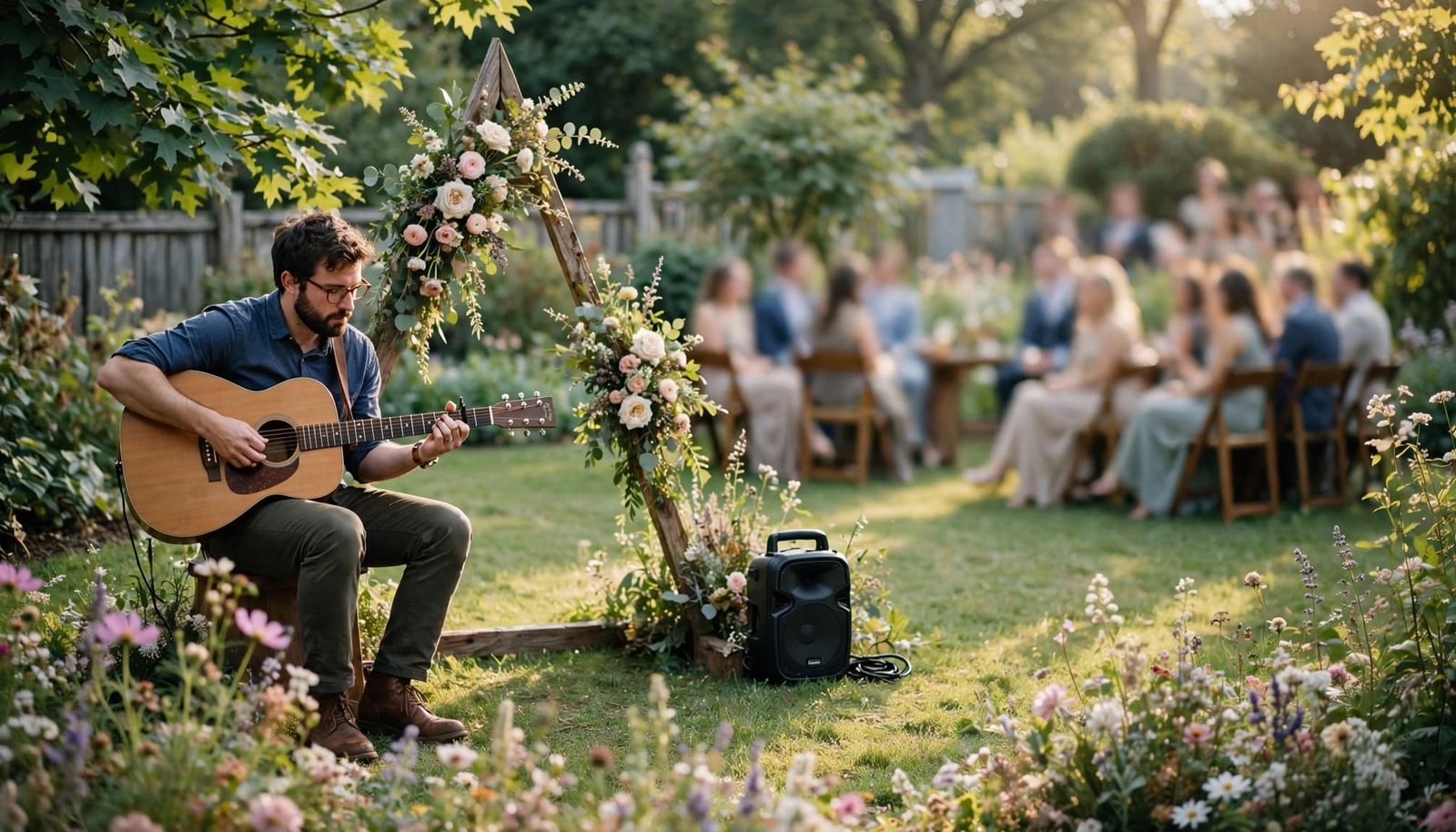
A solo musician or string quartet can suit ceremony music. An acoustic guitarist, pianist, or violinist may fit your selections, but check that the performer’s repertoire and arrangements include the songs you want.
Musicians Performing Alongside the DJ
A reception collaboration needs different preparation. At a wedding reception, a live saxophonist may join recorded tracks for live music fusion, creating a hybrid format without replacing the DJ. Since offerings vary, ask what the DJ hybrid experience includes.
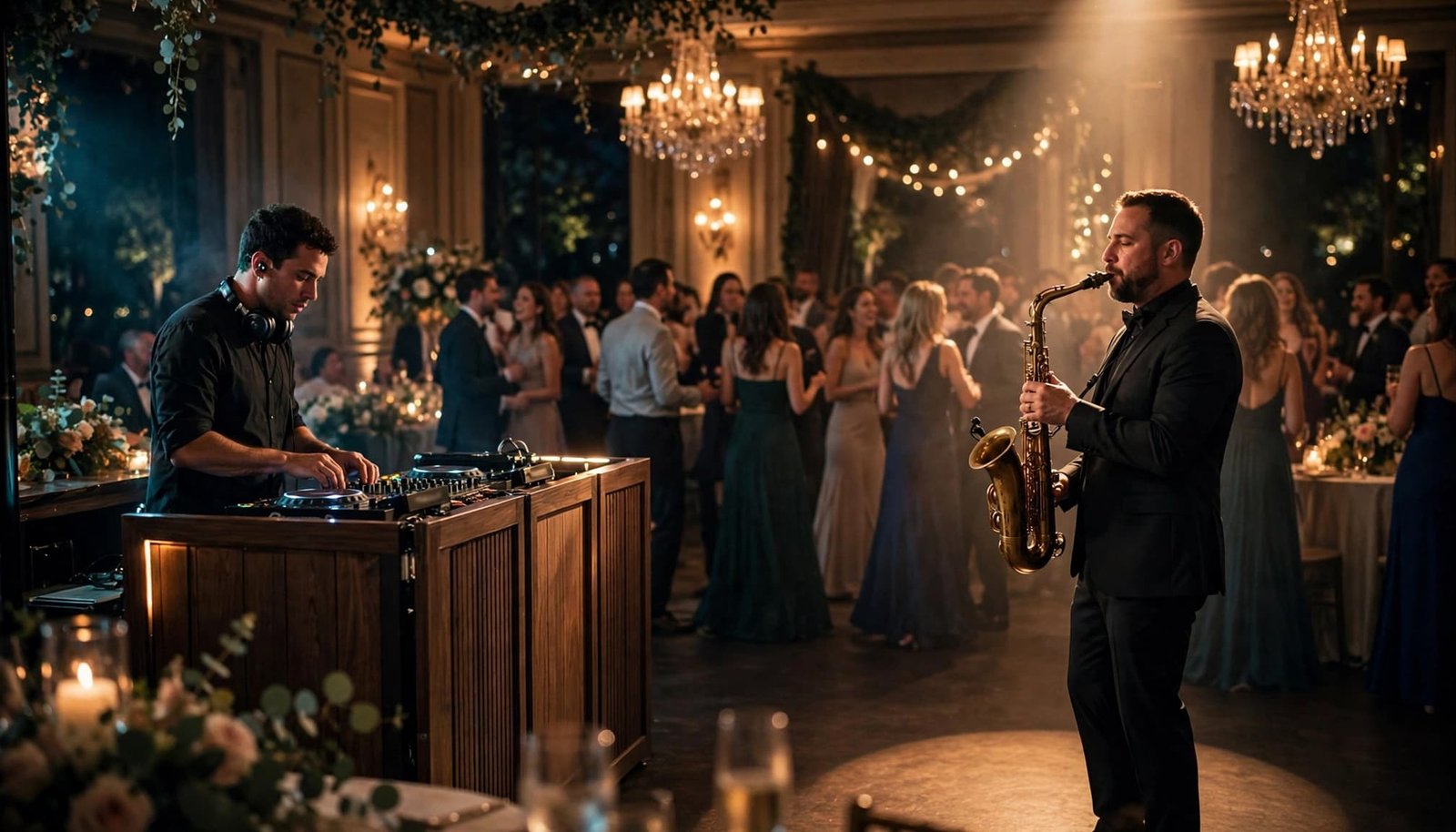
Before booking, confirm whether live percussion or other live instruments are included. Have the professional DJ and performer agree on songs, keys, arrangements, and performance windows.
Ask for examples of the proposed pairing to assess its style and performance energy. Saxophone may suit soul, funk, or dance selections; violin may complement melodic pop arrangements. The performer’s actual style matters more than the instrument alone, especially when live musicians join the DJ on the dance floor.
The Knot’s DJ and live band cost comparison reports averages of $1,800 for a DJ and $4,500 for a band. A ceremony soloist is a different service, so request a separate quote.
Assign Responsibilities Before Wedding Day
Name the Music and Audio Contacts
One person should coordinate the overall entertainment plan, even when the DJ and musician have separate contracts. Your planner can oversee wedding planning and the timeline while the designated audio operator handles sound.
Confirm who receives the musician’s equipment requirements, who approves setup locations, and who controls ceremony volume. A DJ providing reception entertainment isn’t automatically responsible for amplifying another vendor’s performance.
Introduce both professionals early. Direct communication helps them resolve equipment questions without making you the messenger.
Give Announcements a Clear Owner
Decide who welcomes guests, requests silenced phones, directs everyone toward cocktails, and introduces reception moments. The officiant may handle ceremony instructions; the DJ or MC may handle the remaining announcements.
DJ Steve Neff Entertainment LLC provides New Hampshire wedding DJ services that include ceremony audio options, reception entertainment, MC services, and timeline coordination. Its entertainment experience draws on professional DJ experience dating back to 1999.
For any provider, confirm the exact responsibilities in your agreement. Live performance experience doesn’t automatically include professional hosting or MC services.
Build a Ceremony Cue Sheet Everyone Can Follow
Plan Around Entrances and Actions
Choose ceremony moments and agree on a music direction for the selected songs, cues, and transitions. Include guest arrivals, family entrances, the wedding party, your entrance, any musical interlude, and the recessional.
For each moment, record the selection, performer, start cue, and ending instruction. Identify whether the musician should repeat a passage, finish a phrase, or stop at a planned point.
A short cue sheet makes responsibilities easy to follow.
| Ceremony Moment | Start Cue | Ending Instruction |
|---|---|---|
| Guest arrival music | Seating begins | Finish before the opening announcement |
| Processional | Planner signals the first entrance | Close after the final person reaches position |
| Recessional | Officiant gives the agreed signal | Continue while the couple and wedding party exit |
Your actual entrance order and traditions should guide the final version.
Rehearse the Handoff, Not Just the Song
Walk the aisle during rehearsal and note approximate timing, pauses, and the cue giver’s position. The musician needs a visible signal, particularly when entrances begin outside their line of sight.
Confirm the live arrangement, too. A familiar recording may have a different introduction or tempo than the musician’s version.
Share the final sheet with the officiant, planner, DJ, and musician. Everyone should work from the same dated document.
Confirm Ceremony Sound, Power, and Placement
Match Equipment to the Performance
Ask the musician what they need to be heard comfortably throughout the ceremony space. An acoustic performance in a small room has different requirements than a vocalist outdoors.
Confirm whether the musician supplies their own sound system or connects to another provider’s equipment. If sharing equipment, agree on microphone types, instrument connections, mixer inputs, and who supplies cables and adapters.
WeddingWire’s ceremony music cost guide reports an average around $500. That figure doesn’t establish what your musician includes; amplification and additional services belong in the written quote.
Speech needs its own plan. Confirm microphone coverage for the officiant, readers, and vows, rather than relying on the musician’s setup.
Check the Actual Ceremony Location
Confirm working power, vendor access, setup time, sound limits, and cable rules with the venue. Position speakers for guest coverage without placing microphones directly in front of them.
The sound check should include actual speaking positions and the musician’s performance location. Test before guests arrive, with time available for adjustments.
For outdoor ceremonies, agree on weather protection and an indoor alternative. Confirm who authorizes the move and how much time both vendors need.
Shared sound equipment only works when someone is assigned to operate it. Supplying a speaker doesn’t establish who manages microphones, music levels, or emergency playback.
Keep Cocktail Hour and Reception Transitions Organized
For a live music fusion or hybrid format, plan the handoff after the recessional. The musician can continue, or the DJ can start recorded music as guests move to a separately equipped area.
If the DJ needs to relocate equipment, ask whether a separate speaker setup would provide more reliable coverage. A professional DJ should manage the agreed transition, since one operator can’t cover two distant spaces at once.
Prepare enough cocktail music for the scheduled period, plus an extra 15 to 30 minutes. Photographs, transportation, and dinner service can affect the timeline.
Keep the volume comfortable for conversation. Share preferred styles, meaningful artists, and overall music direction without choosing every background track.
At the wedding reception, your wedding reception music selections can guide reception music for introductions, dinner, formal dances, and open dancing. Confirm exact recordings and any shortened versions for the dance floor.
When musicians join the reception, schedule their breaks and the DJ’s coverage in advance. A performance ending shouldn’t leave either vendor wondering who plays next.
Compare Wedding DJ Live Musician Packages Carefully
Request Quotes With the Same Scope
A combined wedding package and two separate contracts can cover very different services. Compare the same performance hours, locations, sound requirements, hosting responsibilities, and costs to keep your wedding budget on track.
Ask whether setup, travel, parking, custom song arrangements, additional microphones, and overtime are included. A musician booked only for the ceremony may charge separately for cocktail hour or extended waiting time.
WeddingWire’s live wedding band cost guide reports a $2,050 average, compared with The Knot’s $4,500 figure. These guides give different estimates; neither determines your local quote.
Compare the actual service rather than assuming a DJ-plus-musician arrangement is always cheaper than a live wedding band or string quartet.
Confirm Package Boundaries in Writing
Review performance start and end times, deposits, payment deadlines, cancellation terms, and venue requirements. Ask whether either performer needs liability insurance documentation for your location.
If ceremony sound is included, clarify whether that means recorded music and speech microphones or also support for your live musician.
For wedding DJ live musician packages, confirm whether the named performers are guaranteed or substitutions are permitted. Also establish who handles updates when the venue, schedule, or performance scope changes.
Prepare Backup Coverage and a Final Review
Give Replacements the Complete Event Plan
Ask both vendors what happens if illness, travel trouble, or equipment failure prevents the planned performance. A general contact list isn’t the same as a replacement held for your date.
Confirm how replacements are selected, when your planner receives updates, and what substitution or refund terms apply.
Keep the timeline, song versions, cue sheet, vendor contacts, pronunciation notes, and music preferences in a shared folder. An approved replacement needs those details, not simply the venue address.
Ask about backup playback, microphones, cables, and locally available music files. Ceremony fallback recordings should be agreed upon before an emergency occurs.
Review Everything Two to Four Weeks Beforehand
Schedule a final review two to four weeks before the wedding. Confirm setup access, locations, cue signals, announcements, performance windows, and the weather alternative.
Choose one day-of decision maker who can receive updates and approve agreed changes. This person should have both vendors’ direct contact information and access to the shared event folder.
When you request a personalized DJ package, include your live musician’s role and sound requirements. Those details help establish the right coverage before contracts are finalized.
Frequently Asked Questions
How Early Should We Book Both Performers?
Once your date and venue are confirmed, contact both vendors. Availability varies, especially for popular Saturdays and seasonal dates. Confirm that their performance windows, setup needs, and coordination expectations work together before paying deposits.
Can Our Ceremony Musician Use the DJ’s Sound System?
Possibly, if both vendors approve the arrangement. They should confirm compatible connections, available inputs, sound-check time, and an assigned operator. Equipment sharing should be included in the agreed scope rather than assumed on wedding day.
Does the Musician Need to Attend the Ceremony Rehearsal?
Ask whether attendance is included or available separately. If they won’t attend, share entrance timing, the cue sheet, and any rehearsal changes. Confirm that the planner understands how to signal the musician during the ceremony.
A Clear Plan Lets the Music Support the Moment
Coordinating a wedding DJ with a live ceremony musician works best when every transition has an owner. Shared preparation gives both professionals the information they need to support your celebration.
Confirm the cues, equipment responsibilities, and backup arrangements before wedding week. Then your ceremony music can lead naturally into a welcoming reception, with fewer decisions left for you to manage.