Yes, a wedding DJ can use a venue’s built-in sound system when the venue permits access, the connections are compatible, and the speakers suit the celebration. A wedding venue sound system designed for dinner music may need additional equipment for dancing.
The deciding factor is reliable coverage, not whether speakers are installed. Start with what the system can handle and who will operate it.
When Does the Venue’s Sound System Work?
Connections and Operator Access
Your DJ needs an approved audio connection, access to volume controls, and a clear handoff with the venue’s AV contact. Professional wired connections, commonly XLR or quarter-inch inputs, provide a dependable connection between the DJ’s mixer and house equipment.
Bluetooth is less dependable for important music cues because pairing interruptions and playback delay can affect timing. The venue’s AV contact should approve house-system connections; the DJ should test music and every microphone before guests arrive.
Coverage and Volume Limits
Installed speakers may cover dining tables while leaving the dance floor without enough bass or volume. A dedicated event system can support both, provided its speaker placement and controls suit the room.
Guest count matters because people absorb sound. An empty-room sound check won’t fully represent a crowded reception. Room dimensions, ceiling height, seating, and distance to the farthest guest also affect clarity.
Venue volume limits and cutoff times apply whether the DJ uses house speakers or separate equipment.
Match the Wedding Venue Sound System to the Event
Different parts of your wedding need different sound levels. These common options provide a useful starting point.
| System | Suitable Use | Main Limitations |
|---|---|---|
| Active speaker kit | Dancing, larger rooms, and outdoor receptions when properly sized | Heavier equipment; needs electrical power |
| Background music system | Indoor dinner music and speeches at low to medium volume | Limited bass; unsuitable for large or outdoor spaces |
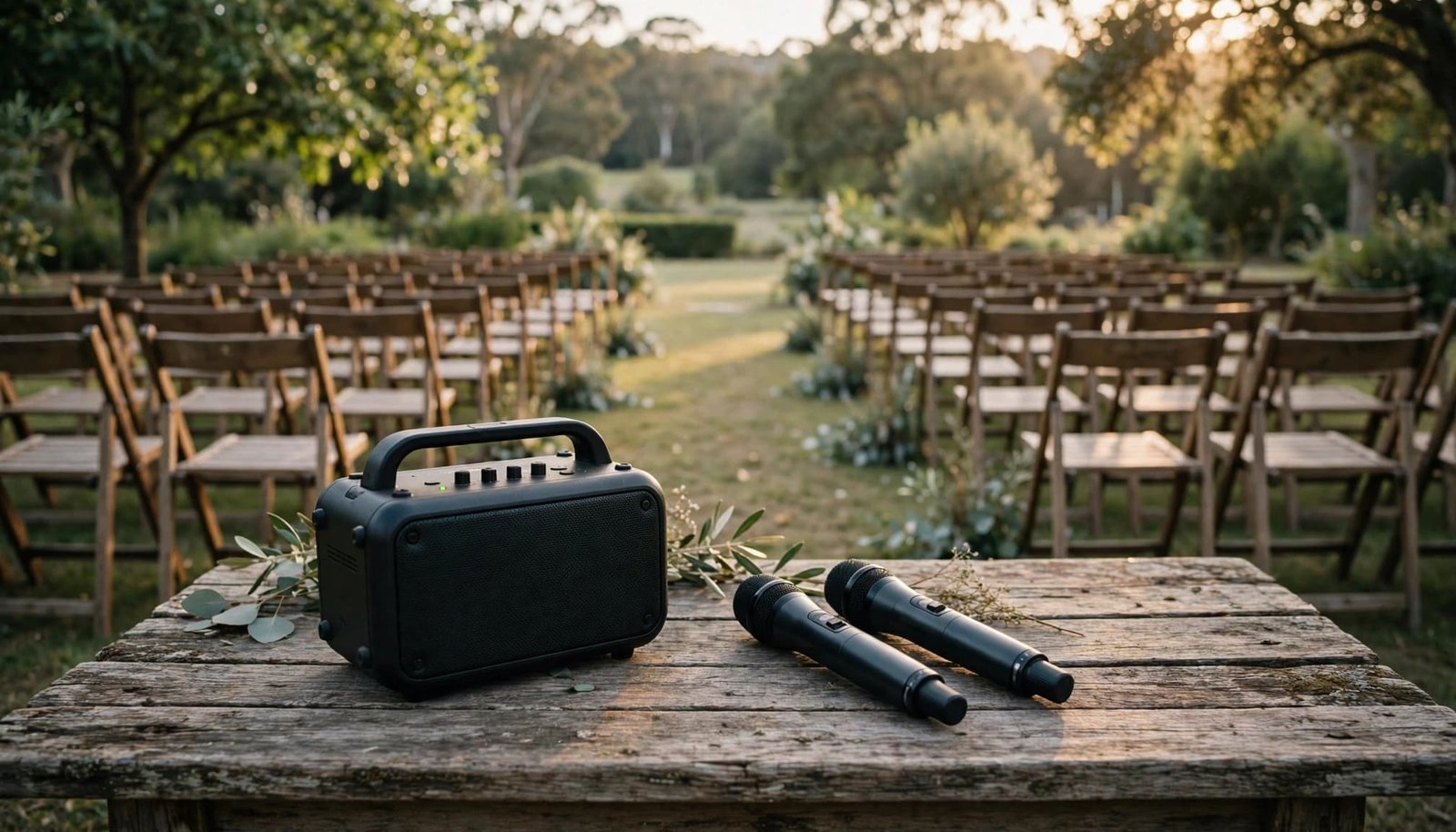
| Battery-powered portable PA | Remote outdoor ceremonies and smaller gatherings | Less output; unsuitable for large crowds or heavy dancing |
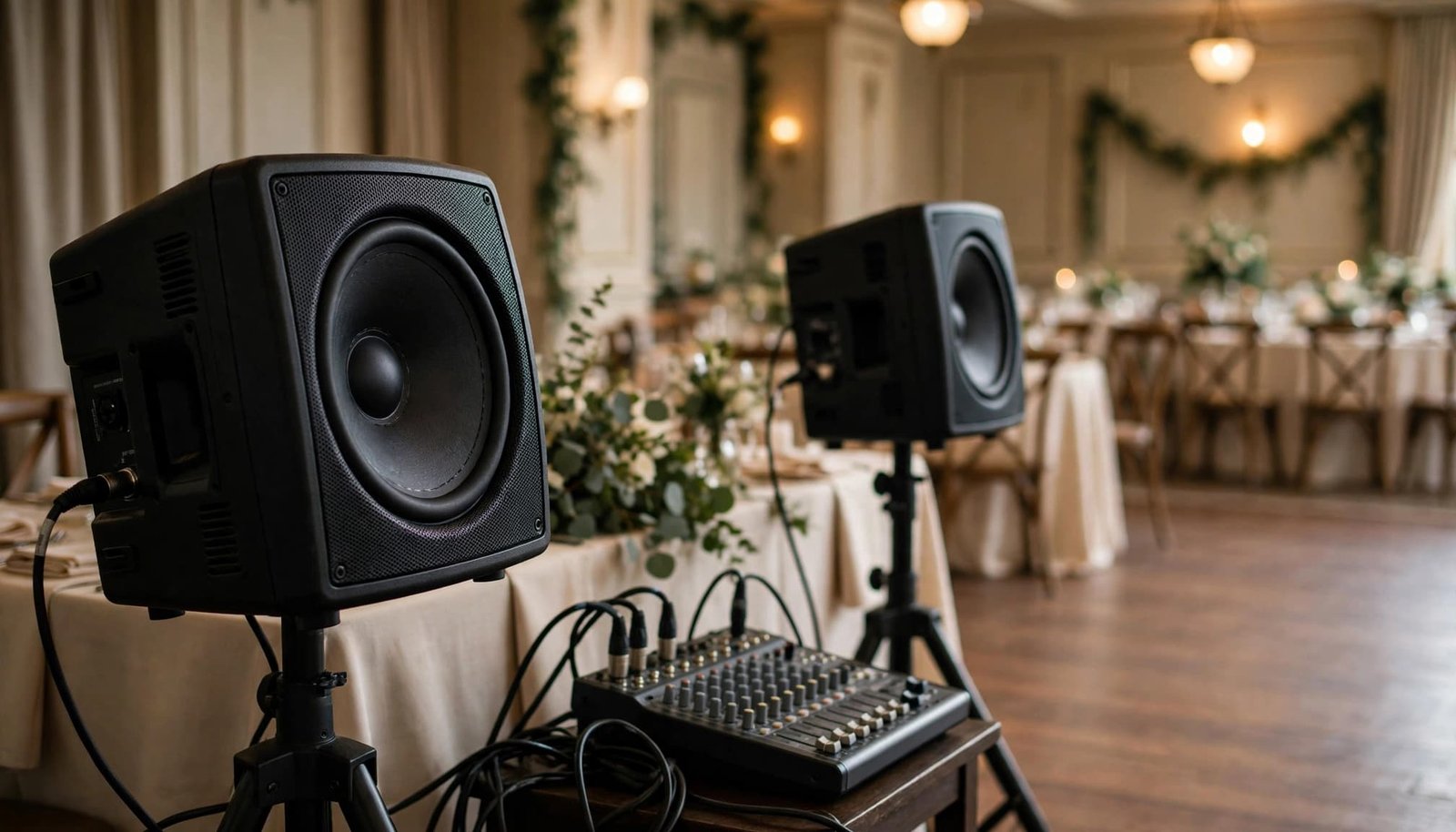
Active speakers contain their own amplifiers and are quick to set up. Background systems generally use less power. Lightweight portable PA packages often include wireless microphones and built-in mixers.
A combination can work well: house speakers for dinner, DJ-provided speakers for dancing, and a separate ceremony setup. When both systems cover the same area, timing differences can create audible echoes.
Our wedding venue music planning guidance connects those equipment choices with room layouts and event transitions.
Prepare Ceremony Audio, Power, and Backup Coverage
Give Ceremony Voices Their Own Plan
Ceremony audio needs clear speech across the seating area, rather than reception-level volume. A wireless lavalier microphone can support the officiant; readers may need a separate handheld microphone.
For a remote outdoor ceremony, a battery-powered PA avoids dependence on a distant outlet. Its battery capacity must cover setup, testing, guest seating, and the ceremony. Wind protection helps microphone clarity, while rain requires a protected alternate location.
Our wedding ceremony sound checklist covers microphones, music cues, and coverage.
Assign Power and Technical Responsibilities
The DJ supplies equipment power requirements; the venue identifies approved outlets and any shared circuits. Multiple outlets don’t necessarily mean separate circuits.
Secure cables with venue-approved tape or cable protection, away from exits and accessible routes. Test microphones where speakers will stand and listen at the back of the room.
The written plan should name the operator and describe backup playback, microphones, cables, and replacement equipment. Larger events or complex house systems may need a dedicated sound technician.
What Does Wedding Sound Equipment Cost?
Ceremony-only audio and reception entertainment are different services. Equipment rental, delivery, setup, operation, breakdown, and additional locations all affect the total.
WeddingWire forum contributors reported several ceremony examples: $500 for speakers and three microphones serving about 140 guests, $300 through a DJ, and approximately $250 to $300 through local rental companies without setup. Another contributor’s venue included sound at no extra charge. These are individual experiences, not a current market rate.
Rental packages also differ. Tlapazola’s dual-speaker PA package includes two 12-inch powered speakers with plug-and-play setup.
For purchase comparison, Walmart lists a VEVOR 800W PA system with a six-channel mixer and Bluetooth. Wattage alone doesn’t establish suitable coverage. Renting usually makes more sense when the equipment won’t be used again.
Key Takeaways
- Use house audio when permission, connections, controls, and coverage meet the event’s needs.
- Treat ceremony speech, dinner music, and dancing as separate requirements.
- Include setup, staffing, microphones, backups, and technical responsibilities in the written package.
Frequently Asked Questions
Will using venue speakers reduce the entertainment price?
Not automatically. Music planning, MC services, performance time, setup, and coordination remain part of the service, even when speakers are supplied.
Can one provider handle ceremony and reception sound?
Yes, with suitable equipment and a practical timeline. Separate locations may need separate systems to avoid gaps while equipment moves.
Does a larger guest list always require more watts?
No. Speaker efficiency, placement, room acoustics, and coverage distance also matter. Guest count is one part of system selection.
Build the Sound Plan Around Your Celebration
A built-in system can be a practical choice when it supports the music, microphones, and spaces your wedding requires. Clear responsibilities and tested connections make that choice dependable.
Choose the setup around the guest experience. Comfortable conversation, understandable vows, and balanced dance-floor sound are better goals than maximum volume.