Music can make a beautiful wedding venue feel connected, even when guests move between a garden, cocktail lounge, ballroom, and outdoor patio. For outdoor weddings, a room-by-room music plan helps the wedding venue feel like one celebration as guests move between spaces.
The goal is not to fill every corner with sound. Good wedding music planning places the right music in the right room and keeps volume, comfort, and timing in balance.
Start with a room-by-room plan before choosing songs or signing an entertainment contract.
Key Takeaways
- Create a room-by-room music plan that matches each space, guest activity, sound requirement, and transition.
- Confirm venue rules, power access, acoustics, load-in details, sound limits, curfews, and weather backups before booking entertainment.
- Plan ceremony music, reception cues, entrances, dances, toasts, and transitions in a shared cue sheet for every key vendor.
- Choose a DJ, live musicians, or a combination based on the venue layout, production needs, guest flow, and desired atmosphere.
- Hold a final production call and complete a full sound check so the ceremony, reception, and outdoor areas remain clear and comfortable.
Start With a Room-by-Room Venue Walkthrough
Walk the wedding venue with your coordinator, DJ, bandleader, or planner before finalizing your music plan. Note how guests move through the wedding venue and how each room handles sound. Music that feels perfect in a ballroom can disappear in a windy garden, while live music may echo through a stone hallway.
Ask direct questions about each space:
- Ask the venue manager whether the wedding venue allows amplified music, and whether volume limits or sound curfews apply.
- Where are the usable outlets, and which outlets are on separate electrical circuits?
- Can equipment stay set up all day, or must it move between rooms?
- What access issues could affect outdoor weddings, including stairs, long outdoor paths, tight doorways, or loading restrictions?
- Does the venue provide microphones, speakers, or a sound limiter?
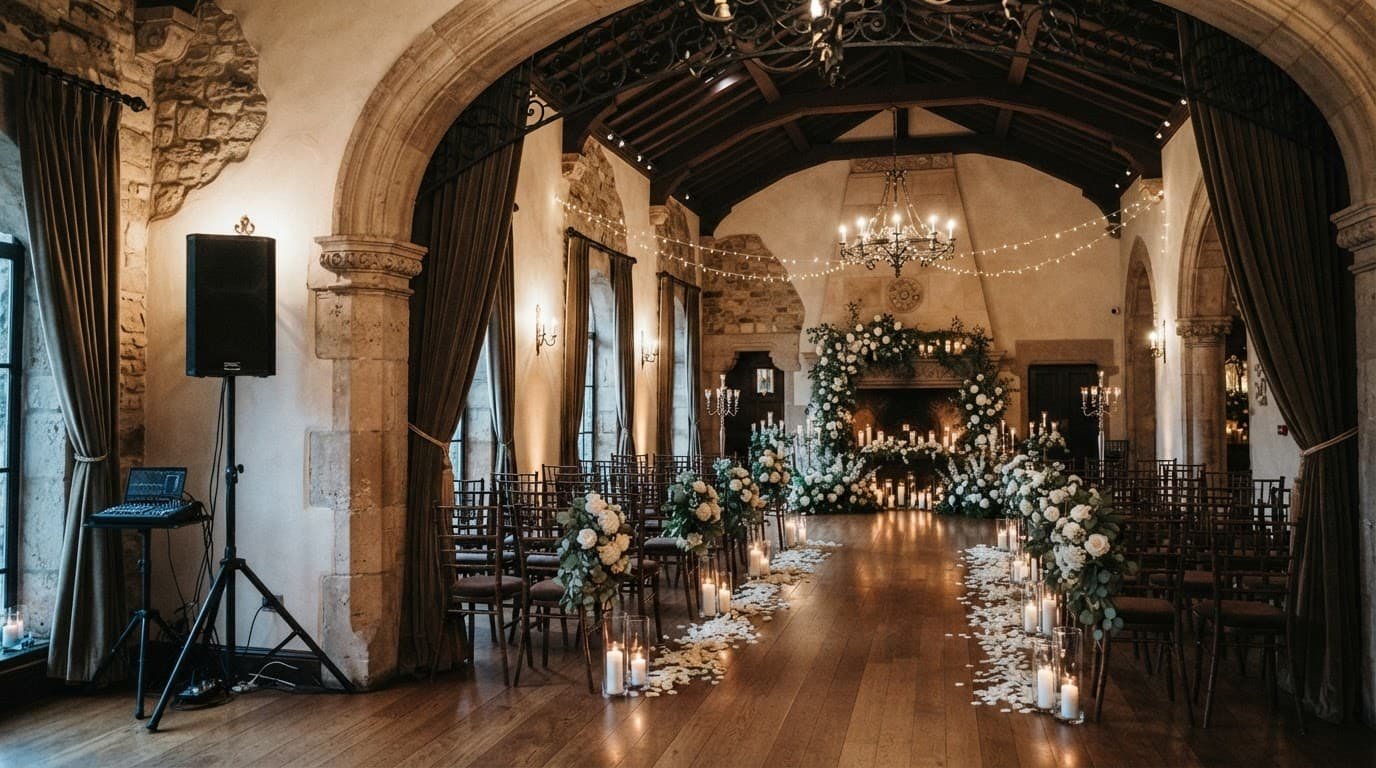
A simple room plan keeps the wedding venue layout clear for vendors and comfortable for guests.
| Venue Space | Music Goal | Practical Setup |
|---|---|---|
| Ceremony area | Let every guest hear the vows and processional music. | Use a dedicated speaker system and wireless microphones for the officiant and couple. |
| Cocktail hour | Create energy without competing with conversation. | Use a compact speaker or acoustic musicians at a lower volume. |
| Dinner room | Keep the room warm and polished while guests eat. | Use soft background music and a separate microphone for toasts. |
| Dance floor | Build energy and keep guests engaged. | Use the main DJ or band setup, placed for even coverage. |
| Patio or lounge | Give guests a quieter place to talk. | Keep music light, unamplified, or on a low independent system. |
A reliable provider should size the equipment around the wedding venue’s room shape, ceiling height, guest seating, and distance to the furthest table. A helpful wedding sound system planning guide can also clarify why a ceremony setup and dance-floor setup should not be treated as the same job.
A packed dance floor does not need to be heard at the dinner tables. Separate sound zones protect both conversations and the party.
Build Wedding Ceremony Music That Fits the Space
Wedding ceremony music needs more planning than a short list of favorite wedding songs. It has to cover guest arrival, family seating, processional music for the wedding party, the couple’s entrance, any unity ceremony or signing, and recessional music after the couple exits.
For a traditional 20 to 30-minute ceremony, schedule 8 to 12 musical selections as prelude music. That gives your DJ or live musicians enough material for early arrivals, late arrivals, and any delay in seating. Decide whether live music or recorded tracks better fit the setting. You can select every song, or provide a few artists and a style direction such as romantic piano covers, string classics, acoustic country, or modern instrumental music.
Add interlude music for a unity ceremony, signing, or quiet transition. Plan postlude music for guests leaving after the recessional.
Choose separate processional music when you want the wedding party entrance to feel distinct from the bride or couple’s entrance. The first selection should have a steady pace and leave room for attendants to reach their places. Save the more emotional song, or the song with the strongest opening, for the final entrance.
Give your wedding musicians the details they need:
- The order of each entrance, including parents, grandparents, attendants, and the couple.
- The exact version of each song, since a live version may have a different introduction.
- Whether a track should fade out, play through, or stop at a set cue.
- The names of anyone who will use a microphone during the ceremony.
A string quartet may suit a formal chapel, while a solo guitarist or DJ can work beautifully in a smaller garden. Acoustic instruments can add warmth, especially for outdoor weddings, but each wedding venue has different acoustics. There is no fixed guest-to-musician ratio. A quartet is not automatically better for 200 guests than a soloist with a proper sound system. Professional musicians can adapt to the ceremony venue’s acoustics and sight lines. Coverage and clear sound at the back still matter in every wedding venue.
Choose a Wedding Band or DJ for Multi-Room Flow
Choosing entertainment involves more than musical taste in a multi-room wedding venue. Layout affects guest movement, flexibility, and the way the day is structured.
Live music brings visual excitement and a one-of-a-kind performance, but it requires more production planning. Professional musicians need stage space, load-in access, power, break coverage, and a sound check that avoids vendor setup. A string quartet or jazz trio may suit cocktail hour, while a full band needs the ballroom stage.
A professional DJ is often easier to move between ceremony, drinks reception, and reception spaces. The wedding venue’s restrictions may determine whether a band or DJ fits best. DJs can play original recordings, adjust song length, manage announcements, and provide separate audio setups for several rooms. For outdoor weddings, that flexibility can support live music when weather exposure is part of the plan.
Good wedding venue music planning may include both. A harpist or duo can lead a pre-reception set; after introductions, a DJ handles reception music, toasts, and dancing.
Book your wedding musicians or DJ as soon as the venue and date are confirmed, especially for popular Saturdays. If the band must learn one of your wedding songs, ask about the deadline and fee before promising it. Send the song title, artist, preferred version, and moment where it belongs in the timeline.
Map Reception Music Cues Before Guests Arrive
The wedding reception should feel relaxed, but it should never feel unplanned. In a multi-room wedding venue, your DJ, bandleader, coordinator, caterer, and photographer need the same reception music cue sheet.
The main reception music moments usually include:
- Cocktail hour music as guests move away from the ceremony.
- Grand entrance songs for the wedding party and couple.
- A dinner playlist that supports conversation.
- A clear toast cue, with microphones ready before anyone stands.
- First dance, parent dances, and any cultural or anniversary dance.
- Cake cutting, bouquet toss, private last dance, or formal send-off music.
- Open dancing, with must-play songs, do-not-play songs, and room-friendly requests.
For the cue sheet, confirm the first dance track, its duration, and the transition into the next moment.
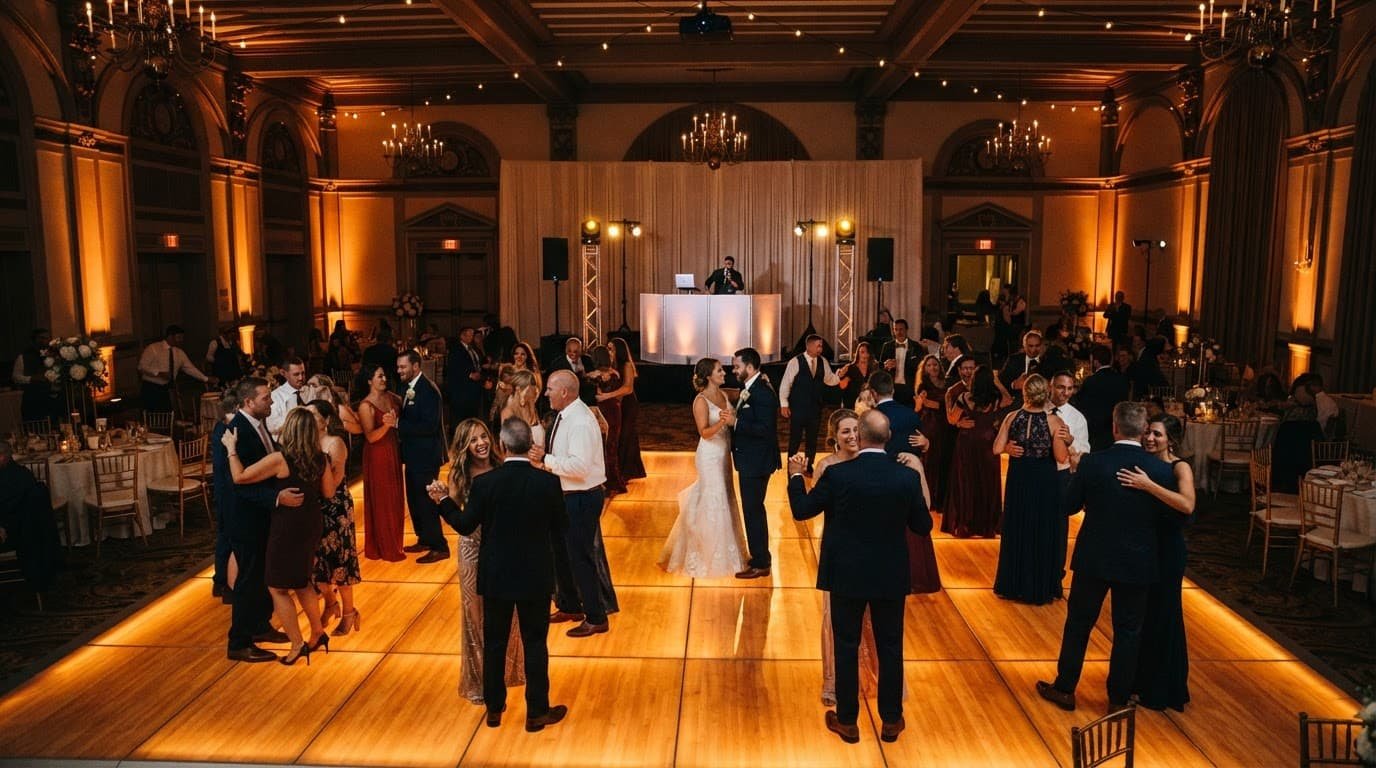
At a wedding venue, the hallway between rooms deserves attention. This matters at outdoor weddings, when guests may move from an outdoor cocktail area into an indoor ballroom. A coordinated entrance announcement, soft dinner music, and welcoming uplighting can keep that transition polished.
Give the DJ permission to read the room within your preferences. A detailed wedding playlist is helpful, but the best dance sets respond to the ages, energy, and requests of the people in front of the speakers. This wedding entertainment logistics guide is a useful reminder to connect the wedding venue’s music cues with the broader wedding timeline.
Protect the Plan With Power, Acoustics, and Weather Backups
Every wedding venue presents different sound challenges. Barns may have high ceilings and hard walls. Historic properties may limit where speakers can go. Outdoor weddings add wind, traffic noise, distant lawn equipment, and weather changes that no playlist can fix.
Confirm the following in writing with the wedding venue manager and entertainment provider:
- The exact load-in time, setup location, parking access, and teardown deadline.
- Whether amplified music is allowed in every planned room and outdoor area.
- The wedding venue’s sound limit, curfew, and rules for placing speakers or subwoofers.
- Who handles music licensing or restrictions for public event playback, and what sound requirements apply.
- The available power source and whether another vendor shares the same circuit.
A wall outlet isn’t automatically a dedicated power source. Caterers, coffee stations, lighting, and photo booths can create power demands in the same area. Your DJ or band should know what equipment they’re bringing and what their power requirements are before event day. The Gemini Sound venue setup guide offers useful questions about sound system placement, ceremony audio, and reception coverage.
For outdoor weddings, choose a backup wedding venue with an indoor location before invitations go out. Plan weather contingencies around that room. Confirm it can hold the ceremony chairs, officiant, musicians, equipment, and guests at short notice. If outdoor power is limited, a quiet generator may be needed, but it must be placed away from guests and protected from weather.
Keep electronics dry, and plan a full sound check. For outdoor weddings, use rain covers, raised cable paths, wind-safe speaker stands, spare microphone batteries, and backup music files. Test the officiant’s and couple’s microphones for wedding ceremony music from the back row, not at the DJ table alone.
Confirm the Details With a Final Production Call
In the final weeks, hold one focused wedding music planning call with the wedding venue coordinator, planner, DJ or bandleader, photographer, and catering lead. Review the wedding venue floor plan and wedding reception details. Confirm the wedding timeline, introductions, speech order, first dance, special dances, weather decision time, and contact numbers.
Bring one printed cue sheet to the venue, even if everyone has a digital copy. List the person authorized to make timeline changes, the reception music cues for the meal, toasts, and transitions, and the exact time the kitchen needs music lowered.
Clear communication gives your entertainment team room to handle a delayed ceremony, a missing microphone, or an early dance-floor rush without confusion.
Frequently Asked Questions
How early should we book a wedding DJ or band?
Book your DJ or wedding musicians as soon as your venue and date are confirmed, especially for popular Saturdays. This also gives a band time to learn any requested wedding songs and confirm production requirements.
Do we need separate sound systems for each wedding venue space?
Not always, but separate or movable setups are often helpful for ceremonies, cocktail hours, dinners, and dancing. They allow each room to have the right volume and coverage without forcing guests to hear dance music during conversations.
How many songs should we plan for the wedding ceremony?
For a traditional 20- to 30-minute ceremony, plan approximately 8 to 12 prelude selections, plus processional, interlude, and recessional music. Providing extra music helps cover early arrivals, delayed seating, and unexpected timing changes.
What should outdoor weddings include in their music backup plan?
Outdoor weddings should have a confirmed indoor backup space, weather protection for equipment, raised cable paths, spare microphone batteries, and backup music files. Test the sound from the back row and confirm how power, wind, rain, and noise restrictions will be handled.
What should be included in the final wedding music cue sheet?
List every major music moment, including entrances, dinner music, toasts, special dances, cake cutting, open dancing, and the formal send-off. Include song versions, durations, cue instructions, microphone needs, and the person authorized to approve timeline changes.
A Celebration That Sounds Connected
The strongest multi-room celebrations do not play more music. They place it with purpose, giving each room the right atmosphere and every major moment the attention it deserves.
When ceremony audio is clear, transitions are planned, and backup options are ready, wedding venue music planning becomes one less thing to worry about. Guests will remember how the celebration felt, not the speaker cables behind the scenes.