For a wedding ring warming ceremony, choose gentle music for reflective pauses, establish clear start and fade cues, and keep spoken blessings easy to hear. The music should support the meaning of the ritual while giving your guests room to participate.
A meaningful song is only part of the plan; timing, volume, and coordination determine how naturally the moment fits into your ceremony. Start with the atmosphere you want, then connect your selection to a clear cue plan.
Key Takeaways
- Choose a musical style that supports the ceremony’s atmosphere, whether that’s formal, relaxed, spiritual, or warmly personal.
- Give the ring warming a defined place in the ceremony, with written instructions for starting, lowering, and ending the music.
- Keep blessings and other spoken words clear, and prepare reliable playback, microphone coverage, and backup arrangements before guests arrive.
A focused plan gives your DJ, musicians, and officiant the information they need without adding unnecessary complexity to the wedding day.
What Happens During a Wedding Ring Warming Ceremony?
A wedding ring warming ceremony invites guests to hold the couple’s wedding bands and offer a blessing, prayer, or good wish before the rings are exchanged. The blessing of the rings draws meaning from the support of the people gathered around the couple.
For a row-to-row handoff, secure the wedding rings in a ring pouch. A trusted attendant, such as the best man or maid of honor, can pass them along. A ring warming station is another option if the room or ceremony format doesn’t suit that approach.
Brilliant Earth’s ring warming ceremony guide describes this guest participation as the central part of the ritual. Music is an optional accompaniment; guests’ wishes remain the focus.
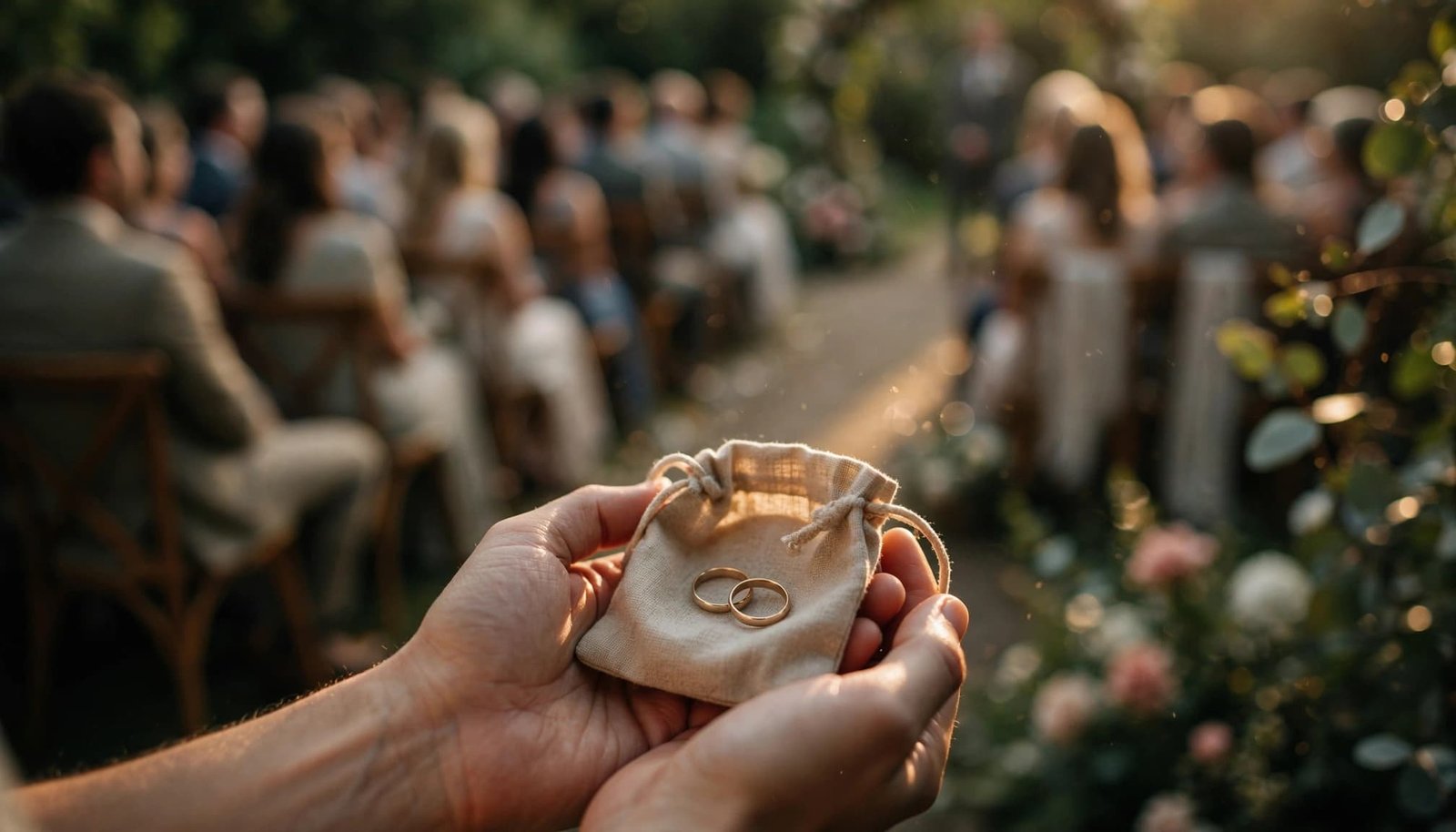
For music planning, distinguish between a quiet period of participation and a spoken portion of the service. Those moments have different sound requirements.
Gentle accompaniment can give a reflective pause a comfortable atmosphere. A blessing, reading, or explanation needs clear speech, with music lowered substantially or stopped.
That distinction also helps your entertainment team understand the purpose of the selection. Rather than treating it as another complete song to perform, plan it as a flexible musical passage within the ceremony.
Choose the Atmosphere Before Choosing the Music
Begin with three to five words that describe the experience you want guests to remember. Warm, peaceful, traditional, intimate, and hopeful are useful starting points. These preferences give your entertainment team a clearer direction than a long list of unrelated favorites.
Choose a Suitable Musical Format
Piano, acoustic guitar, harp, and strings can provide a gentle background without demanding everyone’s attention. A lyric-free arrangement of a shared favorite can also bring personal meaning to the moment.
Listen to the exact recording you intend to use, including its opening, changes in volume, and ending. Different versions of the same song can create very different atmospheres.
For live music, choose an arrangement that suits the performer and the ceremony setting. For recorded music, select a version with a natural place to begin and a comfortable point to fade.
Keep the Emotional Direction Consistent
The ring warming should feel connected to the rest of the service. A dramatic recording with a large musical build may feel out of place between a quiet reading and a personal blessing.
Consider what comes immediately before and after the ritual. If the ceremony already includes an emotional entrance song, a simpler selection here can give guests a welcome change of pace.
Cultural or religious music also deserves a purposeful place. Use selections that fit the agreed ceremony format rather than adding a familiar melody simply because it sounds appropriate for a wedding.
Give the Ring Warming Its Own Music Cues
A reliable cue sheet connects your musical choice to something the operator can recognize. “Play during ring warming” leaves too much open to interpretation.
Write down the exact recording or arrangement, starting point, expected use, and ending instruction. Our wedding ceremony music timeline explains how individual cues fit into the wider service.
Use a simple structure to make the directions easy to follow.
| Ceremony Moment | Music Direction | Cue to Record |
|---|---|---|
| Reflective participation | Begin the approved selection softly | The agreed visual signal or script marker |
| Spoken blessing | Lower the music or fade to silence | The exact opening words |
| Transition to the next section | Finish the musical passage | The agreed closing phrase or signal |
The key is a recognizable cue, not a precise clock time. A ceremony can move naturally without matching a recording second for second.
There isn’t one standard duration for ring warming music. Build the cue around your actual ceremony plan, with room for participation and an unhurried transition. If you’ll exchange rings immediately after the blessing, cue the music to end with room for that handoff.
For live music, agree on a passage that can be repeated and a signal for the ending. For recorded music, prepare a suitable continuation rather than relying on an abrupt restart.
If the music finishes earlier than expected, silence is an acceptable choice. A calm pause is preferable to an unexpected song change that pulls attention away from the ceremony.
Ring Warming Script and Blessing Wording
Choose ring ceremony verbiage and ring warming verbiage that reflect the couple’s beliefs and fit the wider wedding ceremony script. The Soulful Wedding’s ring warming script and meaning includes blessings, prayers, and good wishes as ways to participate.
These suggested blessings can be adapted to your service. Share the complete wording, including the final blessing, with the audio operator. Even a small script change can affect a planned fade.
A Secular Blessing
A nonreligious blessing can emphasize commitment, community, and the everyday care that supports a marriage.
“May these rings, warmed by those you love, remind you of the promises you make today. May they carry the circle of love and support around you, along with love and blessings from family and friends. Wear them as a daily reminder to offer patience, kindness, and care.”
Let the final sentence finish without a new music cue underneath it. The words need enough space to be heard and understood before the ceremony moves forward.
A Faith-Inclusive Blessing
For a ceremony that welcomes different beliefs, the wording can acknowledge prayer without asking every guest to express support in the same way.
“May these rings carry the prayers, blessings, and loving wishes shared with you today. May your marriage be strengthened by faith, generosity, and the support of those who love you. As you wear these rings, may you remember your promises and care for one another throughout your lives.”
Choose the version that sounds natural within the rest of your service. Simple, familiar language is often more comfortable to deliver than elaborate wording.
Coordinate Sound, Playback, and Responsibilities
Thoughtful music selection needs dependable sound and clear responsibilities. The couple shouldn’t have to manage volume, signal a fade, or solve a playback problem during the ceremony.

Assign One Person to Control Audio Cues
Name one audio operator and one person responsible for communicating transitions. Share the same script and cue sheet with the officiant, planner, DJ, and ceremony musicians. Give relevant bridal party members directions if they have a role in the ring handoff.
When live and recorded music are both involved, define who controls playback, microphones, and overall volume. Our guidance on DJ and ceremony musician coordination explains how to separate those responsibilities.
Keep instructions practical: identify the signal, the response, and the person receiving it. Clear ownership prevents several people from giving conflicting directions during a quiet moment.
Test Speech and Prepare Backup Playback
Test the officiant’s microphone at normal speaking volume, then listen from the front, center, and back of the seating area. Music that sounds comfortable near the operator may still obscure softer speech elsewhere.
Our wedding ceremony sound checklist organizes audio testing around the actual moments guests need to hear.
Keep approved recordings available offline, disable shuffle and notifications, and prepare backup playback. Outdoor setups also need weather protection, reliable power, and microphone arrangements suitable for wind.
Rehearse the transition between music and speech as well as the song itself. A clean fade and an audible first sentence are more useful than simply knowing that the track will play.
Frequently Asked Questions About Ring Warming Music
Is Ring Warming the Same as the Ring Exchange?
Ring warming involves guests offering support through the wedding bands. The ring exchange is the couple’s act of giving rings to one another during the marriage ceremony.
The spoken wording can therefore have a different purpose. Robyn Ashley Weddings’ ring exchange wording examples focus on the promises associated with giving a ring. Keep those promises distinct from the shared wishes expressed during ring warming, and give each part its own place in the script.
Can We Have a Ring Warming Without Music?
Yes. Silence gives guests space to reflect and can fit comfortably within a ceremony that emphasizes spoken words.
If you prefer silence, include that instruction on the cue sheet. The audio operator then knows the pause is intentional and won’t fill it with an unplanned selection.
You can still use music for the processional and recessional without adding background sound throughout the service. Each ceremony moment can have its own sound treatment.
Will Our Ceremony Song Become the Wedding Film Soundtrack?
Music played during the ceremony and music added to an edited wedding film are separate planning decisions.
Your videographer may capture some live ceremony sound, but an edited soundtrack has its own creative and music-licensing requirements. Tell the videographer which spoken words matter most and whether you want the blessing preserved in full.
That conversation helps protect the meaning of the moment without assuming the ceremony recording and finished film will use the same music.
Bring Meaning and Music Together
A thoughtful wedding ring warming ceremony music plan gives guests space to participate and keeps every spoken blessing clear. Choose a suitable musical style, define the cues, and give your entertainment team dependable directions.
The strongest preparation combines personal meaning with reliable coordination. When the selection, sound, and transitions work together, you can stay present for the wishes your family and friends share.