Few moments shape a ceremony’s atmosphere faster than the first song guests hear. Thoughtful timing can settle the room, guide each entrance, and give your final walk together the energy it deserves.
Your wedding ceremony music doesn’t need to follow one tradition or a rigid checklist. It needs clear cues, dependable timing, and choices that suit your people, venue, and promises.
Key Takeaways
- Plan musical cues around entrances, transitions, and the ceremony’s natural pace.
- Choose songs that suit the venue, performers, and meaning of each moment.
- Share a clear timeline with everyone involved before the ceremony begins.
Key Takeaways
- Build the timeline around entrances, rituals, vows, signing, and the recessional rather than choosing songs first.
- Use clear start and stop cues, allowing enough time for different walking speeds, photos, and transitions.
- Choose music that suits the venue, performers, ceremony style, and meaning of each moment.
- Confirm religious or civil ceremony restrictions, sound requirements, and exact song versions in advance.
- Share the final cue sheet with the officiant, planner, musicians, DJ, and designated backup contact.
Wedding Ceremony Music Timeline at a Glance
Tradition is a guide, not a fixed playlist. A wedding processional can vary with family entrances, rituals, and cultural traditions. A short secular ceremony may need three pieces, while a faith-based or multicultural celebration may use six or seven.
Choose the moments first, then select music that supports them.
| Ceremony Moment | When the Music Starts | When It Ends |
|---|---|---|
| Guest arrival and prelude | As the first guests enter | When the processional is ready |
| Family seating | When parents or honored relatives begin walking | After they are seated |
| Wedding party processional | As the first attendant begins the aisle walk | When the final attendant reaches the front |
| Main entrance | A few seconds before the final entrance begins | Once the couple joins at the ceremony space |
| Rituals or signing of the register | At the start of the ritual or signing | After the final signature or transition |
| Recessional | Immediately after the pronouncement | After the couple and wedding party exit |
Most couples need five to seven musical cues, not five to seven complete wedding songs. A three-minute track can cover a 30-second walk, a pause for photos, and a gentle fade. Your DJ, musicians, or designated cue person can start at the right point and lower the volume when the moment is complete.
The aisle walk sets the timing, not the song length. Rehearse the route once, then build the music around the real pace of the people walking it.
Prelude Music Sets the Room Before the Ceremony Begins
Prelude music plays while guests arrive, greet one another, and find their seats. Plan for about 20 to 30 minutes, with a longer playlist if your venue opens early or transportation may run late.
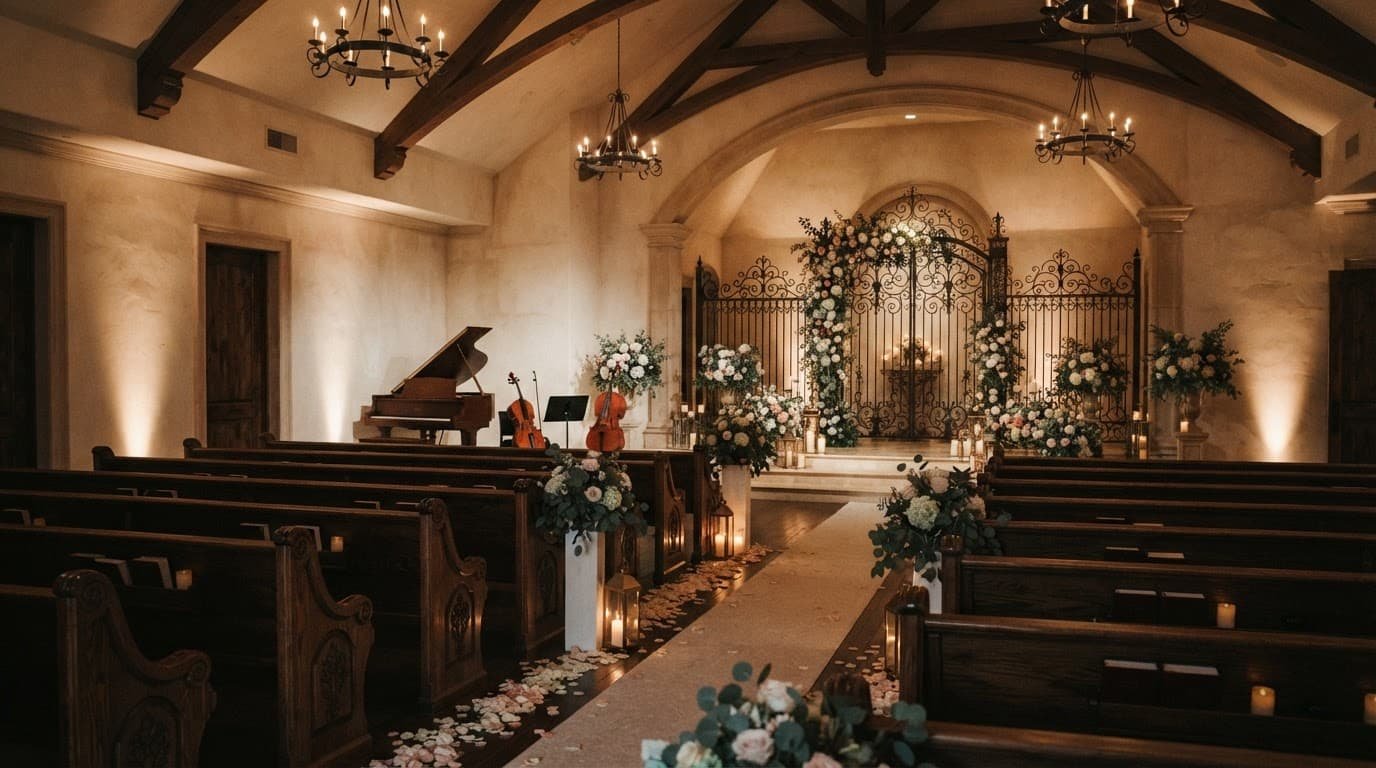
Keep this part warm and welcoming rather than overly dramatic. Classical music, acoustic guitar, piano, a string quartet, and lyric-free arrangements all work well. A familiar pop song can also fit as an instrumental version without distracting lyrics, while Bach’s “Air” and Pachelbel’s “Canon in D” remain popular choices.
Start the selection at a comfortable conversation level. As the ceremony time approaches, lower the music slightly so guests recognize that the formal portion is about to begin. A professional sound system helps the music feel present without making conversation difficult.
Build the prelude portion of your wedding playlist around the venue and guest experience. Outdoor ceremonies need extra planning. Wind can carry sound away, water features can mask quieter music, and a small Bluetooth speaker rarely reaches guests at the back. Place speakers facing the seating area, protect equipment from weather, and test the volume at the farthest chair before guests arrive.
Processional Songs and the Walk Down the Aisle
The wedding processional is often the most detailed part of the timeline because every family has its own order. Some couples include parents and grandparents. Others welcome the wedding party together, or begin with a cultural entrance that includes more family members.
Decide who enters to each song before anyone builds a playlist. One piece can cover every entrance, or you can use separate selections for family, the wedding party, and the main entrance. Choose an aisle song for the grand entrance that gives the final arrival its own feeling.
A reliable cue plan looks like this:
- Start the family song as the first person steps into view, not while they are still waiting at the aisle entrance.
- Begin the wedding party selection when the first attendant is ready to walk.
- Start the main entrance song five to ten seconds before the final entrance, so the opening feels intentional.
- Let the final selection continue softly after the last person arrives, then fade it once the officiant begins.
Most people spend between 20 and 45 seconds walking down the aisle. A slower pace may be appropriate for a long outdoor aisle, a gown with a train, young children, or older relatives. A string quartet can stretch or shorten its arrangement to match different walking speeds. There is no need to rush to fit a favorite lyric or chorus.
For a traditional processional, couples often choose “Canon in D,” “Clair de Lune,” or Bach’s “Jesu, Joy of Man’s Desiring.” An instrumental version of a meaningful Taylor Swift song offers a contemporary alternative. For a modern feel, “Here Comes the Sun” by The Beatles, “Turning Page” by Sleeping At Last, and “Can’t Help Falling in Love” by Elvis Presley are familiar choices with different moods. A gentle acoustic cover can also soften a rock or pop favorite without losing its personal connection.
The strongest ceremony soundtrack feels connected, even when the songs come from different genres. Match the overall mood rather than forcing every selection into the same style.
Music During Vows, Rituals, and the Signing
Not every quiet moment needs background music. Vows, readings, prayers, and spoken blessings are usually clearer without it. Guests should hear each word, and your videographer will have cleaner audio.
Music works well during a unity candle, sand ceremony, handfasting, tea ceremony, garland exchange, ketubah signing, or another meaningful cultural tradition. Choose one calm selection for a brief ritual. For the signing of the register, prepare two songs if the process may take several minutes and includes witnesses or family photos. Confirm whether music is permitted during the signing of the register before finalizing your choices.
Tell your DJ or musicians what signals the end of the signing of the register. It may be the final signature, the officiant stepping back to the microphone, or a nod from the planner. Clear cues prevent a song from ending in the middle of a transition.
Civil Ceremony Music and Religious Restrictions
Rules vary by location, officiant, and venue. In England and Wales, civil ceremony proceedings must be non-religious, and registrars may review song choices before the day. A song with religious lyrics, a hymn, or music strongly associated with worship may not be approved for a civil ceremony.
Other jurisdictions may set different requirements for a civil ceremony, especially when the event takes place in a courthouse, public venue, or faith-based location. Ask the office issuing your marriage license, your officiant, and your venue for guidance before you print programs or finalize your cue sheet.
A respectful choice is always possible. A lyric-free arrangement, a family song with approved wording, or music connected to a shared cultural tradition can keep the ceremony personal while meeting venue rules.
Live Music or a Wedding DJ?
Live music creates a beautiful atmosphere, especially in a church, garden, or formal indoor venue. A string quartet, harpist, pianist, or acoustic guitarist can adjust to a slower entrance and repeat a section if needed. That flexibility is valuable when flower children pause for photos or a larger group takes longer than expected. Ask ceremony musicians how they handle timing changes before booking.
Recorded music offers wider song choices, consistent sound, and easy transitions between classical, country, pop, hip-hop, and oldies. An experienced wedding DJ can use edited versions, set exact start points, fade tracks cleanly, and coordinate with the officiant and planner throughout the ceremony.
The best choice depends on the setting and the feeling you want. Some couples use a string quartet for guest arrival and entrance cues, then have their wedding DJ handle the signing, recessional, and reception music.
Ceremony-to-Reception Handoff
Ask whether the same team will cover the wedding reception. If so, prepare a separate wedding reception cue block for these moments:
- Grand entrance
- First dance
- Father daughter dance
- Mother son dance
- Cake cutting
Review the wedding songs in that block with the DJ before the event.
Your final cue sheet should include:
- The exact version of every song, including the wedding march, plus the exact track for the first dance and the music selected for the signing of the register.
- The order of entrances for the wedding party and the name of the person who gives the start cue.
- The point where each track should fade or stop, including the cue for the first dance.
- A backup contact, such as the wedding planner, who can approve a quick change if timing shifts.
Recessional Songs Bring the Celebration Forward
The recessional begins the second you are pronounced married. It should feel brighter than the processional because the formal ceremony is complete and the celebration is underway.
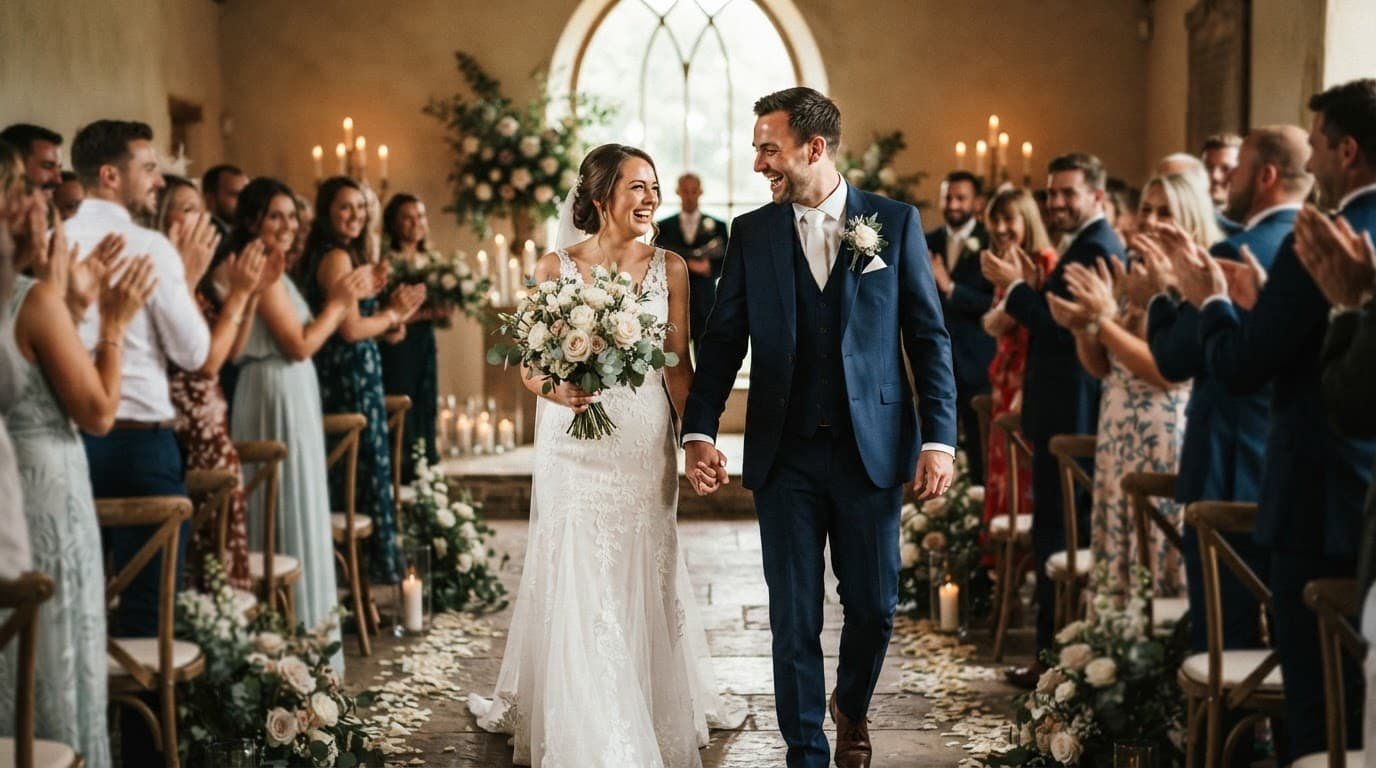
Choose a song with a clear, confident opening. Mendelssohn’s “Wedding March” is traditional, while Motown, upbeat pop, joyful country, a lively acoustic selection, or a modern arrangement of the wedding march can create a relaxed exit. Let it play for at least 60 to 90 seconds, giving the couple, wedding party, and close family time to leave without abrupt silence.
Walk at a natural pace, pausing for a quick smile, wave, or celebratory photo if it feels right. If the first dance follows immediately, share that timing in advance. Keep the first dance music ready while the space is prepared, then continue as guests are dismissed or transition into the wedding reception.
Frequently Asked Questions
How many songs are needed for a wedding ceremony?
Most ceremonies need five to seven musical cues rather than five to seven complete songs. The exact number depends on the processional order, rituals, signing, and length of the recessional.
Should music play during the vows?
Usually, vows, readings, prayers, and blessings are clearer without background music. Music is better suited to quieter transitions, such as a unity ceremony, cultural ritual, or signing of the register.
What is better for ceremony music: live musicians or a DJ?
Live musicians offer a flexible, atmospheric sound that can adapt to changes in walking speed. A DJ provides a wider song selection, consistent volume, precise start points, and clean fades.
When should the processional music begin?
Start the music when the person entering is ready to step into view, rather than while they are waiting at the aisle entrance. For the main entrance, beginning five to ten seconds early can make the cue feel more intentional.
Are there restrictions on wedding ceremony music?
Some venues, officiants, and civil registrars review music choices, particularly when songs include religious lyrics or are associated with worship. Confirm the rules early and consider an instrumental arrangement if a preferred song is not approved.
Build Your Timeline Around the Moments That Matter
A thoughtful ceremony plan doesn’t require a long list of wedding songs. It needs music for moments that matter, reliable cues for everyone involved, and enough flexibility for real life on a busy wedding day.
When every entrance, ritual, and exit has a clear plan, the result feels personal, polished, and easy to follow. The cue sheet can carry wedding ceremony music into the wedding reception, with separate timing for the first dance and cake cutting.