Your first dance should begin when you’re ready and your photographer is in position, not simply when the clock reaches the scheduled time. A coordinated wedding DJ timeline connects music, announcements, dinner service, and photography so meaningful moments receive the attention they deserve.
The strongest plan combines clear cues with enough flexibility to handle late portraits, extended speeches, or a slower meal service. With shared expectations, your vendors can keep the celebration moving while you enjoy it.
Start with one schedule, then give each important moment a practical handoff.
Build One Shared Timeline With Clear Responsibilities
A wedding planner’s wedding day timeline covers the full day, including transportation, getting ready, catering, and guest movement. The shared wedding timeline is the master schedule, while the wedding DJ timeline adds the details needed to deliver music and announcements at the right moment.
Separate Scheduled Times From Start Cues
A line that says “6:20 p.m., first dance” gives everyone a target. A useful cue also identifies the introduction, approved recording, photographer’s position, lighting plan, and person authorizing the start.
Our wedding DJ and MC duties include the announcements and coordination that connect these reception moments. The photographer needs advance notice before the microphone brings everyone’s attention to the couple.
For broader planning, The Knot’s wedding timeline template helps organize the full day’s sequence.
Name One Person Who Approves Changes
Your planner, venue coordinator, or designated point person should approve timing adjustments. This avoids conflicting instructions when the caterer needs more time but the photographer is ready.
Share the final document with every vendor at least two weeks before the wedding. Include contact information, name pronunciations, formal songs, speech order, photography coverage, and venue deadlines.
Label the document with its revision date. If something changes afterward, distribute the updated version to everyone rather than sending separate instructions.
Plan Booking, Setup, and Ceremony Timing Early
Reception coordination starts well before cocktail hour. Booking, venue access, ceremony length, and equipment preparation all affect when the DJ and photographer can begin their work.
Reserve Your DJ and Protect Setup Time
Book your wedding DJ at least nine to ten months before the wedding date. Early booking gives music planning and vendor coordination a place in the overall preparation schedule.
Build the setup window backward so full sound and microphone checks finish two to three hours before the ceremony. For a 4:30 p.m. ceremony, that means completing checks between 1:30 and 2:30 p.m.; arrival and installation happen earlier.
Power access, microphone coverage, and setup requirements belong in the planning conversation. Paperlust’s questions to ask a wedding DJ cover these practical preparation details.
Match the Ceremony Block to Your Traditions
A typical wedding day runs eight to twelve hours, including getting ready and the final send-off. Civil ceremonies commonly need 20 to 30 minutes; religious ceremonies may require 45 minutes to an hour.
A 4:30 p.m. civil ceremony can lead into 5:00 p.m. cocktail hour. A longer ceremony needs an earlier start or a later reception timeline.
Separate locations also require travel, unloading, and another equipment-ready window. Our wedding DJ setup and travel planning covers those transitions in the wedding timeline without squeezing photography time.
A Five-Hour Wedding DJ Timeline With Photography Cues
The Knot’s reception timeline describes a standard reception as about five hours: a one-hour cocktail hour followed by four hours of dinner and dancing.
This wedding DJ timeline uses a 5:00 p.m. reception start and a 10:30 p.m. venue contract end.
| Time | Reception Moment | DJ and MC Cue | Photography Handoff |
|---|---|---|---|
| 5:00 p.m. | Cocktail hour begins | Play relaxed music at conversation volume. | Couple finishes portraits; communicate return time. |
| 6:00 p.m. | Guests enter and find seats | Invite guests inside; organize introductions. | Photographer moves to the entrance position. |
| 6:10 p.m. | Grand entrance | Announce approved names and cue entrance music. | Begin only after the photographer signals readiness. |
| 6:20 p.m. | First dance | Introduce the couple and play the selected recording. | Allow room for camera positions and clear sightlines. |
| 6:25 p.m. | Welcome or blessing | Lower music and provide the microphone. | Capture speakers and couple reactions. |
| 6:30 p.m. | Dinner service | Maintain comfortable background music. | Coordinate the photographer’s meal break. |
| 7:10 p.m. | Toasts | Introduce speakers and manage microphone handoffs. | Photographer returns before the first speaker begins. |
| 7:30 p.m. | Parent dances | Gather participants and cue approved songs. | Wait for parents and photographer to be ready. |
| 7:45 p.m. | Open dancing | Invite guests onto the cleared floor. | Capture early dance-floor activity. |
| 9:00 p.m. | Cake cutting | Give a brief cue without stopping the party. | Photographer is positioned before cutting begins. |
| 9:10 p.m. | Dancing continues | Return smoothly to the dance set. | Capture remaining candid moments. |
| 9:50 p.m. | Last dance | Announce and play the closing selection. | Capture the final dance if coverage continues. |
| 10:00 p.m. | Send-off and guest departure | Give departure directions; end guest-facing music. | Cover the exit if included in the photography schedule. |
The venue access window continues until 10:30 p.m. for breakdown. Our reception timeline examples offer additional music-focused planning guidance.
Give Your Photographer a Warning Before Formal Moments
A photographer may be capturing family interactions, adjusting lighting, or working outside when the next event approaches. A short vendor check-in protects the moment without adding another guest announcement.
Use a Two-Minute Warning and a Ready Signal
Give the photographer a two-minute warning before introductions, dances, speeches, and cake cutting. Follow that warning with a direct ready signal before starting the announcement or music.
The same handoff should include the videographer when one is present. During toasts, position speakers where their faces and the couple’s reactions are visible; avoid placing them behind centerpieces or in busy service aisles.
Each speaker should know where to stand and who receives the microphone next. Keep speeches to about three minutes each so attention stays focused and dinner service remains on track.
A warning gives the photographer time to prepare. The ready signal gives the DJ permission to begin.
Schedule Portraits and Meal Breaks Around Coverage
Sunset portraits need their own departure and return times. New Hampshire’s seasonal daylight changes make this window dependent on the wedding date, rather than a standard reception clock time.
A photographer’s guidance on planning around natural light explains why portrait timing belongs in the day’s schedule.
Avoid calling parent dances while the couple is outside. During that portrait break, the DJ can maintain dinner music or continue an established dance set.
Place the photography meal break during a quiet dinner stretch, with a clear return before speeches begin. Include coverage end time so important formalities aren’t scheduled after the photographer leaves.
Build Buffers Where Delays Actually Happen
Use the reception timeline as a flexible sequence with 10 to 15 minutes of buffer time between major moments. These buffers don’t require empty silence or repeated announcements.
A grand entrance estimated at five minutes often needs eight to ten once guests leave cocktail hour and find their seats. In the sample schedule, 6:00 p.m. seating, a 6:10 p.m. entrance, and a 6:20 p.m. first dance provide a realistic progression.
Meal style also matters. A buffet can take longer than plated service, especially when tables are released gradually. Parent dances usually fit as guests finish dinner; open dancing begins once dishes and service traffic are cleared.
If dinner service runs 15 minutes late, adjust the wedding DJ timeline with the approved point person’s direction. Move speeches or parent dances as needed. Keep the photographer informed before the revised announcement.
Protect fixed deadlines, including photography coverage, transportation departures, and venue closing time. Use buffer time to absorb delays, along with flexible background music and fewer optional interruptions, rather than rushing every remaining event.
Keep Dancing Flexible and Closing Time Clear
A personalized music plan gives the DJ direction while leaving room to respond to guests. Limit the must-play list to around 15 specific songs, alongside your formal selections and do-not-play preferences.
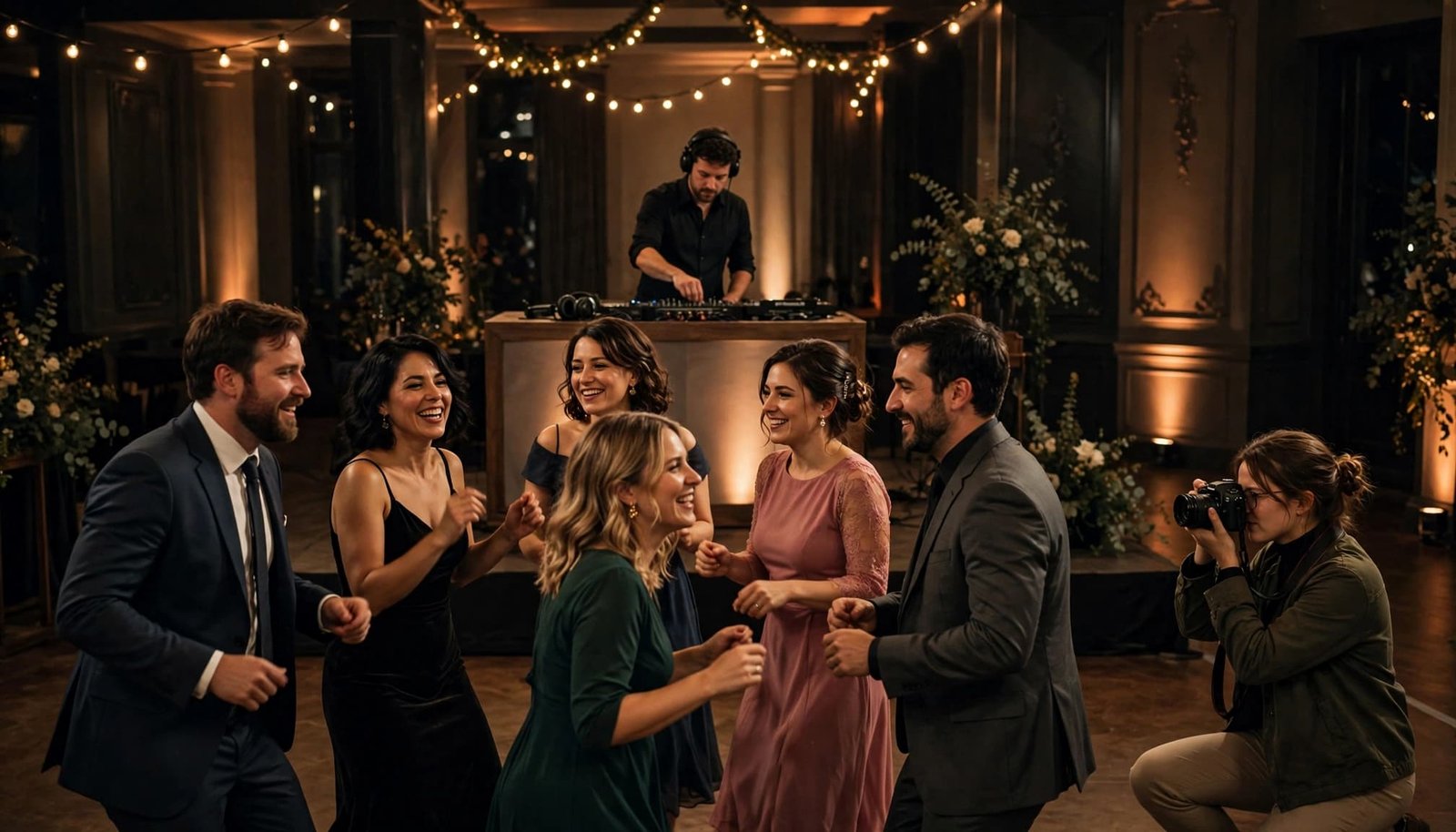
Schedule cake cutting about an hour before the reception ends. Treat it as a focused photography moment; a brief announcement or private cue can preserve energy on the dance floor.
A DJ-only reception supports open dancing with continuous music between formalities. With a band, planned breaks and recorded transition music need their own cues so photography and announcements don’t fall into an unplanned gap.
Plan the last dance at least 30 minutes before the venue contract ends. The sample’s 9:50 p.m. dance leaves 40 minutes before the 10:30 p.m. deadline.
Departure instructions and safe equipment removal still need time after the final song. Keep breakdown activity away from guests who are leaving.
Key Takeaways for Vendor Coordination
- Share one final timeline with all vendors at least two weeks before the wedding.
- Give photography a two-minute warning, then wait for a ready signal before formal moments begin.
- Use realistic transition buffers and keep speeches near three minutes each.
- Place portraits, coverage deadlines, cake cutting, and the last dance where they won’t compete with other responsibilities.
Wedding DJ Timeline Questions
What Is the 30-5 Rule for Weddings?
The informal 30-5 rule describes how a task expected to take five minutes can consume 30 minutes on a wedding day. It also reflects how quickly a meaningful 30-minute experience can feel over.
Use it as a reminder to allow time for gathering people, walking between spaces, and getting into position. It isn’t a requirement to multiply every scheduled activity by six.
How Do Wedding DJs Prepare Their Music?
Professional DJs obtain music through purchased downloads, DJ record pools, and other authorized music sources. Formal songs should be available offline rather than dependent on venue Wi-Fi or a personal streaming account.
Provide the artist, exact recording, requested start point, and preferred ending for each formal dance. Different recordings or edits can change both the timing and the meaning of a planned cue.
A Coordinated Timeline Keeps the Focus on Your Celebration
A reliable wedding DJ timeline gives every vendor a shared sequence, clear cues, and room to respond when timing changes. That preparation protects photographs, supports dinner service, and keeps guests comfortably informed.
We recommend building the schedule around your priorities, then connecting each formal moment to a shared ready signal. That signal helps formal moments begin smoothly. Your first dance can start with everyone ready, with room for open dancing afterward.