An awkward pause at a wedding reception can feel much longer than it is. Usually, it isn’t a music problem. It is a timing problem.
Clear wedding DJ MC duties keep music, announcements, and major moments connected, so guests know where to look and you don’t have to manage the room in formalwear. But a DJ who plays great music isn’t automatically providing full MC support.
Before you book, compare what each role covers, whether one person can handle both, and what belongs in writing.
Understanding the DJ and MC Roles at Your Reception
The DJ and MC roles are closely connected, but they are not identical. One manages sound and energy, while the other guides the room through the evening with confidence, warmth, and clear direction.
The DJ manages music, sound, and atmosphere
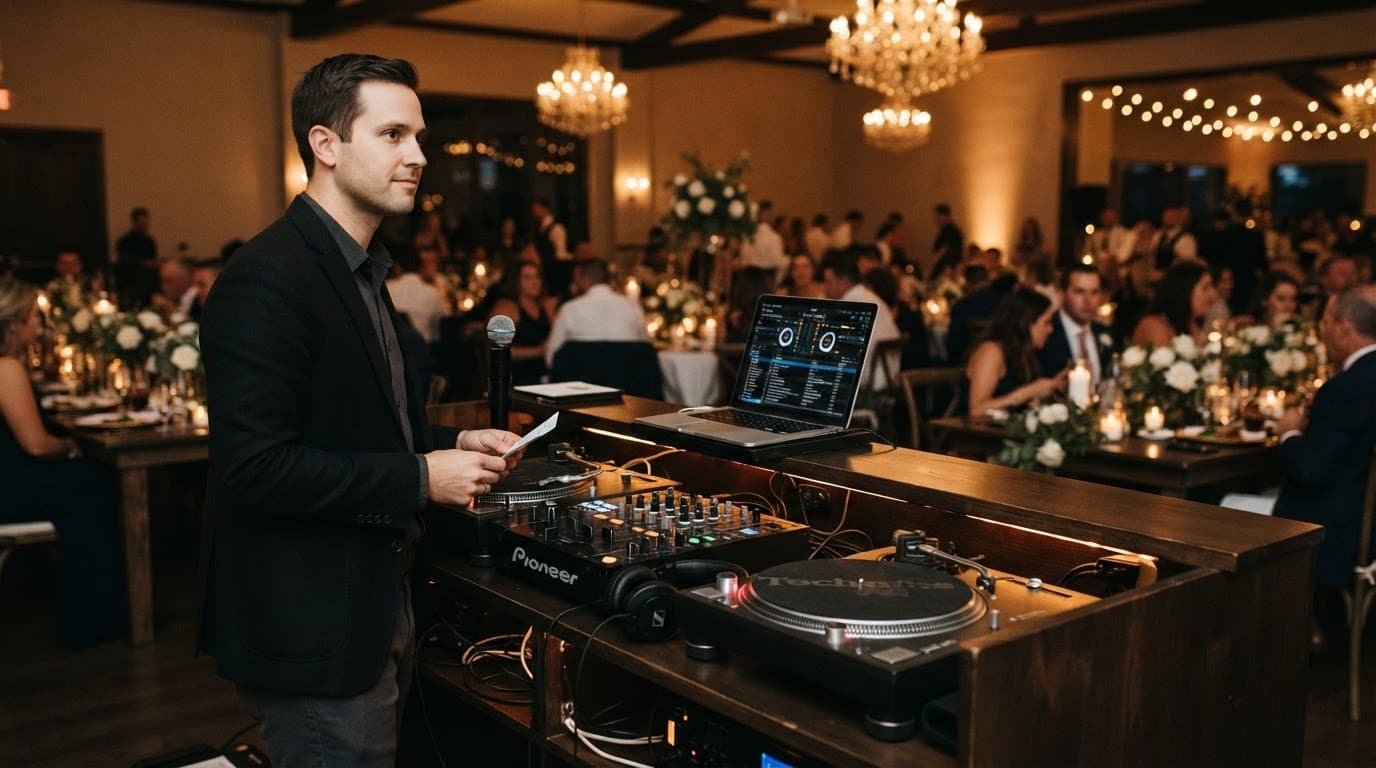
A professional wedding DJ plans the music around your event, not around a generic playlist. Their wedding DJ responsibilities include music selection, cueing, and sound preparation. Before the wedding, they should collect your must-play songs, do-not-play choices, special dances, and preferred genres.
During cocktail hour, dinner, and open dancing, the DJ should read the crowd and adjust the music accordingly. A packed floor may call for a few more high-energy selections. A mixed-age crowd may respond better to a quick shift into familiar singalongs, country favorites, Top 40, oldies, or dance-pop.
Sound is part of the job, too. Depending on the package and wedding venue, a DJ may provide sound equipment, a controller, wireless microphones, ceremony audio, lighting, and backup equipment. Ask which spaces and microphone coverage are included. Confirm how audio quality will be checked if your wedding ceremony and reception happen in different locations.
The MC guides guests through the celebration
A wedding MC, or master of ceremonies, is the voice wedding guests hear when it’s time to move to the next moment. That can include welcoming everyone, inviting guests to dinner, introducing the wedding party, presenting toast speakers, and announcing key transitions.
Good MC work is not about talking all night. It is about offering short, well-timed cues that feel natural and keep the evening moving. The best hosts are upbeat and polished, but they never pull attention away from the couple.
A DJ/MC may also confirm name pronunciations, review family dynamics, and learn which traditions matter most to you. Those small details make the hosting feel personalized rather than scripted.
Planning the Timeline Before Guests Arrive
A strong wedding reception begins well before the first guest walks in. Your DJ/MC should receive a working timeline, key contact names, and the order of formal events before the wedding day.
A detailed wedding-planning checklist can help you organize vendor deadlines and reception details early. The entertainment plan needs practical cues for photos, dinner service, speeches, and guest movement. Build in enough time for each transition.
Give every major moment a cue point
A professional DJ/MC should know when each major moment begins, who is involved, and what music or microphone is needed. The grand entrance, first dance, welcome toast, dinner release, cake cutting, bouquet toss, and last dance all need a clear plan. Include cocktail hour in the event sequence.
For example, the photographer may need a two-minute warning before the couple’s featured dance. The caterer may need guests released to dinner by table. A parent giving a toast may need a microphone at the head table before the MC introduces them.
A well-built wedding timeline template can serve as the master planning document and give vendors a shared starting point. Use the reception timeline to sequence formal events, then turn those notes into live cues that work in the room.
Vendor communication keeps the room organized
The DJ/MC should know who has final authority for timeline changes. At a wedding venue with multiple spaces, that is often the wedding planner or venue coordinator, not a relative with a new idea during dinner.
Before formal events, the DJ/MC can check in with event vendors, including the venue coordinator, caterer, photographer, and videographer, as well as the couple. A simple message such as “Are we ready for speeches in five minutes?” prevents rushed transitions and missing vendors.
If dinner runs late, a strong host doesn’t panic or fill every minute with announcements. They adjust the background music, keep guests comfortable, and wait for the proper cue.
The person holding the microphone controls the room’s attention. Every announcement should have a purpose, a cue, and a clear finish.
How a DJ/MC Handles Key Reception Moments
The most visible special moments happen during formal parts of the reception. Guests may not notice the coordination when it goes well, but they will feel the difference.
Announcements should be clear and personal
Your wedding MC should pronounce names correctly and use your preferred level of formality. The host should make announcements short and focused.
Some couples want an energetic grand entrance as the reception’s formal cue. Others prefer a simple introduction and a relaxed dinner.
A polished grand entrance might be as brief as: “Please welcome the newly married couple, Taylor and Jordan!” The DJ can then bring up the entrance song at the right moment and let the couple enjoy the reaction.
For toasts, the host should introduce each speaker, confirm the microphone is ready, and give guests a moment to settle. Before the cake cutting, a simple invitation works better than a long speech: “The couple will be cutting their cake in a few moments. Please join them near the dance floor.”
Key dances need more than the right song
A first dance needs the right song, but it also needs a prepared room. The DJ/MC should coordinate with the photographer and videographer, invite guests to gather on the dance floor without crowding the couple, and start the first dance track only after everyone is set.
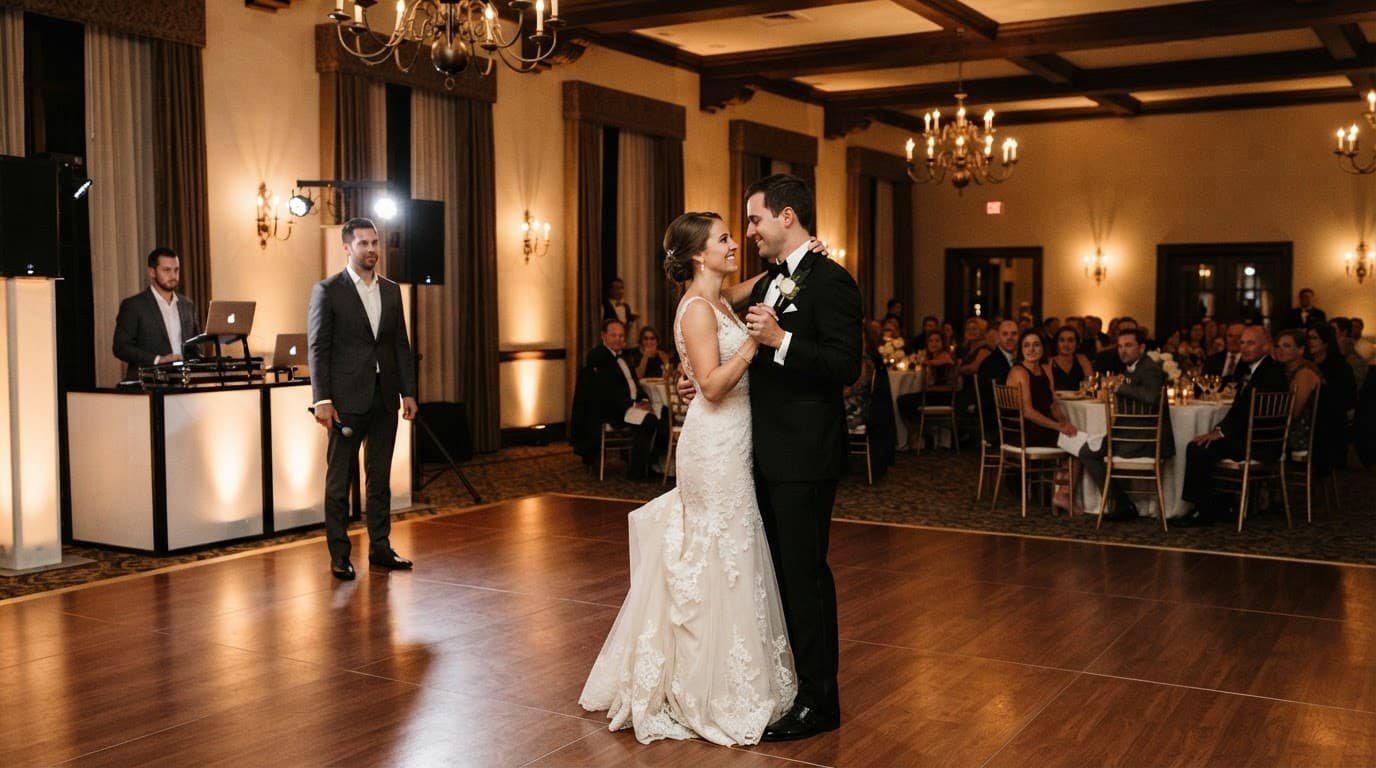
The same care applies to the dessert moment, parent dances, anniversary dances, and private last dances. If you want a song faded early or started at a certain lyric, tell the DJ in advance. Exact versions matter, especially when a radio edit has an awkward break or a slow opening that does not fit your entrance.
Guest engagement should fit your crowd
The host can invite wedding guests to the dance floor, lead a simple anniversary dance, and make helpful reminders without turning the reception into a loud game show. The goal is engagement, not pressure.
A good DJ builds energy in waves and knows how to read the crowd. The early dance set may start with broad, familiar songs. Once more guests join in, the DJ can move into stronger dance tracks and quicker transitions. No single genre has to carry the entire night.
Can One DJ Successfully Act as the MC?
For many weddings, one experienced professional wedding DJ can handle both roles well. This setup often works when the reception has a clear wedding timeline, a manageable guest count, and a DJ who is comfortable speaking in front of a crowd.
When a combined DJ/MC is a strong fit
A dual-role DJ/MC works especially well when you want one point of contact for music, announcements, and reception flow. The same person knows your song choices, formal-event order, and personal preferences.
This person can also make announcements and keep transitions natural. The DJ does not need to explain a cue to a separate host before bringing up the music or microphone.
Still, ask about their actual experience hosting weddings. Some DJs are excellent mixers but prefer limited announcements. That is a valid service style, as long as it matches your expectations.
When a separate MC or team may help
A larger wedding, detailed cultural traditions, live performers, multiple rooms, or a packed formal schedule may benefit from a dedicated master of ceremonies or a two-person wedding entertainment team. One person can be at the sound booth while the other is greeting speakers, checking with vendors, and preparing the next announcement.
A separate wedding planner can also take the lead on timing. In that case, the DJ/MC supports the planner’s direction and the reception timeline rather than trying to run every detail alone.
Confirm Wedding DJ Responsibilities in Writing
Services vary by professional and venue, so don’t rely on a quick verbal promise. Your contract or planning form should state exactly what the DJ/MC will provide.
Use these questions during consultations:
- Will your wedding MC host the grand entrance, first dance, and cake cutting?
- Will you make announcements for introductions, transitions, and formal events?
- How many planning meetings are included to develop our wedding timeline?
- Will you create or review a detailed reception timeline with us?
- Who will coordinate with the venue, photographer, caterer, and other event vendors on the wedding day?
- Are wireless microphones included for the wedding ceremony, speeches, and ceremony readers?
- What sound equipment and lighting coverage are included for each event space, including the dance floor?
- How does coverage change between spaces at our wedding venue?
- How do you handle music selection, song requests, and our do-not-play list?
- Do you bring backup equipment and backup music files?
- Who makes the final call if the timeline changes during the celebration?
A helpful wedding reception checklist can support your planning conversations, especially when organizing music preferences, vendor contacts, and formal events. Clear instructions and a written agreement make it easier for your entertainment team to deliver a smooth, memorable celebration.
Frequently Asked Questions
What does a wedding DJ/MC typically do?
A wedding DJ manages music, sound equipment, microphones, and the atmosphere throughout the celebration. The MC guides guests through announcements, introductions, formal events, and timeline transitions.
Can one person handle both the DJ and MC roles?
Yes, an experienced wedding DJ can often manage both roles successfully. Confirm that they are comfortable with public speaking, vendor coordination, and the specific announcements you want included.
What should we include in the DJ/MC contract?
Your agreement should list the included equipment, event spaces, planning meetings, music services, announcements, and backup plans. It should also clarify who coordinates with vendors and who can approve timeline changes on the wedding day.
How far in advance should we share the reception timeline?
Share a working timeline as early as possible, then review the final version with your DJ/MC before the wedding. Include cue points for entrances, dances, speeches, dinner, cake cutting, and the last dance.
What questions should we ask during a DJ consultation?
Ask about wedding experience, MC style, microphone coverage, sound equipment, backup equipment, song requests, and do-not-play lists. Confirm how the DJ handles changes and communicates with your venue coordinator, photographer, caterer, and other vendors.
Final Thoughts
The best wedding DJ MC duties bring together music knowledge, reliable equipment, crowd awareness, vendor communication, and calm direction when plans shift.
Confirm the level of MC service you want, share the details early, and put the agreement in writing. Those responsibilities can then support a reception that feels organized, personal, and focused on the people you came to celebrate.