A reliable prom cleanup checklist gives every task a clear owner, protects student departure, and leaves the venue ready for its next use. For New Hampshire schools, the prom checklist should cover entertainment, food service, decorations, and supervision as part of the wider prom planning checklist.
The final song should mark the start of an organized closing process, with clear responsibilities already in place. The prom committee should begin with the venue agreement, then build a practical sequence advisers, facilities staff, and student volunteers can follow.
Key Takeaways
- Include closing responsibilities, access hours, staffing costs, and deposit terms in the written event plan.
- Keep departure supervision separate from room cleanup so students remain supported until they leave.
- Use a sequenced checklist for decorations, waste, belongings, equipment counts, and the final inspection.
Months Before Prom: Define the Cleanup Scope
Put Venue Responsibilities in Writing
The rental agreement should explain what the school must remove, what venue staff handle, and the room’s required condition at closing. Include setup and breakdown access, furniture handling, custodial services, and responsibility for waste removal.
Review cancellation and refund policies, damage deposits, deposit-return conditions, insurance requirements, noise restrictions, and curfews before signing. These are contract-specific terms, not a single set of statewide New Hampshire rules.
A venue rental agreement template can help organize access times, included services, and payment details. The school’s signed agreement remains the working document for prom night.
The proposal should also identify whether a day-of event coordinator is included and who can approve changes.
Budget for Closing the Event
Divide the budget into venue, catering, theme-related decor accessories, entertainment, and miscellaneous expenses. Include custodial labor, disposal supplies, floor protection, equipment handling, and any contracted overtime terms within those categories.
Keep a contingency reserve separate from optional enhancements. A school gym may reduce rental expenses while still requiring paid custodial time and a furniture reset.
Record each commitment, payment deadline, and approval owner in the shared worksheet. Closing costs should be visible before decorative upgrades receive approval, rather than becoming an expense the committee discovers afterward.
Two Weeks Before Prom: Assign Leads and Finalize Attendance
Give Each Work Area an Owner
A small prom committee can coordinate cleanup through focused leads rather than separate subcommittees. Name an adult closing lead, a facilities contact, a student-volunteer lead, and a belongings contact.
The closing lead manages the checklist and communicates with the venue. Custodial staff direct cleaning methods and room resets, while a supervised student cleanup crew handles appropriate light-duty tasks.
Keep adults assigned to exits, pickup areas, and any supervised quiet room until those responsibilities end. Volunteers shouldn’t have to choose between helping a student and clearing a table.
Put contact details and assignments on the same run sheet so questions reach the right person quickly. Assign vendors responsibility for their areas and equipment.
Connect Ticket Sales to the Run Sheet
Set a firm ticket sales deadline about two weeks before prom, then submit the final attendance count according to the catering agreement. Include chaperones and anyone else receiving meals, not only students with paid tickets.
Keep ticket-assistance requests confidential and route them through designated school staff. Avoid making students explain their circumstances to classmates.
Use the prom planning checklist to review the event timeline: setup, check-in, food service, announcements, dancing, last dance, departure, and teardown. Give each block a named lead. Our school dance DJ load-in checklist covers equipment access and entertainment.
One Week Before Prom: Walk the Venue and Prepare Supplies
Complete the Final Site Review
Hold the final venue walkthrough one week before prom with the school lead and operations staff. Use the approved floor plan to review exits, accessible routes, storage areas, waste stations, and loading access.
Decide where reusable decorations and accessories will go, where forgotten belongings will be secured, and which surfaces need approved cleaning products. Record existing damage with dated photographs before decorating begins.
Our prom venue walkthrough checklist provides a broader review of room layout, safety, and student flow.
For a New Hampshire spring event, plan a weather-protected loading route and space for wet entrance mats. Keep both areas outside student pickup paths.
Prepare Separate Closing and Emergency Kits
Gather trash bags, collection bins, work gloves, paper towels, approved cleaning products, and containers for reusable decorations. Keep tape, extension cords, and spare batteries available for event operations. Staff should control their placement and removal.
Prepare the student and chaperone emergency kit during the same week. Include safety pins, stain remover, phone chargers, and a small sewing kit. Keep personal-care supplies separate from cleaning chemicals and tools.
Store supplies where assigned adults can reach them without crossing the dance floor. A clearly identified supply area reduces unnecessary searching while the event is active.
Printable Prom Checklist: End-of-Night Tasks
Print this sequence with the event run sheet and write the responsible person’s name beside each step. Keep one working copy with the adult closing lead.
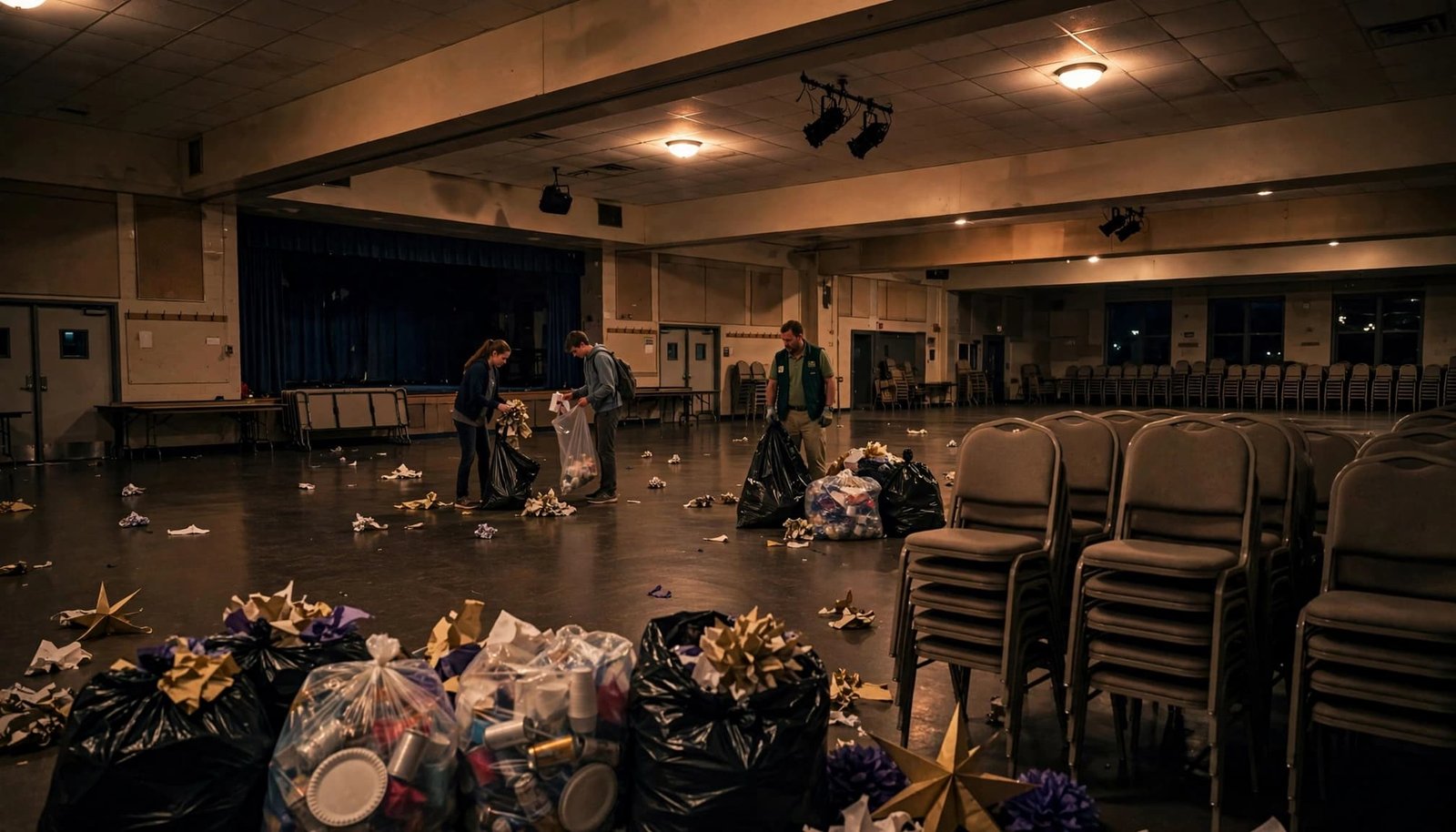
- Before prom: Prepare supplies and assign owners. Set out gloves, waste and recycling bags, labels, and carts. Name an adult owner for each area: the closing lead for the dance floor, the catering lead for the food-service area, and designated adults for the restrooms, coat check, and quiet room. Assign adults to the hallways, loading area, and outdoor gathering points.
- During the event: Protect student departure. Chaperones cover pickup areas, coat check, and exits to support student safety. Keep carts, bags, and vendor cases out of walking routes. Student volunteers may handle light-duty tasks under adult supervision.
- Immediately after: Release work areas deliberately. The closing lead identifies each area that is ready and releases the area for work. Keep occupied spaces, supervised rooms, and active departure routes separate from furniture movement. Custodial staff direct room resets and cleaning methods.
- Immediately after: Clear food-service areas and lost property. Catering or designated food-service staff handle remaining food, service equipment, and food-contact surfaces under the agreed plan. Separate school-owned supplies from vendor property, and don’t distribute leftovers without established food-safety arrangements. The coat-check adult hands lost property to the designated school contact.
- Immediately after: Remove decorations by zone. Collect reusable centerpieces, signs, fabric, and photo props in assigned containers. Leave elevated decorations and electrical fixtures to authorized adults or vendors. Students shouldn’t climb chairs or dismantle unfamiliar equipment.
- Immediately after: Separate waste and reset furniture. Empty approved collection points, close bags, and move them to designated disposal areas. Keep liquids, broken glass, and sharp or hazardous items out of student handling; an adult follows the venue’s disposal instructions. Use the venue’s recycling streams rather than assuming every cup or food container is recyclable. Follow the agreed layout, count linens, tables, chairs, and accessories against the inventory, and leave vendor-owned equipment with its designated handler.
- Follow-up: Hand off records for cost reconciliation. The closing lead records unresolved items and passes receipts or supply notes to the person handling the later reconciliation.
Mark each step complete only when its work area is finished. An unchecked item needs a named adult to resolve it before the closing lead signs off.
Before Lockup: Inspect the Venue and Secure Belongings
A final inspection should cover the full event area, including restrooms, coat check, quiet rooms, hallways, loading areas, and outdoor gathering points. The closing lead should collect forgotten items and record spills, damage, decorations, or equipment left behind.
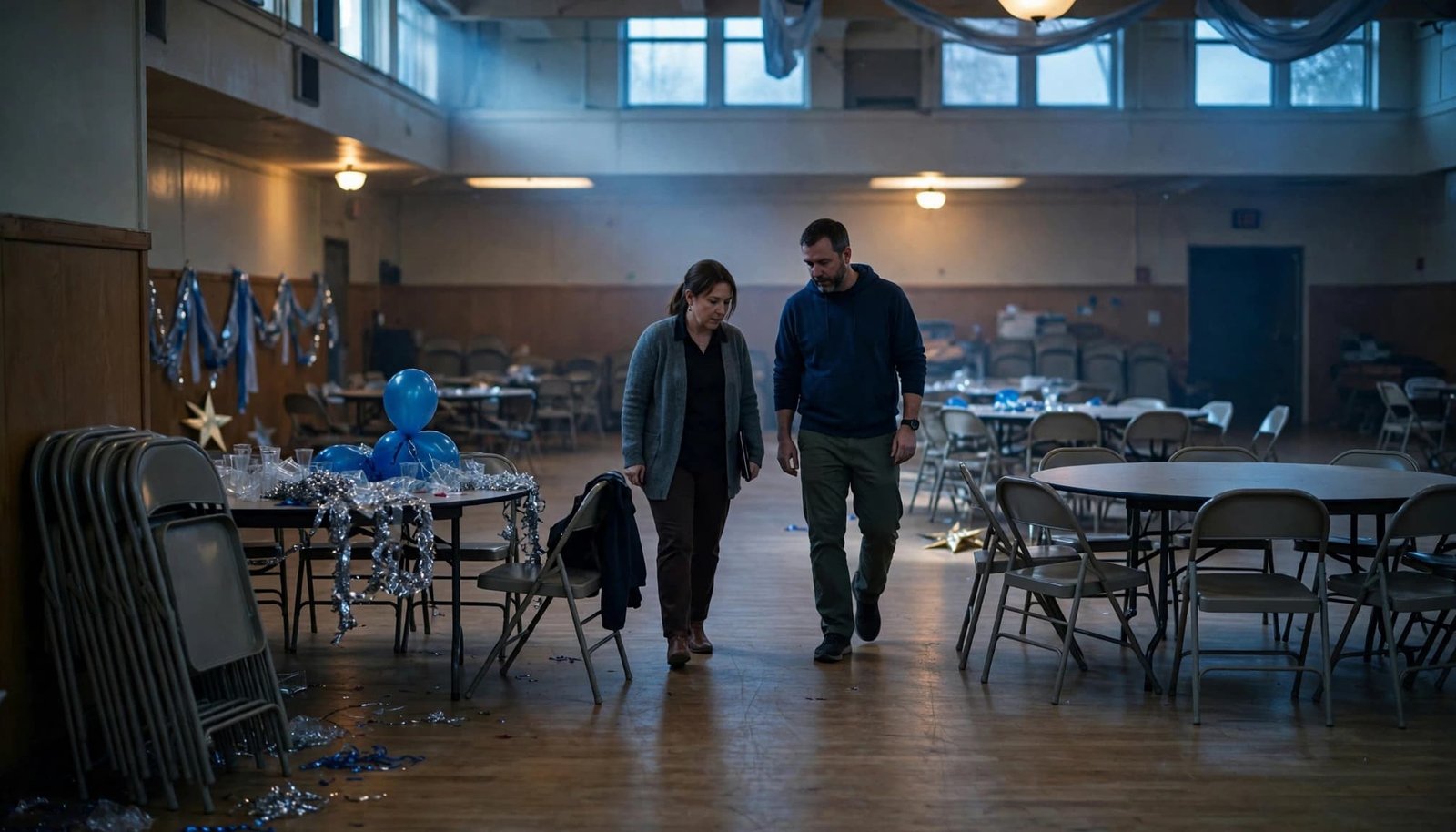
Compare the room with the pre-event photographs. Document any new damage with its location and photographs, then file the record with the event paperwork. Keep observations factual rather than assigning blame.
A room can look clean while storage corners, coat check, and loading areas still contain school property or student belongings.
Before lockup, confirm the final room reset with custodial staff. The closing lead should record any unresolved items or tasks.
The assigned adult should record where each found item was discovered and transfer it to the designated school office under the school’s procedure. Keep phones, wallets, jewelry, and clothing in secure school custody, and don’t post identifying information publicly.
Our prom coat check planning guide helps connect belongings collection with supervised departure. Before lockup, record where found items are stored and which school office will manage collection.
After Prom: Reconcile Costs and Save the Plan
Within the first few days, compare actual invoices with the approved budget. Record cleaning expenses, documented overtime, outstanding payments, and the damage deposit status under the agreement.
Keep the contract, invoices, condition photographs, and closing record together. A venue agreement template can help organize future contract fields, but evaluate existing charges against the school’s signed terms.
Save the completed prom checklist in a school-managed folder with the floor plan, vendor contacts, inventory, and supply notes. Record practical improvements, such as moving a collection bin or adding storage for reusable decor.
A short debrief should identify what worked, what remained unfinished, and which responsibilities need clearer wording next year. Keep student financial-assistance information out of general committee records.
Frequently Asked Questions
Who Should Coordinate Prom Closing Tasks?
An adult school closing lead should coordinate the work, supported by facilities staff, venue personnel, vendors, and supervised student volunteers. The written agreement determines which organization handles each service.
Students can collect lightweight decorations and organize reusable materials. Cleaning chemicals, heavy furniture, electrical equipment, and hazardous debris belong with authorized personnel. Departure supervision should remain a separate assignment until the final students leave.
What Should the Final Walkthrough Cover?
Inspect every space used by the event, not only the dance floor. Include restrooms, coat check, storage areas, food-service spaces, hallways, loading routes, and exterior gathering areas.
Look for forgotten belongings, remaining school property, spills, damage, and incomplete room reset. Compare conditions with the pre-event record, document unresolved items, and identify the adult responsible for each remaining action. Keep the completed inspection with the event paperwork.
Finish Prom With a Clear Closing Plan
A successful prom closing depends on assigned responsibilities, protected departure routes, and a documented final inspection. The preparation that supports an enjoyable celebration should continue through the final room check.
Put the closing sequence beside the event timeline, assign an owner to each task, and save the completed record. This gives the school an organized closeout and a stronger starting point for next year’s prom.