For a high school prom, junior and senior students need clear attire guidance for the formal event. A reliable prom coat check gives students a convenient place for approved belongings while helping staff manage arrivals, supervision, and departure.
For New Hampshire schools, clear preparation matters more than a complicated storage system. School policies, venue requirements, and after-prom arrangements should shape the plan. Clarify any attire labels, such as “upscale casual,” for families and students.
Start by deciding who is responsible, what students may check, and how each item will be returned.
Key Takeaways
- Confirm the venue’s storage space, staffing, fees, and responsibilities before promising coat check to families.
- Publish an approved-item list that addresses coats, bags, shoes, valuables, and clothing changes.
- Keep identification, emergency supplies, and medically necessary items accessible under school-approved arrangements.
- Use matching claim tags, controlled storage access, and a documented process for missing tickets.
- Coordinate retrieval with transportation, early departures, and after-prom transfers so the final minutes remain organized.
Establish Coat Check Ownership and Layout
A dependable storage plan begins with a named adult lead and a location approved by the prom venue. Include these decisions in your broader prom timeline and vendor coordination so they aren’t left for setup day.
Confirm Who Provides the Service
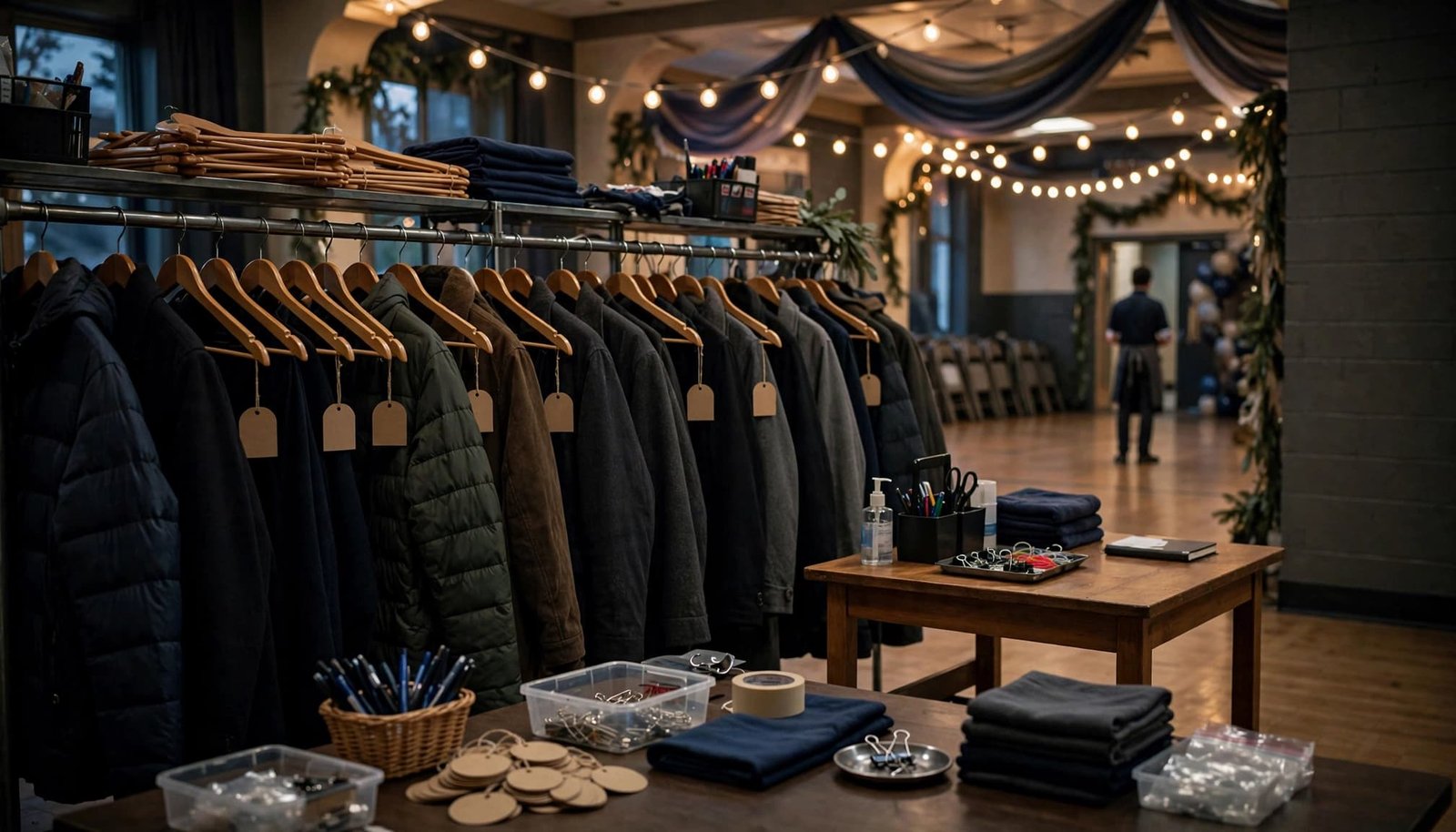
Ask whether coat check is included in the venue agreement or whether the school must supply racks, tags, tables, and attendants. Confirm any additional charges, operating hours, cleanup duties, and responsibility for damaged or missing belongings.
Assign a school contact who can resolve questions without pulling entrance staff away from admission duties. If volunteers will help, confirm district screening and training requirements early. Student committee members can help communicate expectations; adults should oversee storage access and disputes.
Walk the Student Route
Place the station where students can reach it after the approved admission process without crossing vendor loading areas. Walk the route to the coat check area with the venue coordinator and school safety representative.
Check lighting, accessible counter space, queue placement, and proximity to supervised areas. Racks, tables, and waiting students must stay clear of exits and accessible routes. If outdoor arrival or pickup is planned, identify a weather-protected waiting location.
Publish a Clear Personal Belongings Policy
There isn’t one accepted-item list or prom dress code that every New Hampshire prom venue follows. Schools should approve their own list and attire expectations with the venue before tickets go on sale.
Use a simple comparison to settle the main bag policy decisions.
| Item | Decision to Publish |
|---|---|
| Coats and light layers | State whether they are accepted and how wet items are handled. |
| Purses and bags | Identify permitted sizes, screening requirements, and storage options. |
| Backpacks and overnight bags | Explain whether they are prohibited or approved for after-prom use. |
| Shoes | Confirm whether storage is available and whether replacement footwear is required. |
| Clothing changes | Identify approved containers, changing locations, and transfer arrangements. |
Publish prom attire and post-event requirements clearly, since standards can differ. Define “upscale casual” rather than treating it as an assumed standard for the after prom party. State whether formal attire is expected, whether athletic wear is allowed, and how the school dress code applies at each event.
Keep the policy practical. A bag allowed at prom may still be prohibited at the later event, even when the same students attend both.
Tell students to keep cash, jewelry, phones, and other valuables with them when permitted, or leave unnecessary valuables at home. Avoid promising secure storage or financial reimbursement unless those terms are confirmed in writing.
Medically necessary supplies need a separate conversation with the school nurse and appropriate staff. Students shouldn’t have to surrender emergency medication simply because ordinary bags are restricted.
Explain what happens when someone arrives with an unapproved item. Staff need a supervised, school-approved response rather than an improvised instruction to return alone to a vehicle.
Use a Reliable Prom Coat Check System
The best storage process is easy for students to understand and consistent enough for another staff member to follow. Prepare supplies before doors open, then brief everyone assigned to the station.
Match Every Item to a Claim
Use paired, sequentially numbered tags. Attach one tag securely to the accepted item and give the matching claim to the student.
Keep numbering consistent with rack sections or storage bins. Don’t rely on coat color alone; several students may bring similar black jackets.
Decide whether each item receives its own tag or whether approved items stay together in one container. Explain the method at handoff. If a student checks both a coat and a clothing bag, both need a clear connection to the claim.
Control Retrieval and Exceptions
Only assigned staff should enter the storage area. Students present their claim at the counter while attendants retrieve the matching item.
Prepare a lost-ticket procedure before prom night. It can include identification, a description of the item and its contents, and approval from the designated school lead. Record disputed releases through the school’s approved process.
Avoid announcing student names or personal details across the room. A short, respectful conversation at the station protects privacy and keeps the line moving.
During an evacuation, students should leave without collecting belongings. Coat retrieval must never delay an emergency exit.
Connect Coat Check With Prom Entry Rules
Coat check should support admission, not create a second checkpoint or conflicting instructions. The principal, prom adviser, venue coordinator, and security lead should agree on the entry order.
Confirm Identification and Arrival Requirements
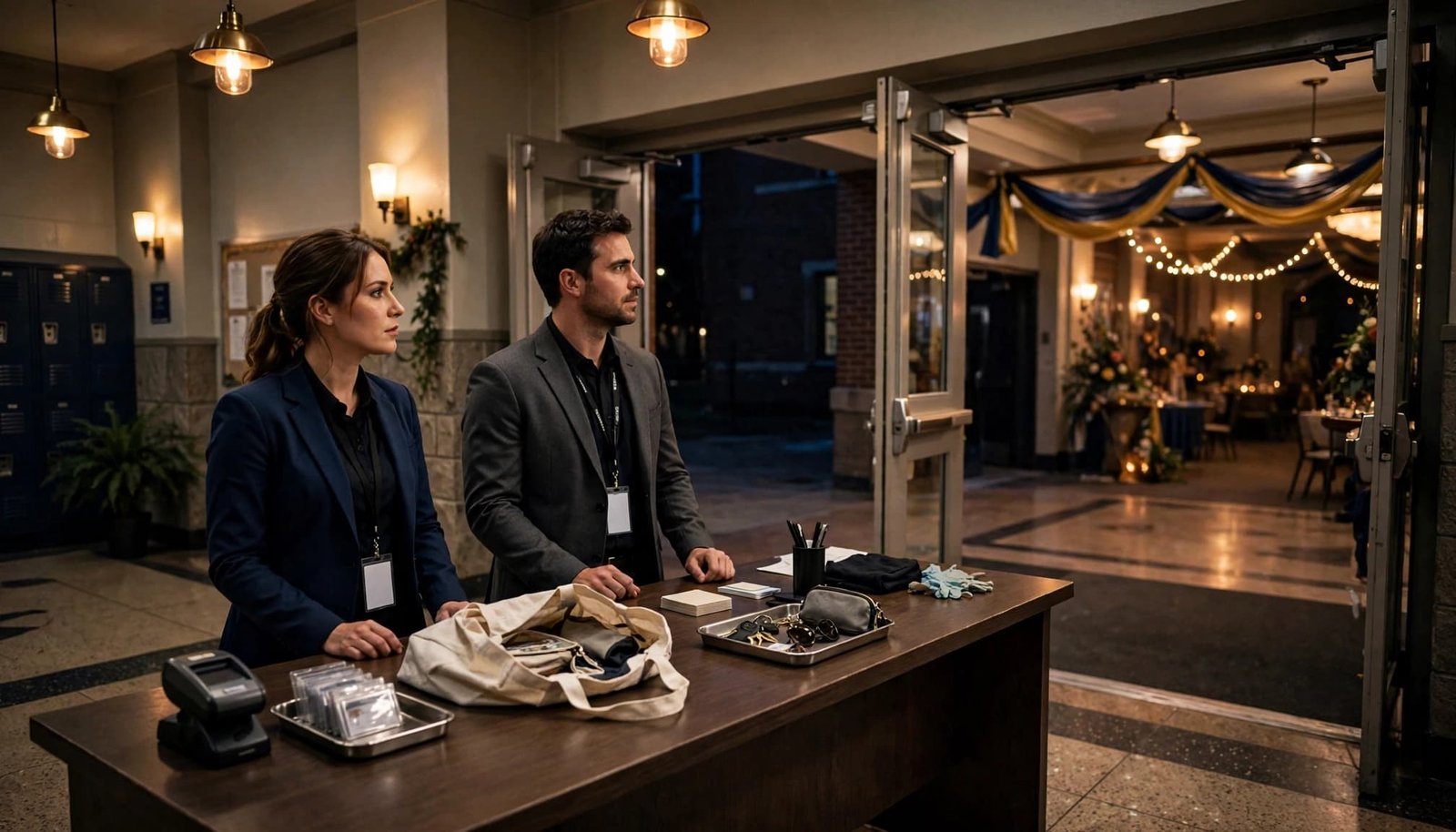
Publish the identification required for enrolled students and outside guests. Tell outside guests to submit the required guest form and identification. Let students know how to resolve a missing student ID card before prom day.
Keep admission documents accessible until check-in is complete. A required ID or dance ticket shouldn’t be buried inside a checked clothing bag.
Publish the entry deadline, event end time, and transportation requirements, which vary by school. Bow High School’s published 2026 information, for example, listed prom for May 16 at Manchester Country Club in Bedford, with dancing scheduled for 6:00 to 10:00 p.m. Those were event-specific details, not statewide standards.
Keep Screening Decisions With School Leadership
If bag searches, a security check, or a breathalyzer test are part of the school-approved plan, communicate the procedures beforehand. Confirm authority, staff training, privacy arrangements, and how staff should respond to concerns.
Coat check attendants shouldn’t improvise searches or decide disciplinary consequences. Their role is to accept approved belongings after required screening.
Use the school’s current prom permission slip checklist to align guest approval, identification, and family communication. Purchasing a ticket, submitting a guest form, and receiving approval may involve separate deadlines.
Plan Clothing Changes and After-Prom Transfers
A change of clothes can make a supervised after-prom event more comfortable, but it adds storage and transportation responsibilities. Confirm the complete arrangement before inviting students to bring extra outfits.
Explain Shoes and Changing Arrangements
Students may want to replace formal shoes with sneakers or athletic wear for dancing and after-prom activities. State whether replacement footwear is permitted and whether shoes can be checked.
Don’t assume coat check accepts shoes. If it does, require an approved bag or container and explain any requirement to remain appropriately shod.
Provide a private, accessible changing location with a supervision plan that respects student privacy. Communicate dress expectations in practical terms, defining labels such as “upscale casual” and allowing for culture, faith, identity, comfort, and disability-related needs.
Assign Responsibility Between Events
Prom admission doesn’t automatically establish after-prom eligibility. Confirm separate registration, guest approval, bag rules, dress expectations, and transportation instructions for the after prom party.
If clothing bags will travel to another location, such as on a party bus or to an after prom cruise, name the adults responsible for loading, delivery, and distribution. Use a school-approved identification method; don’t place sensitive student information on visible labels.
When students transport their own belongings, build collection time into departure. Clearly explain whether re-entry is allowed after retrieving items or leaving the venue.
Avoid borrowing a nightclub dress code label such as “upscale casual” unless the organizer defines it. Students need understandable school-event expectations, not an uncertain interpretation at the door.
Coordinate Closing, Pickup, and Lost Items
The final part of prom needs the same preparation as arrival. Share the coat check closing time, transportation departure time, and final announcement schedule with the school lead and entertainment provider.
Keep staff at the storage station until approved retrieval is complete. An attendant shouldn’t leave when the last song ends if students are still waiting for coats.
For departures, distinguish the dance end time from transportation loading and any approved late-pickup procedure. If a group has a scheduled departure, such as a party bus, coordinate coat retrieval with its loading time. The New Hampshire DOT’s prom safety message reinforces the importance of sober transportation. Families should know whom to contact if a ride fails to arrive.
Document early departures according to school procedures. Retrieving a coat shouldn’t automatically authorize a student to leave.
After the event, inventory unclaimed items and move them to the designated school location. Publish the collection contact and retention period. Handle ownership disputes respectfully, and avoid public posts that expose personal belongings or embarrass students. The state’s bullying and cyber-bullying guidance is a useful reference when reviewing conduct concerns, including online interactions.
Give Staff and Families One Consistent Plan
A clear plan loses value when the ticket page, permission packet, and student announcements give different answers. Use one approved set of instructions, then repeat the essentials through school communication channels.
Include accepted items, any coat check fee, identification requirements, arrival cutoff, retrieval procedures, and the contact for accommodation requests. If the school sets attire expectations, use the same wording everywhere. Clarify whether options like upscale casual are acceptable or athletic wear is excluded. If ticket prices change by purchase date, distinguish those deadlines from guest approval and after-prom registration.
Give staff a briefing on assignments, radio or phone communication, medical escalation, disputed belongings, and early departure authorization. Review the actual floor plan during the final walkthrough.
The DJ needs approved announcements and timing, not private student records. DJ Steve Neff Entertainment LLC’s New Hampshire school dance DJ services include music, sound, lighting, MC support, and coordination with school staff. Admission, coat check custody, and student discipline remain with assigned school and venue personnel.
The company is now based in Concord, with professional DJ experience dating back to 1999. Clear responsibilities help entertainment and supervision work together without confusion.
Frequently Asked Questions
Does every prom venue provide coat check?
No. Confirm with the venue whether coat check is included, what equipment and staffing it provides, and whether additional fees apply before sharing plans with families.
What should students be allowed to check?
Publish a school-approved list that covers coats, bags, shoes, and clothing changes. Tell students to keep valuables, identification, and medically necessary supplies accessible under school-approved arrangements.
What should a student do if they lose their claim ticket?
Use a procedure approved before prom night, such as verifying the student’s identity and asking them to describe the item. A designated school lead should approve disputed releases, and staff should document them through the school’s process.
How should coat check work with an after-prom event?
Confirm which belongings may travel to the next event and who is responsible for loading, delivery, and distribution. Coordinate retrieval with departure times, and explain any rules about re-entry or leaving the venue.
A Prepared Coat Check Supports a Relaxed Prom
A reliable prom coat check gives students confidence that approved belongings have a clear place and a clear retrieval process. Consistent responsibilities help staff manage the practical details without distracting from the celebration.
Confirm the rules with the venue, walk the full student route, and share one approved plan before prom week.
When belongings, entry, and departure are coordinated, students can spend less time sorting out logistics and more time enjoying the evening.