A practical budget for a professional wedding DJ is $1,500 to $3,000. For a spring celebration, plan for changing weather, separate ceremony audio, and clear coordination across the day.
The right wedding entertainment package supports meaningful vows, comfortable conversation, and a reception that feels personal. Start with your venue layout and priorities, then compare providers on preparation, music coverage, and reliability.
Key Takeaways
- Budget for complete celebration coverage, including ceremony audio, cocktail hour, reception sound, travel, and lighting upgrades.
- Give an outdoor spring ceremony an indoor backup plan, with clear sound locations and a weather decision time guests can follow.
- Choose a DJ whose planning process, microphone style, and music approach match the atmosphere you want for your wedding.
What Does a New Hampshire Wedding DJ Cost?
Typical wedding pricing falls between $1,500 and $3,000, depending on experience, availability, popularity, and service scope. Advertised local options start at roughly $500, while some listings reach $5,000, with many between $900 and $2,000.
For national context, Paperlust’s wedding DJ cost guide places most couples between $1,000 and $2,500. Local pricing depends on the responsibilities included in each package.
Our guide to New Hampshire wedding DJ costs explains how service levels affect the budget.
Compare Packages Rather Than Performance Hours
A four-hour wedding reception quote from a DJ should list sound coverage, MC duties, microphones, planning, setup, and breakdown. Ceremony coverage and sound at additional locations can increase the total.
At $100 per hour, three performance hours equal $300. That figure excludes preparation, travel, equipment, and hosting responsibilities. A short private-party booking and a full-event package aren’t equivalent entertainment services.
Build the Budget Around Included Services
Published package differences show how quickly scope changes the price. Music Road DJ Service in Tilton lists a four-hour package that starts at $1,000. Its four-hour package with ceremony coverage is listed at $1,200.
That creates a clear $200 difference for ceremony coverage, with a $1,200 package total before separately quoted additions. List travel, overtime, uplighting, and other entertainment add-ons separately so the full pricing is clear.
Plan for Spring Weather and Separate Sound Locations
Spring wedding planning needs flexibility. A garden ceremony, covered cocktail area, and indoor reception may need separate sound locations for music, so the DJ won’t have to move one system throughout the afternoon.
Give the Ceremony a Weather Backup
Choose an indoor ceremony location before setting the timeline. The plan should name who makes the weather decision, when it happens, and where ceremony microphones and speakers will go.
Rain, wet ground, wind, and cool temperatures can affect guests and equipment placement. A battery-powered system solves a power-access problem, but it doesn’t make equipment weatherproof. Our outdoor wedding sound guidance covers planning for clear vows and dependable coverage.
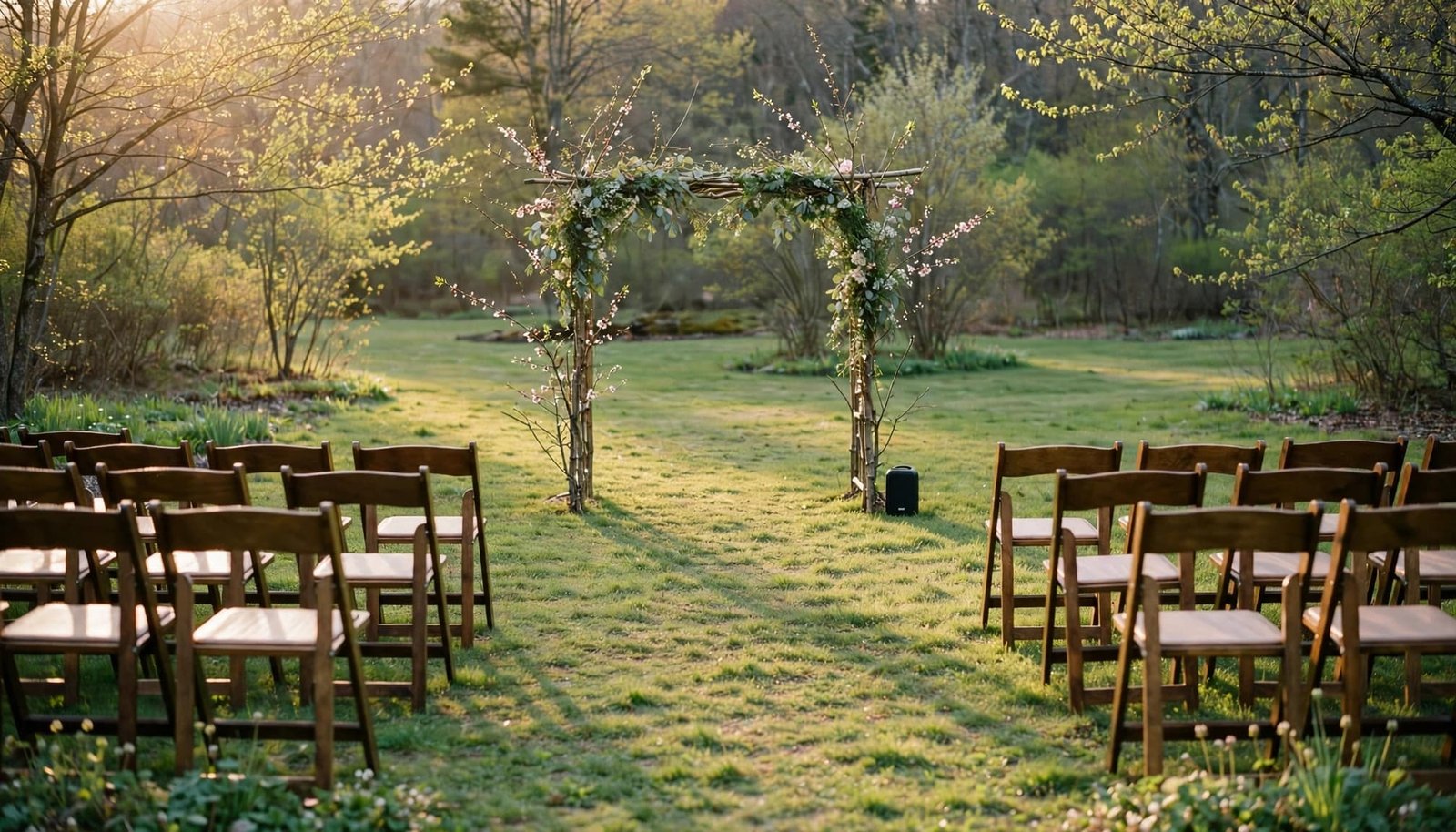
Illustrative spring event layout with separate sound systems.
Account for Access, Power, and Transitions
Share each sound location, available power for equipment and lighting, and the loading route with the DJ. Muddy access paths or distant parking can affect setup time.
Cocktail hour needs sound coverage when people gather beyond the main speakers’ reach. Separate systems keep audio available during equipment moves. Include the venue’s outdoor sound restrictions and closing time in the entertainment schedule.
Choose Between a DJ, a Band, and Added Effects
Your wedding entertainment choice should match your preferred atmosphere, venue space, and budget. The Knot’s wedding music cost comparison reports national averages of $1,800 for a DJ and $4,500 for a live band.
These options involve different planning needs.
| Entertainment Option | Main Advantage | Planning Consideration |
|---|---|---|
| Wedding DJ | Broad music selection and flexible pacing | Define MC duties and sound locations |
| Live band | Distinctive live performance and stage presence | Allow space, power, breaks, and room beside the dance floor |
| Ceremony-only service | Focused coverage for vows and processional songs | Arrange reception entertainment separately |
Original recordings, varied genres, and continuous reception coverage suit couples who prefer recorded tracks. A live band suits couples whose priority is live performance.
Package names alone don’t show everything included. Main Event Entertainment lists officiants, a photo booth, live musicians, and uplighting. Some venues also bundle sound services.
Milestones and Memories lists personalized packages, a photo booth, lighting, uplighting, cold spark machines, and low-lying fog. Zola’s vendor filters include MC services, effects for the dance floor, fog or snow machines, sparklers, and projectors.
Treat effects as optional enhancements. Confirm venue approval, placement, and operating requirements before adding an effect to the reception plan.
Compare Planning Processes and MC Styles
Experience matters most when it leads to organized preparation and confident event management. Chillin McMillin lists more than 25 years of experience and service across New Hampshire, Massachusetts, Vermont, and Maine; couples should ask how a provider’s process fits their wedding entertainment.
Understand How Music Planning Works
Ryan Parker describes a DJ timeline process held about one to three weeks before the wedding. He asks couples for about 20 music selections, do-not-play preferences, and starred must-plays.
His pricing reflects experience, market rates, distance from Dover, and the number of separate sound setups. Published terms call for 50% to reserve the date and the remaining 50% fourteen days before the event.
These details show why couples should confirm preparation expectations and payment dates before booking.
Discuss Sound and Microphone Presence
Parker describes his ceremony system as fully portable and battery-powered, with pricing based on the required setup. For reception sound, he prefers two top speakers with one or two floor-level subwoofers over vertical line arrays.
His MC style favors smooth mixing between songs over radio-style microphone hype. That distinction matters when choosing an MC.
Use The Knot’s DJ consultation questions to discuss announcements, guest interaction, performance style, and the ceremony microphone. Ask how the DJ’s approach to mixing handles introductions, unexpected delays, and changes in room energy.
Build a Music Timeline for the Whole Wedding
A personalized music plan gives each part of the day a clear purpose. At DJ Steve Neff Entertainment LLC, our wedding DJ services include ceremony and reception music, MC support, sound, and customized planning.
Coordinate the Ceremony and Cocktail Hour
Choose the exact recordings for the processional and recessional, including versions and starting points. Name the person who cues the DJ when the wedding party is ready.
Processional timing rarely follows a recording perfectly. Adjust playback and transitions as the wedding party walks, rather than forcing the ceremony to match a fixed song length.
For cocktail hour, choose music that supports conversation and sets the atmosphere. Share preferred genres, cultural selections, and songs for guests to enjoy away from the dance floor.
Connect Dinner, Formalities, and Dancing
Put introductions, toasts, dinner, formal dances, and open dancing on one shared reception timeline. Add name pronunciations and cue responsibilities so the photographer, caterer, and venue follow the same schedule.
Keep the must-play music list focused, with songs for reception formalities and dancing, and separate it from general suggestions. Add do-not-play selections and a clear policy for guests’ requests. This leaves room to accommodate requests while respecting your preferences.
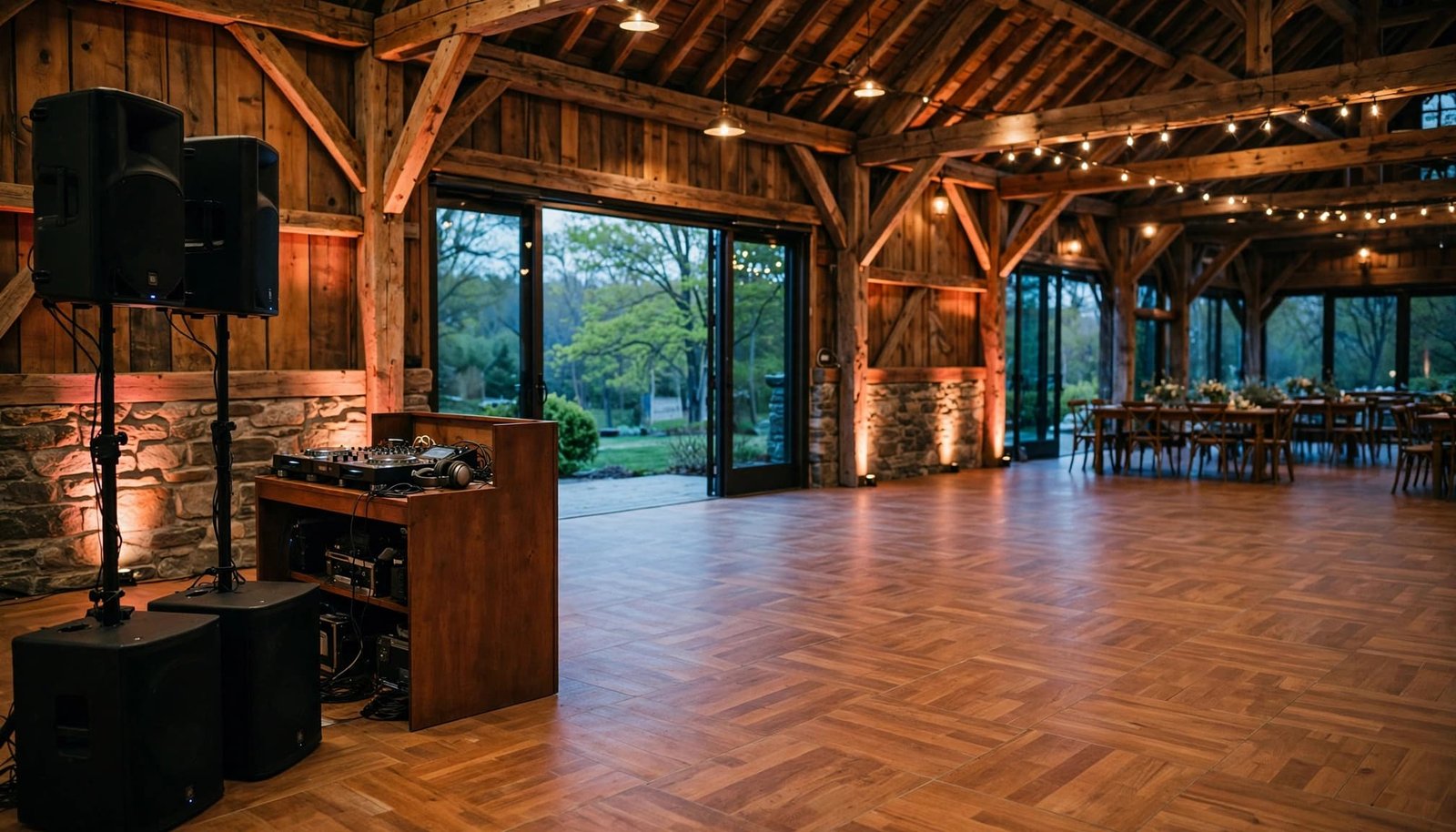
Illustrative layout with a separate dance floor and sound area.
Book Early and Put Responsibilities in Writing
Once your wedding date and venue are secured, put your DJ near the top of the booking list. Spring dates aren’t automatically available.
Follow a Practical Booking Schedule
Nine to twelve months ahead is a useful target. Twelve to eighteen months gives you more choice for popular Saturdays, destination venues, or a particular performer.
Use the remaining months to prepare song choices. Schedule a detailed planning conversation about four to six weeks before the wedding, then send final updates according to the provider’s process.
Our wedding DJ booking timeline helps coordinate setup, performance, and transitions.
Make the Contract Specific
A clear agreement should name the DJ, date, locations, coverage hours, setup access, equipment, and included services. It should list the total price, reservation payment, balance deadline, overtime rate, and who can authorize extra time.
The agreement should also address travel charges, parking, tolls, lodging, vendor meals, and optional enhancements. Include cancellation, postponement, substitutions, illness coverage, backup equipment, and the weather relocation plan.
The Knot’s wedding entertainment contract guide covers setup, performance timing, breaks, and meals. These details help protect time between the ceremony, dinner, and dancing.
Written scope makes proposals easier to compare and keeps responsibilities clear on the wedding day.
Frequently Asked Questions
How much does a New Hampshire wedding DJ cost?
A typical professional wedding DJ costs $1,500 to $3,000, though local listings range from about $500 to $5,000. Compare what each package includes, such as ceremony audio, MC duties, travel, and lighting.
What should couples plan for spring wedding DJ audio?
Plan separate sound locations for the ceremony, cocktail hour, and reception when those events happen in different areas. For an outdoor ceremony, choose an indoor backup and set a time and person for the weather decision.
When should you book a wedding DJ?
Nine to twelve months ahead is a useful target, while booking twelve to eighteen months ahead gives you more choice for popular Saturdays, destination venues, or a particular performer. Schedule a detailed planning conversation about four to six weeks before the wedding.
What should a wedding DJ contract include?
The agreement should list the DJ, date, locations, coverage hours, setup access, equipment, included services, total price, and payment deadlines. It should also cover overtime, travel costs, cancellation or postponement, backup equipment, and the weather relocation plan.
How should couples prepare a wedding music timeline?
Put the ceremony, cocktail hour, introductions, toasts, dinner, formal dances, and open dancing on one shared timeline. Provide song choices, do-not-play selections, name pronunciations, and clear cue responsibilities.
Bring Your Spring Celebration Together With Confidence
A successful spring wedding combines personalized music with practical preparation. The right DJ supports your venue layout, weather backup, budget, and preferred celebration style.
Align entertainment with your wedding plans and ceremony preferences, then put key details in writing. With those decisions settled, your wedding entertainment can follow a clear, coordinated plan while you enjoy the meaningful moments.