A mountain view, a lakeside lawn, or a barn field at a wedding venue NH can look incredible, but the wind does not care about your vows. New Hampshire outdoor wedding sound needs a real plan if you want every guest to hear an outdoor ceremony without harsh volume, dropped words, or last-minute stress, especially when you are surrounded by the sweeping vistas of the White Mountains.
Your ceremony only happens once. The music needs to start on cue. The officiant needs to be clear. Your guests should hear the promises that matter most. A professional sound setup turns an outdoor setting into a polished, memorable ceremony space.
Key Takeaways
- Outdoor ceremony audio needs more planning than reception music because wind, distance, and open space absorb sound during an outdoor ceremony.
- A wireless microphone for the officiant is usually the most reliable starting point.
- Couples should use a second microphone plan for vows, readings, or quiet voices during the wedding ceremony.
- Speaker placement should cover guests evenly without aiming sound directly into microphones.
- Confirm power access, weather plans, and local sound logistics with your venue and municipality before wedding day.
New Hampshire Outdoor Wedding Sound Starts With the Ceremony Site
Outdoor sound does not behave like ballroom sound. Inside, walls help contain audio. Outside, sound travels away from your guests, which is a major factor when planning ceremonies at outdoor wedding venues across Southern New Hampshire. Wind can carry voices in the wrong direction. A passing truck, nearby traffic, birds, or a lawn mower can suddenly become part of the service.
That is why a small Bluetooth speaker is not enough. It may play a processional song, but it cannot reliably cover an officiant, two partners, readers, and a seated guest list. The result is often frustrating: guests in the first rows hear everything, while grandparents near the back only catch pieces.
A proper ceremony sound system uses professional speakers, wireless microphones, a mixer, and someone watching the audio during the event. It is not about making the service loud. It is about making it clear, warm, and consistent, especially when you are hosting a celebration at a scenic rustic barn venue.
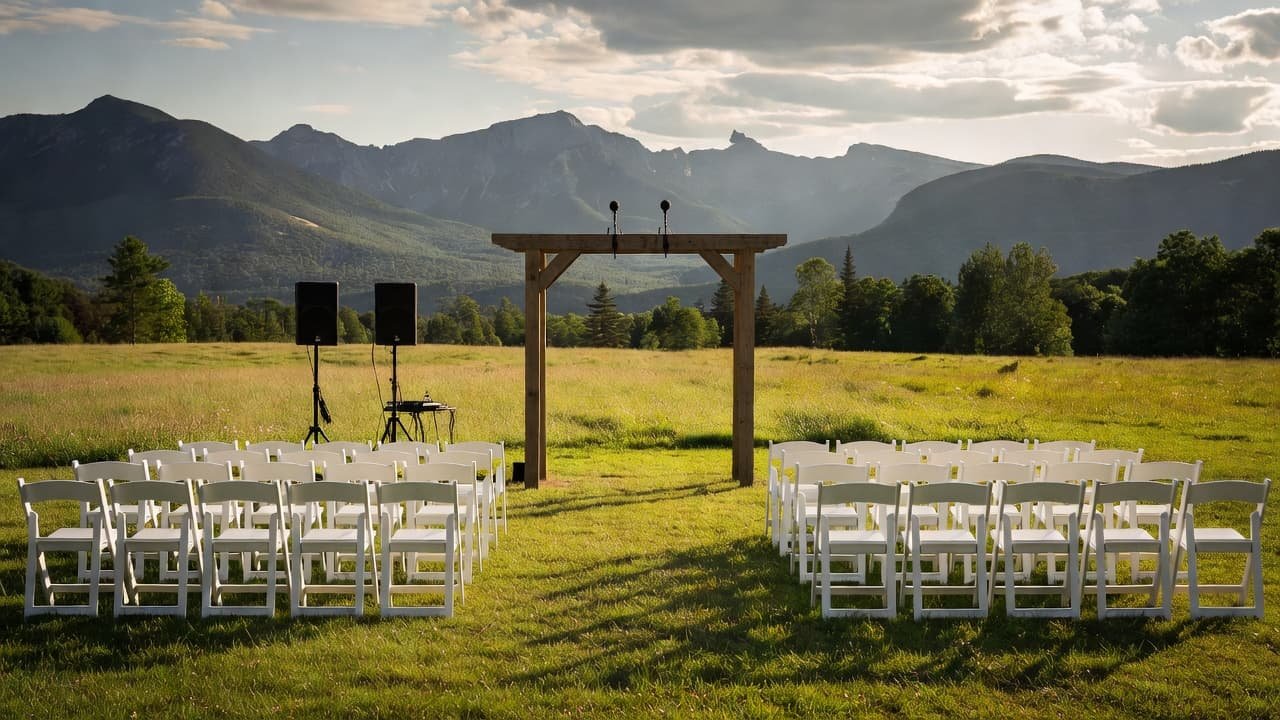
Before finalizing your sound setup, walk the actual ceremony location. Look for the guest seating area, the ceremony focal point, power sources, and the direction of the sun and wind. A sloped lawn, a waterfront deck, and a wooded property all need different speaker placement.
For more outdoor music ideas, these outdoor wedding sound tips offer a helpful reminder that music, volume, and equipment placement need to work together.
Ceremony Audio Is Not Reception Audio
The reception sound can handle more volume, more bass, and a fuller dance-floor sound. Guests are talking, dancing, and moving around. Music, alongside live music or background tracks played during the cocktail hour, is supposed to create energy.
A ceremony has a different job. The sound system must support intimate moments without becoming the center of attention. Vows should feel personal. Readings should be easy to understand. Processional music should fill the space without overpowering the wedding party walking down the aisle.
That difference changes how professional wedding DJs approach the setup.
At the ceremony, speakers should be positioned near the front and aimed toward guests, not directly at the couple or officiant. This helps reduce feedback and keeps the sound focused where it belongs. Reception speakers may be spread wider or placed for dance-floor coverage later, but ceremony speakers are about speech clarity first.
A ceremony can sound perfect during music playback and still fail during vows if the microphone plan is weak.
The person operating sound during the wedding ceremony should also be ready for live changes. A reader may stand farther from the planned spot. A couple may speak softly. The officiant may turn away while talking. Those small moments are exactly why an experienced operator matters.
Choose the Right Wedding Ceremony Microphones
Microphones are the heart of outdoor ceremony sound. One microphone is rarely enough. A polished setup uses the right microphone for each role and includes backups.
Give the Officiant a Wireless Lapel Mic
A wireless lapel microphone, also called a lavalier mic, is usually the best choice for the officiant. It clips neatly to clothing and keeps both hands free. Since the officiant is speaking throughout the wedding ceremony, this mic captures the key moments, introductions, readings, and often the couple’s responses.
Placement matters. The microphone should sit high on the chest, away from necklaces, loose fabric, or hair that can rub against it. A professional disc jockey checks the level before guests arrive and watches for any interference during the service.
A headset microphone can also work well for an officiant who moves often. It stays close to the mouth and provides strong vocal clarity. It is more visible, though, so many couples prefer the discreet look of a lapel mic.
Add a Mic Plan for the Couple
Couples often assume the officiant’s mic will capture every vow. Sometimes it does. Sometimes a soft-spoken voice disappears in the breeze.
The most reliable choice is to mic the officiant and provide a second wireless microphone for the couple to share during vows. This is especially smart when partners plan personal vows, speak quietly, or want every word recorded clearly for wedding entertainment videos.
A handheld mic can be passed naturally between speakers. It also gives the disc jockey a dependable option if wind or movement affects another microphone. For a more formal look, some couples prefer a small mic stand at the ceremony spot. That works best when everyone knows where to stand and speak.
Readers should never be expected to project across a field. Give them a handheld microphone on a stand. It keeps their hands free for pages and prevents the classic moment where a meaningful reading becomes impossible to hear.
Speaker Placement Makes the Difference
One loud speaker at the front is not a sound plan. It often forces the front rows to sit through uncomfortable volume while the back rows still struggle. Clean coverage is the goal.
For a smaller ceremony, two professional speakers near the front may be enough. They should face the guest seating area and sit ahead of the microphones whenever possible, often mounted on stable speaker stands to optimize projection. This reduces the risk of squeals and feedback.
For longer seating layouts, more coverage may be needed. Whether you are planning a rustic woodland celebration or a coastal gathering in Portsmouth NH, a sound professional can use a second pair of speakers farther back at a lower volume. Every guest hears the ceremony, and no one gets blasted by one oversized speaker.

Photo by Marvellous Adu
Avoid placing your audio equipment inside the ceremony arch, behind the couple, or directly beside the officiant. They will look distracting in photos and can create feedback. A clean setup should blend into the ceremony design while still delivering reliable coverage.
When comparing local providers, look for teams that understand both entertainment and production. Audio Events is one example of a New Hampshire event-production provider offering mobile entertainment and audio services. Ask any provider about outdoor speaker coverage, microphone backups, battery options, and onsite sound support.
Power, Weather, and Timing Need a Backup Plan
New Hampshire weather can change fast. Bright sun can turn into rain. A late-afternoon breeze can become a strong gust by ceremony time. Sound equipment needs protection, and the ceremony needs a backup location or weather plan that everyone understands.
Managing sound logistics for a mountain view or a coastal wedding requires careful attention to power availability and weather contingencies.
Ask your venue these questions well before the wedding:
- Is there dependable power near the ceremony location?
- Can the sound team safely run power from an approved outlet?
- Is there a covered backup ceremony space?
- Where can equipment be staged if rain arrives?
- Are there rules about sound levels, setup times, or generator use?
As you navigate your broader wedding planning checklist, never assume the same permit or noise rules apply to every property. Whether you are hosting an event in Concord NH or a rural retreat, requirements can differ by venue, town, neighborhood, and event type. Confirm expectations directly with your venue coordinator and the municipality if needed.
A professional setup should also include spare batteries, backup microphones, weather covers, and enough time for a full soundcheck. Ceremony audio is not the place to test equipment five minutes before guests arrive.
For couples still comparing options, New Hampshire AV rental listings can help show the range of local audio services available. Still, rentals alone do not replace an experienced person who can run the equipment during live vows.
Common Outdoor Ceremony Sound Mistakes to Avoid
The biggest mistakes are easy to prevent when sound is part of the planning conversation early.
Waiting until the final week creates rushed decisions. Your wedding DJs or sound provider needs the ceremony time, venue layout, guest count, music selections, and microphone needs in advance.
Using only one microphone puts too much pressure on one piece of equipment. A second mic gives you options for vows, readings, and unexpected issues.
Skipping a soundcheck is risky. Wind, nearby activity, and guest seating can change the way sound carries. Test music and microphones in the actual ceremony space at your chosen wedding venue NH.
Putting speakers behind the ceremony can cause feedback and poor coverage. Speakers should project toward guests, not toward open space.
Treating ceremony music like a playlist misses the point. Processional cues, family entrances, the bride’s entrance, unity moments, and recessional music all need clean timing from a dependable ceremony sound system.
Forgetting the officiant is common. Send the officiant a simple microphone plan before the wedding. Let them know where to stand, when to use the handheld mic, and how close they should stay to the ceremony area.
Frequently Asked Questions
Why is outdoor ceremony sound harder to manage than indoor sound?
Outside spaces lack walls to bounce audio, and open air along with wind can quickly scatter voices. Without professional speakers and proper placement, guests in the back rows will struggle to hear your vows.
Do we really need more than one microphone for our outdoor ceremony?
Yes, relying on a single microphone is a common mistake that often leaves quiet speakers or personal vows inaudible. Using a lapel mic for the officiant and an extra microphone for vows or readings ensures everyone is heard clearly.
Where should ceremony speakers be placed?
Speakers should always be positioned near the front and aimed directly toward the guest seating area rather than behind the altar. This setup prevents audio feedback and projects the sound evenly across the crowd.
Build a Sound Plan That Feels Effortless
A strong ceremony plan is simple on paper. It includes the processional order, exact music cues, microphone assignments, speaker locations, power access, and a weather backup. On wedding day, that preparation lets everyone relax.
DJ Steve Neff Entertainment brings more than 23 years of event experience to celebrations across New Hampshire. Beyond professional emcee services, uplighting, and a photo booth, the goal is always the same: professional equipment, clear announcements, customized music, and a ceremony that feels smooth from the first guest arrival to the recessional.
The best New Hampshire outdoor wedding sound is the sound guests barely notice because every word comes through clearly. Your vows stay front and center. Your music lands at the right moment. Your celebration starts exactly the way it should.