Comfortable music at a summer wedding starts with balanced sound coverage, shaded gathering areas, and a practical weather plan for an outdoor wedding. Guests should hear the vows, talk comfortably at dinner, and dance without sitting beside overpowering speakers.
A beautiful venue adds atmosphere; thoughtful preparation keeps guests comfortable throughout the celebration. Start with the property, then build a coordinated sound plan around its layout, guest count, and summer conditions.
Key Takeaways
- Plan ceremony timing, shade, water access, and a weather backup around the venue’s local conditions. During thunderstorms, move guests to a substantial building or hard-topped vehicle.
- Match sound coverage to each ceremony, cocktail, dinner, and reception area. Place speakers so guests can hear clearly while dining and quieter spaces remain comfortable.
- Use guest count, schedule, and event complexity to plan production. A micro wedding or elopement may still need ceremony microphones, separate music coverage, and coordinated cues.
- Confirm power, equipment access, sound restrictions, setup time, and the reception timeline with the venue and vendors. Compare venue rental costs separately from entertainment and other services.
Planning New Hampshire Summer Weddings Around the Weather
Summer brings long daylight hours, green mountain views, and opportunities for waterfront celebrations. It also brings heat, humidity, passing showers, and thunderstorms.
Choose Ceremony Timing With Guest Comfort in Mind
June, July, and August each offer appealing dates for a wedding, but no month guarantees comfortable conditions. July and August can bring hot, humid afternoons; mountain and waterfront locations have their own wind and temperature patterns.
NOAA’s local climate normals provide location-specific averages rather than one statewide expectation for New Hampshire. Use the venue’s setting to guide ceremony timing, shade placement, nearby water access, and shorter walks.
Later-afternoon timing can reduce direct sun exposure when the layout provides shade. Make water easy to reach, and identify a cool indoor space if heat requires moving the wedding indoors. Keep seating away from loudspeakers, place speakers so the officiant can be heard at a comfortable volume, and leave accessible routes for guests.
Establish a Weather Decision Before Wedding Day
A dependable backup plan identifies the alternate ceremony location, available power, equipment placement, and who makes the relocation decision. Check that the venue’s plan allows time for the move and another sound check.
A tent provides shade and some rain protection, but it isn’t safe shelter during lightning. For thunderstorms, direct everyone to a substantial building or hard-topped vehicle.
The Rocks: A White Mountains Weekend Wedding Option
The Rocks in Bethlehem occupies a 1,400-acre property in the White Mountains owned by the Society for the Protection of New Hampshire Forests. It hosts one wedding per weekend, Friday through Sunday, with room for arrivals, preparation, and time together.
These were The Rocks’ published 2025 rates, not current-season quotes:
| Wedding Option | 2025 Rate |
|---|---|
| Weekend wedding package | $8,000 |
| One-day wedding | $5,500 |
| Ceremony only | $2,500 |
| Reception only | $3,000 |
The Carriage Barn accommodates up to 120 seated guests or 197 standing. For indoor events, the reception gallery holds up to 100 seated or 174 standing.
The two-night weekend package includes the Gardener’s Cottage as bridal accommodation, with sleeping space for up to eight. These figures describe different arrangements; the listed guest capacity for a standing event doesn’t indicate room for seated dinner tables and dancing.
For outdoor music, plan around the distance between the ceremony site and reception space. Separate locations may need separate sound coverage, protected power, and extra setup time. The historical venue rates are a starting comparison, not a complete event budget.
Lakes Region and Seacoast Venues With Different Advantages
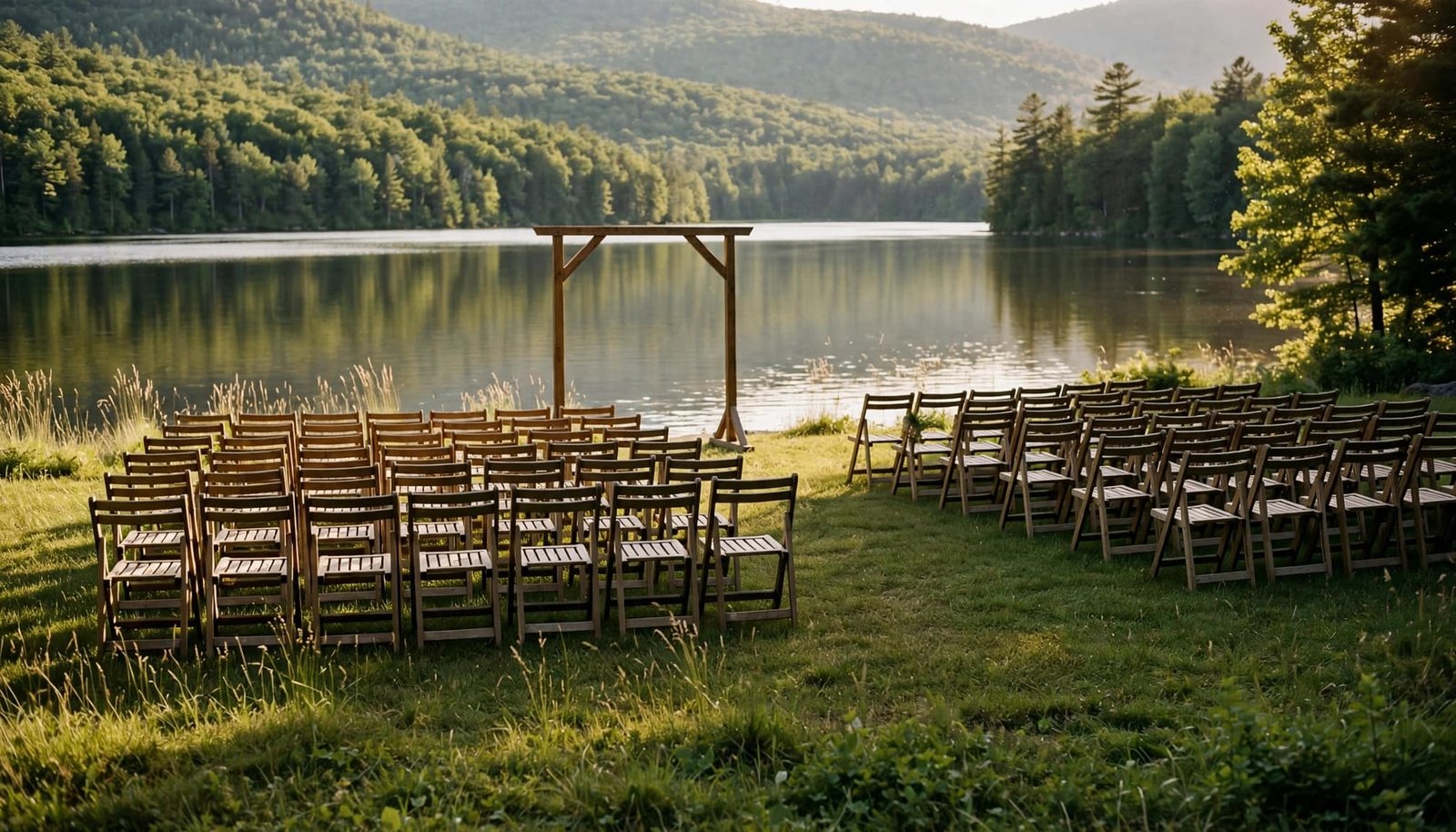
A waterfront venue in New Hampshire can suit an intimate gathering or a larger celebration. The right choice depends on guest capacity, included coordination, and how guests move between spaces.
The Lake Estate on Winnisquam
The Lake Estate on Winnisquam offers seven event rooms, an Estate Ballroom accommodating up to 220 guests, and a One Wedding Per Day Guarantee.
Its packages include a 30-minute service in the couple’s chosen location, a rehearsal the previous day, and a preferred vendor list. An outside wedding planner isn’t required; the events team manages timelines, vendor coordination, floor plans, and day-of execution.
For the wedding, share the ceremony, cocktail-hour, and reception locations together. Each area needs appropriate sound coverage, even when everything takes place on one property. Built-in venue coordination helps establish when microphones, announcements, and music transitions belong.
Seacoast Science Center and Fuller Gardens
Seacoast Science Center in Rye, within Odiorne Point State Park, offers an oceanfront tent and evening access to its museum and aquarium. Its coastal setting makes microphone wind protection and controlled speaker direction important planning considerations.
Fuller Gardens in North Hampton suits an elopement or intimate event of up to 50 people. A smaller guest list supports a more compact celebration, while sound still needs to reach everyone clearly.
Both venues call for sound that complements the surroundings without dominating nearby conversation or gathering spaces.
Historic Properties for Garden and Pavilion Celebrations
The Victoria Inn Bed and Breakfast and Pavilion is another Seacoast option for wedding celebrations. The approximately 5,500-square-foot historic inn has a wrap-around porch and sits on 5.6 acres of rolling greens with garden space.
A porch, lawn, and pavilion create distinct gathering areas. At this wedding venue, plan music coverage around guest movement and coordinate timing with the photographer rather than relying on one speaker aimed across the property.
Kimball Jenkins in Concord hosts wedding celebrations for 30 to 200 guests, with a Mansion and the more casual Carriage House and Gardens. The different spaces support distinct atmospheres and equipment layouts.
For a pricing comparison, Wedding Spot’s Kimball Jenkins listing gives a $4,000 reception rental with 12 hours for the event, setup, and cleanup. It also lists a $2,000 ceremony-only fee. These are rental figures, separate from entertainment and other services.
Match the Wedding Format to Your Guest List
Format labels can overlap, so guest count and schedule are more useful than the name alone.
A micro wedding generally includes up to around 50 guests. A minimony has no more than 10 people, while an elopement typically includes 30 guests or fewer. An intimate wedding may fit within the same range without following a fixed definition.
A sequel wedding is a larger celebration held after a smaller minimony. The term appeared by 2019, before the pandemic expanded interest in separate ceremonies and receptions.
An elopement, minimony, or micro wedding can still include multiple scheduled events, so the format alone doesn’t determine production needs. An intimate wedding may have production needs similar to a larger event.
Guest count influences sound coverage; event complexity influences production needs. Even a micro wedding may require ceremony microphones, separate cocktail music, introductions, and coordinated dance cues. A shorter guest list doesn’t automatically mean one speaker will cover every moment, whether it’s an elopement or a minimony.
Keep Outdoor Music Clear and Comfortable
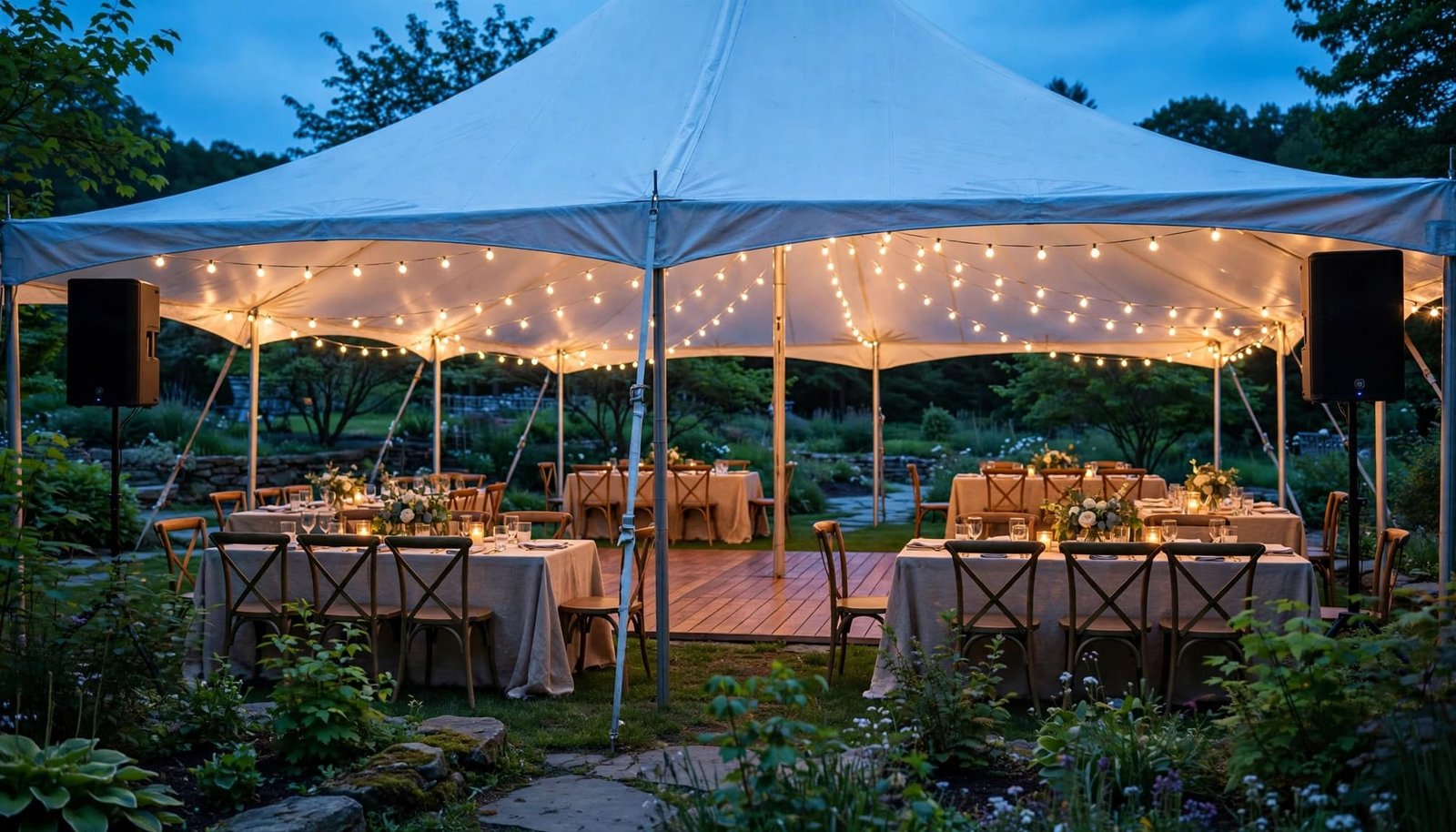
Outdoor audio needs careful placement because open spaces don’t contain and distribute sound. Turning up the volume alone can leave nearby guests uncomfortable while people farther away still miss announcements.
Plan Coverage Around Guests and Activities
For a summer wedding, place speakers to cover the intended listening area, directing dance-floor energy away from dining tables and quieter seating. Include nearby homes and waterfront boundaries in the venue layout.
Dinner music should let guests talk without raising their voices. At the wedding reception, the dance floor can have more energy while a separate seating area stays comfortable.
Our guide to outdoor wedding sound planning explains how speaker placement and open-air conditions affect clear speech.
A comfortable dinner area and an energetic dance floor can coexist when sound coverage follows the floor plan.
Give Ceremony Microphones Their Own Attention
An outdoor ceremony needs clear coverage for the officiant, vows, readings, and musical cues. Wind protection and careful microphone placement help reduce distracting noise without raising the volume.
Schedule a full ceremony sound check before guests arrive. Test speech through the actual microphones, including the vows, and listen from the rear seats so guests there can hear clearly.
The reception system may be too far away to cover the ceremony. Coordinate processional cues with the photographer, and use separate coverage to avoid rushed equipment moves and keep the processional on time.
Coordinate Power, Setup, and the Reception Timeline
Reliable entertainment depends on preparation behind the scenes. Equipment access, electrical safety, sound restrictions, and vendor communication all affect how smoothly the celebration runs.
Protect Equipment and Guest Pathways
Provide a stable, shaded setup area with suitable cover, protected electrical connections, and clear equipment access. Outdoor power should use GFCI protection, with connections kept dry and away from guest traffic.
Cable routes shouldn’t cross walking paths without appropriate protection. Keep equipment away from food service, lawn games, and busy entrances.
Our wedding venue sound questions help organize discussions about power, setup access, equipment permissions, and amplified-music restrictions before the floor plan is finalized.
Build Music Around the Summer Schedule
Start with the required ending time, then schedule the ceremony, dinner, toasts, formal dances, and open dancing within that window. New Hampshire summer evenings can stay bright, so coordinate lighting with the actual schedule.
Personalized selections should include must-play songs, do-not-play preferences, family traditions, and the desired energy level. Leave flexibility for guest response and timing changes.
The DJ, wedding planner, photographer, and catering team should share the same sequence. That coordination prevents a first dance from starting while guests are still moving between spaces.
Common Summer Wedding Planning Questions
Who Can Legally Marry Us in New Hampshire?
New Hampshire’s marriage solemnization law authorizes civil ceremonies by commissioned justices of the peace and religious ceremonies by qualifying religious leaders. A reception MC isn’t automatically an authorized officiant.
What Should We Budget for DJ Entertainment?
A practical starting budget for a DJ wedding package is $1,500 to $3,000, with ceremony coverage, event length, and added production affecting the total. This is a planning range, not a package quote.
Our New Hampshire wedding DJ services include personalized music planning, professional sound, wireless microphones, and MC support. Define every reception location needing music or speech when comparing entertainment proposals.
A Comfortable Celebration Starts With Coordinated Planning
A strong wedding music plan fits the venue, supports conversation, and gives meaningful moments clear, dependable sound. Shade, weather shelter, thoughtful speaker placement, and organized transitions all support guest comfort.
Bring your venue layout, guest count, music preferences, and ceremony plans into the wedding entertainment discussion early. With those details coordinated, guests can enjoy a personal, welcoming celebration that stays well-paced throughout the day.