A beautiful venue can still create a stressful wedding day if the DJ setup was never discussed. One missing outlet, a tight loading dock, or a surprise sound limit can affect ceremony audio, announcements, and the reception flow.
The right wedding DJ venue questions give your wedding DJ the details they need before event day. A few clear answers now can prevent last-minute changes during your wedding reception when you should be focused on getting married.
Key Takeaways
- Confirm your wedding DJ has adequate space, power access, and enough time for setup and load-in before finalizing your event timeline.
- Ask about sound volume limits, regulations for outdoor areas, and venue-approved vendor policies.
- Plan the audio requirements for your ceremony and reception as distinct needs if they are occurring in different locations.
- Ensure your vendor has reliable backup equipment ready to go, and always address potential red flags with a clear plan.
- Get all venue answers in writing, then share the final details with your DJ well in advance.
Start With the Room, Not the Playlist
It is easy to focus on your preferred music style and song requests. Those details matter. But first, your event professional needs to know what the room can support.
A ballroom with a dedicated vendor entrance has different needs than a barn, tent, private estate, or historic inn. Ceiling height, wall materials, guest count, table layout, and dance floor placement all affect sound coverage. A wedding DJ setup squeezed beside the bar may look small on a floor plan. In real life, it can leave one side of the room too loud and the other side unable to hear announcements.
Ask the venue where the potential DJ is expected to set up. Confirm the dimensions of the space and whether there is room for speakers, a DJ facade, lighting, and safe cable runs. If your venue has a preferred floor plan, request a copy before finalizing your dance floor and reception layout.
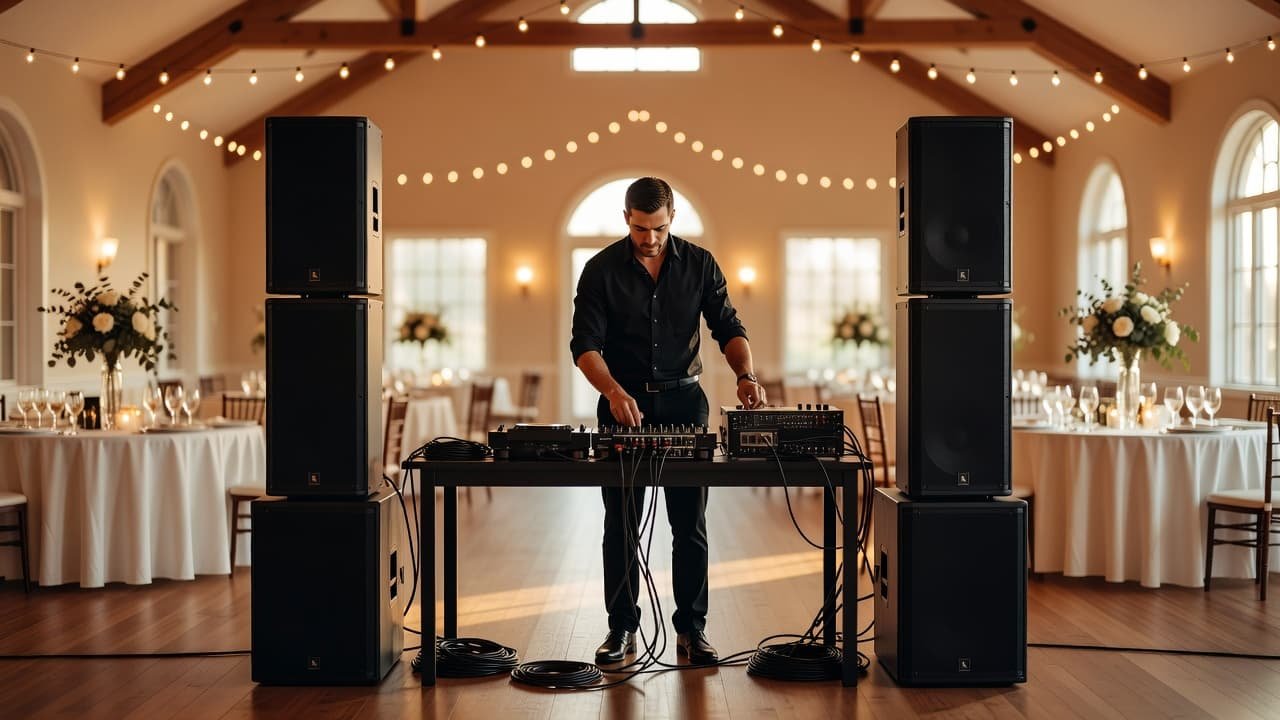
Your vendor should also know where guest tables, the head table, cake, photo booth, and dance floor will be placed. Entertainment works best when it supports the room instead of competing with traffic flow.
For a broader planning reference, Zola’s wedding DJ checklist is a useful reminder that music planning includes far more than the dance set.
A good setup is rarely about using more equipment. It is about placing the right equipment in the right location.
Ask About Power, Load-In, and Setup Time
Power is one of the first things to confirm when hiring your wedding DJ. Ask the venue where outlets are located, whether they are dedicated circuits, and if the professional sound system can be connected without running cables through guest walkways.
A single shared outlet may be fine for a small cocktail hour speaker, but it likely will not suffice for your full reception sound, wireless microphones, dance lighting, and DJ workstation. Your wedding DJ can determine the actual power requirements, but they need accurate information from the venue first.
Loading access matters just as much as electricity. Some locations have easy ground-level access, while others require stairs, elevators, long hallways, or a specific service entrance. Those details directly affect arrival time and logistical planning.
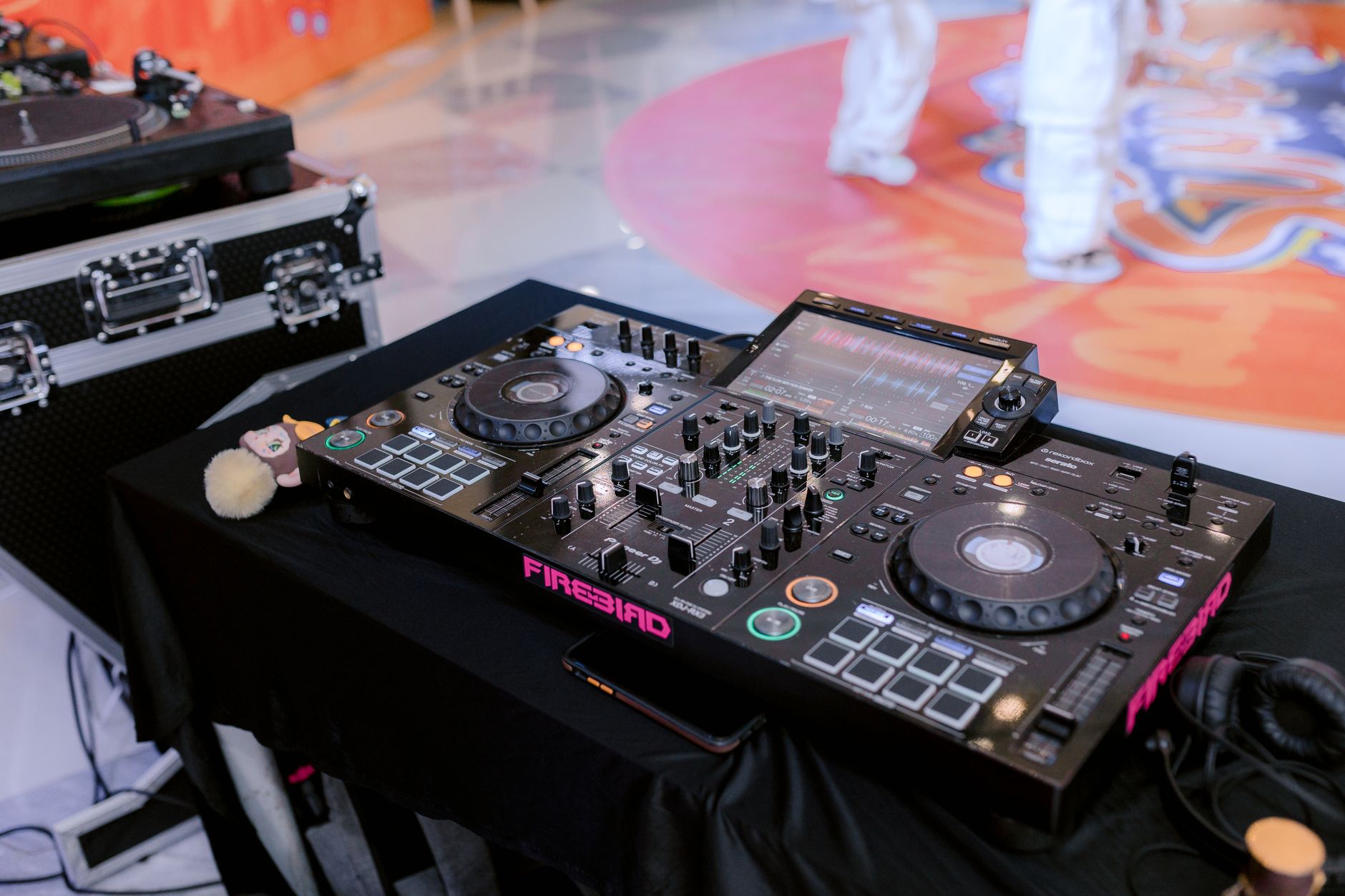
Photo by Nguyễn Tiến Thịnh
Ask whether the entertainment team can load in before guests arrive. Many professionals need ample time to bring in equipment, test microphones, place speakers, and check music cues. A restricted arrival window can work, but it requires careful vendor coordination to ensure everything is ready.
Check these details with the venue staff:
- Vendor arrival time: Ask when your DJ may enter the property and begin setup. A red flag is a short setup window paired with a long walk from the parking area. Ask whether early access can be added to the contract.
- Load-in route: Inquire about stairs, elevators, gravel paths, ramps, and service doors. Follow up with photos or a site visit if the route sounds complicated.
- Power access: Confirm where outlets are located and what other equipment shares those circuits. A red flag is an outlet that is far away, unreliable, or already assigned to catering equipment.
- Parking: Ask where the DJ vehicle may stay during the event. Confirm if parking passes or security approval are required for the staff.
- Setup and breakdown: Ask whether all equipment must be removed immediately after the reception. A late-night load-out can affect staffing, the overall event timeline, and your final song timing.
A detailed venue and DJ planning checklist can help you compare your venue’s answers with your professional’s standard requirements.
Confirm Sound Rules Before You Book
Every venue has its own sound policies. Some have no formal limit, while others use decibel monitors, limit amplified music after a certain hour, or restrict subwoofers outdoors. A few venues even require music to end earlier than the reception itself.
Ask for the rules in writing because “keep it reasonable” is not a clear policy. Find out who controls volume decisions on the wedding day. Is it the venue manager, the coordinator, a property owner, or a neighbor complaint line? It is also wise to inquire how venue restrictions might influence your wedding DJ pricing packages, as special equipment needs or extra labor may be required to comply with strict noise ordinances.
This conversation is especially important for outdoor weddings. Sound disappears quickly across open lawns, so your sound system must be properly calibrated for the space. Wind affects microphone clarity, and nearby homes can create restrictions that are not obvious during a daytime tour.
If the venue has a strict sound limit, your professional can build the night around it. Strong music selection, smart speaker placement, and controlled volume can still create a packed dance floor. The goal is not maximum volume; the goal is energy that feels good in the room.
Ask whether your venue allows:
- Professional speakers and subwoofers
- Wireless microphones for toasts and ceremonies
- Specialized lighting equipment like dance floor effects or LED uplighting
- Outdoor ceremony speakers
- Music during cocktail hour in a separate location
- A backup indoor location for rain
A professional audio setup usually includes more than decks and speakers. This wedding DJ equipment discussion shows why microphones, stands, power, and backup gear are all part of the conversation.
Plan Ceremony, Cocktail Hour, and Reception Separately
A wedding often involves distinct sound environments across the ceremony and reception. The ceremony may happen on a lawn, while cocktail hour might move to a patio. Dinner and dancing typically take place in a ballroom or a tent.
Do not assume one setup covers every space. Because your professional wedding DJ will be managing audio in multiple areas, you must plan for the specific needs of the ceremony and reception individually.
For the ceremony, ask where speakers can be placed and whether the officiant, couple, and readers can use microphones. Guests should hear the vows without harsh volume or visible cords crossing the aisle. A wireless microphone plan can keep the space clean while giving every important voice proper coverage.
For cocktail hour, ask if there is power and weather protection. Music should feel polished and relaxed. It should not overpower conversations or interfere with bar service.
The reception needs the most detailed plan. Confirm the DJ location, dance floor position, speaker placement, lighting options, and access to the main power source. Because this portion of the day includes professional emcee services for announcements and introductions, ensuring the audio is balanced across the room is essential. If the venue has hard walls, high ceilings, or exposed beams, clear speaker placement is critical to ensuring your guests enjoy the evening.
Printable Wedding DJ Venue Question Checklist
Bring this list to your venue tour or share it with your coordinator to ensure your potential DJ has everything needed for a seamless performance. Have the venue and your wedding DJ confirm these answers together so everyone is on the same page.
- Where will the DJ set up for the reception? Ask for the exact location on the floor plan. If the space is near doors, bars, or buffet lines, ask whether another location is available to keep the music focused on the dance floor.
- How much space is available for the DJ table, speakers, and lighting? Your DJ needs enough room to work safely. A red flag is a narrow corner with no room for speaker stands or guest movement, which can hinder the flow of the event.
- When can the DJ arrive and begin setup? Confirm the arrival time in your written contract. If setup begins after guests arrive, ask how the venue will keep equipment movement out of sight to maintain the atmosphere.
- Where is the vendor entrance and loading area? Ask about stairs, elevators, distance from parking, and weather exposure. Send photos to your DJ if the route is unusual.
- Are there nearby outlets and dedicated power circuits? Ask whether other vendors will use the same circuit. If power is limited, your DJ may need a different equipment plan to avoid technical failures.
- Are there venue sound limits or curfews? Get the exact policy, including outdoor music rules and the final dance end time. Ask who will communicate with the DJ if volume needs adjustment, keeping in mind that reading the room is essential for effective crowd engagement throughout the night.
- Is there a specific policy regarding a do not play list? Confirm if the venue has restrictions on song choices or genres that might conflict with their sound management policies.
- Can the DJ use wireless microphones for the ceremony and speeches? Confirm that officiants, readers, toasts, and announcements are all covered. Do not rely on guests being able to hear without proper amplification.
- Will ceremony, cocktail hour, and reception require separate sound setups? Ask about power, shelter, and travel distance between each space. A far-apart cocktail location may need its own speaker system.
- What is the rain plan for outdoor audio? Ask where equipment can move if weather changes. The backup location must have room, power, and clear sound coverage.
- Are uplighting, dance lights, and DJ facades allowed? Some venues restrict hanging fixtures, open flames, or equipment near historic walls. Confirm what is permitted before choosing your package.
- Does the venue require liability insurance or approved-vendor paperwork? Ask for specific insurance requirements and submission deadlines. Send the request to your DJ as soon as possible.
- Who is the event-day contact for DJ questions? Get a name and phone number. A coordinator who knows the plan can solve small issues before they become big ones.
Put the Final Answers in Writing
A quick verbal answer during a venue tour is helpful, but a written confirmation is much better.
Send the venue’s rules, floor plan, access times, and contact information to your wedding DJ. Your DJ should review these details and flag any potential concerns, such as the need for backup equipment, well before the wedding week. This is also the ideal time to engage in thorough vendor coordination to confirm your event timeline, ceremony cues, introductions, speeches, and the last dance.
The best event plans leave room for real life. Dinner can run late, photos can take longer, and weather can shift. Your DJ and venue staff should both know how the setup will adapt to these changes without disrupting your guests.
Frequently Asked Questions
Why is it necessary to ask about power circuits at my wedding venue?
Most professional DJ equipment, lighting, and sound systems require consistent, reliable power to function properly. A dedicated circuit prevents technical issues like blown fuses or equipment failure, which can abruptly stop the music during your reception.
Does my DJ need a separate sound setup for the ceremony and the reception?
If your ceremony and reception are held in different locations or rooms, your DJ will likely need separate setups to ensure consistent audio coverage. Planning for these as distinct needs allows the sound to be properly balanced in each area without visible cables or long gaps in service.
What should I do if my venue has strict noise restrictions?
If your venue has decibel limits or outdoor sound ordinances, inform your DJ as soon as possible so they can calibrate their equipment accordingly. A professional will build a performance plan that works within these limits to ensure you have a great atmosphere without violating venue policies.
A Better Setup Creates a Better Celebration
The right venue questions protect the moments people remember most: the vows, the introductions, the toasts, and the high-energy atmosphere at the end of the night.
A clear plan for space, power, sound, timing, and weather provides the professional experience your entertainer needs to deliver a polished and reliable performance. By confirming these logistical details early, you ensure your wedding reception runs smoothly. Taking the time to coordinate these requirements allows your wedding DJ to focus on the music and the mood, keeping guests engaged from the first song until the final dance on the packed dance floor.