A corporate event DJ at a brewery or distillery should provide music, clear announcements, and program support that fits the venue’s working environment. Successful planning starts with conversation-friendly sound, a coordinated schedule, and equipment placement that respects guest traffic and venue operations.
Breweries and distilleries offer a distinctive setting for corporate events, but tasting rooms, production areas, and shared public spaces need thoughtful coordination. Start with the event’s purpose, then build the music and hosting plan around the room.
Key Takeaways
- Match music, microphone support, and hosting responsibilities to the program, whether guests are networking, dining, or celebrating.
- Budget for preparation, equipment, setup, travel, and production support rather than performance hours alone.
- Put venue access, presentation cues, insurance requirements, and backup arrangements in writing before event day.
What a Corporate Event DJ Handles Beyond Music
Professional DJs support the company’s message as well as the guest experience. The right DJ understands when to build energy, when to make an announcement, and when to give conversations room.
MC Duties and Program Coordination
A corporate event DJ often acts as the master of ceremonies (emcee), introducing executives, welcoming guests, announcing awards, and guiding transitions. This role requires accurate pronunciations, approved wording, and a clear understanding of who controls the schedule.
At a brewery reception, the MC may announce dinner after a tasting. At a distillery awards evening, introductions and presenter handoffs may require closer timing. Our guide to planning DJ support for corporate events covers the communication and preparation behind these responsibilities.
Entertainment That Fits the Occasion
Mixers, networking events, and dinners need music that supports conversation. A holiday party or milestone celebration may gradually develop into dancing after formal remarks.
Conferences, product launches, team-building events, employee retreats, awards ceremonies, and charity events each need a different balance of music and hosting. A relaxed tasting-room reception doesn’t require constant interaction; a recognition program may need frequent microphone support.
Plan Around the Brewery or Distillery Layout
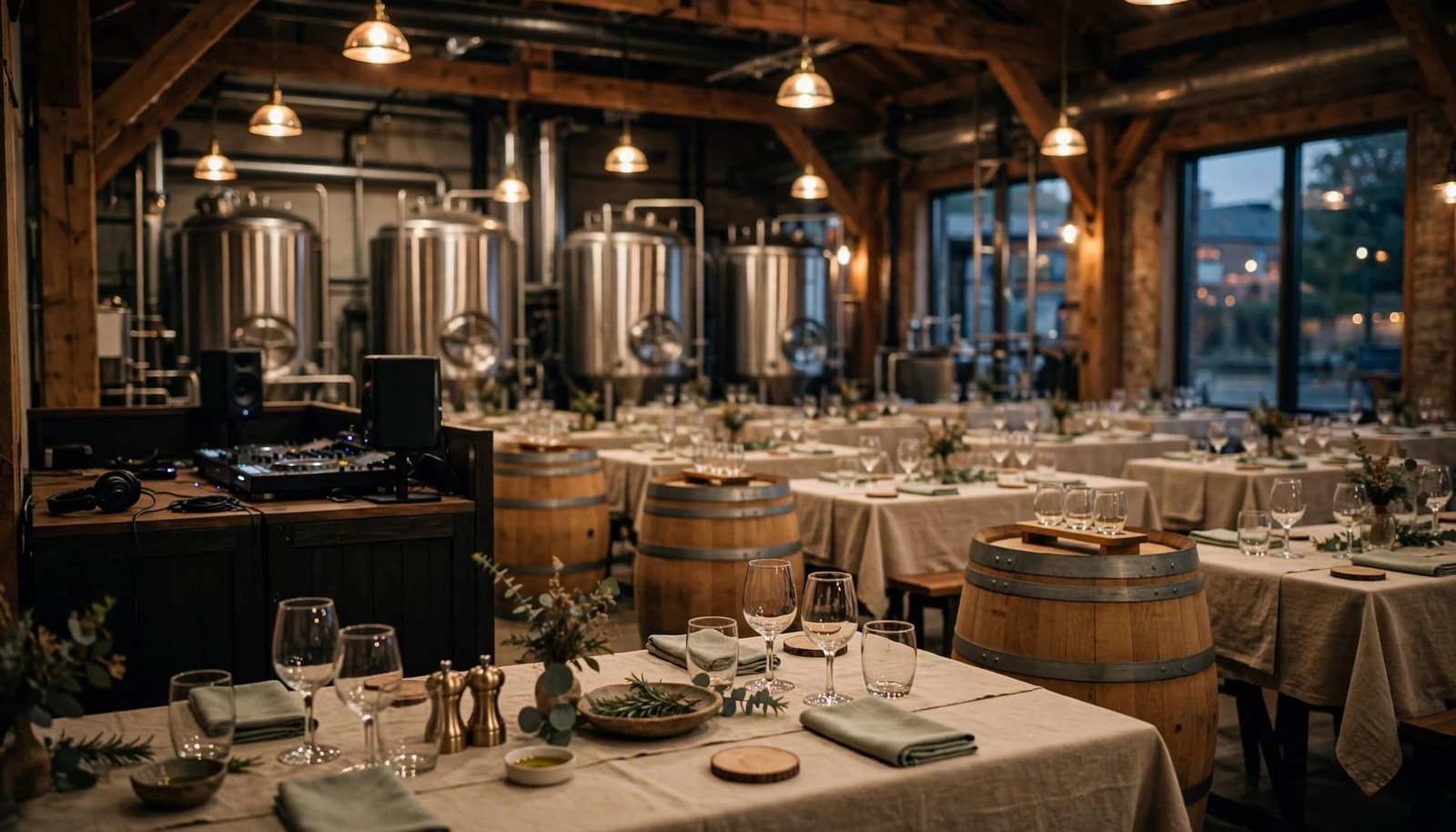
A distinctive room needs an entertainment layout that works with its existing features. Bar queues, tasting stations, equipment displays, and production boundaries all affect where guests gather.
Protect Conversation and Guest Movement
Position the DJ away from entrances, service stations, and busy bar areas. Keep accessible routes, exits, and catering paths clear, with equipment and protected cables outside normal walking routes.
Separate the main listening area from quieter networking tables when space allows. Room acoustics and venue sound limits should guide speaker placement and volume. Speakers should support the intended audience without directing unnecessary sound toward the bar or adjacent public seating.
NIOSH’s noise exposure guidance recommends an occupational limit of 85 dBA averaged over eight hours. That workplace benchmark isn’t a recommended party volume; comfortable conversation and the venue’s sound restrictions remain important planning considerations.
Coordinate With the Working Venue
The floor plan should distinguish private event space, public tasting areas, and staff-only production areas. The DJ or planner should confirm alcohol-service and tasting schedules, access boundaries, and operational needs with venue staff. Include tours, scheduled deliveries, and equipment movement in the planning conversation.
For distilleries, entertainment equipment belongs only in venue-approved event areas. Venue staff should control access to production spaces, while the DJ and planner coordinate around those boundaries.
Patio entertainment also needs a defined weather alternative and an agreed ending time.
Build a Shared Run of Show
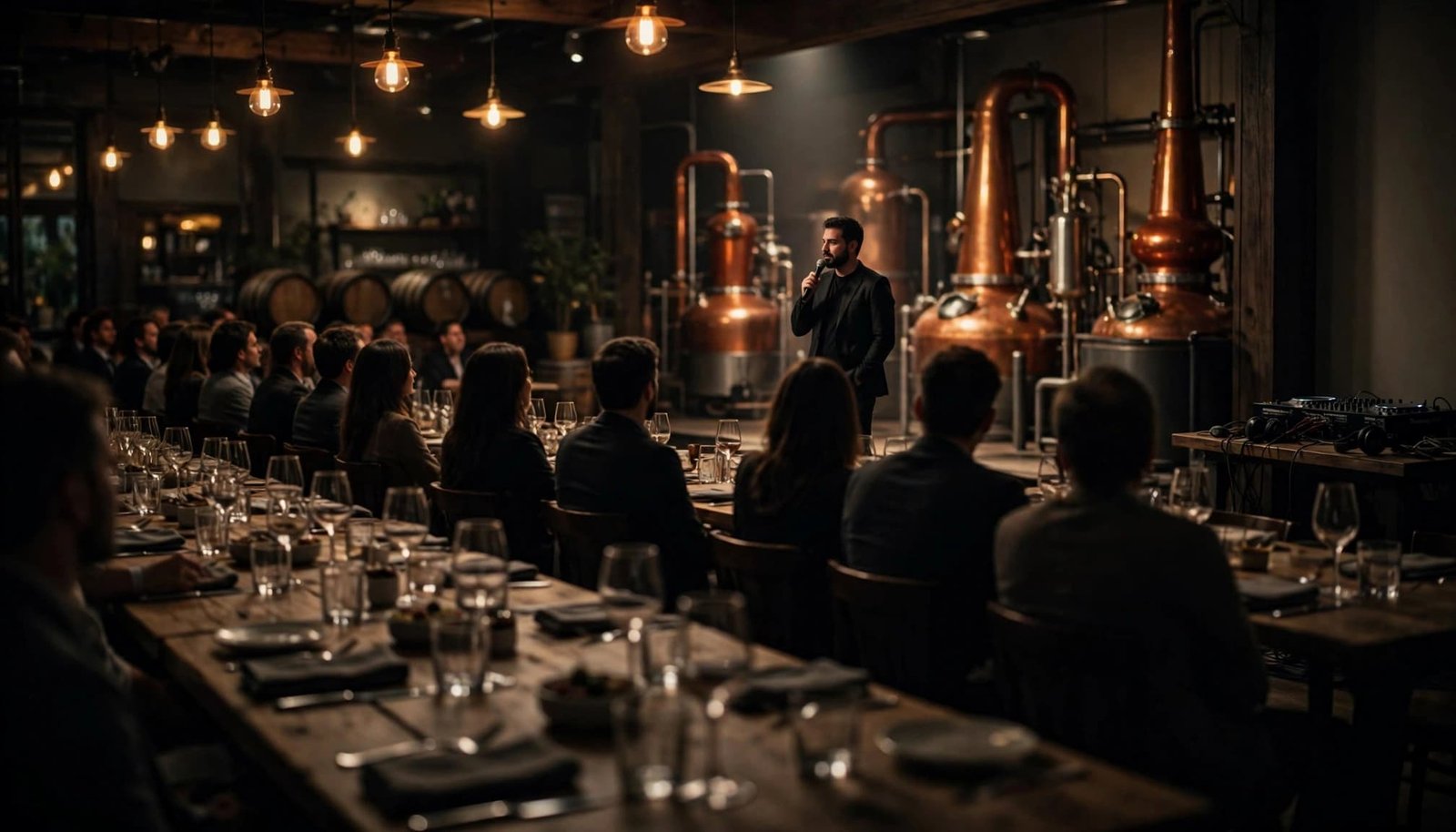
A shared run of show connects the DJ, event planner, venue manager, caterer, and any separate AV team. Include arrival, soundcheck, doors opening, meal service, presentations, music fills, dancing, and breakdown.
Give Every Presentation Cue an Owner
List each speaker’s name, title, pronunciation, introduction, and microphone needs. Assign responsibility for starting music, advancing slides, playing videos, and signaling that a presenter is ready.
Music fills are short selections, typically 15 seconds to a minute, played while speakers or award presenters approach the stage. Identify the exact track and stopping point so music doesn’t compete with the opening words. For walk-ups or consecutive presenter handoffs, list each music fill’s cue and stopping point.
Allow the Schedule to Adjust Naturally
Brewery tours, tasting service, and dinner can affect the evening’s timing. Build modest buffers around major transitions and designate one person to authorize schedule changes.
The DJ can extend background music while service finishes, then move into the next announcement when the team is ready. Guests experience a composed program because the vendors share the same information.
What Does a Corporate Event DJ Cost?
The cost of DJ services for a corporate event reflects the complete assignment, including preparation, music planning, MC duties, sound, travel, setup, and breakdown. A short reception with one microphone requires different production than a conference reception with presentations and dancing.
Use Local Ranges as Planning References
Our Keene corporate DJ pricing guide provides these New Hampshire planning ranges, rather than a universal rate or guaranteed quote.
| Event scope | Planning range |
|---|---|
| Smaller company party | $900 to $1,500 |
| Mid-size corporate event | $1,500 to $2,800 |
Use those figures to establish an initial budget, then compare DJ services proposals against the same schedule and equipment requirements.
Compare the Full Service Period
Quotes may use an event package, hourly structure, or day rate. Day-based availability can suit conferences with substantial gaps between program segments.
The proposal should identify performance time, early setup, rehearsal requirements, additional rooms, microphones, lighting, travel, parking, and overtime. A second sound system for a patio or separate presentation room changes the assignment.
Payment terms also vary. MyDeejay requires a 50% deposit for corporate bookings and prefers the remaining balance before the event date. That’s its policy, not an industry-wide requirement.
Establish Setup, Power, and AV Responsibilities
Venue access should allow equipment installation and a complete soundcheck before guests arrive. Shared loading routes and a tasting room that remains open during setup can affect the available window.
MyDeejay states that events below 250 guests generally require setup about 90 minutes before the start; larger events need several hours. Its stated venue requirements include a six-foot banquet table with linen and power within 35 feet. Larger rooms may require a riser or stage. These are provider-specific requirements, not automatic specifications for every DJ.
Assign responsibility for AV equipment, including speakers, microphones, presentation playback, screens, lighting, and staging, in the proposal. Existing house audio doesn’t automatically cover the corporate program.
Providers package these services differently. Hank Lane travels to client locations with an Events Team and in-house AV inventory that includes lighting, staging, microphones, and photo booths. Other events may use separate vendors.
At DJ Steve Neff Entertainment LLC, we provide DJ, MC, sound, lighting, and customized music planning throughout New Hampshire. Any live band, photo booth, or additional production should have a clearly identified supplier.
Choose Music and Hosting That Fit Company Culture
A brewery setting may feel casual, but the entertainment still reflects the company. Music preferences, workplace standards, guest ages, and the purpose of the gathering should guide the atmosphere.
Establish Music and Request Guidelines
Corporate playlists typically use radio-edited tracks. Set preferred genres, important selections, and a do-not-play list before the event, with client approval of song requests where required.
Networking music should leave room for introductions and discussion. Dinner selections can maintain a relaxed atmosphere, while a later dance set can respond to guest participation.
Our guidance on music for corporate cocktail receptions expands on this balance between atmosphere and conversation.
Look for Adaptability and Professional Restraint
A capable MC speaks clearly without making every transition a performance. Review how candidates approach executive introductions, mixed-age audiences, and changes in the room’s energy.
Vox DJs describes training in both musical skills and crowd-reading interpersonal skills. Those are useful selection criteria because technical mixing alone doesn’t establish corporate hosting ability.
Themed playlists or a live musician alongside DJ sets can suit some celebrations. Their value depends on the event’s purpose, available space, and production budget.
Put Insurance and Backup Plans in Writing
Reliable preparation includes a response to illness, equipment failure, weather disruption, and unexpected program changes. These arrangements belong in the written agreement alongside staffing, overtime, cancellation, and payment terms.
Separate Insurance From Equipment Protection
Liability insurance addresses covered claims subject to policy terms; it doesn’t replace a practical equipment backup plan. The venue’s contract determines required limits and documentation.
MyDeejay reports $2,000,000 in liability coverage per DJ and provides a certificate of insurance on request. That example doesn’t establish another provider’s coverage.
Certificate details should include the correct legal names, required additional-insured wording, and dates that account for setup and breakdown.
Make Replacement Coverage Practical
MyDeejay’s Emergency DJ System stores event notes, paperwork, and custom music so a prepared replacement can step in.
The practical lesson is that replacement staffing needs access to the complete event plan. A substitute also needs introductions, approved music, presentation cues, and venue instructions.
Equipment contingency planning should address playback, microphones, cables, and other essential components. Each responsibility should have an assigned owner rather than an assumed solution.
Frequently Asked Questions
How Far Ahead Should a Company Book?
For many company events, three to six months provides a useful planning window. November and December holiday celebrations benefit from six to nine months because desirable dates attract competing bookings.
Large corporate events are often booked several months to a year ahead. Smaller functions can be arranged on shorter timelines. Our corporate DJ booking timeline explains how program complexity affects preparation.
What Should the DJ Wear?
A conservative business suit is customary for corporate functions unless the company requests a tuxedo or more casual clothing. A brewery’s relaxed setting doesn’t automatically mean casual attire is appropriate.
The planning brief should state the dress code, hosting tone, and any company presentation standards. This keeps the entertainment consistent with the occasion.
Plan for Clear Sound and Confident Coordination
A successful brewery or distillery event begins with a shared plan for the room, the program, and the people responsible for each transition. Thoughtful music selection works best alongside clear microphones, practical access arrangements, and prepared backup coverage.
Define the event’s purpose and production needs before comparing proposals. That preparation gives your team dependable support and gives guests space to connect, celebrate, and enjoy the venue.