The first ten minutes of cocktail hour tell guests what kind of event they have walked into. If the music is too loud, conversations stop. If the room is too quiet, it can feel more like a waiting area than a celebration.
Choosing a corporate DJ New Hampshire businesses can rely on is about more than a playlist. The right music, clear sound, thoughtful lighting, and well-timed announcements create coordinated event entertainment. Together, they help guests relax and keep the program on track.
A polished gathering feels easy because the details behind the celebration have been handled with care.
Key Takeaways
- A corporate DJ should support conversation, networking, and formal moments with carefully paced music and comfortable sound levels.
- Professional announcements, wireless microphones, MC support, and clear event flow help keep remarks, awards, and transitions organized.
- Sound coverage, lighting, venue logistics, accessibility, and the event schedule should be planned together before the reception.
- Compare DJ quotes by reviewing planning, equipment, microphones, lighting, setup, travel, and hosting responsibilities—not just the hourly rate.
- Booking several months ahead gives your company more time to confirm the venue layout, music direction, timeline, and entertainment needs.
What Corporate Cocktail Events Need
Corporate cocktail receptions need a different approach than a late-night dance party. Guests may be meeting colleagues, speaking with clients, connecting with leadership, or waiting for an awards program to begin. Music should support those moments without pulling attention away from them.
Conversation-Friendly Music Sets the Tone
The opening music should match the purpose of the gathering. A holiday party may call for familiar seasonal selections mixed with upbeat classics. A networking reception may feel better with soul, jazz-inspired instrumentals, light pop, or clean contemporary tracks at a comfortable volume.
The DJ watches how the room is responding. When guests begin to arrive, the music can give the space warmth and energy. As the room fills, energy can rise gradually while the volume stays low enough for client and colleague conversations.
Higher-energy selections can come later if the schedule includes dancing or a livelier finish. The goal is to create an atmosphere that feels welcoming, polished, and appropriate for the people in the room.
Announcements Should Be Clear and Well-Timed
Cocktail receptions often include welcome remarks, recognition, sponsor acknowledgments, raffle drawings, awards, or a transition into dinner. Those moments need clear sound and a host who knows when to step in and when to stay out of the way.
A professional DJ can also take on the master of ceremonies role when the program calls for brief, prepared transitions. Names should be pronounced correctly. Speakers should know when they’re on deck. Announcements should stay concise and align with your company culture.
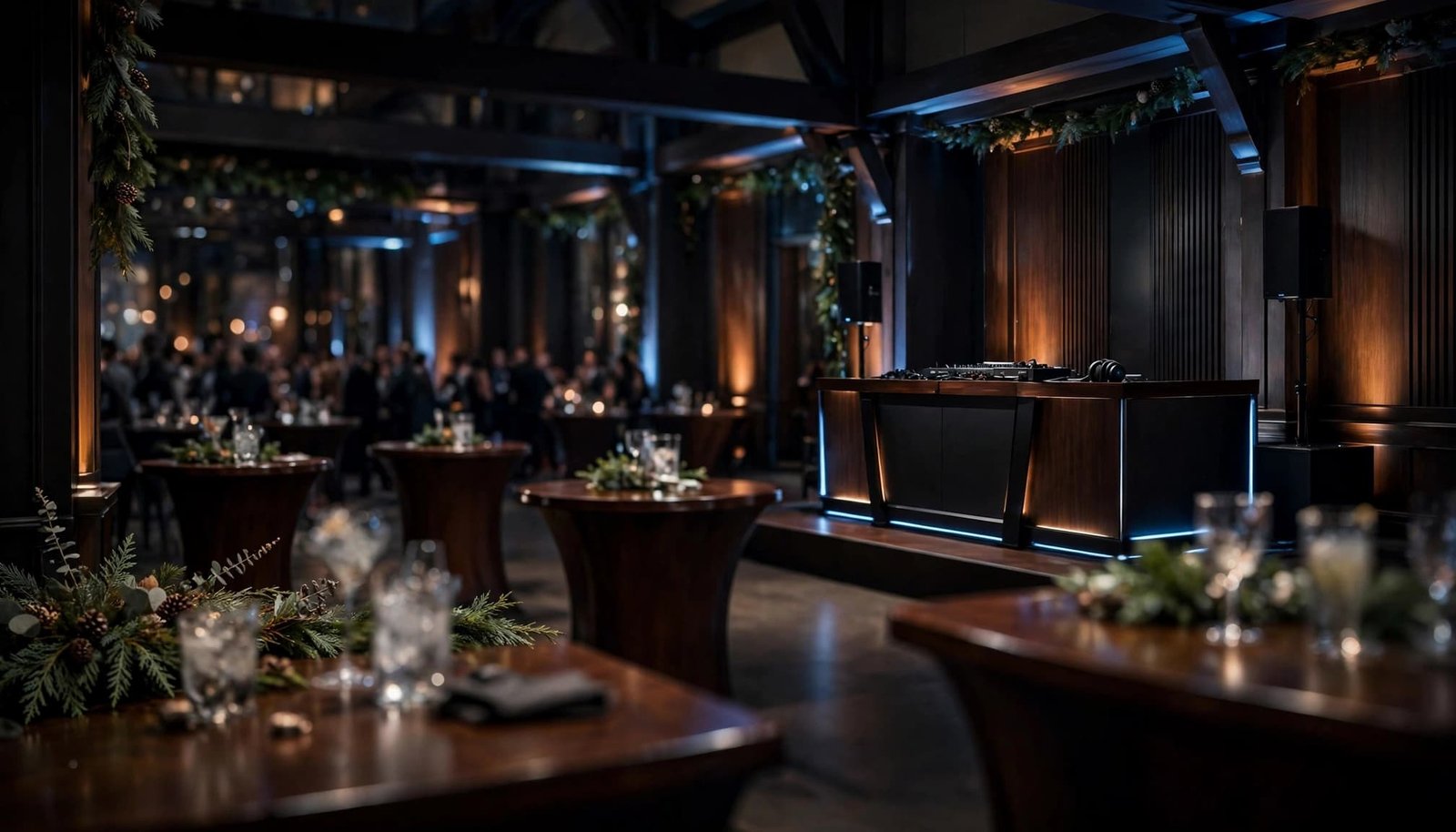
For corporate events, including company parties, galas, fundraisers, conferences, and private business celebrations, event flow matters as much as music selection.
Build Music Around the Event Schedule
A good music plan follows the event rather than forcing the event to follow the music. Before choosing songs, look at guest arrival, networking time, remarks, food service, awards, and any plans for dancing later in the evening.
Start With Arrival and Networking
Guest arrival needs enough energy to make the room feel active, but not so much that people hesitate to begin a conversation. This is where a well-built background playlist does its best work.
During cocktail hour, music should feel warm and active while staying quiet enough for introductions and business conversations. The DJ can create custom playlists using approved genres, must-play artists, and do-not-play guidance instead of relying on a generic playlist.
A wedding-focused reception music checklist makes one point that applies to business events too: background music should be planned while guests gather, not treated as an afterthought. The first songs set expectations before the first announcement is made.
Share details about your audience with the DJ. A group of long-time employees at a holiday party may respond well to sing-along classics later in the night. A client reception may need a more reserved sound throughout. The DJ can watch crowd engagement and adjust the tempo, volume, and familiarity without forcing participation. A planner may also consider live music when the format and space support it, but a DJ-led playlist usually works best for networking.
Plan Formal Moments and the Dance Floor
Leadership remarks and awards deserve a music plan of their own. A short walk-up cue can make an award presentation feel organized. Music under a video introduction can help hold attention. A clean transition after speeches keeps the room from losing momentum.
Set a clear process for song requests before the event begins. Guests can share requests through the event planner, a designated company contact, or the DJ. This avoids interruptions during remarks and helps the DJ honor approved requests when they fit the audience and schedule. Requests should also follow the company’s do-not-play list.
If dancing is part of the schedule, do not open the dance floor by default. Wait until dinner, awards, and key remarks have ended. Then build the energy gradually with recognizable selections that suit the group.
A packed dance floor is not the only sign of a successful corporate reception. Guests who stay engaged, hear every announcement, and enjoy the room are a better measure.
Sound, Microphones, and Lighting Need a Clear Plan
The best sound systems are the ones guests barely notice. They hear the host, understand the speaker, and enjoy the music without harsh volume changes or distracting feedback.
New Hampshire venues vary widely. A hotel ballroom, historic mill building, restaurant private room, barn, tent, or office space can each create different sound challenges. Room layout, ceiling height, room dimensions, hard surfaces, built-in AV, power access, and guest count all affect the setup. Daylight changes and weather contingencies also matter for tents or outdoor areas. These factors should shape the sound and lighting plan for a formal corporate event.
Ask About Sound Coverage and Wireless Microphones
Don’t assume microphones are included in every DJ package. Ask how many wireless microphones are available, whether handheld or lapel options are needed, and who will manage microphone handoffs during the program.
Also discuss where speeches will happen. A DJ may need to cover a cocktail area, a stage, a dining room, or more than one room. The equipment plan should fit the layout instead of relying on one speaker near the DJ table.
Accessibility belongs in the conversation as well. The ADA temporary-event accessibility planning guide is a helpful reference when reviewing pathways, seating, speaker locations, and access to key parts of the program with your venue.
Use Lighting With Purpose
Elegant LED uplighting can add warmth to a ballroom, reinforce event colors, or make an event space feel more finished after dark. It should complement the decor, not turn a formal business event into a nightclub.
Ask whether uplighting and dance floor lighting are included in the lighting packages. Photo booths and other entertainment options may be separate add-ons. Some receptions need only music and clear microphones. Others benefit from a photo booth during a holiday party or extra lighting once the formal program ends.
A written quote should make those choices clear. It’s easier to build the right package early than to make rushed decisions during setup.
Create a Timeline the DJ Can Follow
A DJ needs more than a start time and an address. The strongest events are planned around the real schedule, including moments that may shift once guests arrive.
Share the Details Before the Event
Send the DJ a simple run-of-show with arrival time, guest count, venue contact, parking or load-in information, and expected end time. List guest arrival, cocktail hour, networking, food service, leadership remarks, awards, photographs, any dance floor opening, the hard stop, and contingency timing.
Include meal timing, speaker names, award cues, and the person who can approve changes during the event. The same attention to schedules, vendors, and guest experience used in an Event Management and Design program is useful in professional event planning.
Music preferences matter too. Give the DJ a few must-play artists or genres, plus a short do-not-play list. That provides direction while leaving room to read the crowd in real time.
Coordinate With the Venue and Other Vendors
A professional DJ should coordinate directly with the planner, venue contact, caterer, photographer, videographer, lighting team, and other involved vendors. The venue may have a strict end time or limits on where equipment can be placed.
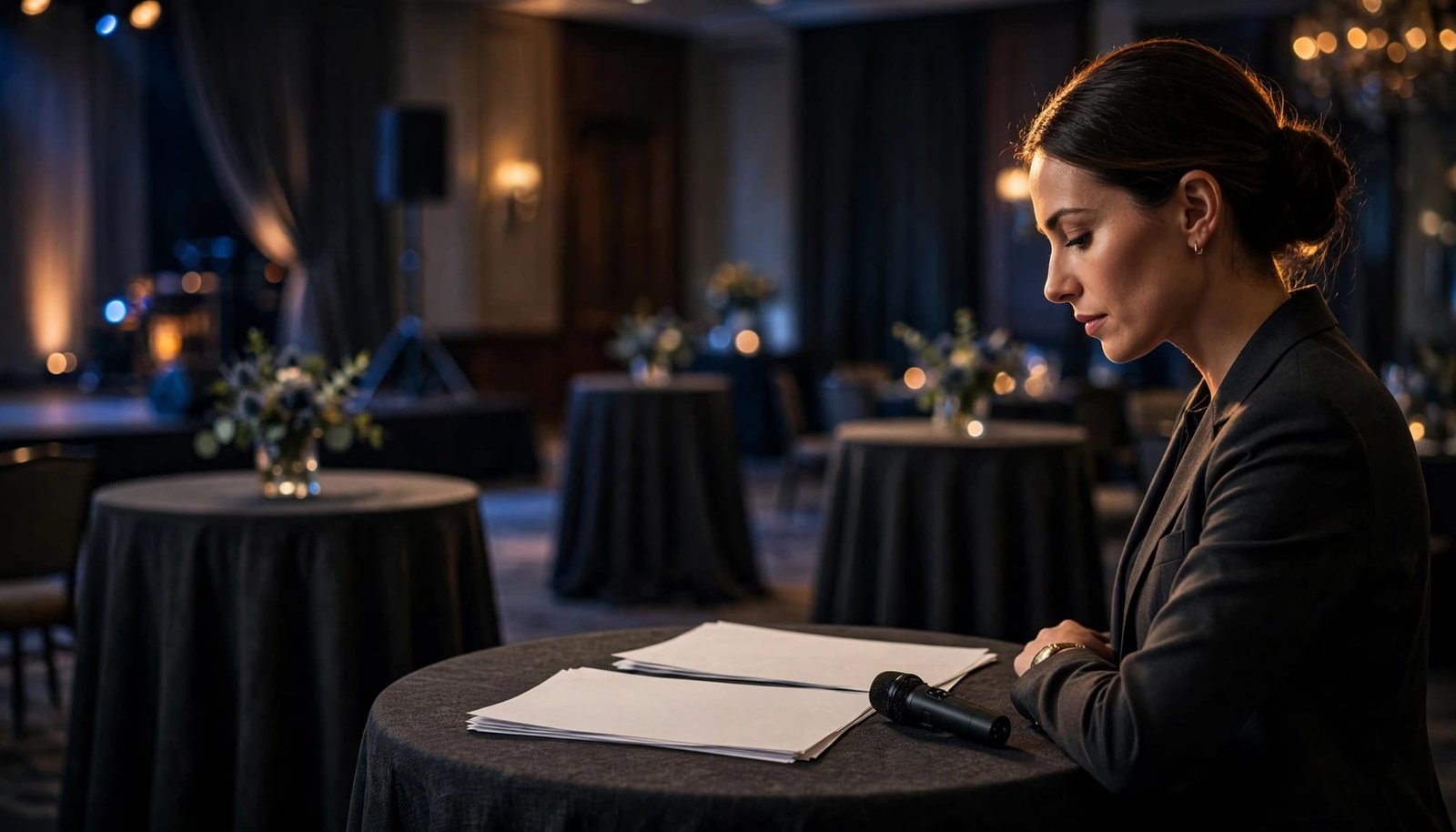
Confirm that the DJ can communicate with those professionals directly on event day. That ensures timeline changes reach everyone without placing another burden on the planner, while keeping announcements, music transitions, and program cues on track.
Compare Corporate DJ Quotes Beyond the Hourly Rate
Corporate DJ pricing should reflect the full scope of the event. A lower number may not include the sound coverage, lighting, MC support, planning time, or event duration your reception requires.
Use a side-by-side comparison before making a decision. Evaluate whether the entertainment company clearly defines its planning, MC, sound, lighting, and logistics responsibilities.
| Quote Item | Confirm Before Signing |
|---|---|
| DJ and MC coverage | Confirm the event hours, hosting duties, and who manages announcements. |
| Sound equipment | Ask how the system will cover the room and support speeches. |
| Wireless microphones | Confirm the number, style, and whether they are part of the quote. |
| Lighting and add-ons | Clarify uplighting, dance floor lighting, and photo booth options. |
| Logistics | Review setup time, breakdown, travel, overtime, and cancellation terms. |
Look for a DJ who asks thoughtful questions about the audience, venue, schedule, and tone of the event. A New England DJ may also understand regional corporate schedules and varied event formats. Wedding DJ experience can show strong crowd-reading and music-transition skills, but corporate receptions also require networking-sensitive volume, concise hosting, and planner coordination.
DJ Steve Neff Entertainment LLC is based in Concord and serves corporate events throughout the state. Steve Neff and business partner Jon Turgeon provide DJ, MC, sound, lighting, and event entertainment for business events, weddings, school events, and private parties. Their professional DJ experience dates back to 1999, and the company was named the 2026 Best DJ Service in Concord, New Hampshire by Quality Business Awards.
For larger events, event planning support can help keep vendors aligned. Organizations in the region may consider Memorable Events, LLC, a New England-based wedding and event planning company serving the region since 2004.
Corporate Cocktail Reception DJ FAQ
What Does a Professional DJ Handle Beyond Music?
A professional DJ manages music selection, sound levels, transitions, announcements, and timeline cues as part of the event entertainment. For a corporate cocktail gathering, that can include background music during networking, microphone support for leadership remarks, and award walk-up music.
The best DJs read the room without making the event feel overproduced. They adjust the pace based on the crowd while staying connected to the agreed timeline.
Are Lighting, Microphones, and Photo Booths Included?
Those items are not automatic in every package. Some corporate events need only a compact sound system and one wireless microphone. Others need multiple microphones, uplighting, dance floor lighting, or a photo booth for guest engagement.
Ask for each item to be listed in the quote. Clear expectations protect your budget and help the DJ arrive with the right equipment.
Can a DJ Support Different Types of Business Events?
Yes. Professional DJ entertainment can fit holiday parties, company anniversaries, awards banquets, fundraising galas, networking receptions, product launches, team events, and private company celebrations.
The music and hosting style should change with the event. A formal awards dinner needs a different approach than an employee holiday party with a late-night dance floor.
What About Song Requests?
Song requests should go through the designated planner or DJ. They should fit the approved playlist and company setting without interrupting speeches, awards, or other scheduled moments.
How Far Ahead Should You Book?
Begin reaching out four to nine months ahead when possible, especially for holiday parties, formal galas, conferences, and popular dates. Earlier planning gives you more time to confirm the venue layout, music direction, sound needs, and event timeline.
An Event That Feels Well Run
A successful cocktail event doesn’t need constant announcements or a loud dance floor. It needs music that fits the room, sound that keeps every word clear, and a professional who treats timing as part of the entertainment.
When details are planned early, an experienced entertainment company can shape event entertainment around the schedule. It can protect conversation time and keep formal moments on track. Your corporate event DJ can help guests feel comfortable, connected, and ready to enjoy the night.