A corporate event can feel polished or rushed long before the first song plays. The difference often comes down to corporate DJ booking lead time, clear communication, and a plan that fits the room, audience, and schedule.
For New Hampshire companies, corporate events can include a Concord office holiday party, executive retreats, a multi-day conference in Manchester, or a formal awards dinner near Portsmouth. Local corporate clients have different planning needs. A corporate event DJ brings music and energy while supporting announcements, timing, sound quality, and the event’s overall flow.
A thoughtful timeline gives your team time to make good decisions without adding last-minute pressure.
Key Takeaways
- Begin corporate DJ booking four to nine months ahead when possible, especially for holiday parties, formal galas, conferences, and popular New Hampshire dates.
- Build the run-of-show early and confirm arrivals, meal timing, speeches, award cues, music transitions, and emcee responsibilities.
- Match the DJ package to the event’s actual needs, including sound reinforcement, microphones, lighting, multi-room coverage, video audio, and optional services such as a photo booth.
- Review venue logistics before signing, including power access, load-in rules, room diagrams, cable routes, insurance requirements, and setup limitations.
- Use a final planning call and shared schedule to confirm music standards, vendor contacts, equipment, backup plans, and event-day timing.
Why Lead Time Matters for Corporate Events
Booking early gives you more than a better chance of finding the right entertainment. It gives your corporate event DJ, venue, AV team, caterer, and internal planning team time to work from the same expectations. An event planner can coordinate those conversations and flag seasonal demand before preferred dates fill.
A company party often includes more moving pieces than people realize. There may be speeches, award presentations, video playback, employee entrances, dinner service, a client reception, or a dance floor that opens after the formal program. Each piece affects the music plan and equipment needs.
Small Office Celebrations Need Less Production
A casual employee appreciation lunch or team celebration may only need a compact sound system, music during arrivals, one microphone, and a DJ who can shape the room as guests settle in. Seasonal office holiday parties often require more lead time because popular dates fill quickly.
Even simple events need a few details confirmed early. Check the available power, setup area, guest count, ending time, and whether the office has noise limitations. A smaller event can still feel high-quality when the sound is clear and the music fits the people in the room.
Formal Events Need More Planning Time
An awards gala, conference, product launch, or client-facing celebration for corporate clients needs a more detailed program schedule. The DJ may coordinate entrance music, walk-up cues, microphone handoffs, videos, and sponsor announcements. The program may then shift from cocktail hour into dinner or dancing.
For these events, start the conversation several months ahead when possible. Your venue may have preferred vendors, loading rules, a restricted setup window, insurance requirements, or its own in-house AV team. Confirm venue logistics, plus the photo booth’s footprint, power access, and timing, with the venue.
Larger New Hampshire venues can have several event spaces and room configurations, as shown in listings for University of New Hampshire Events and Conferences.
The music may last one evening, but the planning decisions often begin with the room layout, power access, and program schedule.
A Corporate DJ Booking Timeline for New Hampshire Companies
The best planning process moves from broad decisions to event-day details. A corporate event DJ can help align the timeline with your event size and program. This outline gives busy HR teams, executive assistants, and planners a practical starting point.
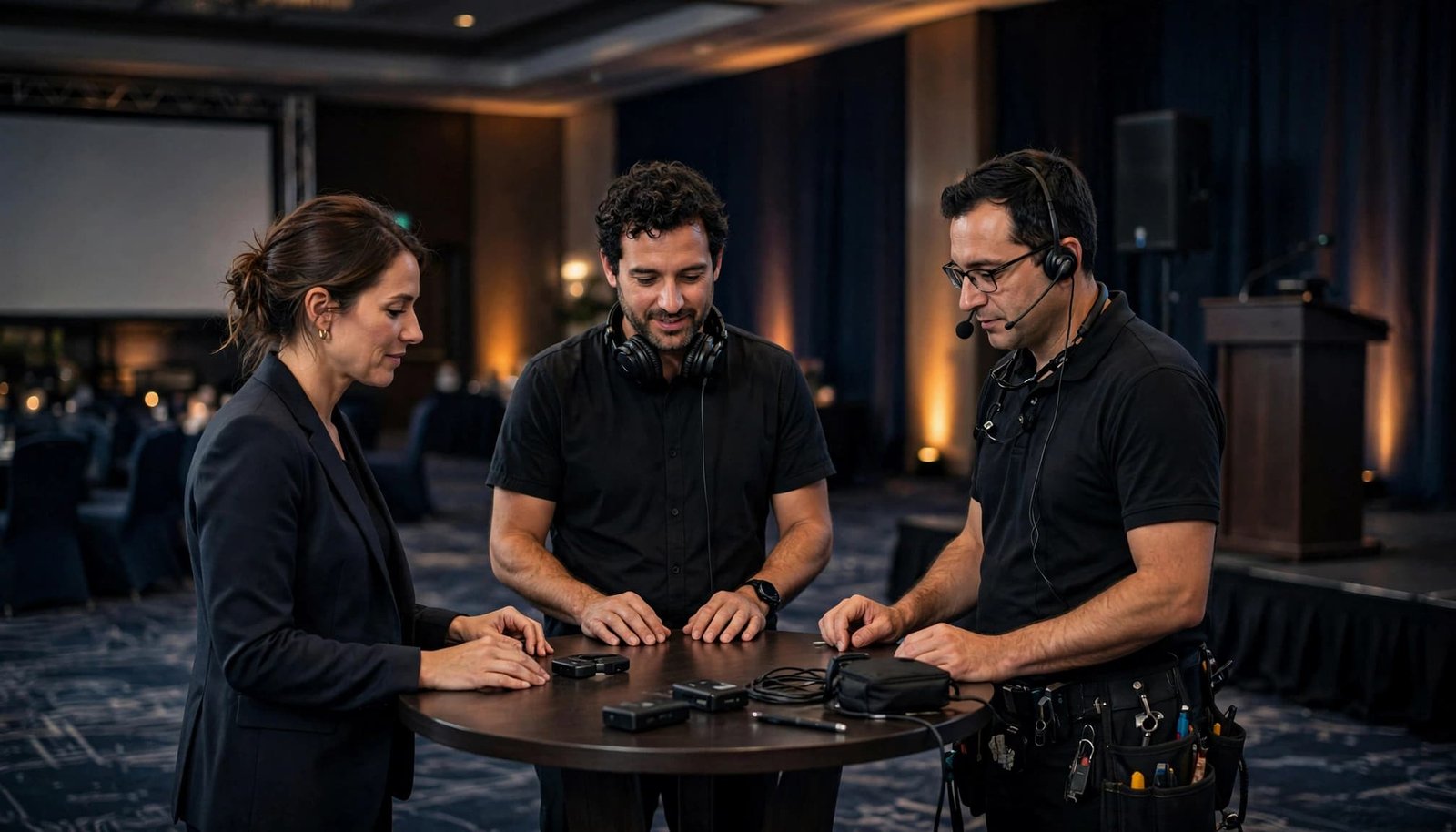
Use this schedule as a guide, then adjust it for your venue and program.
| When to Plan | Main Focus | Details to Confirm |
|---|---|---|
| 4 to 9 months before | Reserve entertainment, venue, and optional services | Date, guest count, event type, such as a product launch, service hours, budget range, optional photo booth availability and placement |
| 2 to 4 months before | Build the event plan | Music style, emcee needs, equipment, event lighting, venue rules |
| 4 to 6 weeks before | Finalize production details | Schedule details, arrivals, meal timing, speeches, room diagram |
| 1 to 2 weeks before | Confirm every contact | Load-in time, power, final playlist notes, insurance documents |
| Event day | Test and communicate | Soundcheck, microphone test, cue review, final walkthrough |
For a simple office party, four to eight weeks may provide enough planning room. Earlier booking is especially useful when dates are popular, holiday parties fill calendars, or multiple vendors are involved.
Build the run-of-show before the final planning call. Include arrivals, meal timing, speeches, and transitions such as cocktail hour.
A final planning call should include the person who can approve changes and the corporate event DJ. That contact helps the DJ respond quickly if dinner runs late, an award segment changes, or the dance floor opens earlier than expected.
Choose the Right Scope Before Requesting a Quote
A quote makes more sense when a corporate event DJ understands what the event actually needs. “We need music for a party” is only a starting point. It doesn’t identify whether you need dance-floor entertainment with open-format mixing, presenter support, or a complete sound and lighting package.
Match the DJ Service to the Event Type
Corporate DJs can support many types of business gatherings:
- Employee holiday parties, company anniversaries, and team celebrations.
- Awards dinners with walk-up music, presenter microphones, and polished emcee assistance.
- Conferences, trade shows, or a product launch that need announcements and controlled music.
- Fundraisers, client receptions, and networking events where conversation still matters.
- Outdoor company picnics and family events that need music for mixed ages.
A formal awards gala may need a wireless microphone, a backup microphone, and carefully timed music cues. Its sound system should reach the back of the ballroom. A networking reception may need lower-volume background music that feels welcoming without covering conversations.
What Is Usually Included in a DJ Package?
A standard package often includes a professional DJ, planning meetings, music programming, sound reinforcement, and a pre-event audio check. Setup and breakdown time, plus emcee support, may also be included. Event lighting, uplighting, dance floor lighting, extra speakers, microphones, ceremony audio, photo booth, and extended service hours may be separate options.
Pricing varies with service hours, travel, guest count, equipment, and production complexity. A short office event usually costs less than a formal multi-room event with lighting and microphones. Ask a corporate event DJ for an itemized proposal. Confirm the details before comparing totals, including whether a photo booth is included or supplied by another provider.
Plan Sound, Lighting, and Multi-Room Logistics
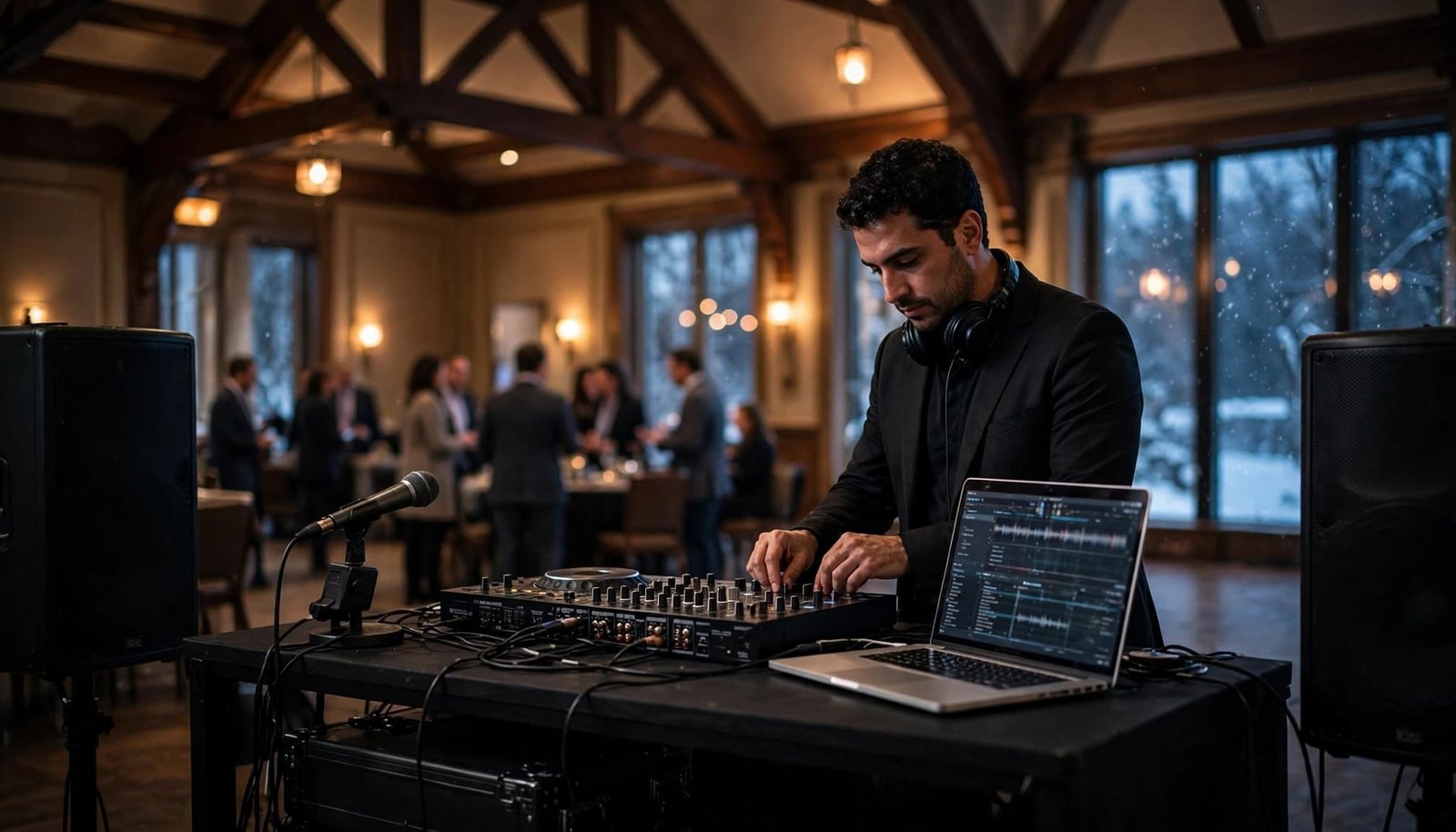
Music only works when people can hear it comfortably. A corporate event DJ should plan sound reinforcement around room acoustics, with clear speech and balanced music. It should support announcements and speeches without making dinner conversation difficult.
A helpful guide to corporate event audio systems explains why speaker placement, room size, microphone needs, and venue acoustics all affect the result.
Give Each Room a Clear Job
A large company function may use a ballroom for dinner, a lobby for registration, a breakout room for presentations, and a separate reception area for dancing. Each space may need separate coverage for music, event lighting, microphones, or video audio. Do not assume one speaker setup can cover every space.
Identify which rooms need music, announcements, microphones, or video audio, and whether uplighting or dance floor lighting belongs there. Clarify whether the DJ provides equipment or works with an AV production company, then review audio visual needs for hybrid events. Confirm how program audio reaches remote attendees without creating feedback in the room.
Send a room diagram before the event. It should show the DJ area, stage, tables, bars, doors, screens, power outlets, and guest traffic paths. If included, add the photo booth footprint and power needs. That diagram clarifies venue logistics, prevents a rushed setup, and helps protect the guest experience.
Keep Cables, Power, and Access Routes Clear
A professional setup should look organized because it is organized. Audio and power cables should follow approved room edges whenever possible. They should never block emergency exits, stairways, doorways, or accessible routes.
If a cable needs to cross a busy path, use a venue-approved cable ramp or floor protector. Gaffer tape can help secure a thin cable in a dry, low-traffic area, but it is not a substitute for a proper protector where guests and staff are walking.
Confirm dedicated power for speakers, lighting, laptops, and microphones. A final walkthrough with the venue coordinator should also confirm that speaker stands, DJ tables, uplighting, and subwoofers do not interfere with doors, fire equipment, or service areas.
Build Music and Emcee Support Around the Program
A corporate event DJ does more than play a long playlist. The DJ reads the room, manages transitions, and supports the company message without pulling attention away from it.
Approve the Music Brief Early
Start music planning with a short description of the atmosphere you want, such as “warm, upbeat, professional, and celebratory.” A custom playlist can help illustrate the direction. Also include audience details, workplace standards, preferred genres, do-not-play selections, and one final music contact.
Clean versions matter, but a radio edit is not automatic approval. Some edits still carry themes that do not fit the workplace. Others have long gaps that interrupt the momentum of a familiar song. A DJ should review the actual version that will play, not only the title.
Guest requests can be welcome, but they should not override company standards or the planned flow. Open-format mixing helps a DJ adapt across age groups, genres, dinner music, and dancing while keeping those standards in place.
Use Short Cues for Awards and Entrances
Awards ceremonies need precise, short music cues. A recipient may need only 10 to 20 seconds of walk-up music, followed by a clean fade. Another cue can announce when the photo booth opens.
Review entrances, award names, wireless microphone handoffs, fade signals, and presenter timing during the final meeting. The DJ should follow the approved run-of-show, so clear cues prevent awkward pauses and help the program feel confident. A DJ can provide emcee support when planned in advance, with approved language and clear responsibility for formal announcements.
Confirm the Details Before Signing
A clear agreement protects both the company and the DJ. It turns verbal expectations into specific details that everyone can follow.
Questions to Ask a Corporate Event DJ
Before selecting a provider, ask questions that show how they prepare for corporate clients:
- Have you handled an event with our guest count, program style, and venue type?
- What sound reinforcement, wireless microphone, and lighting are included in the quoted package?
- How do you coordinate with an event planner, caterer, venue manager, outside AV crew, photo booth provider, and other event vendors?
- What backup music playback, cables, microphones, and backup gear do you bring?
- Can you provide program hosting for awards, introductions, or company announcements?
- How do you handle music requests, workplace-appropriate music, and schedule changes?
A wedding DJ may have strong music skills, but business programs bring firmer timing, approvals, brand expectations, and multiple decision-makers. The DJ needs to follow the run-of-show and communicate with the entire event team.
Review Insurance and Event-Day Terms
Ask for proof of liability insurance if your company or venue requires it. The National Association of Insurance Commissioners’ event insurance overview explains that liability coverage commonly relates to injuries or property damage connected to an event.
Check the exact business name, policy dates, certificate holder wording, and any additional-insured request from your venue or risk manager. A certificate holder and an additional insured aren’t the same thing, so don’t assume one document meets every contract requirement.
Also confirm arrival time, setup access, loading instructions, overtime terms, payment schedule, meals if needed, and weather plans for outdoor setups. If another vendor supplies a photo booth, confirm shared load-in, access, and power requirements. Clarify who handles timing and equipment responsibility for the photo booth, including any damage terms. These details may seem small during planning, but they keep the schedule clear on event day.
Frequently Asked Questions
How far in advance should we book a corporate DJ in New Hampshire?
For most corporate events, booking four to nine months ahead provides the best planning flexibility. Smaller office parties may need only four to eight weeks, while holiday dates, formal galas, and multi-vendor events benefit from earlier booking.
What information does a corporate DJ need before providing a quote?
Share the event date, location, guest count, service hours, event type, program schedule, and any sound, lighting, microphone, or emcee needs. It also helps to identify venue rules, multi-room requirements, and optional services such as a photo booth.
Can a corporate DJ support awards, speeches, and company announcements?
Yes, a corporate DJ can provide wireless microphones, walk-up music, entrance cues, fades, and planned emcee support. Review the approved run-of-show, presenter timing, award names, and announcement language during the final planning meeting.
What should we confirm with the venue before the event?
Confirm load-in access, setup windows, power, room layout, insurance requirements, noise limits, and approved cable routes. A final walkthrough should also verify that speakers, lighting, the DJ area, and any photo booth do not block exits, accessible paths, or service areas.
A Confident Start Creates a Better Celebration
The strongest celebrations start with a corporate event DJ who understands the plan, not one big moment. They’re built around prepared details, including the right music, clear announcements, and dependable sound.
Give your provider enough lead time and keep one shared schedule with every key person. Add optional services, such as a photo booth, with their timing, and confirm contingency plans early. Your employees and guests will remember a well-planned celebration that felt easy, welcoming, and ready for the moment.