A casino night needs energy at the tables without making guests shout over the music. Your corporate casino DJ should support conversation, coordinate announcements, and build toward dancing when the room is ready.
That balance starts with clear preparation. Music, dealer coordination, sound placement, and timing all work together to create enjoyable casino entertainment. Guests should feel comfortable learning a game, connecting with colleagues, or joining the dance floor.
Start by planning how those activities will work together throughout the evening.
Key Takeaways
- Plan gaming, announcements, and dancing as separate parts of one shared schedule, with a named contact approving changes.
- Keep music comfortable for dealer instructions and conversation; reserve stronger volume and dance lighting for the dance area.
- Compare complete DJ proposals, including MC duties, equipment, setup, travel, backup arrangements, and coordination, rather than performance hours alone.
Clean music standards and guest-request rules also deserve written approval. These details give the DJ room to adapt while keeping the entertainment appropriate for your company.
Build the Casino Night Run of Show
A professional casino night runs more smoothly when the DJ, casino provider, venue, and planner share one current schedule. That document should identify each announcement, its cue owner, and what happens if timing changes.
Decide whether gaming and dancing will overlap or whether tables will close before the main dance set. Overlapping activities give guests more choices, but they require greater attention to sound coverage and lighting.
Use this sequence to organize the main entertainment phases.
| Event phase | DJ approach | Coordination needed |
|---|---|---|
| Guest arrival | Welcoming, conversation-level music | Confirm registration and chip distribution |
| Tables open | Upbeat background music | Let dealers explain games clearly |
| Final rounds | Brief, approved announcement | Wait for the casino lead’s cue |
| Recognition or prizes | Lower or pause music | Confirm names and results |
| Dance set | Increase energy gradually | Confirm the dance area is ready |
The transition depends on the casino team’s readiness, not only the clock. A delayed final round or prize tally should trigger an agreed adjustment rather than an improvised announcement.
Include food service, executive remarks, soundcheck, and vendor access in the same document. Identify one person who can approve changes during the event.
A corporate event music brief can accompany the schedule with audience details, music preferences, restricted content, and announcement notes. Share the final version with every lead vendor before event day.
Choose Music With Your Corporate Casino DJ
Music selection should reflect the company culture, guest mix, and evening’s purpose. Don’t assume every corporate audience shares the same age range or musical preferences.
Background Music That Supports the Tables
For gaming, request an upbeat but controlled atmosphere. Soul, light funk, familiar pop, instrumental lounge selections, and selected 1980s or 1990s favorites are useful directions to discuss.
Songs such as Earth, Wind & Fire’s “September” or Chic’s “Le Freak” offer recognizable examples for the consultation. Their suitability still depends on the audience, volume, and surrounding program.
Avoid building the entire gaming soundtrack around dramatic casino or movie themes. A few themed selections can establish the atmosphere, while familiar music gives the evening broader appeal.
Share preferred artists and decades, then let the DJ adjust the mix as guests settle into the room.
Clean Dance Sets With Broad Appeal
Clean versions of top 40 hits, dance-pop, throwbacks, and approved genre requests can support the dance portion. Short runs of two or three songs in one style give the DJ time to assess participation before changing direction.
Clean edits aren’t automatic approval. A song may remove explicit words while retaining themes that don’t suit employees, clients, or family guests. Review the exact version and use brand-safe music guidelines to establish boundaries.
Agree on must-play songs, do-not-play selections, and who has final approval. Guest requests should follow those rules, even when someone asks for a popular track.
Keep Game Tables Comfortable Without Flattening the Atmosphere
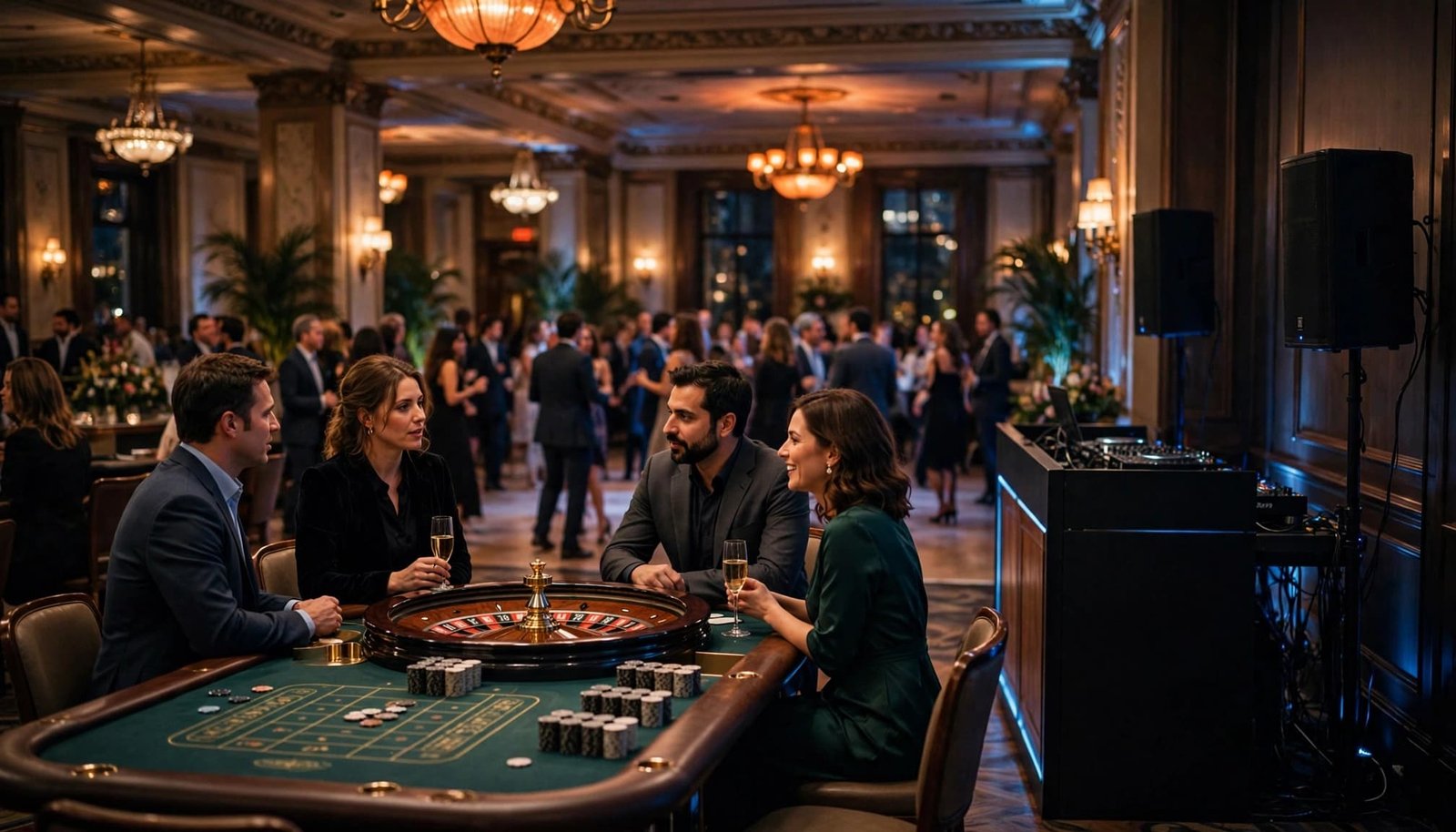
Position Sound Around Guest Activities
A corporate casino DJ should assess the room before choosing speaker locations. The dance floor, casino tables, bar, and seating areas each have different sound needs.
During soundcheck, stand where a guest will sit or watch a game. Ask someone to explain a rule at normal speaking volume. If you struggle to understand them, adjust the music.
Point primary dance speakers toward the dancing area, not directly across nearby tables. If gaming is in another room, discuss separate sound zones rather than relying on one louder system to cover both comfortably.
Test sound from a guest’s position at the casino tables, not only beside the DJ booth. Clear music near the mixer doesn’t confirm that instructions are clear at a crowded table.
Keep Lighting Appropriate for Each Area
Game tables need steady visibility for cards, chips, and dealer instructions. Ask the casino provider what table lighting is required before adding decorative effects.
Use uplighting to support the theme without changing practical lighting at the tables. Dance-floor effects can become more active when dancing begins.
Keep moving beams and flashing effects away from gaming surfaces, seated conversations, and presentation areas. Ask about venue restrictions and guest sensitivities before approving the lighting plan.
Give the MC Clear, Concise Announcements
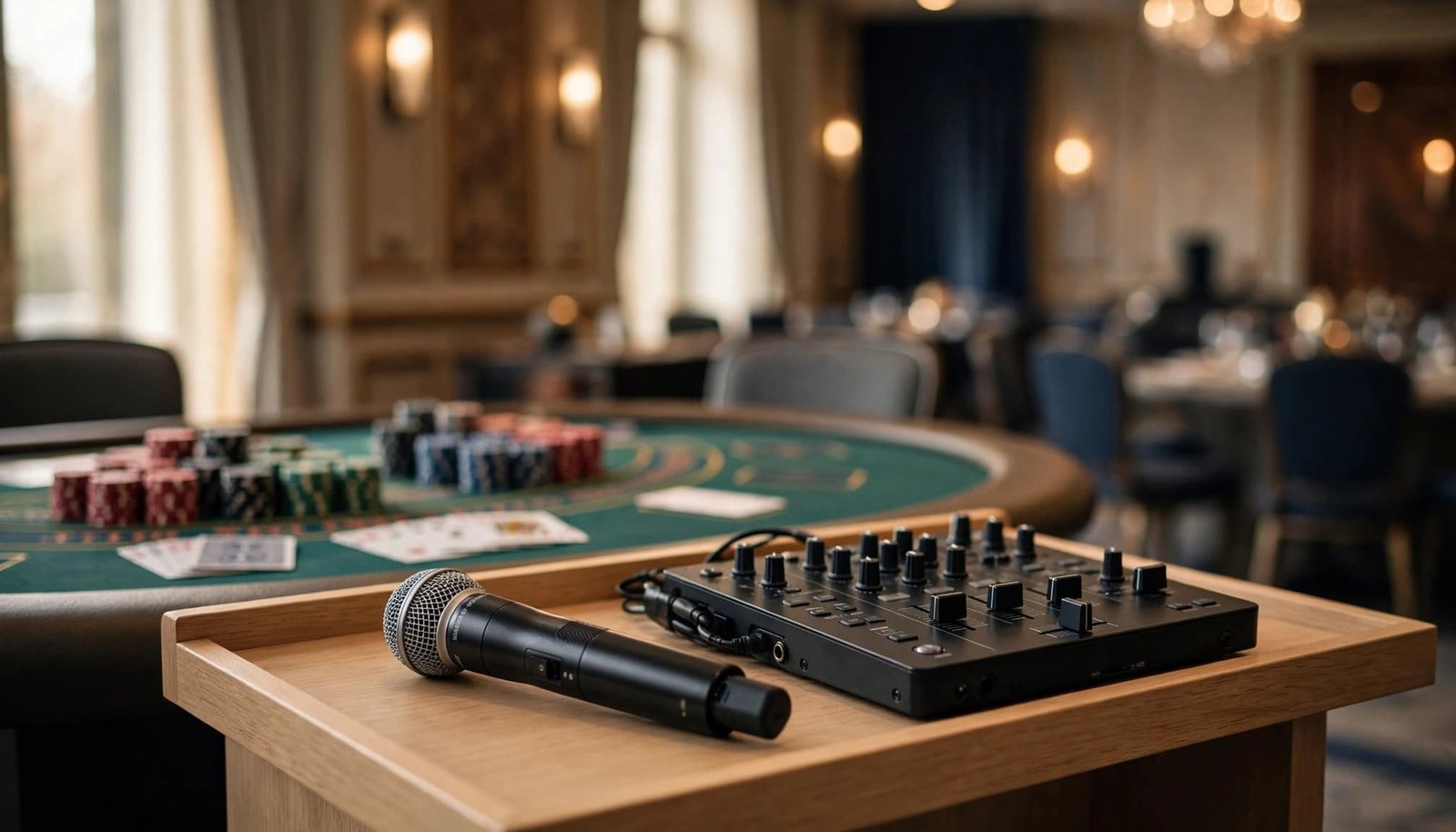
Professional MC support helps guests understand the evening without interrupting every conversation. Confirm whether the DJ will serve as the Master of Ceremony (MC) for the full event or share hosting duties with a company representative.
Opening Tables and Explaining Participation
The welcome should cover where guests receive chips, which activities are available, and who can answer gaming questions. Ask the casino lead to approve the wording.
If your provider offers blackjack, roulette, craps, or Texas Hold ’em, confirm the lineup before announcing games over the microphone. Ask whether beginner instruction is available and how guests can join occupied tables.
Dealers should explain game rules at their tables. The MC’s role is to direct guests and share approved participation information, not deliver lengthy rules to the whole room.
Closing Games and Recognizing Winners
Agree on the exact meaning of the final-round announcement. Does it mean no new players, one remaining hand, or a scheduled closing time? The dealer team should confirm the procedure.
For prizes or tournament recognition, identify who verifies results and gives the DJ permission to announce them. Provide names, pronunciations, and approved descriptions in advance.
Lower or pause the music for important announcements. Keep company recognition respectful, and avoid teasing employees about losses or encouraging unapproved wagers.
Once the formal moments finish, a concise invitation and a familiar opening track can introduce the dance set without pressuring reluctant guests.
Coordinate Equipment, Power, and Venue Access
Mobile DJ services may provide transportable sound and lighting, but the written proposal should identify exactly which sound equipment and services are included. Confirm speakers, microphones, lighting, delivery, setup, breakdown, and any additional staffing.
A wireless microphone can support welcomes and recognition. Ask where presenters will stand, who handles microphone handoffs, and what replacement equipment will be available if something fails.
Venue access affects preparation time. Review shared elevators, loading-dock restrictions, long equipment routes, and late room availability before event day. Setup windows vary by event.
Mark the DJ position, tables, dance floor, entrances, catering routes, and power locations on a room diagram. Review event sound and lighting power planning with the venue before assigning outlets or connecting to house equipment.
Keep cables clear of guest routes and coordinate appropriate cable protection with the venue. If speeches or videos use a separate AV system, identify who controls that audio and who conducts the final test.
Finish soundcheck before guests enter whenever the venue schedule allows. Then review microphone use and communication signals with the planner and casino lead.
Compare Casino DJ Packages and Planning Responsibilities
Customization should begin with the event’s needs, rather than a long list of optional enhancements. Book once the date, venue, and format are clear enough to describe the work.
Review the Complete Service Scope
When comparing a casino party DJ, ask each provider to quote the same scope of DJ services: performance hours, MC duties, sound coverage, microphones, lighting, setup, travel, overtime, and backup arrangements. Review insurance requirements, cancellation terms, and replacement coverage in the agreement.
Additional speaker zones, longer access windows, or separate presentation support can change the scope. A photo booth may be a useful addition, but confirm its provider, staffing, space, and operating hours.
For local selection criteria, review corporate DJ and MC planning alongside your vendor consultation.
Steve Neff and business partner Jon Turgeon run DJ Steve Neff Entertainment LLC, providing DJ, MC, sound, lighting, and event entertainment services for corporate events. Their professional DJ experience dates back to 1999. The business began in Maine and is now based in Concord, New Hampshire.
Confirm Permissions and Casino Procedures
Ask the venue and organizer who verifies applicable music permissions. ASCAP’s music licensing FAQs explain licensing for public performances of its members’ works. BMI’s licensing information addresses permission for its repertoire.
Don’t assume a DJ booking automatically resolves every licensing requirement. Recording, livestreaming, or including music in a recap video also needs separate review.
Confirm chip use, prize procedures, participation rules, and any applicable legal requirements with the casino provider. The DJ should announce approved procedures, not create them.
Frequently Asked Questions
How loud should music be near casino tables?
Keep background music low enough for guests to hear dealer instructions and talk comfortably. During soundcheck, test from a seat at the table and adjust speaker placement or sound zones if needed.
Should casino games and dancing happen at the same time?
They can overlap if guests have enough space and the sound plan keeps music comfortable at the tables. Otherwise, schedule the dance set after games close and confirm the transition cue with the casino lead.
What should a corporate casino DJ announce?
The DJ can welcome guests, direct them to chip distribution and available games, and share approved closing or prize announcements. Have the casino lead verify game details and results before anything is announced.
What should I compare when booking a casino night DJ?
Compare the full written scope, including performance hours, MC duties, sound coverage, microphones, lighting, setup, travel, overtime, and backup arrangements. Confirm who coordinates timing changes and who approves music and announcements.
Give Gaming and Dancing Their Own Room to Succeed
A well-planned casino night lets guests hear their dealer, enjoy conversation, and take part in dancing when they’re ready. The strongest foundation is shared coordination, with clear music standards, practical sound placement, and approved transitions.
Use the final planning meeting to review the table-closing cue, announcement responsibilities, and opening dance set. When the DJ and event partners understand those details, the evening can feel organized, welcoming, and celebratory without pushing every guest toward one activity.