A poor song choice can change the feel of corporate gatherings and business events in seconds. Music that is too loud, too familiar, or out of step with the room can pull attention away from speakers, conversations, and the company image you worked hard to protect.
A clear music brief gives HR teams and event planners direction before playlist requests start coming in. It helps establish the desired event atmosphere and guides each part of the schedule. The right corporate event music plan keeps guests comfortable and aligns the DJ, venue, and AV team on the same soundtrack and production expectations.
Key Takeaways
- Start with three to five words that describe the event atmosphere, such as polished, welcoming, modern, celebratory, or family-friendly.
- Match music to the event schedule, not only to personal song preferences. Arrival, networking, dinner, awards, and dancing each need a different level of energy.
- Keep background music below conversation level during registration, meals, and networking.
- Confirm clean music standards, restricted themes, guest-request rules, and the final approval contact before event day.
- Treat music licensing, streaming access, livestreams, and recap videos as separate planning items.
- Share the final brief with the DJ, MC, venue, AV provider, and internal event lead before the soundcheck.
Why Corporate Event Music Needs a Written Plan
Corporate events often bring employees, clients, leadership teams, sponsors, vendors, and family members into the same room. That mix calls for thoughtful choices. What feels appropriate for an employee holiday party may not work for a client reception or formal awards ceremony.
Music also affects timing. It can soften an empty registration area, bring energy back after a meal, or create a clean transition between award categories. It can also cause problems when it competes with conversation or plays at the wrong point in the program.
The sound should fill empty space, not fill every silence. Guests still need to greet colleagues, hear leadership, and enjoy the room.
A playlist isn’t always enough for corporate shows with formal programs or client-facing expectations. These events may need microphone support, announcement cues, coordinated walk-on music, live sound, AV coordination, and backup playback, so the soundtrack follows the program. New Hampshire corporate event DJ services can combine music planning with sound, lighting, and polished hosting when the program has more moving parts.
Build a Corporate Event Music Brief Before Choosing Songs
A music brief is a short document that turns broad preferences into useful direction. A party playlist alone can’t provide that level of guidance. “Fun music” is hard to act on, while “welcoming, modern, upbeat, and professional” gives the event team a clear starting point.
Define the audience and company culture
Begin with the guests in the room. Consider their age range, relationship to the company, event purpose, and comfort level with dancing or audience participation. A black-tie awards night has different expectations than a casual summer celebration.
A financial firm may prefer contemporary pop, classic soul, and refined electronic selections. A creative company may welcome disco-pop, indie favorites, and polished remixes. A family-owned business may lean toward Motown, country, rock, and familiar singalongs across generations. These genre recommendations are starting points, not rigid requirements.
Professional doesn’t have to mean boring. It means the music feels right for the people attending.
Set clear music standards
Write down the approved styles, preferred decades, artists to include, and music to avoid. Include guidance on explicit lyrics, alcohol references, political themes, sexual content, and guest requests.
Clean edits are helpful, but a clean version isn’t automatically appropriate. The subject matter, chorus, and overall tone should still fit the company culture and audience.
Name one person who can make the final call. Too many last-minute opinions can turn a focused soundtrack into an unrelated mix of requests.
Match Corporate Event Music to Each Event Moment
The strongest corporate event music changes with the room. A gradual build feels natural, while party music too early can make guests feel rushed or out of place.
Preshow music for a conference or seminar
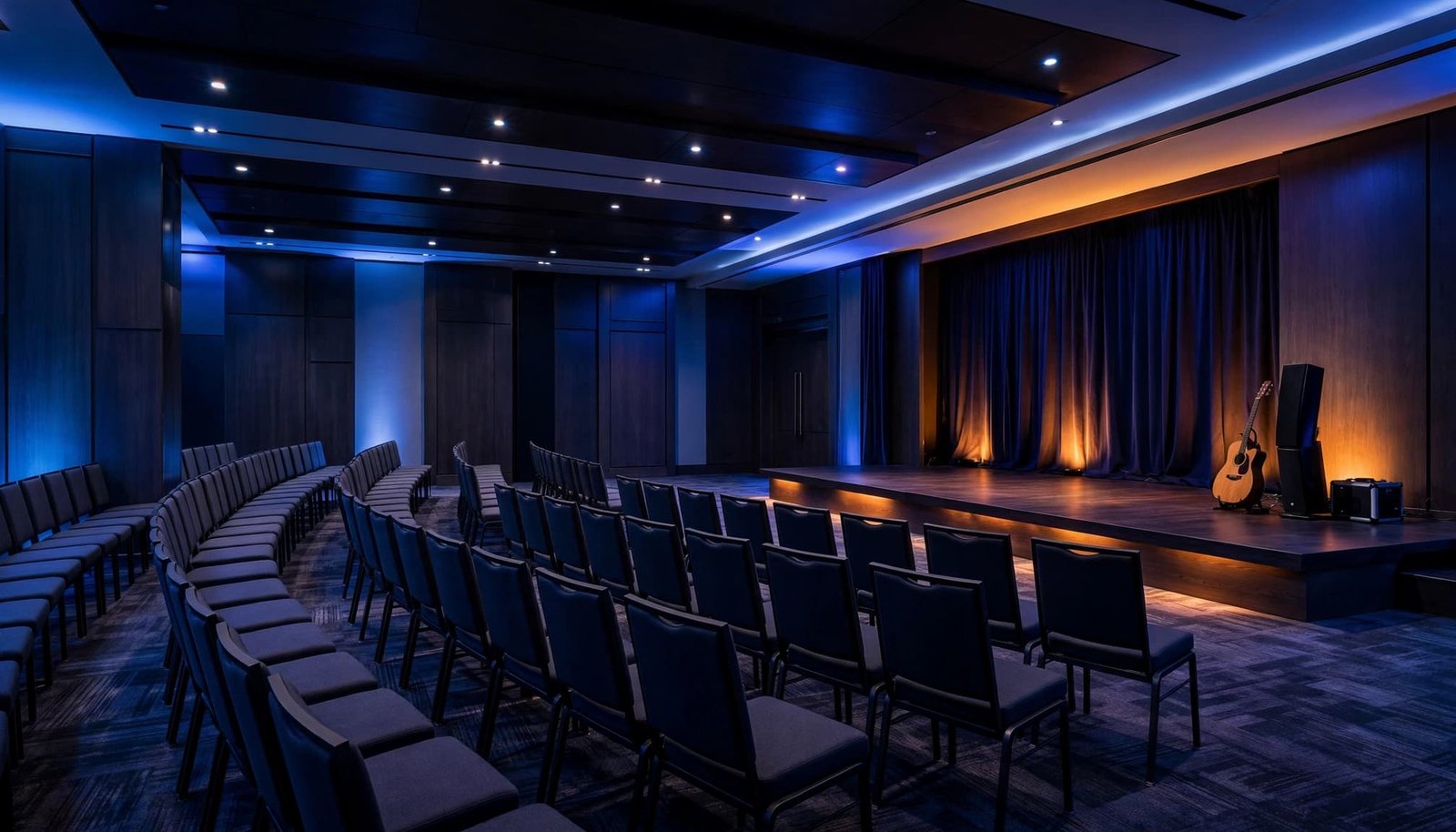
For a serious event, lyric-free music is usually the safer choice. Piano covers, classical guitar, string covers, instrumental ambient music, downtempo electronic tracks, and carefully selected lo-fi beats can create a current, polished atmosphere without competing with speakers.
Keep the volume low enough for registration questions, greetings, and casual conversation. Light jazz can work well, but it may feel too relaxed for a technology presentation, financial update, or strategy session. Choose music that supports focus instead of pulling attention toward the speakers.
Networking cocktail hour music and client mixers
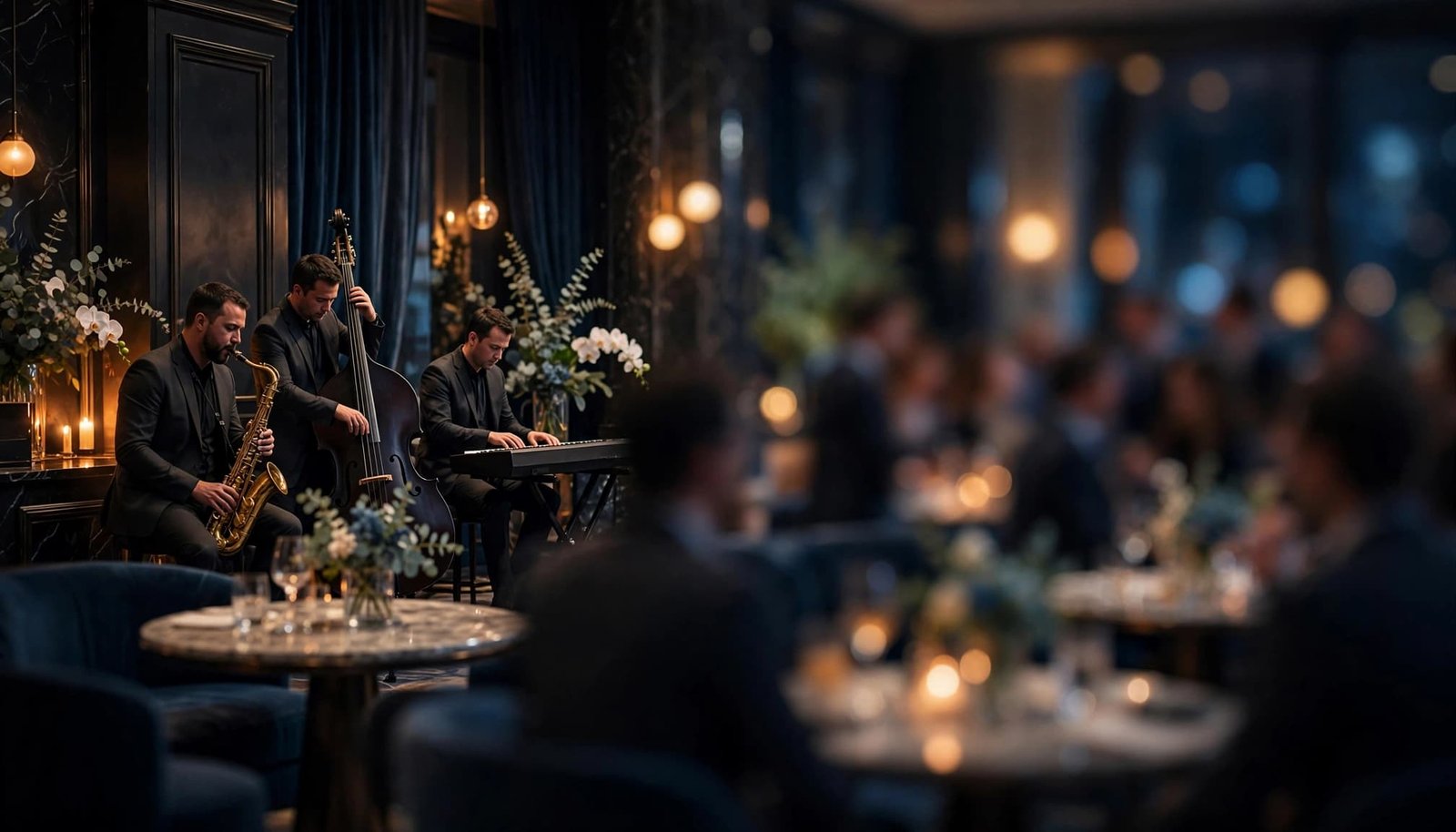
This music should bring warmth without taking over the room. Smooth jazz, bossa nova, classic soul, modern funk, lounge music, and lyric-free pop covers are reliable directions.
The Budos Band and El Michels Affair offer rhythmic funk selections that can add movement without a dominant chorus. GoGo Penguin and BADBADNOTGOOD can suit a modern lounge feel. Antonio Carlos Jobim recordings can add a relaxed Brazilian jazz direction when the setting calls for it.
Save highly recognizable songs for later unless the reception is built around a more social celebration. During the main networking window, the priority is conversation.
Gala dinner, awards, and celebrations
This music should feel present but controlled. Warm soul, jazz-influenced lounge, soft pop, and familiar classics can make the meal feel polished without burying table conversation.
Awards night needs short, clean walk-on cues. The DJ and MC should know the exact spelling, title, and pronunciation of every honoree. Once formal presentations end, the music can shift toward upbeat celebration tracks, throwbacks, clean pop songs, country favorites, or dance music that fits the crowd.
Timing matters as much as song choice. The soundtrack should follow the room’s readiness, not simply the next song.
Align Product Launch Music With the Brand
A product launch is often more focused than a company party. The music should reinforce the visual design, brand identity, presentation style, and brand personality without becoming a marketing slogan played through speakers.
Start with brand words, not song titles
Ask the leadership or marketing team for three to five event words. A launch described as “confident, modern, precise, and premium” may call for controlled electronic music, stylish pop, or crisp percussion. A brand described as “warm, local, and people-focused” may suit soul, acoustic pop, and familiar classics.
Those words give the DJ room to make professional choices while keeping the soundtrack consistent.
Plan the reveal and presentation cues
List every important moment that needs music or silence:
- Guest arrival and registration
- Executive entrance or opening video
- Product reveal
- Speaker walk-ons
- Demonstrations and transition breaks
- Closing reception or celebration
For each cue, include the desired feeling, approximate length, volume guidance, and who gives the go-ahead. A product reveal may need a short, confident music cue. A detailed demonstration may need no music at all.
Handle Streaming and Music Licensing With Care
Access through streaming services or a personal Spotify playlist isn’t automatically permission to play music at an organized public corporate event. Streaming access, public performance rights, recorded video, livestreams, and social clips can involve different permissions.
Confirm who covers public playback
Ask the venue what music licenses it carries and which spaces or uses they include. Coverage may involve licenses administered by ASCAP, BMI, SESAC, or GMR, but event teams should confirm the details with the venue and relevant providers.
Don’t assume the venue covers every use. Public performance coverage may not include a branded recap video, livestream replay, or social media clip featuring a selected recording.
Keep a simple rights record
Save licensing emails, vendor agreements, invoices, approved song versions, cue sheets, and platform terms in the event file. If a track is supplied directly by an artist or independent label, confirm the exact use in writing.
“Copyright-safe” should never be treated as a blanket label. Review the source, the event format, and the planned media use before the doors open.
Copy-and-Paste Corporate Event Music Brief Template
Use this format for conferences, company parties, client receptions, awards ceremonies, and end-of-year celebrations.
Event details
- Event name and date:
- Venue and room:
- Guest count and audience mix:
- Event purpose:
- Three to five atmosphere words:
- Budget range and approval limits:
- Stakeholder approval deadline:
- Accessibility and sensory considerations:
- Final music approval contact:
- Day-of lead and emergency contact:
- DJ, MC, AV, and venue contacts:
- Technical and live-production requirements:
Music and program direction
- Arrival and preshow music: Include styles such as classical guitar, ambient, jazz, or upbeat contemporary selections.
- Networking or cocktail hour music:
- Dinner or meal service music:
- Walk-on, award, and announcement cues:
- Dance floor or closing music:
- Preferred genres, artists, and decades:
- Songs, lyrics, artists, or themes to avoid:
- Clean music requirement:
- Guest request process:
- Volume expectations by event phase:
- Livestream, video, or recap content planned:
- Music licensing responsibility and records location:
- Backup playback and emergency stop contact:
Add the full run of show beside this brief. Document the soundtrack with setup access, soundcheck time, meal service, speeches, videos, awards, breaks, and the final event close. The DJ and AV team don’t need to do the same job, but they do need a shared plan for where each responsibility begins and ends.
For events with formal announcements, microphones, lighting, and several program transitions, custom event music and entertainment planning can give your team one coordinated point of contact.
Frequently Asked Questions
What is the best preshow music for a serious corporate conference?
Choose lyric-free piano, guitar, strings, mellow electronic tracks, or low-key lo-fi beats. Keep the volume controlled so guests can check in, greet colleagues, and ask questions without raising their voices.
How should music change between a seminar and cocktail hour?
A seminar needs focused, understated background music or silence during presentations. A cocktail hour can bring in more warmth and movement through lounge, funk, soul, bossa nova, and light jazz selections. The transition should feel gradual, not abrupt.
Does a corporate event need a professional DJ?
A small gathering with a simple schedule may work with a pre-approved playlist and a dedicated operator. A large event, awards program, client reception, or company party with microphones, cue points, dance music, and changing timelines often benefits from professional DJ and MC support.
A Strong Music Brief Protects the Guest Experience
Corporate event music works best when it supports the people and purpose in the room. A clear brief protects conversation, gives the program better pacing, and helps every vendor make decisions with confidence.
Start with the atmosphere you want guests to feel, then match each music choice to the schedule. Preparation is what makes the soundtrack feel natural when the event begins.