A corporate event can look polished on paper and still feel rushed once microphones, music, lighting, catering, and guest arrivals compete for the same room. Reliable power supports a polished event entertainment experience and keeps the program from becoming a last-minute scramble.
Thoughtful event DJ power planning gives the venue, planner, DJ, and AV team a clear plan before load-in begins. A professional DJ helps coordinate audio, lighting, and event timing with the venue team. Whether you’re planning a Concord holiday party, Manchester conference, Portsmouth awards dinner, or company retreat, the goal is clear audio, safe cable routes, appropriate lighting, and a program that stays on schedule.
The best time to solve power questions is before the room is set and the doors open.
Why Power Planning Matters at Corporate Events
A DJ setup is often part of a larger production picture. Event entertainment may include background music during networking, wireless microphones for speakers, award cues, walk-up music, LED uplighting, and dance floor support. Sound systems need the right placement, access, and power source.
Good planning also protects the experience your guests notice first. Thoughtful lighting design helps shape the room atmosphere and support program flow. A microphone that cuts out during an executive welcome, a speaker placed where guests cannot hear it, or a cable run across a busy entrance can pull attention away from the event itself. Most of these problems are avoidable with early coordination.
For planners booking New Hampshire corporate event DJ services, power is not a separate technical detail. It connects directly to room layout, event flow, speaker timing, lighting design, and the overall atmosphere.
Corporate rooms are not all built the same
A hotel ballroom may have dedicated event power and a clear vendor entrance. A historic hall may have fewer accessible outlets, limited setup space, and strict rules about cables or wall access. A conference venue may have in-house AV requirements, while a winter event can face narrow load-in windows and weather delays.
Ask about the room you have booked, not just the building. A venue with several ballrooms may have different power availability, outlet locations, and access rules for each space.
Power planning protects the run of show
Corporate programs often have little room for delay. Introductions, meal service, presentations, sponsor recognition, awards, raffles, and dancing all depend on the room being ready at the right time.
A DJ or AV professional who knows the power plan can arrive with a setup suited to the space. That allows time to test microphones, set music levels, confirm transitions, and solve small issues before guests begin arriving.
The strongest power plan is rarely the biggest one. It is the one that matches the room, the equipment, and the event schedule without creating unnecessary risk or clutter.
What Corporate DJ Power Planning Covers
Event DJ power planning begins with a simple question: what equipment will support the event entertainment, where will it be placed, and how will each part be powered safely? The answer should come from a conversation with the venue and production team, not assumptions based on a previous event.
House power, temporary power, and production equipment
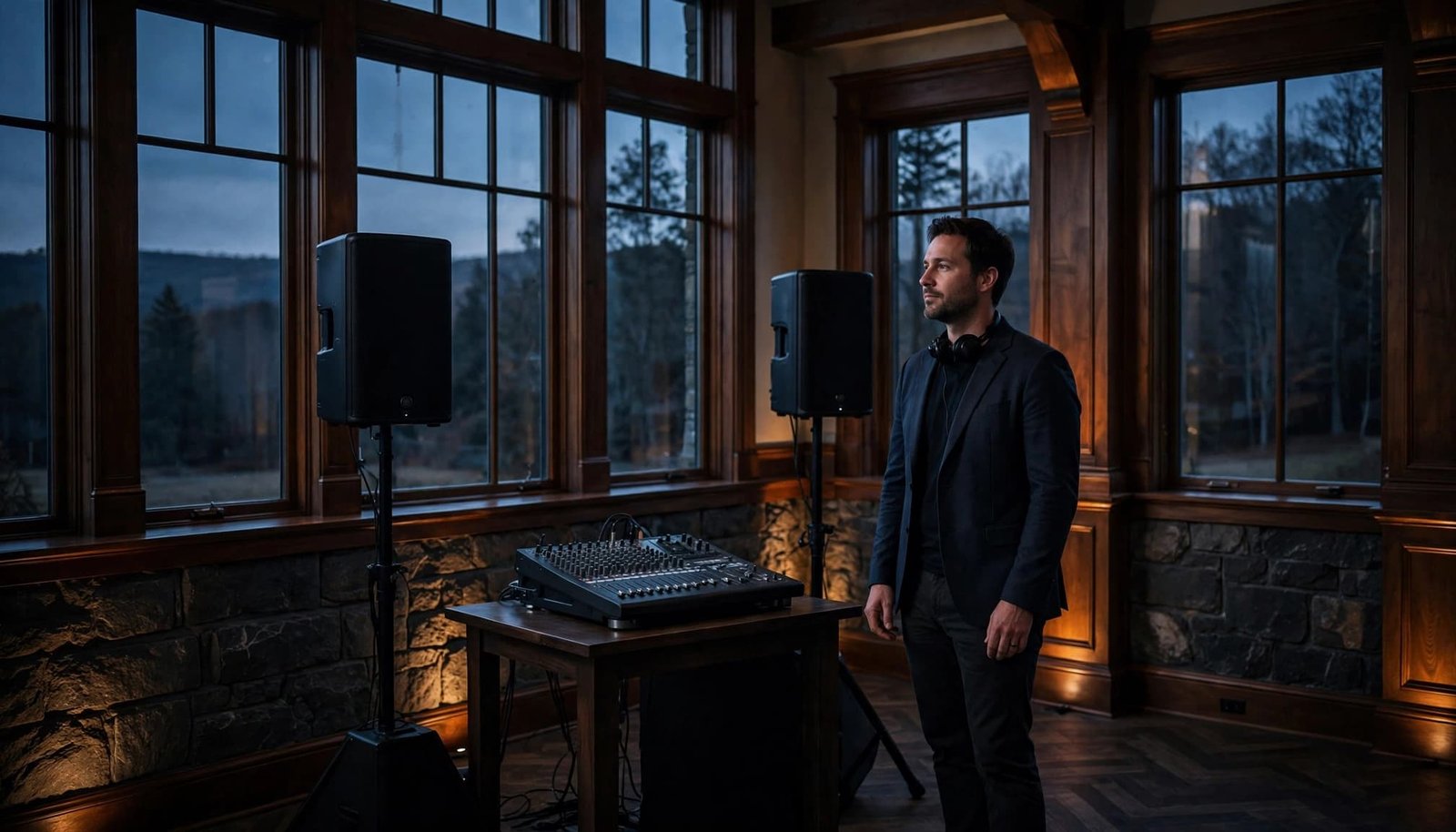
Start with the venue’s available electrical service. Document the power requirements for the equipment load, approved outlets, shared electrical circuits, and nearby vendor demand. Confirm where approved outlets are located, whether other vendors use them, and who can authorize access. A DJ setup may include a controller, speakers, subwoofers, wireless microphone receivers, uplighting, and supporting equipment.
Temporary power should only enter the conversation when the venue and qualified electrical professionals determine it is appropriate. An inverter generator may be suitable in some situations, but the venue and qualified electrical professionals must determine its suitability, connections, and sizing. A generator is not a casual backup plan for an indoor ballroom. It is a separate power source with placement, safety, and code considerations.
Keep the equipment list practical. The venue needs to know what will be in the room, while the DJ needs to know what else is drawing power nearby, such as catering stations, a photo booth, projection, or décor lighting.
Sound and lighting loads should be confirmed, not guessed
There is no single circuit count, wattage total, or generator size that fits every New Hampshire corporate event. Equipment needs change with the room size, guest count, audio coverage, lighting plan, venue infrastructure, and other vendors working in the space.
That is why asking for a venue’s event-specification sheet early is helpful. If no document exists, request a walkthrough with the venue coordinator. Identify the approved outlets and verify whether the DJ area shares power with bars, catering equipment, registration, or other AV.
A polished setup is not about filling every available outlet. It is about giving the sound system and lighting a dependable plan that fits the evening.
Conduct a Venue Power Walkthrough Before Load-In
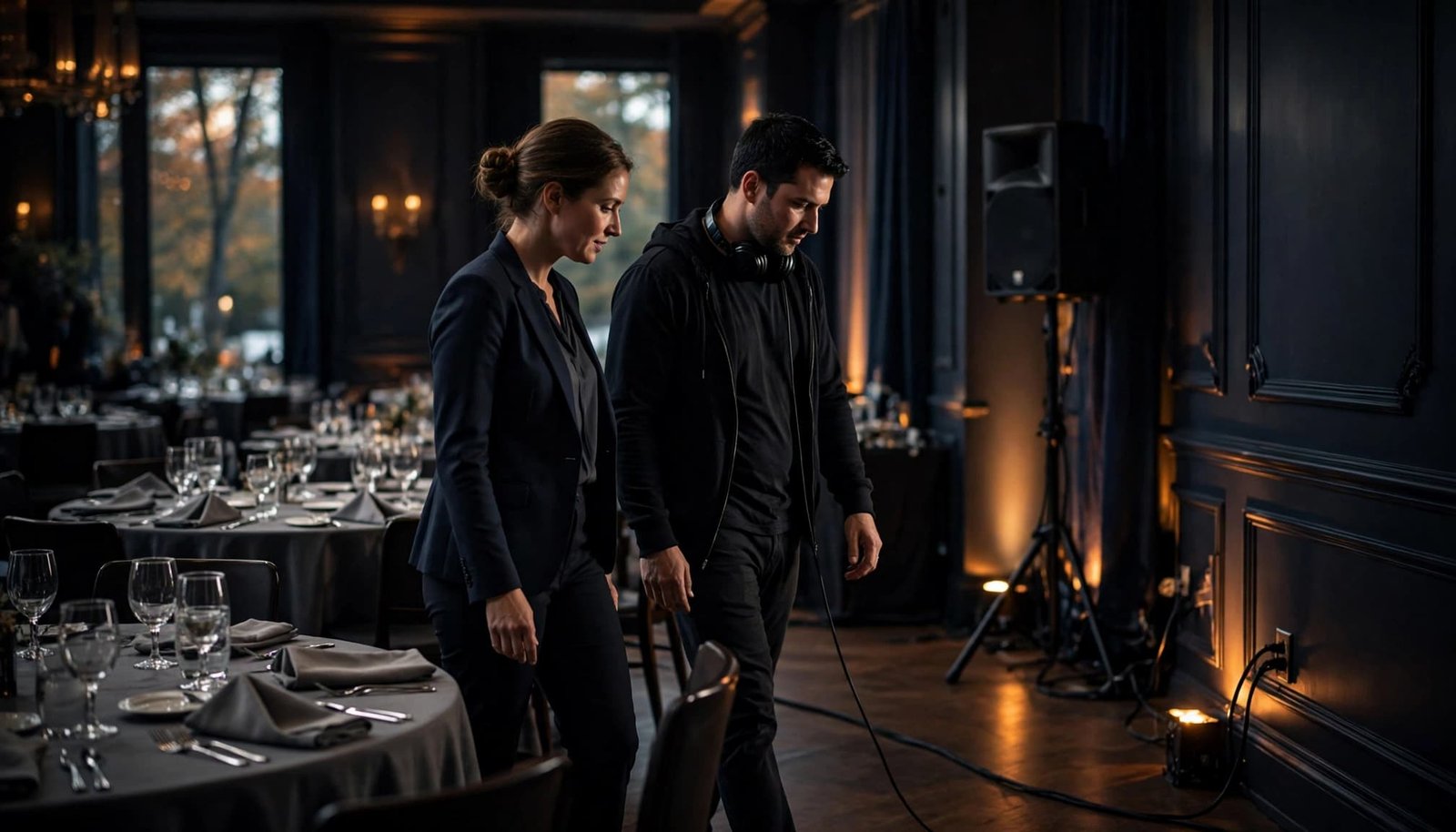
A short walkthrough can prevent the most common event-day surprises. It is also the right time to align the DJ booth with the venue layout, event entertainment schedule, presenter movement, and guest experience. Confirm speaker placement, lighting design, presentation sightlines, and cable routes before load-in.
Questions to ask the venue coordinator
Bring the DJ or production contact into this conversation when possible. The following questions give everyone a useful starting point:
- Which outlets or circuits are approved for DJ, sound, and lighting equipment?
- Is a dedicated power source available for the DJ area, or will other vendors share it?
- Where is the vendor entrance, and when can equipment enter the building?
- Are there restrictions on cable covers, tape, extension cords, or lighting placement?
- Does the venue require certificates of insurance, an in-house AV team, or advance approval for temporary power?
Also ask who has final authority if a room setup changes. A late decision to move the DJ booth, head table, bar, or stage can change cable paths and outlet access quickly.
Protect guest pathways and presentation areas
Cables should never become an afterthought once tables and décor are in place. The HSE’s event electrical safety guidance recommends routing cables to reduce trip hazards and mechanical damage. While that guidance is from the United Kingdom, the basic event-safety principle applies anywhere.
Keep cable runs away from guest entrances, buffet lines, dance floor edges, and primary paths between tables. When a cable must cross an approved walkway, use appropriate protection and coordinate the route with the venue.
Wireless microphones also need a clear plan. Confirm where presenters will stand, where awards will be handed out, and whether the DJ or MC needs to move between locations during the program.
Document what changes after the walkthrough
A simple written recap can save time and support day-of coordination. Include the DJ location, approved power locations, load-in time, cable route, microphone needs, lighting areas, venue contact, and the final run of show.
Share the recap with the people who need it, including the planner, venue coordinator, DJ, caterer, photographer, and any separate AV provider. A room that changes after the walkthrough should receive a second review, even if the change seems small.
Temporary Power and Generator Safety in New Hampshire
Most indoor corporate events rely on the venue’s existing electrical service. When outdoor programming, remote locations, or special production needs require temporary power for outdoor event entertainment, involve qualified professionals and the venue early.
Follow New Hampshire rules for generators and distribution
New Hampshire’s electrical-wiring requirements for generators and distribution equipment are not a do-it-yourself checklist. N.H. Admin. Code Saf-C 1402.10 requires generating plants to follow the National Electrical Code, NFPA 70, 2017 edition. The rule also addresses annual inspection and certification requirements for generators and distribution boxes.
Generator selection can’t rely on running watts alone. Startup demand, peak draw, total load, and distribution require review by qualified electrical professionals.
An inverter generator isn’t a casual backup for an indoor ballroom. Equipment condition, connections, and electrical oversight all need to be addressed by the right people.
A DJ can explain the production needs. The venue and licensed electrical professionals should determine how temporary power is safely provided. Safe backup plans should never become improvised generator use.
Generator placement and building connections
New Hampshire fire-safety guidance says portable generators should operate outdoors, at least 20 feet from buildings, doors, windows, and vent openings. Review the state’s portable-generator safety guidance before an outdoor or temporary-power event.
Never connect a portable generator directly to a building’s electrical circuits. Where a generator must work with a building’s electrical system, proper switching or isolation, such as a transfer switch or interlocking device where applicable, is needed to prevent dangerous backfeed.
Any proposed inverter generator must be reviewed for placement, connections, distribution, and venue approval. Fuel, weather protection, sound, access control, and public separation also need venue approval. Venue-specific rules and licensed electrical professionals control the actual setup.
Generator areas should stay away from guests and event traffic. These details are too important to decide during setup.
Build Power Details Into the Corporate Event Timeline
Power planning works best when party planning follows the event’s room, schedule, and technical brief. A formal gala, holiday party, conference, or awards dinner often benefits from beginning event entertainment and production conversations four to nine months ahead, especially for popular New Hampshire dates.
Start with the venue and event goals
At the beginning, confirm the guest count, room, event type, program schedule, DJ role, microphone plan, lighting needs, and power requirements. A networking reception may need light background music and one microphone. A formal awards event may need multiple wireless microphones, walk-up cues, presentation support, and a more detailed stage plan.
Share the event goals and music playlist preferences before choosing the final setup. A business dinner needs a different sound level and lighting approach than a company celebration built around dancing. The same venue-power principles can also guide planning with a wedding DJ.
Review your budget and compare pricing packages by checking which DJ, sound, lighting, setup, and coordination services are included.
Finalize the event-day handoff
Several weeks before the event, confirm vendor arrival times, loading access, meal timing, speeches, award cues, music transitions, emcee services, and timeline coordination. Reconfirm the power plan if the floor plan changes or another vendor adds equipment.
DJ Steve Neff Entertainment LLC provides professional DJ entertainment dating back to 1999. Steve Neff and Jon Turgeon support corporate events with DJ, MC, sound, lighting, and event-flow services planned around the venue and schedule. The team’s DJ, sound, and lighting services can be tailored for company parties, awards programs, meetings, and celebrations across New Hampshire.
Key Takeaways for a Dependable Setup
A corporate DJ setup should support the event entertainment without becoming the center of attention for the wrong reasons. Clear sound, controlled lighting, safe cable routes, and tested microphones help the room feel organized from the first announcement through the final song.
Keep these priorities in view:
- Confirm the venue’s approved power access before finalizing DJ, lighting, and AV placement.
- Walk the room before event day, then document the DJ location, cable routes, load-in plan, and key contacts.
- Treat generator and temporary-power decisions as safety and code matters, not simple equipment add-ons.
- Build power checks into the run of show, especially when speakers, awards, lighting, and multiple vendors share the room.
Frequently Asked Questions
How early should power planning begin for a corporate event?
Begin when the venue is selected and the basic event format is clear. For holiday parties, conferences, and formal galas, starting four to nine months ahead gives the team time to review venue rules, access windows, equipment needs, and vendor coordination.
It also allows time to document backup plans for approved power access or schedule changes. Smaller company gatherings may need less lead time, but the power conversation should still happen before the final floor plan is approved.
Does every corporate event DJ need a generator?
No. Many hotel ballrooms, conference spaces, and event venues have suitable house power. A generator may be considered for outdoor or remote events, but only after the venue and qualified electrical professionals review the situation.
An inverter generator’s running watts rating must match the total equipment load. Those specifications don’t replace a venue review, electrical approval, or guidance from a licensed professional. The right question isn’t “Should we get a generator?” It’s “What approved power source does this event require?”
What should a planner send the DJ before the event?
Share the venue name, room layout, load-in instructions, setup window, event schedule, speaker list, microphone needs, award cues, and music playlist or music preferences. Include any rules about outlets, cable routes, lighting, insurance, and in-house AV.
Complete venue, schedule, and technical details help the DJ prepare the event entertainment setup. Clear information allows the DJ to support the event instead of competing with it.
A Smooth Event Starts Before the First Song
Corporate event power planning is careful coordination, not guesswork. When the room, equipment, cable routes, and event entertainment work together, guests hear clear announcements, enjoy the atmosphere, and stay focused on the celebration.
The best corporate events feel easy because the people behind the scenes prepared for details guests never need to see.