A cocktail style wedding reception gives guests more freedom than a traditional wedding with a seated dinner. It also asks more of your planning. Success depends on substantial food, food stations, comfortable seating, and clear musical transitions.
A cocktail-style wedding reception offers guests more freedom to mingle, visit food stations, and choose when to sit or dance, departing from a traditional seated dinner. While providing flexibility, this reception format requires thoughtful coordination, especially concerning substantial food provisions and comfortable seating. For example, when a cocktail reception replaces a full meal, Artigot recommends 14 to 16 hors d’oeuvres per person over two and a half to three hours to ensure guest satisfaction. Clear communication with guests about the reception's format is also essential for a smooth and enjoyable experience.
The strongest plans give the evening a comfortable rhythm without filling every minute with announcements.
Start with the guest experience, then build food service, music, and meaningful moments around it.
What Changes at a Cocktail-Style Wedding Reception?
How do cocktail-style wedding receptions offer more freedom and require more coordination?
A cocktail style wedding reception gives guests more freedom than a traditional wedding with a sit down dinner. At a cocktail reception, guests can mingle, visit food stations, and choose when to sit or dance.
That flexibility needs thoughtful coordination. Guests should understand where food stations are available, which spaces are open, and when to gather for important moments. Your DJ/MC, caterer, and venue coordinator need the same plan.
A cocktail hour followed by dinner also requires less food than a reception replacing dinner. The Perfect Wedding suggests four to six appetizer pieces per guest for a standard one-hour cocktail hour. That isn’t enough to replace a full meal.
Explain the Format Before Guests Arrive
Use your wedding website and reception details to explain the format clearly to wedding guests. Suggested wording is: “Join us for a cocktail party-style reception with substantial hors d’oeuvres, food stations, and dancing. Seating will be available throughout the evening.”
Only promise what you’ve arranged. For a destination wedding, include the reception’s start and end times, practical travel details, and a way to share dietary or accessibility needs. Clear expectations reduce confusion before the celebration begins.
Plan Food That Replaces a Full Meal
Choose Substantial Portions, Not Only Small Bites
When a cocktail reception replaces a meal, plan enough food to satisfy guests. This matters especially if it overlaps normal dinner hours. Pair passed appetizers with satisfying choices such as carved meats, rice bowls, pasta, or substantial vegetarian dishes.
Artigot recommends 14 to 16 hors d’oeuvres per person over two and a half to three hours when the reception replaces a meal. Treat that estimate as a catering discussion point, not a universal formula.
Portion sizes, service duration, and food stations all affect the calculation. Ask your caterer whether station servings are included in the proposal’s total food allowance. Otherwise, comparing quotes by passed apps count alone can be misleading.
Choose foods guests can manage comfortably, and provide seated eating areas for dishes requiring utensils. A beautifully presented menu should also be practical to enjoy.
Give Dietary Needs Their Own Service Plan
Collect dietary requirements with RSVPs and provide the caterer with confirmed counts. Ask which dishes offer a complete meal for vegetarian, vegan, gluten-free, and other dietary needs.
Guests shouldn’t have to rely on salad or wait for one suitable appetizer to circulate. Arrange clear ingredient information and a reliable way to request reserved portions.
For food allergies, confirm preparation and cross-contact procedures directly with the caterer. Dietary labels alone don’t answer those questions. Your coordinator should know who handles food concerns during the reception.
Make Seating and Room Layout Comfortable
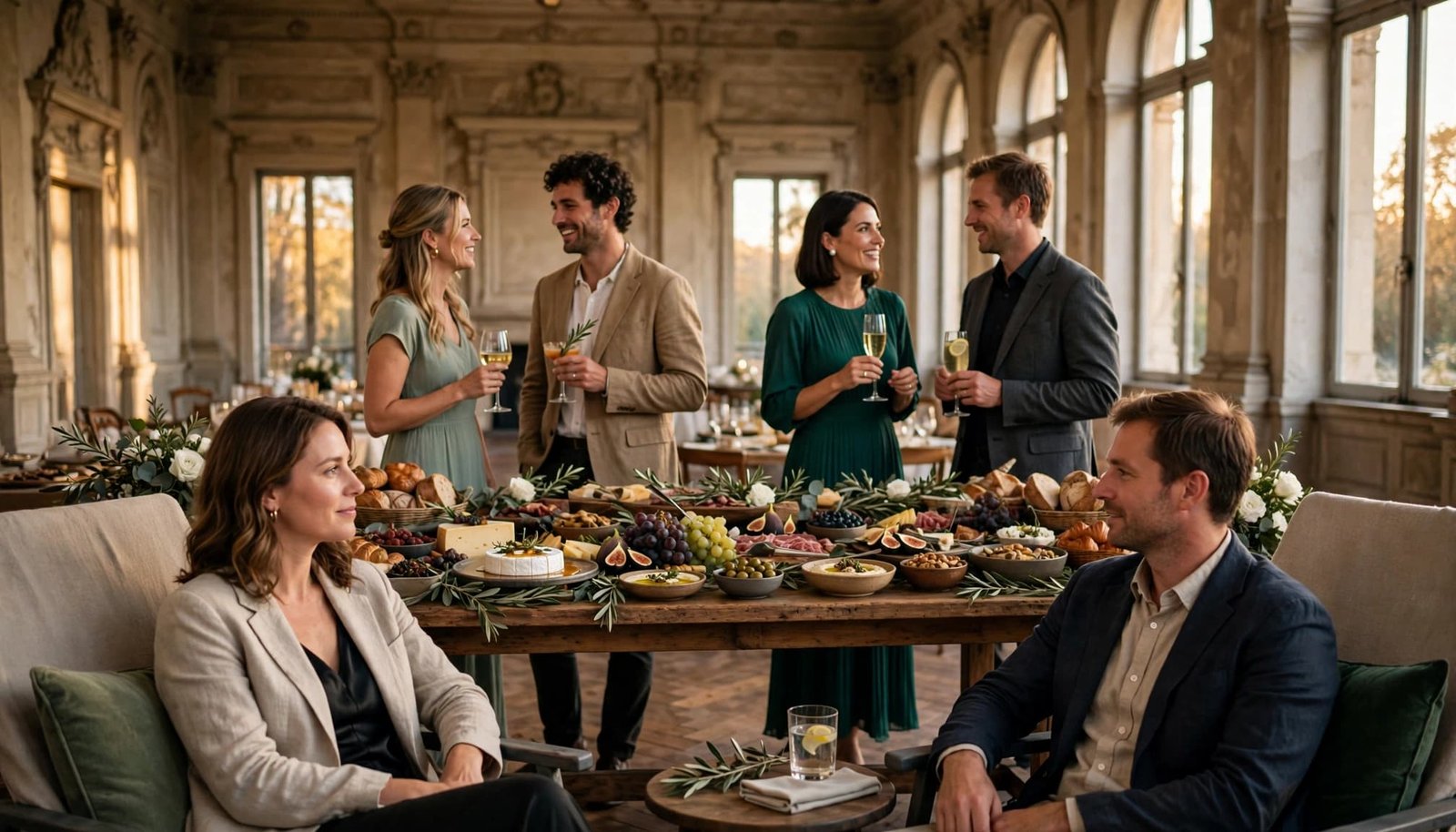
Provide Places to Rest and Eat
Skipping assigned seats doesn’t remove the need for seating. Review the guest list for older relatives, children, pregnant wedding guests, and anyone who may need regular breaks.
A chair for every guest is a comfortable option when space and budget allow. Thoughtful seating arrangements can combine supportive chairs and standard-height tables with lounge seating and cocktail tables. High stools and low sofas won’t suit everyone.
Keep some quieter seating away from speakers while preserving a clear view of formal moments. Brides’ cocktail reception planning guidance also emphasizes plentiful hors d’oeuvres and food stations; plan places to enjoy that food alongside the menu.
Separate Queues and Protect Walking Routes
Walk the proposed layout with your wedding venue coordinator and caterer. Put the bar away from the entrance, separate food queues, and keep station lines outside the dance floor.
Clear walking routes support the guest experience, especially between seating, restrooms, exits, and service areas. For a destination wedding, ask the venue to review accessibility and capacity before approving furniture placement.
Belongings need a plan, too. A staffed coat check with numbered tickets can prevent chairs becoming storage spaces. If that’s unavailable, designate a monitored coat area and explain its location during the welcome.
Provide convenient space beside seated eating areas for bags. Don’t ask guests to leave valuables unattended, and keep coats, purses, and gifts out of circulation routes.
A Four-Hour Reception Plan You Can Adapt
A four-hour schedule is one planning option, not a required duration. Confirm the venue’s closing time, catering window, and your priorities before setting the pace.
This schedule gives food an early start and protects an extended dancing block.
| Time | Reception Moment | DJ/MC Cue |
|---|---|---|
| 5:00 p.m. | Guests arrive; passed apps and stations open | Welcoming music at conversation volume |
| 5:15 p.m. | Couple’s welcome | Brief explanation of food, seating, and facilities |
| 5:20 p.m. | Substantial food service and mingling continue | Warm, familiar background selections |
| 6:10 p.m. | Coordination buffer before formalities | Confirm caterer, photographer, and speakers are ready |
| 6:25 p.m. | Focused toasts | Lower music and gather attention |
| 6:35 p.m. | First dance and optional parent dances | Play approved recordings and cue lighting |
| 6:45 p.m. | Open dancing begins | Invite guests onto the floor; confirm remaining food access |
| 7:30 p.m. | Wedding cake or dessert becomes available | Brief announcement without stopping dancing |
| 8:45 p.m. | Final dance block | Closing cue and departure information |
| 9:00 p.m. | Reception ends | Final thank-you |
Let service progress determine whether formalities begin on time. Guests still waiting for substantial food need that opportunity before gathering for speeches.
Allow 10 to 15 minutes of breathing room around major transitions rather than adding another activity. Portraits, dress adjustments, and food service can shift the schedule.
Share one run sheet with vendor contacts, music cues, speaker names, and the person authorized to approve changes. Confirm wedding DJ and MC responsibilities before assuming your entertainment provider handles every transition.
Match the Music to Guest Activity
Keep Early Music Conversation-Friendly
Music should welcome guests, add personality, and leave room for conversation. Jazz, classic soul, acoustic favorites, mellow pop, and lighter Motown selections can create a polished atmosphere.
Build the early playlist in gentle waves. Begin comfortably, then introduce brighter familiar songs as guests settle into food service and mingling.
Use a conversation test during setup: can two people speak normally across a table? Check lounge areas and places near speakers, not only the middle of the room.
Speaker placement matters as much as volume. Explore cocktail wedding music ideas with your DJ, then share preferred genres, must-plays, cultural selections, and do-not-play choices.
Give Dancing a Clear Opening
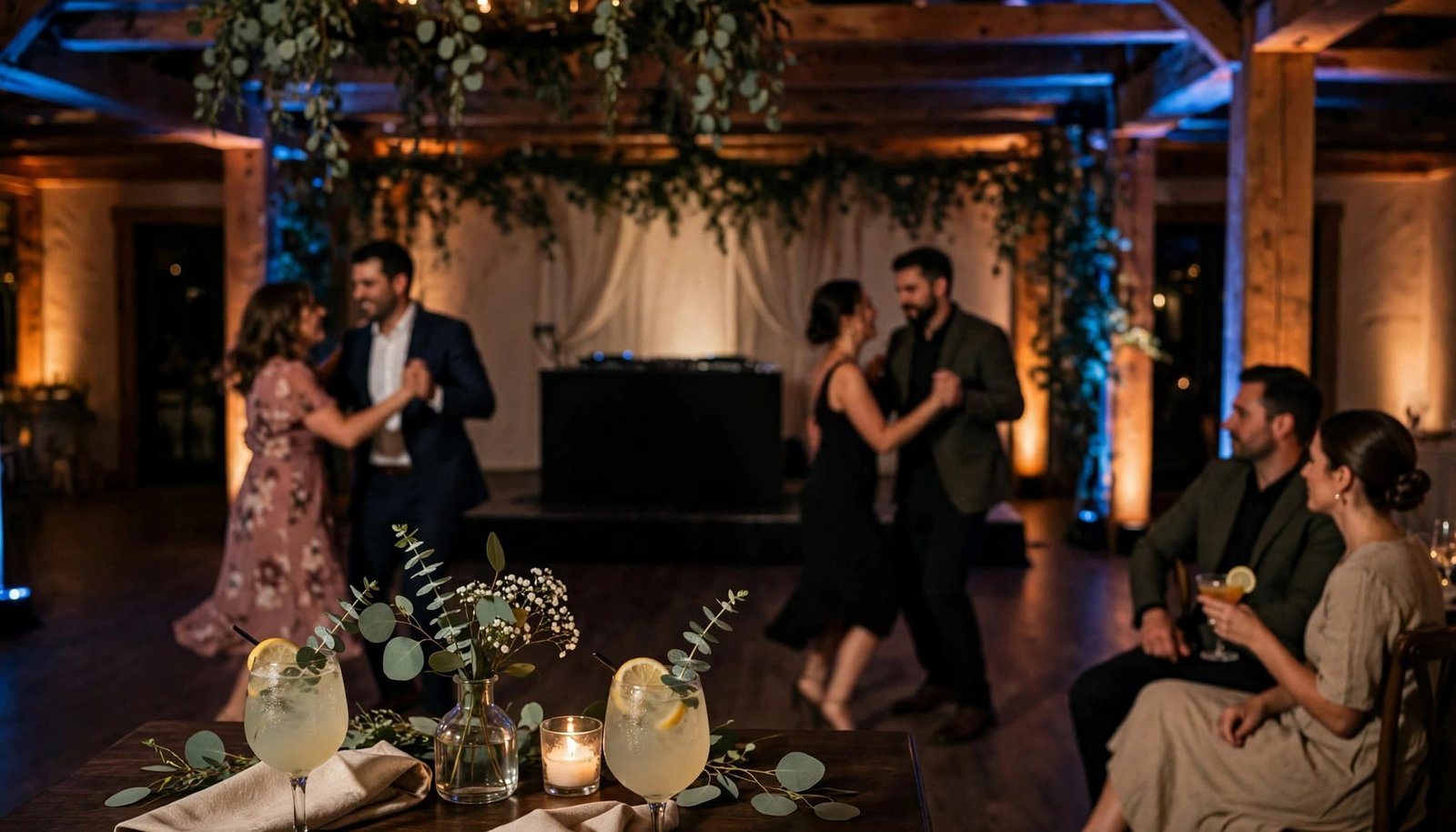
Without a seated dinner, there may be no obvious moment when the social portion ends. A first dance, brief welcome, or shared toast can bring attention together before dancing begins.
Choose that moment intentionally. Confirm the photographer is ready, the caterer can accommodate the pause, and your MC knows the invitation wording.
Discuss wedding dance floor lighting as part of the transition. Keep food and walking areas comfortably lit while changing the dance floor’s atmosphere.
Once dancing begins, let the DJ respond to participation. Guests who prefer conversation should still have a comfortable place to enjoy the celebration.
Handle Toasts Without a Seated Audience
Standing guests need a clear gathering point and a short, focused speech block. Position speakers where everyone can see them without blocking food service or accessible routes.
Confirm the toast order in advance and ask speakers to keep remarks concise. Tell guests where to gather, while inviting anyone who needs a chair to remain seated.
Your DJ/MC should lower the background music before speaking. Test microphone coverage in adjoining lounges or patios if guests will use those areas.
A toast announcement only works if guests can hear it where they’re socializing, not just beside the DJ booth.
Coordinate a brief pause in nearby service when practical. Avoid pulling attention toward a speech while staff are refreshing stations directly behind the speaker.
Planning the reception announcement order helps keep directions useful and brief. One clear invitation is more comfortable than repeated calls for attention.
Compare the Complete Cost, Not Just Dinner
A cocktail reception can change the budget, but removing plated dinner doesn’t guarantee savings. Compare proposals with a plated dinner or buffet dinner using the same guest count, reception length, food coverage, and bar arrangements.
Ask for itemized estimates that include staffing, rentals, service charges, setup, cleanup, and taxes. Passed apps may require substantial service staff, while stations may need attendants, serving equipment, and replenishment.
Furniture also deserves attention. Lounge rentals, cocktail tables, standard chairs, and places to eat can offset savings elsewhere. Review coat-check staffing and additional sound coverage if guests use several spaces.
An open bar needs its own comparison. Confirm whether pricing is consumption-based or charged per guest, which drinks are included, and when service ends. Don’t assume either format will produce a particular alcohol bill.
Choose the arrangement that supports your guests and priorities. A dependable, well-staffed reception is a better comparison point than the lowest starting price.
Key Takeaways for a Well-Paced Reception
- Confirm a complete meal-replacement menu, including substantial dietary options and a replenishment plan.
- Provide comfortable seating for wedding guests, clear walking routes, and an organized place for coats.
- Give vendors one shared schedule with cue points, approval contacts, and transition buffers.
- Keep conversation music comfortable, formalities focused, and the opening of dancing clearly announced.
Frequently Asked Questions
How much food should we serve at a cocktail-style wedding reception?
If the reception replaces dinner, plan a complete meal rather than a few small bites. Use estimates as a starting point, then ask your caterer to account for service duration, station portions, and dietary needs.
Do we need seating if guests won’t have assigned places?
Yes. Provide comfortable places to rest and eat, including chairs and tables suited to guests who may not manage high stools or lounge seating.
How should we let guests know when dancing begins?
Choose a clear transition, such as a first dance or brief welcome, and have your DJ/MC invite guests onto the floor. Coordinate the cue with your photographer and caterer so guests aren’t asked to gather while food service is still underway.
Is a cocktail-style reception less expensive than a seated dinner?
Not necessarily. Compare complete proposals that include food, staffing, furniture, rentals, bar service, and fees for the same guest count and reception length.
Give Guests Freedom With a Clear Plan
A cocktail style wedding reception feels relaxed when food, seating, music, and announcements work together for a smooth guest experience.
DJ Steve Neff Entertainment LLC brings professional DJ experience dating back to 1999 to personalized music and reception-flow planning. Based in Concord, New Hampshire, the company works with couples to coordinate sound, MC support, lighting, and meaningful musical moments.
Begin with your guest list, catering plan, and favorite traditions; build a comfortable reception rhythm around them.