A great first dance deserves more than a dark corner and a speaker in the room. The right wedding dance floor lighting gives your reception energy, makes photos look polished, and tells guests where the celebration is happening.
Your chosen wedding venue sets the starting point. A grand ballroom needs a different approach than a rustic barn, a sailcloth tent, or an industrial loft. The goal is never to add every available effect. It is to create a look that fits your wedding, your floor plan, and the way you want the night to feel.
Start with the room, then build lighting that supports every big moment and helps create atmosphere for the entire celebration.
Key Takeaways
- Wedding lighting works best in three layers: ambient light, decorative light, and party lighting.
- Uplighting gives most venues a polished look without taking over the room.
- Barns, tents, ballrooms, lofts, and outdoor receptions all need different equipment and lighting options.
- A packed dance floor needs energy, but tasteful lighting changes always look better than nonstop effects.
- Ask about venue power, hanging restrictions, curfews, and open-flame rules before finalizing your plan.
Start With the Three Types of Reception Lighting
The most memorable wedding reception rooms don’t rely on one bright light source. They use layers. Each layer has a job, and each one affects how guests experience the space.
Ambient lighting is the base. It makes entrances, dinner, conversations, and formalities comfortable. Venue house lights, soft wall washes, bistro lights, and chandeliers can all support this layer. You want enough light for guests to move safely and see their meals, without making the reception feel like a meeting room.
Decorative lighting shapes the room. LED uplighting can wash walls, columns, draping, and architectural details in warm amber, blush, champagne, blue, or colors that fit your palette. Pin spotting gives cakes, floral centerpieces, and sweetheart tables a focused glow. A custom monogram or gobo can project a pattern, initials, or a design onto the dance floor or wall, provided the venue allows it.
Party lighting comes alive once the dance floor opens. Intelligent moving lights, party lights, dj lights, color changes, and controlled effects help guests feel the shift from dinner to celebration. This is where the energy builds.
More lighting is not always better. Fast, aggressive effects can feel out of place during a formal first dance or a romantic parent dance.
A professional lighting plan changes with the timeline. Keep dinner flattering and relaxed. Add movement and bolder color when the DJ opens the floor. That pacing makes the party feel intentional, not chaotic.
Wedding Dance Floor Lighting for Ballrooms, Barns, and Beyond
Every room has strengths. The best wedding dance floor lighting highlights them instead of trying to turn the venue into something it isn’t.
Elegant ballrooms call for polished layers
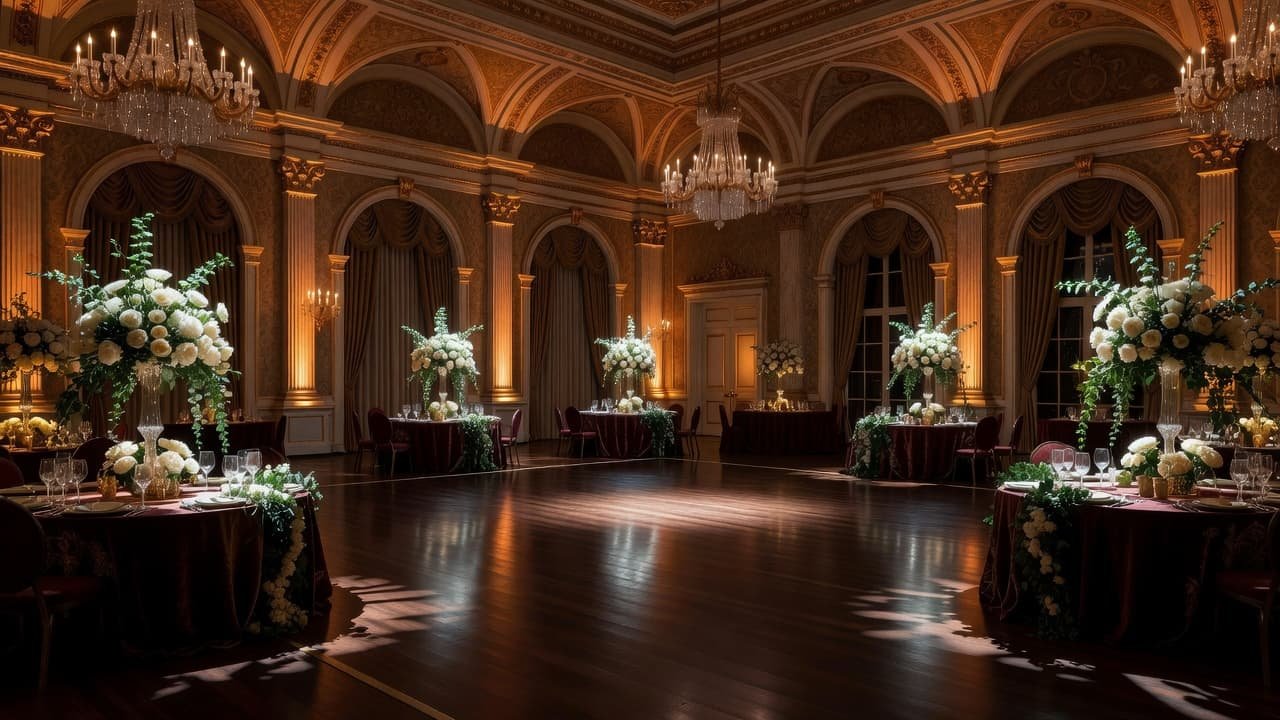
Ballrooms often come with chandeliers, carpeting, tall ceilings, and formal architecture. That means you can focus on refinement before the party gets bigger.
Warm amber or soft white uplighting works beautifully around perimeter walls and columns. Add pin spots to centerpieces and the cake table for a high-end look in photos. A chandelier above the floor can be left as the visual centerpiece, while intelligent lights add movement after dinner.
Custom monograms look especially sharp in a ballroom. Project them onto an open wall, the dance floor, or behind the sweetheart table. Keep the design simple. One clean focal point makes a stronger impression than patterns everywhere.

Photo by Vidal Balielo Jr.
Rustic barns need warmth, not a nightclub overload
Wood beams, stone walls, and exposed rafters already bring character. Bistro or string lights can soften overhead space and make a barn feel welcoming. Lanterns may work along pathways, tables, or lounge areas, but confirm venue policy first. Open flames are not automatically permitted, and battery-operated candles often provide the same look with fewer concerns.
Uplighting is a strong choice for barn walls and support beams. Deep amber, warm white, or muted color adds dimension without fighting the rustic setting. For the dance floor, use compact moving head dj lights with controlled patterns. The effect should feel fun, not harsh against natural wood.
If the barn has low ceilings, avoid oversized fixtures and excessive beams. A clean setup with uplighting, string lights, and a few led moving head fixtures usually delivers more than a crowded lighting rig.
Garden tents need practical beauty
A tent reception can be stunning after sunset, but it needs a clear plan. Bistro lights strung across the ceiling give the entire space a warm canopy effect. Chandeliers can add a formal touch when the tent structure and venue permit safe installation.
Use uplights around tent poles, fabric draping, trees, hedges, and the bar area. These details keep the edges of the reception visible after dark. Well-designed dance floor lighting can also create a clear party zone when the floor is surrounded by lawn or open space.
Outdoor power matters. Ask where outlets are located, whether generators are allowed, and what happens if weather changes the setup. Equipment should be protected from rain, wind, and guest traffic. A beautiful lighting plan is only useful if it remains reliable all night.
Industrial lofts look best with contrast
Brick, concrete, metal, and high ceilings give loft venues their own personality. Do not hide it. Use ambient venue lights to bring out brick walls and steel details. Saturated colors can work well here, especially rich blues, purples, magentas, or warm amber.
Edison-style bistro lighting can soften the hard edges. For dancing, intelligent moving lights create a modern, high-energy look that fits the room. A custom gobo projected onto a brick wall can be more visible than one projected onto a dark floor.
Keep cable runs neat and protected. Loft spaces often have open layouts, but that does not mean equipment can sit anywhere. The dance floor, bar, guest seating, and photo areas all need room to work.
Beach and waterfront receptions need subtle glow
Waterfront venues already have a natural focal point. Lighting should support the view, not compete with it. Warm string lights, low uplighting on nearby trees or railings, and gentle pin spots create a relaxed, romantic look.
Avoid aiming intense lights directly toward the water or into guest sightlines. As the evening gets darker, a few well-placed dance lights can bring energy to the floor without losing the setting. Battery-powered LED fixtures are useful when outlet access is limited.
Build Energy Without Losing the Elegance
Your lighting should move with the reception. During cocktail hour and dinner, stick to flattering colors and soft wall washes. Guests should be able to talk, eat, and take photos without feeling like they are under a spotlight.
Once formal dances end, party lighting can become more active. Intelligent moving lights can sweep the dance floor, create patterns, and change color with the music. A skilled wedding dj controls those changes based on the crowd and the moment, often utilizing sound activated settings or dmx control to keep things dynamic without accidentally creating an overwhelming club atmosphere.
A full LED dance floor is a bold statement piece. It works best in modern ballrooms, hotel venues, large tents, and contemporary spaces where it becomes part of the decor. If it stretches the budget too far, use uplighting and a focused lighting package featuring compact stage lights instead. Guests respond to the atmosphere, not the number of fixtures in the room.
For budget-conscious couples, prioritize the areas people will notice most:
- The dance floor and DJ area
- The sweetheart table, cake table, or head table
- Main walls, columns, and architectural details
- Entryways and photo-friendly spaces
A smaller package placed well will look more polished than lighting every corner with no clear plan. Your venue layout matters more than guest count alone.
Questions to Ask Your Venue or Lighting Vendor
A quick conversation early in planning prevents last-minute surprises. Bring these questions to your venue walkthrough or lighting consultation:
- Is outside lighting equipment allowed, and are there approved vendor rules?
- Which fixtures are already installed, and can the existing venue lights be dimmed or turned off?
- Are uplights, hanging chandeliers, bistro lights, or gobos permitted among your other lighting options?
- Does the venue allow open flames, or are LED candles required?
- Where are the power outlets, and are they on dedicated circuits?
- Are there ceiling, rigging, weight, or mounting restrictions for overhead dance floor lighting?
- What time must music and dance lighting end due to curfews?
- Is there a rain plan for outdoor lighting and DJ equipment?
- Can lights be placed near exits, sprinklers, historic walls, or tent poles?
- Who handles setup, teardown, and coordination with other vendors?
Don’t assume a permanently installed chandelier or wall dimmer is available for your event. Some venues limit access to house fixtures, and others require their staff to operate them. Get the details in writing.
Frequently Asked Questions
When should wedding dance floor lighting turn on?
Party lighting should stay off or subdued during dinner and formal moments, then activate once the dance floor opens. This creates a natural transition from a relaxed, romantic meal to a high-energy celebration.
How many uplights do I need for my venue?
The number of uplights depends on the room size and layout, but typically twenty to thirty fixtures can cover the perimeter of a standard ballroom or barn. Placing them a few feet apart along key walls and architectural columns gives the space a balanced, polished glow.
Are bistro lights enough for a dance floor?
Bistro lights provide a wonderful ambient canopy, but they usually lack the energy needed once the party starts. Pairing string lights with intelligent moving lights or compact DJ fixtures ensures the dance floor has enough dynamic movement for the evening.
Let the Dance Floor Set the Mood
The strongest wedding dance floor lighting feels like part of the celebration. It flatters your venue during dinner, adds style to your formal moments, and brings real energy once the music starts.
Choose lighting that fits the room, not a one-size-fits-all package. With thoughtful uplighting, focused decorative details, and dynamic party lights timed to the crowd, your reception can maintain a packed dance floor, keeping the evening polished, personal, and unforgettable from the first dance to the final song.