Your guests should hear the person across from them without working for it. The right cocktail wedding music gives the room warmth, style, and a sense that the celebration is already underway.
A cocktail-style wedding reception is built around mingling, passed appetizers, food stations, and easy conversation. Unlike a traditional cocktail hour, it may last much longer, so the sound should support that energy without pulling guests toward the speakers.
The goal is simple: create a polished atmosphere that feels personal, comfortable, and ready to build throughout the night.
Key Takeaways
- Keep cocktail wedding music present but quiet enough for guests to hold normal conversations comfortably.
- Choose between live musicians, a wedding DJ, or a curated playlist based on your venue, budget, guest count, and desired flexibility.
- Build the playlist gradually, beginning with warm familiar genres and adding energy in short, thoughtful runs rather than starting with dance-floor hits.
- Personalize the music with cultural favorites, family connections, meaningful songs, and a clear do-not-play list.
- Test the sound setup in the actual venue, place speakers away from conversation areas, and plan music changes around the reception timeline.
Cocktail Wedding Music Should Keep Guests Talking
Cocktail hour music is not filler. It provides background music with purpose, filling quiet gaps, welcoming guests who may not know one another, and giving the wedding reception a shared rhythm while photos, drinks, and conversation unfold.
Know Whether It Is an Hour or the Entire Reception
A traditional wedding cocktail hour often runs about 45 to 60 minutes. It creates a smooth reception transition between the ceremony and dinner. Keep cocktail hour music light and welcoming with jazz, acoustic selections, adult contemporary, or yacht rock.
A cocktail-style reception lasts much longer than a traditional wedding cocktail hour. Guests may mingle for several hours, visit food stations, and move around the room instead of sitting through a formal dinner. In that setting, the music needs more variety. Start refined, add familiar songs as the room settles in, then raise the energy in small steps when guests are ready.
Use Conversation as Your Volume Test
Music should be present, but it should not dominate the room or disappear into background noise. Ask your DJ, bandleader, or venue coordinator to test the sound where guests will actually stand, sit, and order drinks.
If guests need to lean toward each other to finish a normal conversation, the music is too loud for a cocktail-focused event.
Volume often changes as the room fills. A nearly empty ballroom can sound bright and echoing, while a full room absorbs more sound. A professional team will adjust throughout the reception instead of setting one level and walking away.
Choose Live Music, a DJ, or a Curated Playlist
There is no single right format. Live music, a wedding DJ, and a wedding playlist offer different kinds of guest entertainment. The best choice comes down to your venue, guest count, budget, desired mood, and how much flexibility you want during the reception.
Live Musicians Add a Personal Touch
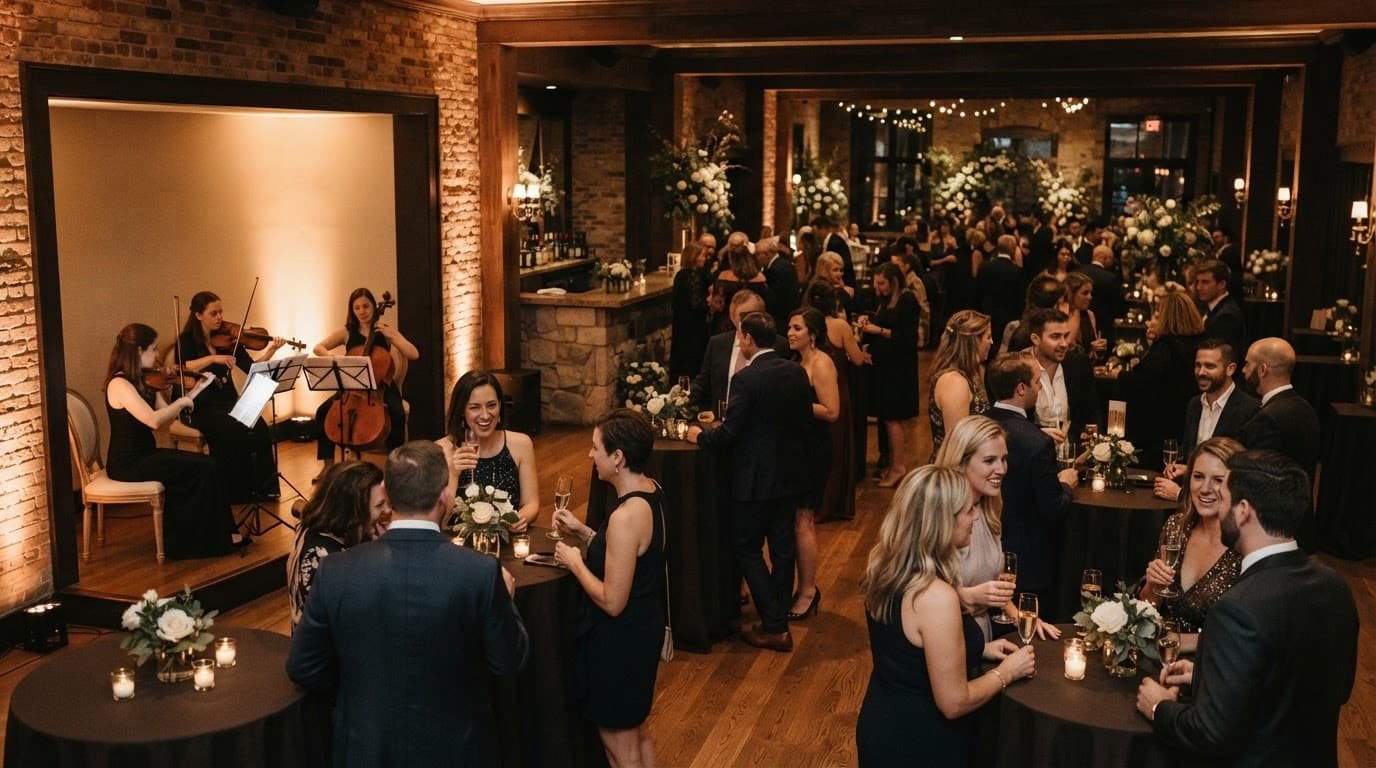
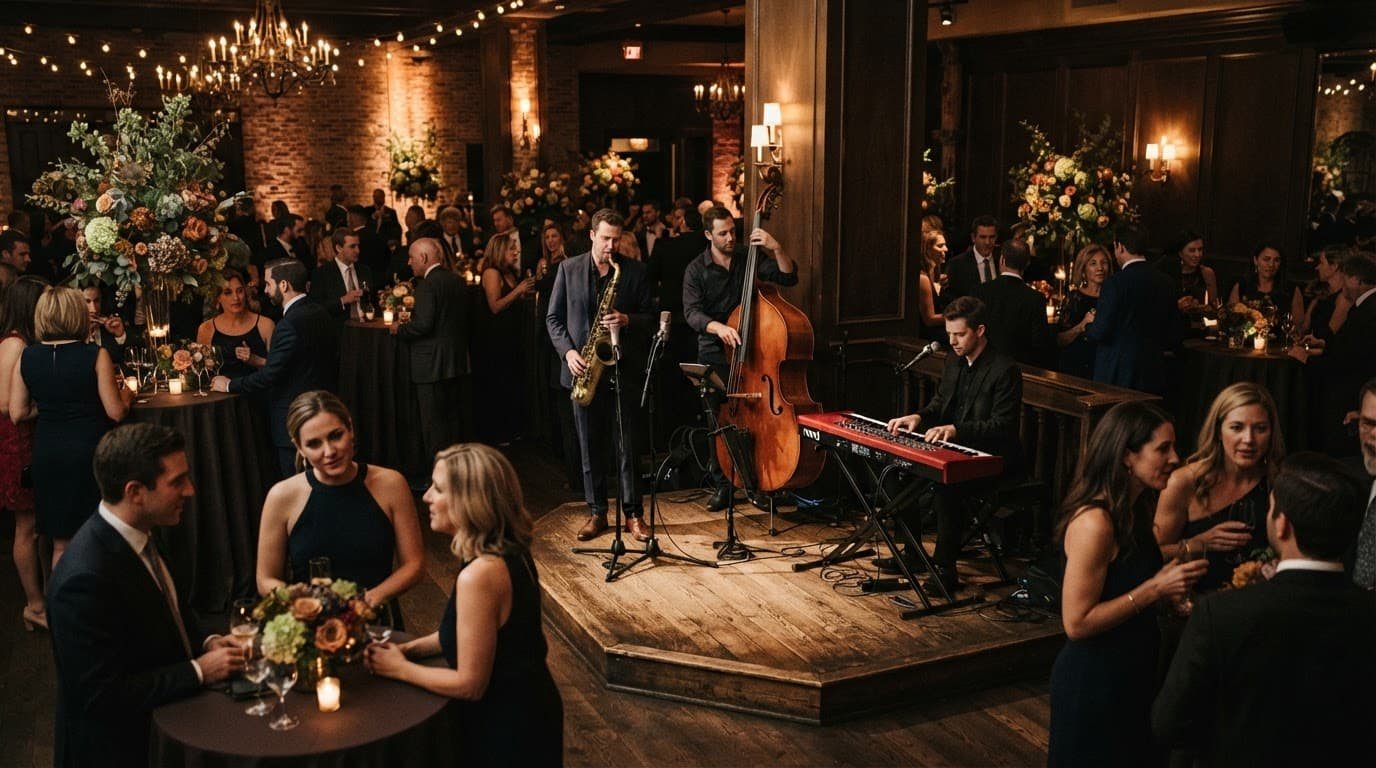
A solo guitarist, jazz duo, string quartet, or small acoustic group can give cocktail hour an elegant, welcoming feel. Live music works especially well in gardens, historic venues, galleries, and intimate indoor spaces where guests are close to the performers. A wedding band offers fuller sound than a small cocktail-hour ensemble and can personalize a yacht rock favorite.
Ask about breaks, song requests, acoustic covers, rain plans for outdoor events, electrical needs, and how musicians will handle timing changes. A string trio may feel perfect for a refined afternoon wedding, while a jazz group can bring warmth to an evening reception without turning it into a concert.
A Wedding DJ Brings Flexibility and Control
A wedding DJ is a strong fit when you want a customized music plan that can adjust as the room changes. The DJ can begin with light soul, jazz, acoustic pop, adult contemporary, or yacht rock, then bring in more upbeat selections as guests become comfortable.
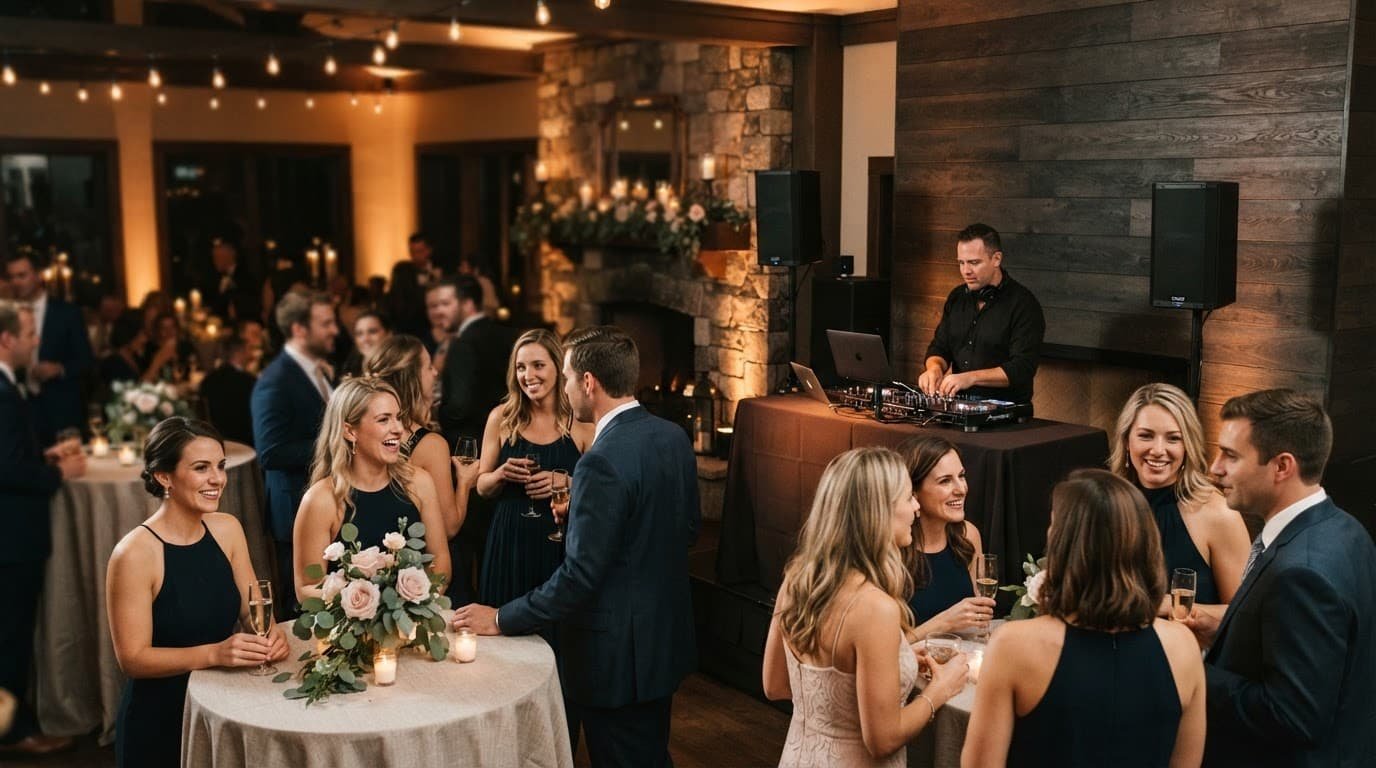
A professional DJ also manages the technical side, including speaker placement, microphones for toasts, transitions, and music for unexpected delays. DJ pricing varies based on date, travel, total coverage, sound equipment, hosting duties, and whether the cocktail portion is part of full wedding-day service. Compare detailed quotes, not only the starting price.
A DIY Wedding Playlist Needs a Real Plan
A playlist can work for a smaller gathering, but it needs more than a phone near a speaker. Download music for offline playback in advance, bring a backup device, avoid depending on venue Wi-Fi, and assign one reliable person to manage timing.
A personal streaming account may not cover public performance at an event. Check your venue’s music policy and the service terms before the wedding day. Also, build at least 15 to 30 extra minutes of music. Dinner service, weather, and family photos can all run longer than planned.
Build a Wedding Playlist That Has Room to Breathe.
A strong wedding playlist avoids playing every favorite song at once. For a wedding cocktail hour, good music curation matters as much as individual favorites. Cocktail hour music should balance familiar moments that make guests smile with softer stretches that keep conversation flowing.
Start With Warm, Familiar Genres
For cocktail hour ideas, start with soul, jazz, acoustic pop, mellow funk, yacht rock, soft rock, bossa nova, and tasteful adult contemporary. These styles have personality without feeling demanding during early mingling.
Think of songs such as “Lovely Day” by Bill Withers, “This Will Be (An Everlasting Love)” by Natalie Cole, “L-O-V-E” by Nat King Cole, “Better Together” by Jack Johnson, and “Everywhere” by Fleetwood Mac. These familiar cocktail hour songs set a welcoming tone. Instrumental covers of favorite pop songs can also suit softer stretches when romantic ballads feel too lyric-heavy, giving couples recognizable melodies without prominent lyrics.
For ideas, this classic wedding cocktail-hour playlist is a Spotify playlist featuring Louis Armstrong, Etta James, and Sammy Davis Jr. Use it as inspiration, then remove anything that does not feel like you.
Add Energy in Short, Thoughtful Runs
A cocktail-style reception should not feel sleepy all night. Bring in brighter tracks after guests have settled, perhaps with a touch of yacht rock. Use those tracks to create movement around food stations or invite guests toward the bar and lounge areas.
“September” by Earth, Wind & Fire, “You Make My Dreams” by Daryl Hall and John Oates, and “24K Magic” by Bruno Mars can add bounce without pushing the room into full dance-floor mode. Use two or three upbeat songs in a short run, perhaps a yacht rock set. Follow them with a familiar adult contemporary vocal track for a softer reset.
A Millennial wedding cocktail-hour playlist offers another useful lane, with relaxed romantic pop from Jason Mraz, Colbie Caillat, and Natasha Bedingfield.
Match the Music to Your Guests and Your Story
The best choices should sound like a natural part of your wedding, not a generic hotel lobby soundtrack. Your music can reinforce the wedding theme while still feeling polished and personal.
Include Culture, Family, and Shared Favorites
Make room for music that matters to both families during the wedding cocktail hour, so everyone feels represented. That may mean Latin favorites, Afrobeat selections, bhangra, mariachi, country classics, Motown, K-pop, adult contemporary, or songs tied to a meaningful trip, hometown, or family tradition.
You don’t need to explain every choice. A thoughtful mix supports your story, helps guests feel comfortable, and lets them hear themselves in the celebration. Genre blending keeps that variety from feeling random or checklist-driven. If a meaningful song has strong lyrics or an intense tempo, consider a softer cover, a shorter edit, or a later placement when the room is more active.
Review Lyrics and Exact Versions
Even at a wedding, a song’s message matters. Some tracks have a clean edit that feels choppy, while others carry themes that may not fit a mixed-age gathering. Listen to the exact version in your music selection, then confirm it with your DJ, band, or playlist.
Share a short do-not-play list alongside your must-play choices. Include artists, songs, or themes you want to avoid. This gives your entertainment team clear direction while leaving room to read the crowd and keep the reception moving naturally.
Get the Sound Setup Right Before Guests Arrive
Great music can still feel wrong if the sound setup does not fit the room. During wedding planning, check venue acoustics, table layout, ceiling height, and speaker placement before setting levels for the wedding cocktail hour.
Keep Speakers Away From Conversation Hot Spots
Avoid placing a speaker or related audio equipment directly beside a cocktail table, lounge grouping, guest book, or food station. Those areas need comfortable sound, not a front-row concert experience.
Large ballrooms with hard floors, glass, and high ceilings can reflect sound and amplify background noise, making bass-heavy music feel muddy. Outdoor spaces bring a different challenge because sound can disappear into open air. Test the system in the actual space, then walk the room before guests arrive.
Plan the Music Around Real Reception Moments
For cocktail hour planning, give your wedding DJ a clear wedding timeline. Include the ceremony end, cocktail service, food opening, toasts, special dances, sunset photos, and announcements. Share your wedding playlist, plus live music or wedding band setup needs, breaks, and transitions, so changes feel planned, not random.
If you want guests dancing later, save familiar adult contemporary songs with moderate energy for that moment. Cocktail music should build anticipation, not use every big sing-along before the reception has found its rhythm. A feel-good cocktail-hour collection can help identify upbeat songs that still fit a social setting.
Frequently Asked Questions
How loud should cocktail wedding music be?
Music should be easy to hear without making guests raise their voices or lean toward one another. Test the volume where guests will actually sit, stand, order drinks, and mingle, then adjust it as the room fills.
Is a DJ or live music better for a cocktail-style wedding?
Neither option is universally better; the right choice depends on your venue, budget, guest count, and preferred atmosphere. Live musicians add a personal visual touch, while a DJ offers greater flexibility and control as the reception changes.
What genres work well during a wedding cocktail hour?
Soul, jazz, acoustic pop, mellow funk, yacht rock, soft rock, bossa nova, and tasteful adult contemporary are strong choices. They add personality and familiar moments while leaving enough space for conversation.
How long should a cocktail wedding playlist be?
Plan for the full length of the reception’s cocktail-style portion and add at least 15 to 30 extra minutes. Delays involving dinner, weather, photos, or family logistics can easily extend the schedule.
Can I use a personal streaming account at my wedding?
A personal streaming account may not include public-performance rights for an event. Check the venue’s music policy and the streaming service’s terms, and arrange offline playback with a backup device if you are using a DIY playlist.
A Reception Soundtrack Guests Will Remember
The right cocktail hour music makes the room feel welcoming before the first toast or dance ever begins. It gives guests space to reconnect, meet new people, and enjoy the celebration with background music that supports conversation without disappearing completely.
Choose music that fits your story, respects guest comfort, and suits the real flow of the wedding cocktail hour. When the volume, pace, and personality are right, your wedding reception feels polished, relaxed, and genuinely yours.