A well-organized prom seating chart starts with an accurate group list, clear seating preferences, and a practical backup plan if everyone can’t share one table. Agreeing on those details early gives your friends a comfortable place to gather without adding unnecessary pressure to prom planning.
Your group may include couples, students attending independently, and friends bringing approved guests; everyone deserves the same consideration. Start with clear coordination so your seating request supports both your friendships and the evening’s activities.
Key Takeaways
- Build one accurate attendee list, with each person’s permission, before submitting your group’s seating request.
- Prioritize familiar company and nearby tables rather than expecting an entire group to fit at one table.
- Keep personal information private, follow the approved seating arrangement, and leave furniture changes to event staff.
These steps give organizers useful information while keeping your group’s expectations realistic. They also reduce the repeated messages, conflicting requests, and last-minute decisions that can distract from enjoying prom.
Build Your Group Before Requesting Seats
A reliable seating request begins with knowing who actually plans to attend. A group chat can start the conversation, but reactions, tentative invitations, and shared transportation plans don’t provide a final attendee list.
List Each Attendee Once
Use the names associated with each student’s ticket or registration so organizers can match your request to their records. Include approved guests where applicable, and distinguish confirmed attendance from someone who’s still deciding.
Each person should know they’re included. Adding a classmate without permission can create conflicting requests, especially when friends belong to several overlapping groups.
Choose one student to collect responses and submit the agreed list. That person handles communication; they don’t decide everyone else’s preferences. Keep a copy of the submitted request so later conversations refer to the same information.
Agree on Priorities Without Ranking Friends
Discuss what matters most before choosing table arrangements. Some students want to sit beside their date, while others feel more comfortable with a familiar friend.
Ask whether nearby tables would work if the full group can’t sit together. Keep the conversation focused on comfort and companionship rather than creating a public ranking of friendships.
Until final assignments are issued, treat the request as a preference rather than a guaranteed reservation. Clear expectations make adjustments easier without suggesting that anyone matters less.
Match the Prom Seating Chart to the Room
A prom seating chart needs to work within the room’s approved arrangement. Tables share space with dancing, dinner service, photography, entertainment equipment, and the routes students use throughout the evening.
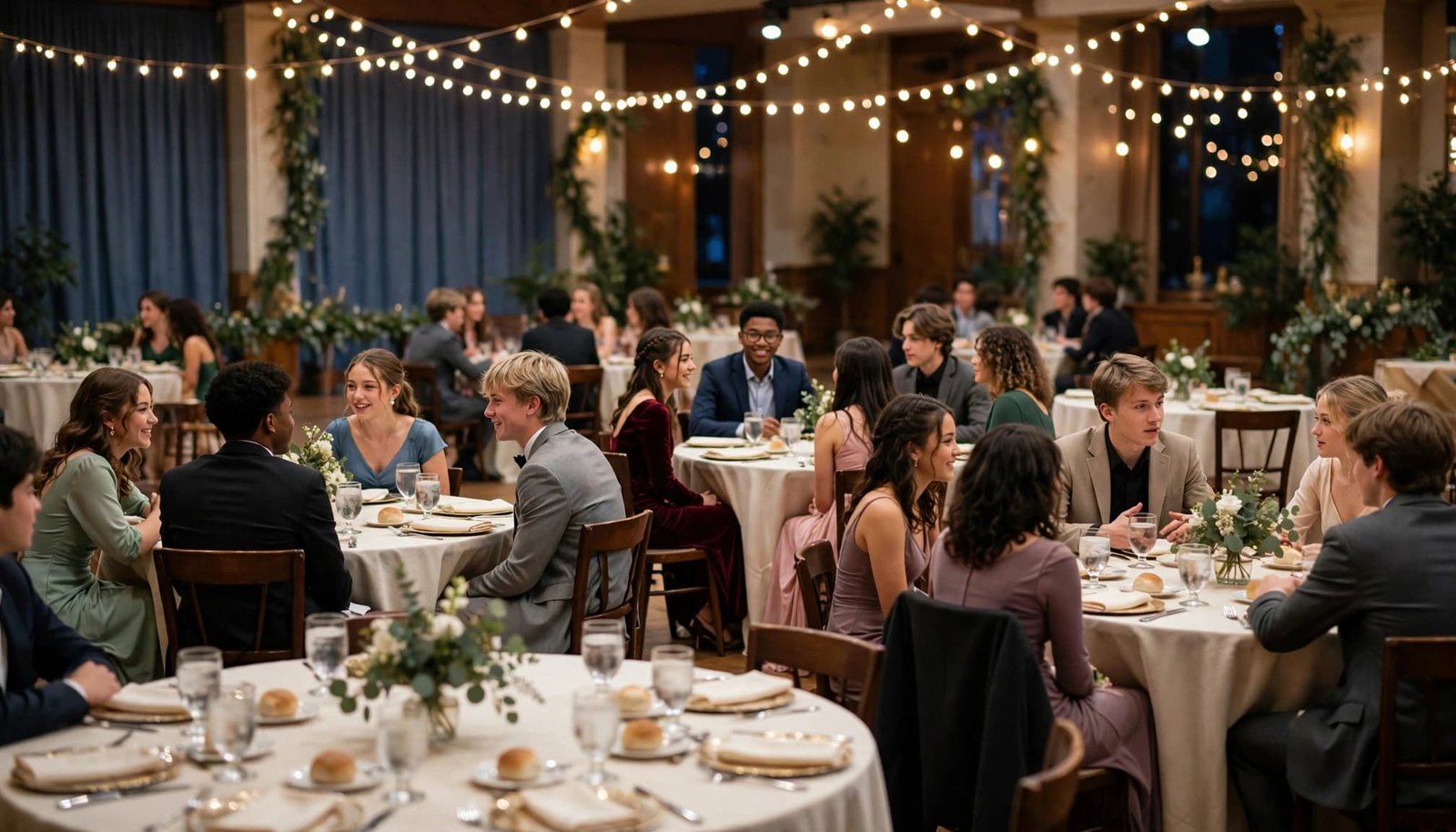
Work Within the Approved Table Layout
Build your request around the available seating rather than adding chairs to make a preferred arrangement fit. An extra chair can narrow a walkway, interfere with service, or reduce another student’s space.
Table count alone doesn’t establish comfortable room capacity. Our guidance on prom seating and dance-floor space explains why dining, equipment, queues, and circulation need separate consideration.
For students, the practical approach is straightforward: request seats within the existing plan and leave changes to table placement with the school and event staff.
Keep Larger Groups Connected Across Tables
Nearby tables can give a larger group a shared gathering area while preserving comfortable dinner seating. Identify smaller combinations that work socially, then request neighboring tables where the layout allows.
Avoid leaving one person separated simply because everyone else paired off first. Discuss the arrangement together, with particular attention to students who know fewer people.
If your group occupies several tables, keep conversation and movement considerate of neighboring guests. Standing between chairs or gathering in an aisle can make nearby seating difficult to use.
Coordinate One Clear Group Request
Consistent information helps organizers translate student preferences into workable assignments. Several students submitting slightly different versions of the same group can create duplicate names, missing guests, and unnecessary follow-up.

Keep One Shared List
Google Sheets can help a group maintain a single list of names, attendance status, and seating preferences. Limit editing access to the people coordinating the request, and avoid collecting information the group doesn’t need.
Use the school’s designated submission process rather than assuming a message in a student chat reaches the planning team. Follow its published instructions and include any acceptable backup arrangement in the same request.
After submission, send changes through the same contact instead of starting several separate conversations. One clear update is easier to apply than conflicting messages from different friends.
Separate Seating From Arrival Plans
A shared ride doesn’t automatically create a shared table assignment. Your transportation group, photo group, dinner table, and entrance group may include different combinations of people.
Keep those arrangements distinct in your planning document. Students should be able to find their table assignment without reading through pickup addresses or private family information.
If prom includes a formal entrance, our guidance on organizing the prom grand march lineup addresses that separate process. Don’t assume the seating request also places everyone together in the procession.
Make Group Seating Welcoming
Thoughtful seating gives students a comfortable starting point for the evening. Students attending without dates should receive the same opportunity to sit with familiar classmates as those attending as couples.
Avoid treating an unattached student as an extra person who can be moved wherever space remains. Include them in the original conversation, explain the available options, and respect their preferences.
When combining smaller friendship groups, introduce students before prom where possible. A familiar name and a brief conversation can make dinner more comfortable than arriving at a table of strangers.
Handle sensitive concerns privately. A student who needs a particular seating arrangement shouldn’t have to explain personal circumstances in a group chat. Personal accommodation requests belong with the designated school contact, and dietary information belongs with the staff responsible for meals.
A shared seating list should help classmates find their places, without revealing why someone needs a particular arrangement.
Students can support that privacy by sharing only the information needed to coordinate their own group.
Use the Final Chart Without Last-Minute Confusion
Once assignments are released, share the official table information with everyone in your group, including guests who aren’t in the main chat. Use table numbers or names exactly as published.
Distinguish between an assigned table and an assigned seat. If individual seats are designated, follow those placements. If only tables are assigned, your group can choose seats within that table without occupying another group’s space.
Keep an accessible copy of the information. A screenshot or printed note can be useful when messages are buried or phone batteries are low. Avoid circulating an entire attendee list when each friend only needs their own table details.
If someone cancels or joins a different group, route the change through the designated school contact. An apparently empty chair may still be assigned to someone who hasn’t arrived.
Don’t promise that another student can take that place. Seating changes can affect attendance records, meals, and arrangements that aren’t visible to classmates.
Let Seating Support Dinner and Dancing
Your table provides a place to eat, talk, and pause between activities. It doesn’t require everyone to spend the entire evening together or follow the same schedule for dancing and photographs.
During dinner, follow the announced service process. If tables are released in sequence, stay with that system rather than joining friends already in line. It helps keep food service organized and walkways usable.
Our school dance and prom services include DJ and MC support, professional sound, and lighting. Clear announcements help connect dinner, formal activities, and dancing; students support that coordination by listening for instructions and keeping gathering areas clear.
Our guidance on coordinating prom schedules and announcements explains how those transitions fit into the wider evening.
When dancing begins, avoid leaving bags, jackets, or chairs in nearby paths. Enjoy time with different friends while keeping your assigned table comfortable for everyone using it.
Frequently Asked Questions
Can Our Whole Friend Group Sit at One Table?
That depends on the available table arrangement and your group’s size. Submit everyone’s names together and include an acceptable nearby-table option. A larger group can remain connected across several tables without crowding one seating area or leaving someone without a comfortable place.
What If Two Groups Both Include the Same Student?
The student should choose which seating request reflects their preference before the lists are submitted. If the duplicate appears afterward, send one clear correction through the designated school contact. Avoid asking organizers to interpret competing requests or decide between friendship groups.
Can We Switch Tables During Prom?
Follow the event’s seating instructions. Dinner arrangements may connect table assignments with meal service or attendance information, so an informal swap can create confusion. Socializing after dinner is different from changing an assigned place; keep other students’ seats and belongings undisturbed.
What If We Disagree About the Seating Plan?
Begin with shared priorities, such as keeping close friends together and avoiding isolated placements. Discuss workable options privately rather than taking a public vote about individuals. When preferences conflict, neighboring tables may offer a more comfortable solution than forcing everyone into one arrangement.
Plan the Seats, Then Enjoy the Evening
A dependable prom seating chart gives your group a clear place to gather without placing unnecessary pressure on every friendship. Accurate names, realistic preferences, and thoughtful communication help organizers create a comfortable arrangement.
Focus on good company and clear expectations rather than a perfect table assignment. Once the plan is settled, your group can enjoy dinner, photographs, music, and the freedom to celebrate with classmates throughout the evening.