Good prom portrait timing gives students room for meaningful photos without sacrificing their meal or favorite songs. The strongest plan sets clear photography boundaries, allows for changing conditions, and gives the photographer, school advisor, venue team, and DJ the same information.
Beautiful portraits matter, but so does time to enjoy prom. A coordinated approach helps students feel comfortable in front of the camera while keeping the evening welcoming and well-paced. Start with the commitments that photography needs to fit around.
Key Takeaways
- Plan portraits around the venue’s closing time, transportation departures, meal service, and photography coverage.
- Keep photo locations accessible, lighting consistent, and waiting students clear of entrances and service routes.
- Give one school-approved coordinator responsibility for timing changes, and share those changes with the photographer and DJ.
- Balance formal portraits with candid coverage so students can enjoy the celebration without repeated interruptions.
Build Prom Portrait Timing Around Clear Boundaries
A useful portrait plan identifies what can move and what needs to stay on schedule. That distinction gives the event team flexibility without letting portraits shorten dinner, dancing, or transportation time.
Identify the Commitments That Cannot Move
Record the venue’s end time, transportation departures, and any school-required arrival or dismissal procedures. Include meal-service requirements so photography doesn’t compete with students finding their seats or receiving food.
Set the portrait start time after student arrival and check-in. Then work backward from dinner, transportation departures, and required school procedures. Allow time for students to reach the photo location and return.
Estimate 2 to 3 minutes per individual portrait, 3 to 5 minutes per couple, and 5 to 10 minutes per group arrangement. Multiply those estimates by the actual number of people and photo combinations instead of assuming every student can fit into one short block.
For example, a small roster before a 6:30 p.m. dinner could follow this illustrative timeline:
- 5:00 to 5:20 p.m. for individual portraits
- 5:20 to 5:35 p.m. for a few couples
- 5:35 to 5:55 p.m. for several small groups
- 5:55 to 6:15 p.m. for travel back and a delay buffer
A larger roster needs a longer or additional portrait window. Keep dinner and dancing protected, and don’t let portraits run into either.
Use one school-approved coordinator and keep students ready in a queue. The buffer can absorb late arrivals or brief delays without shifting the dinner schedule.
The same approach begins earlier in the planning process. Planning around the school calendar helps committees account for commitments that affect student availability and the overall event schedule.
Treat Daylight as a Separate Planning Factor
Outdoor portraits depend on the date, available light, weather, and travel between locations. New Hampshire’s seasonal daylight changes make a single year-round portrait time unsuitable.
Confirm the photo location and transportation in advance. Set a departure and return time, and account for walking, parking, clothing adjustments, and gathering students at both locations.
Keep an indoor alternative available so changing weather doesn’t force the entire evening into a new schedule.
Choose a Portrait Setup That Keeps the Evening Moving
A separate portrait area can make formal photography easier to manage, provided its location supports the rest of the room. Treat it as a planning option that fits the venue, staffing, and photography agreement.
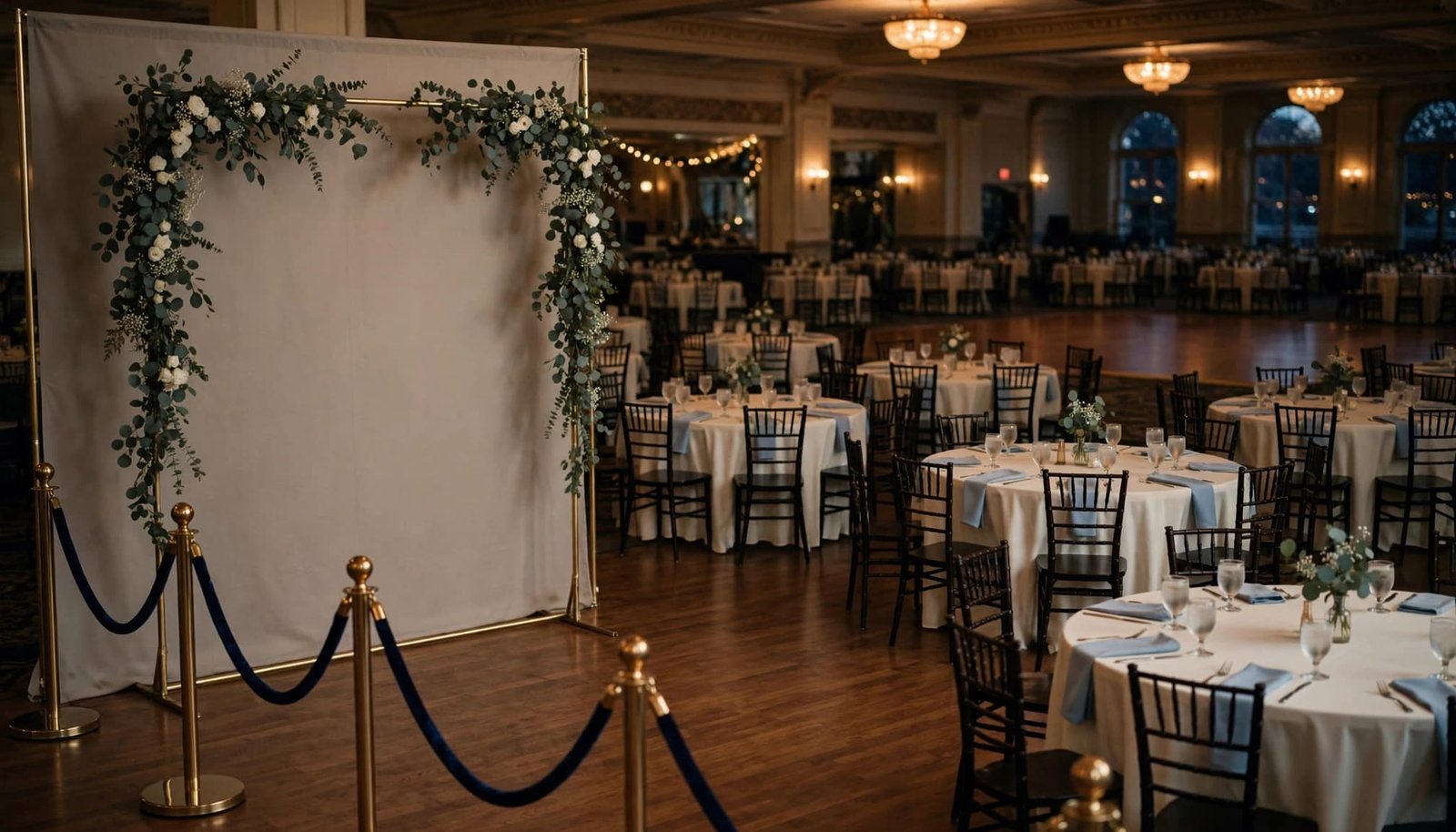
Keep Waiting Students Out of Busy Routes
Place the photo area away from entrance check-in, buffet access, restrooms, and emergency exits. Students should be able to wait without blocking servers or crossing the dance floor.
Provide enough open space for formal clothing and accessible movement. Secure stands and backdrops, keep equipment cases out of guest areas, and use rated cable covers wherever cords cross walking routes.
Include photography space in the prom room setup plan, rather than fitting it into whatever corner remains after decorating.
Separate Portrait Light From Dance Effects
Soft white light gives the portrait area a consistent starting point. A suitable LED panel can support a simple photo station, while professional portraits may use a dedicated flash setup.
Coordinate placement with the DJ so changing colors and moving effects don’t continually wash over faces. Students can enjoy an energetic dance floor while the portrait area maintains dependable lighting.
Test the arrangement before doors open, including reflections from shiny fabrics, glasses, and decorations.
Give the Photographer and DJ Clear Cues
A shared timeline works best when everyone understands who can approve a change. Our DJ and MC planning connects announcements, music, and event transitions; photography needs to be part of that same conversation.
Use a Warning Followed by a Ready Signal
A warning tells the photographer that a planned announcement or spotlight moment is approaching. A ready signal tells the DJ that the photographer and participants are in position.
Those messages have different purposes. Calling an activity before the photographer is ready can leave students waiting or cause an important reaction to go unrecorded.
Give the school advisor or designated coordinator final authority over adjustments. Our guidance on coordinating vendor cues explains how shared responsibilities keep transitions clear.
Adjust Requests Without Repeatedly Stopping the Room
If photography falls behind, the coordinator should decide which requests remain priorities. Avoid repeated microphone calls that pull students away individually or interrupt an established dance set.
Meal service also needs attention. Don’t call students away when their food arrives or send a large group across an active service route.
Allow breathing room around transitions instead of filling every available opening with another activity. When the plan changes, give the photographer, venue team, and DJ the same revised direction.
A portrait delay shouldn’t automatically become a dinner delay. Decide which photo requests can change before moving the rest of the program.
Prepare the Camera and Flash Before Prom Night
Reliable equipment preparation protects prom portrait timing by reducing troubleshooting once students arrive. A simple, familiar setup is more useful than additional equipment the photographer hasn’t practiced using.
Choose Flexible Lenses and Controllable Flash
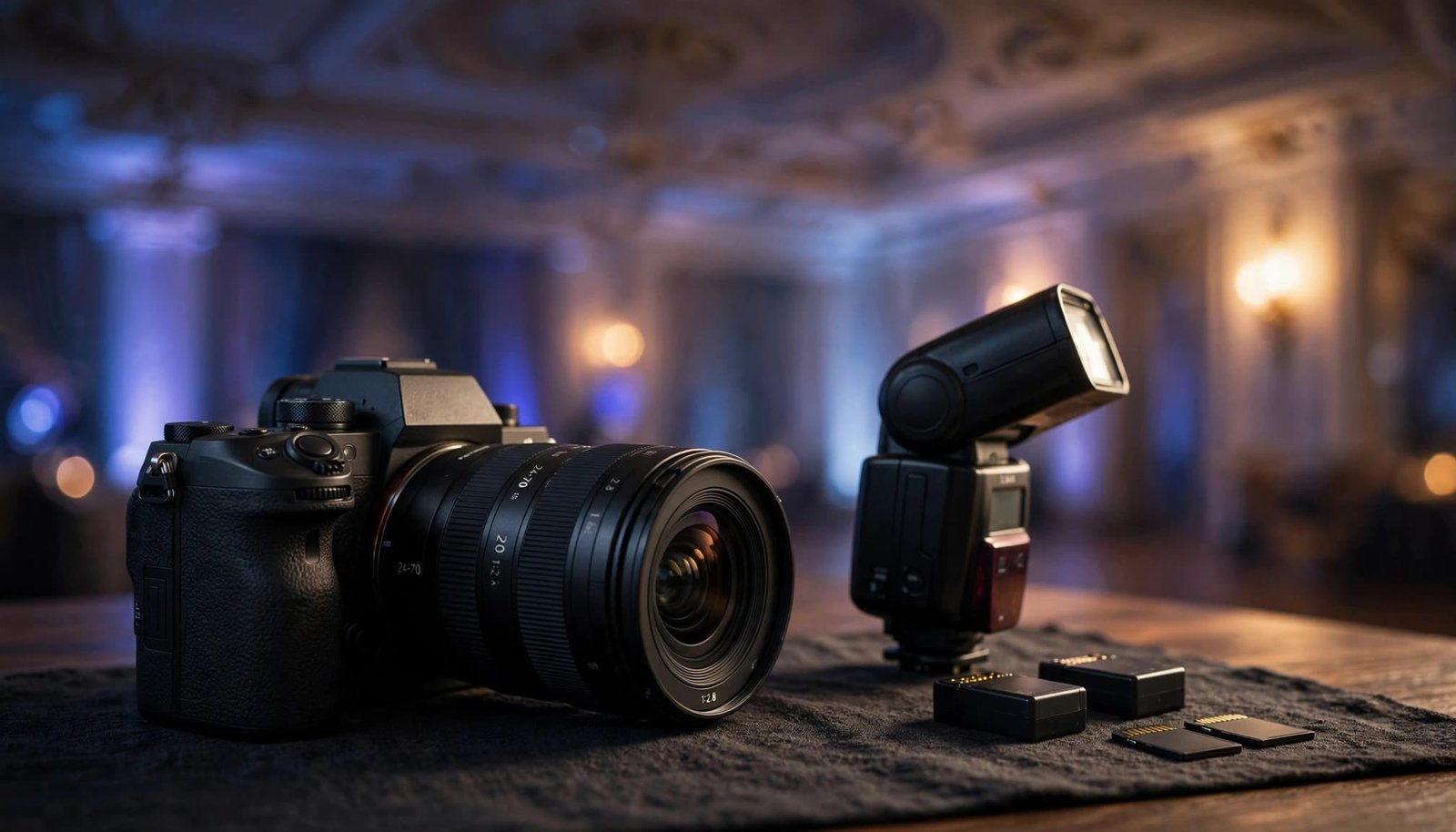
For a full-frame camera, a 24-70mm f2.8 lens provides a practical event range. A 17-55mm or 17-50mm f/2.8 lens offers a comparable working range on a crop-sensor camera.
Use an on-camera flash with a rotating head for bounce flash off suitable walls or ceilings. The Godox V860 II is an option in the version compatible with the camera brand; the Godox TT685 is a budget option.
The Reddit discussion “Shooting Prom?” favors Adorama, which sells Godox equipment under its Flashpoint branding, and B&H Photo for customer service. Check with Adorama for current model compatibility and support details. The discussion cautions against Amazon Godox sellers because support can be inconsistent.
Complete Checks Before Students Arrive
Check the equipment the day before, re-check it while packing, and test again after setup. Use fresh or charged camera batteries. After backing up existing images, format a memory card in the camera and carry spare cards, batteries, and backup gear.
Shoot raw files for post-processing flexibility. Test color correction gels under the venue’s warm indoor lighting, then set a matching white balance. Manage saturated dance effects as you would in nightclub photography, while keeping portrait exposures consistent.
A black foamie thing can block direct flash spill, while a Rogue FlashBender can shape bounced light. Practice positioning a FlashBender before prom. Check the FlashBender’s position during setup. Softness depends largely on the size of the light source reaching the subject.
Balance Formal Portraits With the Emotion of the Night
Formal portraits provide a polished record of prom, and portrait photography gives students images they can keep. Candid shots capture friendships, reactions, dancing, and the atmosphere students helped create.
Agree on the balance before the event. The school should plan portrait photography alongside dance-floor coverage and include both in the photography agreement.
If students expect event photography across the room, set priorities for group photos and posing, portrait coverage, and dance-floor moments. One photographer can’t cover a portrait station and another part of the room at the same time.
Students will also take their own smartphone photos. Professional coverage adds value through reliable lighting, thoughtful composition, and attention to moments students may miss while enjoying themselves.
Avoid interrupting genuine reactions to recreate them. A welcoming photographer can offer direction for posed pictures while allowing candid moments to unfold naturally.
Set Photography Expectations Before Prom
Ask the people hiring the photographer to clarify client expectations for the photo package and coverage. Discuss formal portraits, friendship groups, candid images, event details, and any school-approved recognition moments.
Clarify whether portraits require advance registration, whether prints are included, and how students will receive their images. These are service decisions, not assumptions to leave until the first students arrive.
School organizers should also establish the approved approach to photographing minors, sharing galleries, and using images publicly. Give the photographer those requirements before the event.
Include the photographer’s meal break and coverage end time in the shared plan. Schedule the break during a quieter stretch, with a clear return before any activity that requires coverage.
This preparation gives the photographer room to work and helps students understand what their photography experience includes.
Frequently Asked Questions
Should Parents Receive the Portrait Plan?
Yes. Families benefit from knowing the approved photo location, arrival expectations, transportation arrangements, and whether parent photography is included.
Keep that information consistent with the school’s supervision and access policies. Parents shouldn’t have to guess whether they can enter the venue or gather near the professional portrait area.
For photos taken away from the venue, allow for travel and arrival procedures. Share one clear plan rather than several informal versions circulated through separate student groups.
How Long Should Photo Delivery Take?
A two- or three-day processing window can be a starting point when the photographer’s workload and service agreement support it. Allow more time when the volume of images, editing requirements, or print services require it.
Give clients a realistic delivery commitment before prom. Explain whether that commitment covers a preview, the complete gallery, or finished products.
Raw files usually need processing, so avoid promising immediate delivery simply because the photographs have already been taken.
Protect the Experience Alongside the Portraits
Thoughtful prom portrait timing gives photography a clear place in the celebration without allowing it to take over. Shared boundaries, dependable preparation, and coordinated cues help students enjoy both their portraits and the event itself.
Build the photography plan into the main event timeline. Give everyone the same expectations and a clear person to contact when something changes.
The goal is a well-paced evening with meaningful photographs, comfortable meal service, and time for students to enjoy the dance floor.