Every decision in a professional prom DJ setup should work backward from the first New Hampshire prom guest’s arrival. A professional DJ creates polished production, while a school DJ coordinates with administrators and chaperones. That approach supports school events, from a pep rally to a formal prom.
Arrival time depends on access windows, venue capacity, school requirements, and selected equipment. Room dimensions and guest distribution guide speaker placement. A custom package can adapt sound coverage to venue capacity when crowded ballroom, gymnasium, or banquet rooms need different layouts. The goal is simple: have the dance floor ready before the first guest walks in.
Prom DJ Setup Timeline Before Guests Arrive
Work backward from the stated guest-arrival time to build an event timeline that protects setup time and keeps unfinished work out of view. Confirm vendor access with the school and venue, including entry time, loading door, and parking. Note when decorators, caterers, photographers, and the vendor assigned to the guest photo station will be present.
Four Hours Before: Load In and Build the Foundation
Four hours before guest arrival is a dependable starting point for many New Hampshire school proms. The DJ can load in speakers, booth equipment, microphones, lighting, and backup gear. Build the booth, store microphones securely, place lights, and route cables before students arrive.
Speakers should be positioned for balanced sound coverage based on room shape and expected guest count. The DJ booth needs a clear view of the dance floor and main entrance, while staying out of photo areas, catering paths, and emergency routes.
Confirm the photo booth footprint on the floor plan before finalizing equipment placement. Keep its queue away from the dance floor, catering route, and guest entrance.
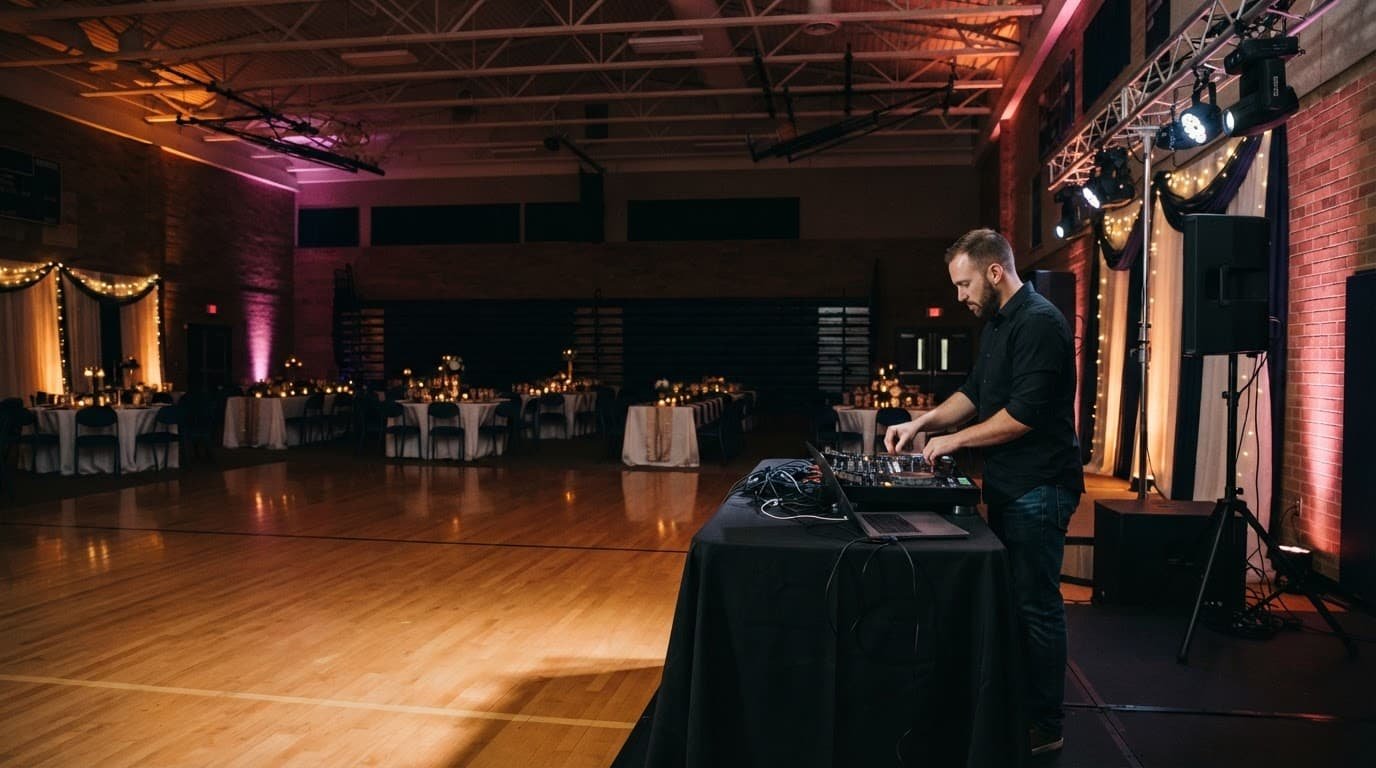
At this stage, confirm the dedicated power plan for the laptop, controller, powered speakers, subwoofer, wireless microphones, and uplighting. Use each device’s electrical input rating, not the large peak-output number printed on a speaker.
Two Hours Before: Test Sound, Lighting, and Announcements
Two hours before doors open, the system should be assembled enough for a full sound check. Test music at an agreed level, spoken announcements, wireless microphones, and any entrance cues. If the provider also handles a pep rally, adapt microphone and cue testing to that format.
Review event lighting, including wash lights, moving effects, and room visibility. Check uplighting color and brightness for interference with formal photos; the lighting design should support, not overwhelm, the room’s décor. Confirm locations for formal photos, candid photos, and the guest photo station with the photographer.
Thirty Minutes Before: Final Walkthrough and Ready Position
Thirty minutes before guest arrival, the equipment should be in its final position. Queue the arrival music and put the DJ in a ready position, not still moving cases or running cables.
Meet briefly with the lead administrator, venue coordinator, and chaperone captain. Confirm the final schedule, grand entrance cues, approved music boundaries, announcement responsibilities, last-song timing, and who can authorize changes. These details come from the individual school and venue, not from a universal New Hampshire rule.
A finished setup before doors open gives the school time to solve small issues before they become part of the prom experience.
Protect the Room, Guests, and Emergency Access
A professional setup should blend into the room without creating obstacles. The venue-approved layout should keep cables, speakers, décor, and queues from obstructing emergency exits. Doors, stairways, accessible routes, and staff walkways should follow that approved layout.
Before prom day, the DJ, school, and venue coordinator should review the floor plan together. Confirm the venue’s rules, available power, occupancy expectations, accessible routes, and emergency procedures.
Keep Every Cable Out of Harm’s Way
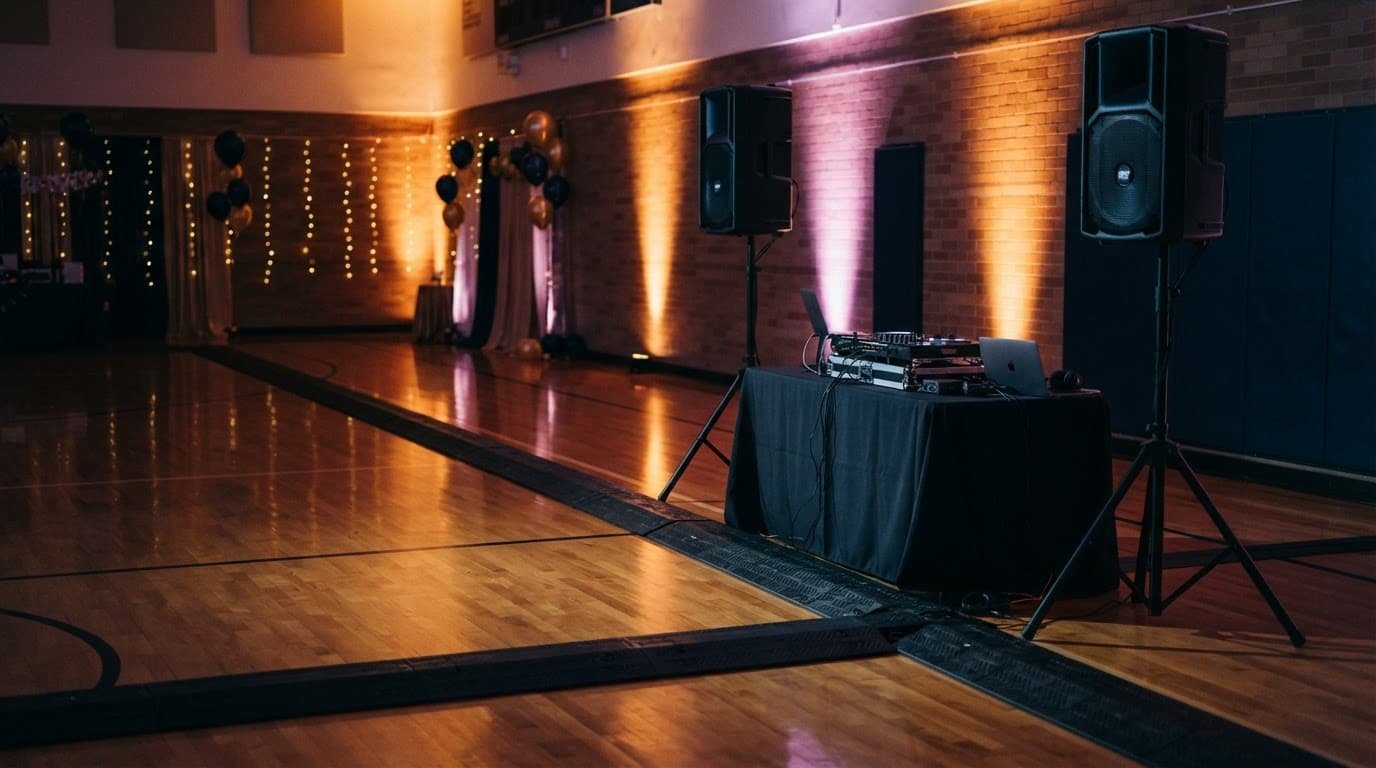
Run audio and power cables along room walls when the venue-approved layout permits. The plan should keep them out of doorways and guest or staff walkways.
Use low-profile cable ramps when the venue approves a crossing. Gaffer tape can hold a thin cable in a low-traffic area, but it is not a substitute for a proper protector in a busy walkway. Review event cable protector options when the room layout requires an approved crossing.
The New Hampshire Fire Marshal’s school safety information offers helpful planning information for clear access and thoughtful room planning. It does not replace confirmation from the school or venue. During the final walkthrough, the venue coordinator should verify emergency exits, stairways, doors, and accessible paths against the venue-approved layout.
Build Backup Audio Into the Plan
Reliable entertainment means preparing for unexpected issues. A professional DJ should have backup music playback, spare cables, and an extra microphone. A practical response plan can reduce disruption if a speaker, laptop, or power source fails.
Ask the venue about circuit needs, available power, and whether catering or custodial equipment shares it. Include the photo booth’s equipment and queue when the venue reviews the load-in route and power. The DJ can check ratings and bring backups; a qualified venue representative should approve connections and site-specific electrical requirements.
Keep the Dance Floor Ready Without Disrupting Prom
At a New Hampshire prom, arrival music should feel polished, welcoming, and relaxed. Keep the dance floor calm and open for greetings, photos, and the formal entrance. A homecoming dance may begin with familiar crowd cues, but prom benefits from a more formal arrival sequence.
The DJ can draw on experience from other school events without assuming the same pacing or audience preferences apply. After doors open, start with pop, hip hop music, dance tracks, throwbacks, and familiar sing-alongs. A slow dance or two can fit the opening while guests settle in.
A well-timed prom playlist should guide the opening, middle, and closing sequence instead of relying on random requests. The middle should become high energy after most guests arrive. Watch crowd engagement and adjust pacing as participation changes. Balance current songs with student favorites so different groups have reasons to participate. Unlike a pep rally, prom needs a longer musical arc than short, immediate crowd cues.
Optional, age-appropriate dance challenges can add participation during a slower arrival period. The event lead should approve them, and they shouldn’t be inserted automatically. Position the photo booth so it doesn’t interrupt music flow or restrict guest pathways. Later, approved dance challenges can re-energize a crowded dance floor as the night enters its busiest portion.
Treat Song Requests as Input, Not Promises
Student requests matter, but they’re input, not guarantees. Collect them before prom when possible, then have the committee review radio edits, lyrics, remixes, and themes before approving clean music. Radio edits can still include themes that don’t fit the school’s expectations.
A school DJ should translate student input into a workable, school-approved sequence. Confirm the school’s written expectations and school policies before finalizing the playlist. The DJ manages music flow, while administrators and chaperones handle behavior and discipline under the school’s written expectations.
Key Takeaways for Prom Planners
- Schedule the DJ to arrive at least four hours before guests for a full sound and lighting setup.
- Confirm venue requirements, protect walkways with cable ramps, and approve speaker placement and power plans.
- Coordinate the DJ, venue team, decorators, caterer, photographer, photo booth operator, and chaperones before doors open.
- Approve clean music in advance, and treat requests as suggestions rather than guarantees.
- Ask about backup audio equipment before signing the DJ contract.
A Confident Start Sets the Tone
By the time students enter, equipment should be stable and the room should look finished. Music should be queued, and every vendor should know their position.
Coordinated lighting design makes the room feel intentional through balanced color, brightness, and placement. Broad event experience helps a provider understand that prom needs a different pace than a pep rally. Keep the photo booth accessible without narrowing the entrance or interrupting student movement.
Frequently Asked Questions
How early should a school DJ be booked?
For a spring prom, begin contacting DJs nine to 12 months ahead. Popular Saturdays, school calendars, venue access, and larger New Hampshire venues can affect availability.
Does every prom need four hours for setup?
Not always. A custom package for a compact room and basic system may need less time. Larger rooms or expanded production may need more, especially with a photo booth, uplighting, or limited venue access. Confirm the access window and setup expectations with the specific venue and school.
Who should approve the final prom playlist?
The school administrator or designated event lead should have final approval. Student input and song requests can shape selections, while the DJ reviews timing, clean music, and the overall atmosphere. Final choices should follow written school policies.