A memorable prom starts before students reach the dance floor, with clothing choices that feel comfortable, affordable, and personal. Planning prom formalwear in New Hampshire works best when families combine a complete outfit budget with clear school expectations and enough time for fitting.
A school formalwear closet can provide additional choices without making clothing assistance a public experience. Start with a shared plan that supports students buying, borrowing, renting, or using an outfit they already own.
Key Takeaways
- Budget for the complete outfit, including alterations, footwear, accessories, and any rental return requirements.
- Schools should publish flexible attire guidance early and provide one private contact for questions or clothing support.
- A reliable formalwear closet needs organized inventory, discreet fittings, and clear ownership or return arrangements.
Set Clear Prom Attire Expectations Before Shopping
Clear guidance helps families choose clothing confidently and prevents unnecessary spending. Schools should explain the event’s formality before students begin shopping or arranging alterations.
Give Students Several Formalwear Options
Dresses and tuxedos are familiar prom choices, but a polished event can also include suits, jumpsuits, formal separates, cultural garments, religious attire, and adaptive clothing.
Describe the expected level of formality without assigning garments by gender. A student’s comfort, mobility, and personal expression deserve attention alongside the event’s overall atmosphere.
Our prom dress code communication guide provides additional guidance for presenting expectations clearly across school announcements and family messages.
Handle Questions Privately and Early
An event-specific attire guide can supplement the student handbook without replacing district policies. Families should check their school’s current dress code, since expectations vary between schools. The guide should explain footwear expectations, venue-related restrictions, and a private contact for questions.
Schools should use the same approved wording on ticket pages, emails, and student announcements. Staff preparation matters, too; an outfit concern should receive a calm, private response rather than a discussion in the entrance line.
Compare Designer Prom Dress Prices
Designer listings provide useful budget references, but they don’t establish a statewide average. Brittany’s Boutique’s featured formalwear includes Adrianna Papell and Aleta styles at different price points.
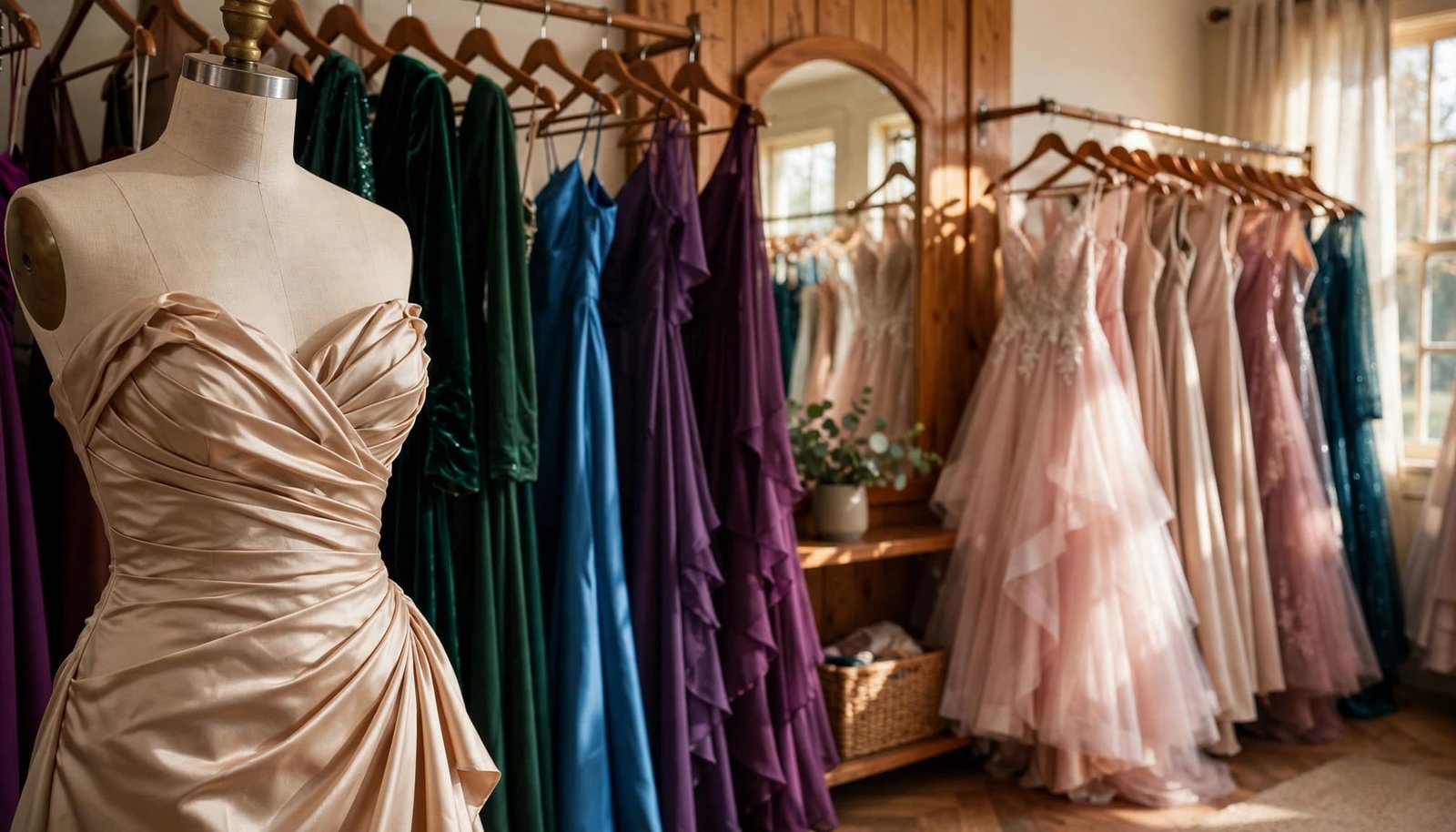
These listed catalog prices show the range families may encounter.
| Designer or Style | Regular price (USD) | Sale price (USD) |
|---|---|---|
| Adrianna Papell Dress #AP3853 | $325 | No discount shown |
| Adrianna Papell Dress #AP9611 | $398 | No discount shown |
| Adrianna Papell Dress #AP7216 | $375 | No discount shown |
| Adrianna Papell Gown | $363 and $398 | No discount shown |
| Aleta Dress | $299 to $573 | Sale varies by listing |
| Aleta Gown | $475 | No discount shown |
| Aleta Gown | $525 | No discount shown |
| Aleta Sale Gown | $478 | $250 |
| Ashley Lauren #11157 | $2,198 | No discount shown |
| Ashley Lauren #4556 | $238 | $25 |
The $250 USD Sale price for the Aleta Gown reflects a $228 reduction. The $25 USD Sale price for Ashley Lauren #4556 is $213 below its Regular price. Those discounts apply to individual sale listings, not an entire collection. A gown’s listed price doesn’t include alterations.
At $2,198, Ashley Lauren #11157 is the highest-priced item among these listings. Families can set a spending limit without treating that price as a typical prom requirement. Adrianna Papell Dress #AP3853 lists at $325, while Adrianna Papell Dress #AP9611 lists at $398.
The storefront separates Featured products, Shop all, and View all browsing links. Listings show a Regular price in USD, with markdowns displayed for Sale items.
Find Useful Shopping Options Around New Hampshire
Local shopping works best when the destination matches the need: a gown, alterations, accessories, or suit-related services. General fashion boutiques shouldn’t be treated as guaranteed prom-gown specialists.
Salem: EROS Formal Wear is listed at 99 Rockingham Park Boulevard, E265A. Its listed hours are Monday through Thursday, 10 a.m. to 8 p.m.; Friday until 8:30 p.m.; Saturday until 9 p.m.; and Sunday, 11 a.m. to 6 p.m.
Nashua: Olga’s Bridal & Alterations at 493 Amherst Street offers prom dresses, accessories, and alterations. Combining garment shopping and fitting services can simplify planning for families seeking both.
Portsmouth: Pretty Little Things at 21 Vaughan Mall offers apparel, jewelry, and accessories. It’s an accessory-shopping option rather than a verified source for a particular designer prom gown.
For Manchester families, a school clothing exchange or formalwear closet can reduce travel and broaden affordable choices. Nearby Nashua also provides a documented prom-dress and alteration option.
When browsing online, save the designer name, style number, size, color, and listed price together. A style number alone doesn’t describe the complete purchase or establish available sizing.
Build the Budget Around Fit and Comfort
The garment’s purchase price is only one part of prom preparation. A realistic budget leaves room for fitting, shoes, undergarments, accessories, and clothing care.
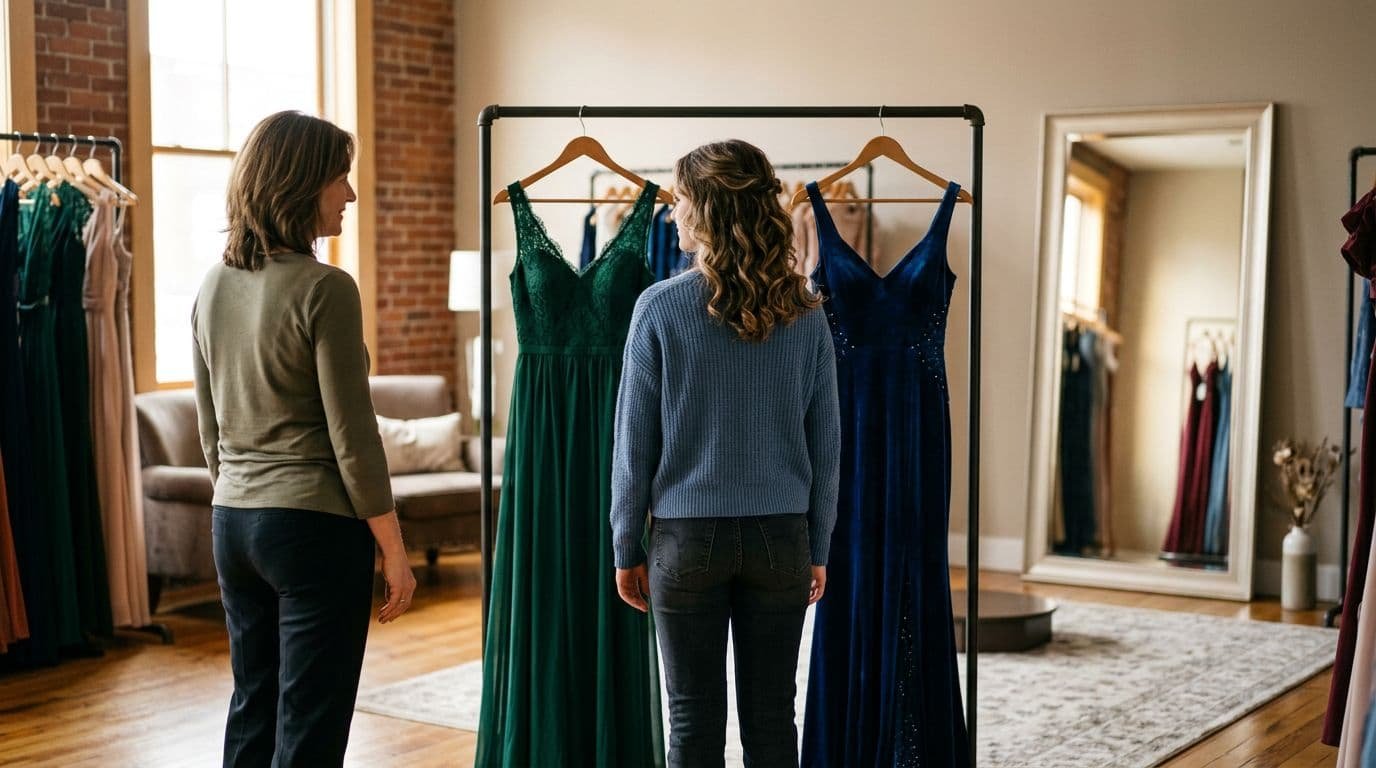
Consider the Complete Outfit Cost
Compare the total cost of buying, borrowing, and renting. A discounted gown may still require a hem adjustment or other fitting work; a borrowed suit may need suitable shoes and a shirt.
Keep admission and transportation in separate budget lines. Clothing assistance doesn’t automatically cover prom tickets or an approved guest’s admission.
Our New Hampshire prom assistance guidance explains how families can approach clothing and ticket support as separate needs.
Choose Clothing That Works Throughout the Evening
A fitting should include sitting, walking, using stairs, and moving comfortably. Prom involves dinner, photographs, transportation, and dancing, so standing comfortably in front of a mirror isn’t enough.
Bring the intended shoes to a hem fitting. Consider secure closures, comfortable waistbands, manageable skirts, and fabrics that suit individual sensory needs.
Students using mobility aids should have adequate garment clearance and comfortable access to seating. A professional alteration service can help address garment fit without changing the student’s preferred style.
Organize a School Formalwear Closet With Care
A successful closet is a dependable clothing resource, with enough organization to make selection and follow-through straightforward. Assign an adult coordinator and establish a school-approved process before accepting donations.
Sort Donations for Practical Student Use
Accept clean garments in wearable condition, then inspect closures, seams, stains, and missing pieces. Include suits, dresses, jumpsuits, formal separates, shoes, and accessories rather than building the collection around one outfit category.
Record garment measurements alongside labeled sizes, since sizing differs between designers. Note available pieces, repair needs, and whether shoes or accessories accompany an outfit.
Store garments on suitable hangers or in protective bags. Keep heavier items supported and separate anything awaiting cleaning or repair from the ready-to-wear collection.
Make Selection Discreet and Welcoming
Offer private appointment windows and a fitting area that provides adequate space and privacy. Students should be able to browse without publicly explaining their financial circumstances.
Avoid photographs, recipient lists, or public recognition tied to individual clothing assistance. Keep student information within the school’s approved support process.
State whether each garment is a gift or a loan. For loans, explain the return date, cleaning responsibility, and approach to ordinary wear before the garment leaves the closet.
A donated outfit becomes useful support when the student also has a workable fit, suitable footwear, and clear ownership or return arrangements.
Use a Practical Formalwear Planning Timeline
A recommended schedule creates breathing room for shopping and school support. These are planning targets, not statewide deadlines or promises about retailer delivery times.
- Several months before prom, publish attire guidance and open private clothing-support requests. Schools can begin collecting, inspecting, and organizing donated garments.
- Six to eight weeks before prom, narrow outfit choices and arrange needed fitting work. Families should account for tickets, guest approval, and transportation before committing their full budget.
- Two to three weeks before prom, complete a full outfit try-on with shoes and accessories. Resolve missing pieces, uncomfortable closures, or movement concerns. New Hampshire spring weather can be cool, wet, or changeable, so consider an appropriate layer and protect the outfit during travel.
- During the final week, prepare the outfit, garment bag, approved belongings, and any loan paperwork. Keep pickup and rental-return arrangements in the same planning calendar.
A school closet should remain available beyond its first distribution day. Later access supports students whose plans change or whose first outfit doesn’t work.
Coordinate Clothing With Prom-Night Logistics
Formalwear planning should connect with arrival, storage, and departure arrangements. Families need clear information about permitted bags, coats, footwear changes, and any after-prom clothing arrangements.
Schools should publish belongings rules alongside attire guidance. Our prom coat check planning guide addresses supervised storage, claim procedures, and keeping necessary items accessible.
Garment racks, fitting supplies, and storage areas must stay clear of exits and accessible routes. Clothing-support appointments should also remain separate from busy event check-in.
Our school dance and prom services include professional DJ and MC support, sound, lighting, and clean, radio-edited music options. Coordinating announcements with the school’s approved timeline helps students understand transitions without interrupting the celebration.
Frequently Asked Questions About Prom Formalwear
Does Every Student Need a New Designer Outfit?
No. A purchased designer garment, borrowed outfit, rental, secondhand selection, or existing formalwear can support a polished prom experience.
The important considerations are the school’s written expectations, suitable fit, comfort, and the student’s preferences. School closets should offer a range of clothing rather than treating gowns and tuxedos as the only acceptable choices.
Families can also reuse accessories or choose pieces suitable for future occasions.
Are Deep Discounts the Most Affordable Choice?
A large markdown can be valuable when the garment fits and meets the student’s needs. The listed $25 Ashley Lauren #4556 illustrates how substantial an individual sale can be.
However, the final cost still includes needed alterations and supporting pieces. Compare the complete outfit budget with borrowing, renting, or using school-provided clothing.
A lower sticker price is most useful when the garment is comfortable and practical for the evening.
A Prepared Outfit Supports a More Relaxed Prom
Thoughtful formalwear planning gives students more room to enjoy photographs, friends, and the dance floor. Clear expectations, a complete budget, and an organized school closet support that confidence.
For New Hampshire families, the strongest choice is an outfit that fits the student and the occasion without unnecessary financial pressure. Preparation and student choice belong together in a welcoming prom experience.