A successful prom DJ setup in a low-ceiling cafeteria uses compact equipment, carefully aimed speakers, controlled lighting, and clear traffic routes. Room planning matters more than the size of the equipment package.
Reflective walls, food-service areas, and limited overhead space need attention before the first song plays. With thoughtful preparation, your cafeteria can provide an inviting dance floor, clear announcements, and comfortable areas for students and staff. Start with the room and build the entertainment plan around it.
Key Takeaways
- Reserve your DJ 6-12 months ahead for popular dates, then begin music planning 4-8 weeks before prom.
- Design sound, lighting, and cable routes around the cafeteria’s usable space, ceiling obstructions, and exits.
- Give one school representative authority over music approvals, announcements, and event-night changes.
Book Early and Establish the Planning Schedule
Reserve the Date and Define the Package
When booking a DJ, reserve 6-12 months ahead for popular prom and homecoming dates. Early booking gives the committee more flexibility when comparing services, production options, and availability.
Before you hire a prom DJ, share the event date, venue dimensions and layout, expected attendance, content guidelines, and school requirements, including whether lighting is needed. Describe the low ceiling during that first conversation because it affects equipment selection and placement.
Choose a DJ with school-event experience, clear communication, and a defined approach to clean music, announcements, and staff coordination.
Hold the Final Planning Meeting
Schedule a planning call 2-4 weeks before prom. Confirm the date, guest arrival time, venue access, sound-check window, and school music policies.
Include the faculty contact, chaperone responsibilities, emergency exits, photo permissions, and formal announcements. Identify who will unlock the loading entrance and when cafeteria tables will be moved.
Setup and sound checks should be finished before students arrive. The final meeting should produce one shared pre-event checklist. It should cover venue access and arrival times, clearances and exits, plus power and cable routes. Include speaker and lighting positions, sound-check completion, and safe setup and teardown. An adult decision-maker should be available throughout the event.
Map the Cafeteria Before Choosing Equipment
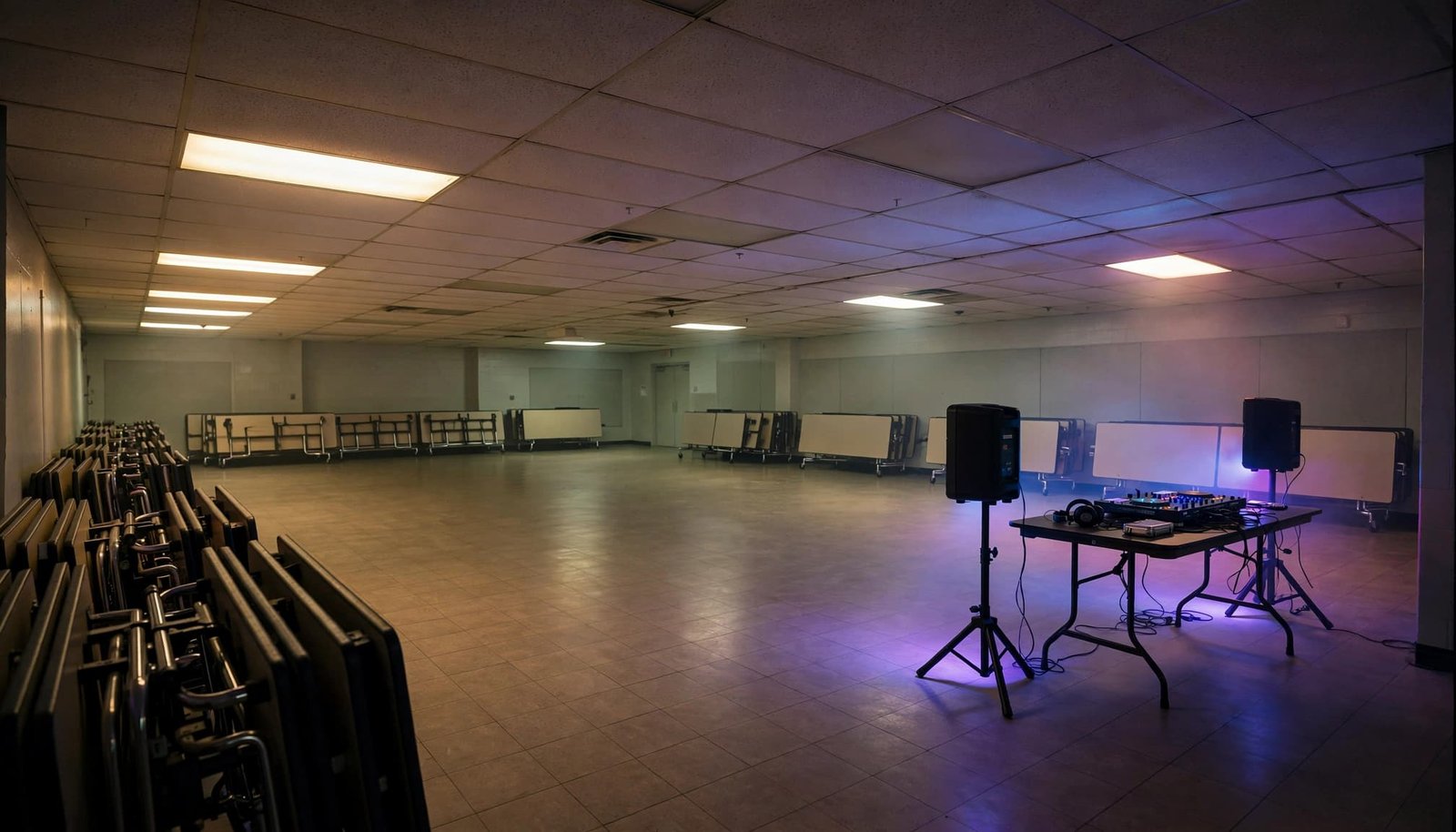
Measure the Usable Space
Record the room’s length, width, ceiling height, and lowest overhead obstruction. Projectors, fans, sprinkler heads, and suspended decorations can limit equipment placement, even when the ceiling grid seems high enough.
Map the venue’s electrical circuits, lighting positions, speaker locations, and cable pathways before event day. Facilities staff should identify suitable power supplies, including circuits shared with food-service equipment.
Our school dance load-in checklist covers access, equipment footprints, and cafeteria-specific preparation that can prevent setup delays.
Separate Dancing From Other Activities
Choose a wall position for the DJ booth with a clear sightline across the room, and account for the booth’s footprint. Plan around the cafeteria’s actual floor layout, without assuming it has a stage or professional rigging. Keep door swings, kitchen access, accessible routes, and emergency exits clear.
Place the photo booth near the dance floor but outside the dancing area. Its waiting line shouldn’t cross refreshment service or an exit route.
Set aside separate locations for backpacks and drinks. Students should be able to enter, dance, take photos, and step away without crossing equipment areas.
Build a Prom DJ Setup for Clear, Controlled Sound
Aim Speakers Toward Students
Low ceilings and hard surfaces can make reflections more noticeable, particularly during announcements. The answer is careful placement rather than automatically increasing volume.
Use stable, appropriately sized speaker supports within the available clearance. Aim coverage toward the dance floor rather than directly at walls, refreshment tables, or chaperone stations.
The Axis introduction to acoustics explains how room behavior affects sound, particularly low frequencies in smaller spaces. Controlled bass helps preserve vocals and reduces the tendency to overwhelm nearby seating.
Test Coverage, Speech, and Backup Playback
A sound check should include spoken announcements, full-range music, controlled bass, microphones, and the backup playback device. Listen near the speakers, across the dance floor, at the entrance, and beside staff seating.
Keep microphones behind the main speakers where practical, and address placement before increasing microphone gain. Clear speech is important for prom court introductions, schedule changes, and supervised dismissal.
Proposals may name JBL Pro, QSC, Shure, Chauvet Professional, Pioneer DJ, or Denon DJ equipment. Brand names alone don’t establish whether a system fits the cafeteria.
Our prom sound and lighting guide explains how production choices should support the room and event flow.
Use Low-Profile Lighting and Protected Cable Routes
Compact LED dance lighting and carefully positioned uplighting can create atmosphere without a tall overhead structure. Choose fixtures and supports that fit beneath ceiling obstructions and remain outside student traffic.
Avoid directing bright effects into students’ eyes, toward photo positions, or across staff supervision areas. Keep emergency lighting and exit signs visible. Haze, lasers, strobes, and other effects require separate consideration under school and venue policies; they aren’t necessary for an engaging dance floor.
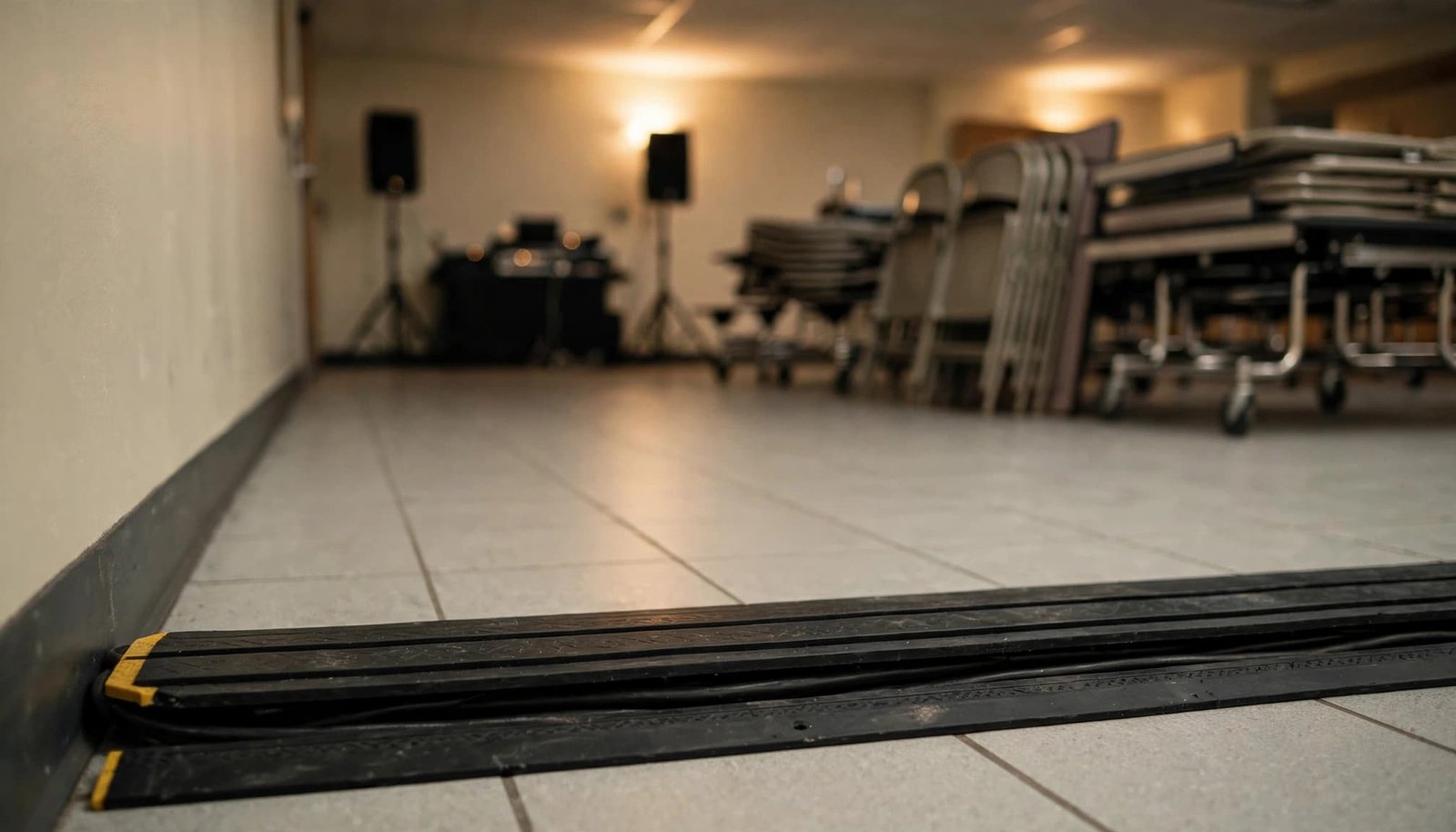
Route cables along protected room edges whenever possible. Where crossings can’t be avoided, use professional cable ramps suited to the route or school-approved tape appropriate for the floor and cable arrangement.
Inspect cords and connections before use. OSHA’s electrical equipment guidance addresses portable-equipment handling and inspection; damaged equipment should be removed from service.
Facilities staff should assign power for audio, lighting, and other vendors. More wall outlets don’t necessarily mean more independent circuits.
Our school dance cable safety checklist supports coordination between the DJ and facilities team. Keep drinks, backpacks, spare cases, and loose equipment away from the dance floor throughout the night.
Create a Clean, Student-Informed Music Plan
Begin music planning 4-8 weeks before prom, especially if students will submit song requests. Ask the school adviser to organize submissions through a school-approved form or committee process.
Give the DJ 15-20 must-play requests, a do-not-play list, and the exact clean versions administrators have approved. Include artist names and remix details so a familiar title doesn’t lead to the wrong recording.
A radio edit isn’t automatic school approval. Mature themes, remaining ad-libs, and long muted sections can make an edited track unsuitable or difficult to use effectively. The DJ and designated school representative should review the actual recordings against school policies and administrator content standards.
Approve the recording that will play, not only the song title. Different versions can change both content and dance-floor pacing.
Avoid explicit recordings, unreviewed remixes, and songs that conflict with school content standards. Genre alone isn’t a reliable approval rule.
Student requests should shape the evening without becoming a guaranteed running order. A personalized playlist can include current pop, school-appropriate hip-hop, EDM, country, throwbacks, and group favorites. Leave room for the DJ to read the crowd and adjust transitions while staying within approved boundaries.
Follow a Three-Hour Prom Timeline
A shared event timeline gives the DJ and school staff a clear framework while allowing adjustments for student energy.
| Event Time | Music and Program |
|---|---|
| 0:00-0:30 | Arrival, photos, and welcoming background music |
| 0:30-0:45 | Welcome announcements and opening formalities |
| 0:45-1:30 | Current hits and dance-floor building |
| 1:30-1:45 | Approved interactive entertainment or slow-dance block |
| 1:45-2:30 | High-energy dance set |
| 2:30-2:50 | Familiar sing-along favorites |
| 2:50-3:00 | Final anthem, closing announcements, and supervised exit |
Treat these as flexible planning blocks, not uninterrupted commitments. Welcome remarks may need only a few minutes, with music continuing around them.
Place prom court announcements or school traditions within agreed windows. The DJ should have names, pronunciations, music cues, and the school contact responsible for releasing each announcement. Staff should be ready for dismissal before the final song begins.
Understand What the DJ Price Includes
GigSalad’s Bowie DJ listings include advertised event ranges of $500-$2,000. These are individual directory examples, not a New Hampshire prom rate or a guaranteed cafeteria package.
A three-hour performance also requires preparation, travel, loading, setup, sound checks, and teardown. Compare DJ pricing by accounting for that work alongside sound coverage, lighting, microphones, MC duties, insurance, and backup equipment.
Low ceilings don’t automatically make a package cheaper. Compact equipment may suit the room, but difficult access, early setup requirements, additional coverage, or separate lighting staffing can increase the work involved.
An accurate proposal should identify performance hours, setup and teardown, travel, included equipment, planning support, and optional upgrades. The agreement should also state the deposit, balance deadline, overtime rate, and cancellation terms.
Our New Hampshire prom DJ budget guide explains package comparisons in more detail. Prioritize clear sound, reliable playback, school-appropriate music, and effective coordination before adding decorative effects.
Frequently Asked Questions
Can the Cafeteria’s Existing Ceiling Speakers Handle Prom?
Don’t assume a system intended for paging or background music can provide suitable dance-floor sound. Its speakers, amplification, controls, and coverage may not support the event’s needs. A dedicated DJ system allows music and announcements to be planned around the actual dance floor while keeping other areas more comfortable.
Who Handles Announcements and Schedule Changes?
A prom DJ often acts as both emcee and program coordinator. That includes introducing formalities, managing music cues, and communicating transitions. One designated school representative should retain authority over content decisions, timing changes, and student supervision, with a direct way to reach the DJ throughout the evening.
Make the Room Work for the Celebration
A low ceiling doesn’t prevent a polished prom experience. A compact layout, controlled sound, appropriate lighting, and protected walkways give the evening a dependable foundation.
Build the entertainment plan around the cafeteria’s limits and the school’s expectations. Preparation and coordination help students enjoy the celebration while staff maintain clear communication and supervision.