A cable across a gym floor can turn an exciting school dance into a preventable safety problem in seconds. Strong school dance cable safety keeps power, sound, lighting, student traffic, and emergency access working together before the first song begins.
The planning committee coordinates event planning early among the DJ, facilities team, activity director, chaperones, and school leadership. Early decisions about music selection and budget management keep the setup organized. That preparation protects the school community, so students can enjoy the music instead of working around cords, speaker stands, or last-minute equipment changes.
Local fire, electrical, building, and accessibility requirements, along with venue policies, take precedence over this general checklist. The DJ can propose an equipment plan, but facilities staff or other authorized venue personnel approve room access, power, and routing decisions.
Why School Dance Cable Safety Belongs in the Event Plan
This risk belongs in the full event plan, where the planning committee connects power, room access, music selection, ticket sales, and venue capacity. These are connected event planning decisions, not separate tasks. Ticket sales can’t be used to exceed approved venue capacity.
A professional sound system needs more than an available outlet. It needs approved power, a protected equipment area, clear exits, and enough time for a proper sound check.
Cables Affect More Than the DJ Setup
Audio and power cables can create trip hazards when they cross walkways, doors, stairs, or accessible routes. They can also become damaged when carts, bleachers, drinks, or student traffic come too close.
Keep the DJ station in a defined equipment zone, with speakers, lighting stands, and subwoofers positioned away from the busiest parts of the room. This keeps the setup organized and gives chaperones clear sightlines across the dance floor.
Facilities Staff Should Be Part of the Plan
The facilities team should verify approved outlets, shared circuits, accessible routes, exits, and building restrictions before load-in. They should review the venue layout before equipment is in place.
A good planning conversation confirms room access, unloading doors, bleacher positions, approved outlets, breaker-panel access, and the staff contact who can approve a layout change. The DJ supplies equipment and load information, then follows the approved layout. Safety protocols and local fire, electrical, building, and accessibility requirements take precedence over preferences from the DJ, student council, or event organizers.
Build a Safe DJ and Speaker Layout
A gymnasium, cafeteria, auditorium, or multipurpose room needs a layout that creates energy without becoming an obstacle course. Start with student movement across the dance floor, then place the DJ table, speakers, subwoofers, and lighting outside the busiest routes.
A stable, venue-approved speaker setup is the DJ’s responsibility to install and monitor. Facilities staff should approve its location and any changes to the room.
Keep Equipment Outside Student Traffic
Place the DJ table where it is visible to the room but protected from student traffic. Speaker stands should be stable, weighted when needed, and positioned where students cannot pull on them or bump into them during a crowded song.
Subwoofers need protection too. Keep them away from drink stations, entrances, open bleachers, and areas where students may set down bags or coats. A clear equipment boundary protects the system and reduces distractions for staff.
Route Cables Along Approved Room Edges
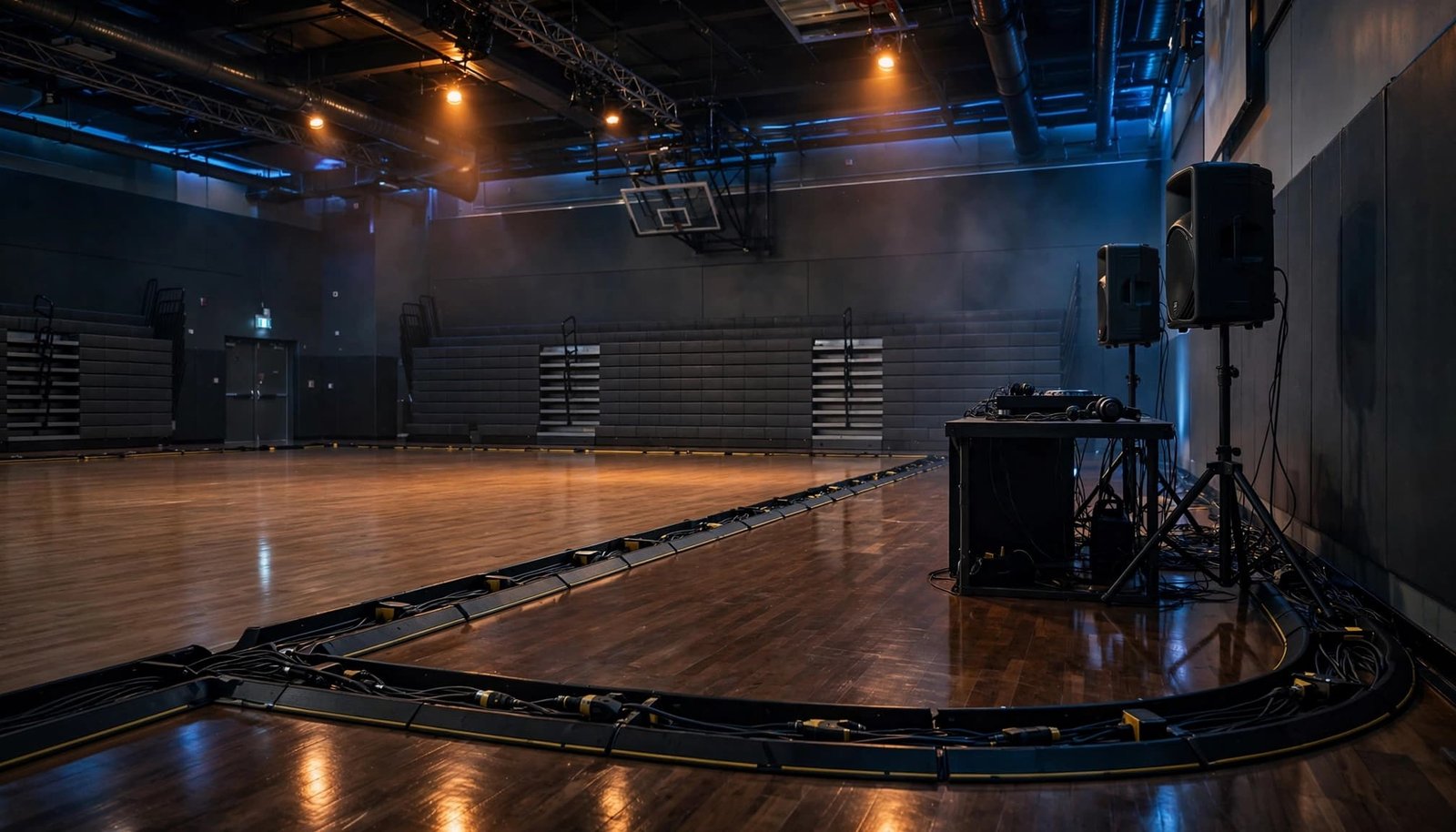
Run audio and power cables along walls or other approved room edges whenever possible. Never run them through emergency exits, doorways, stairways, or accessible paths.
If a crossing cannot be avoided, the facilities team or venue representative must approve the route and cable ramp. Use a venue-approved, low-profile protector that matches the expected pedestrian traffic. The UK’s electrical safety guidance also recommends cable ramps or similar protection where cords must cross routeways.
Gaffer tape can hold a thin cable in a dry, low-traffic spot. It isn’t acceptable as the sole protection in a busy walkway.
Local accessibility, building, fire, and electrical requirements must control the final layout.
Complete Pre-Event Checks Before Students Enter
A final walkthrough catches the small details that are easy to miss during a busy load-in. It should include the DJ, event lead, and a facilities representative whenever possible.
Inspect Every Cord, Plug, and Connection
Inspect every cord, plug, connection, and piece of audio equipment before applying power. Follow the venue’s safety protocols before turning anything on.
Before equipment is powered on, inspect cables for worn insulation, exposed conductors, cracked plugs, loose connectors, or bent grounding pins. Remove damaged equipment from service rather than taping it up for one more event.
OSHA requires a visual inspection of portable cord-and-plug equipment and flexible cord sets before use for external defects. Review OSHA’s equipment-use standard with the team that handles temporary event power. The standard supports venue procedures but doesn’t replace them.
Check that cords are grounded where required, properly rated for the connected equipment, and kept away from liquids. Drinks, refreshment tables, and extension-cord connections should never share the same floor space.
Walk the Room Like a Student Would
Look at the room from the entrance, the check-in table, the chaperone area, the photo booth, and the far corners of the dance floor. A cable that looks harmless behind the DJ table may still be in the path of students entering, leaving, or lining up for refreshments.
Confirm that emergency exits, fire equipment, first aid access, doors, stairs, accessible routes, and photo booth or decoration areas remain clear. The room should support a fun atmosphere without reducing visibility or access.
This checklist supports preparation, but it isn’t a substitute for inspection by a qualified professional. Local fire, electrical, building, and accessibility requirements, along with instructions from authorized facilities personnel, take precedence.
Inspect Temporary Power Before Setup Is Complete
Temporary power is where a well-planned sound system can become unreliable. The closest outlet may not be on a separate circuit, and two outlets across the room may still share the same breaker.
Calculate Load From Equipment Input Ratings
Use the input wattage listed on each device or in its manual, not a speaker’s marketing output rating. At 120 volts, a 600-watt load draws about 5 amps, while a 1,200-watt load draws about 10 amps.
A standard North American circuit is commonly rated at 15 or 20 amps, but its full capacity may not be available. Scoreboards, vending machines, custodial equipment, hallway lighting, and other building loads may already share that circuit.
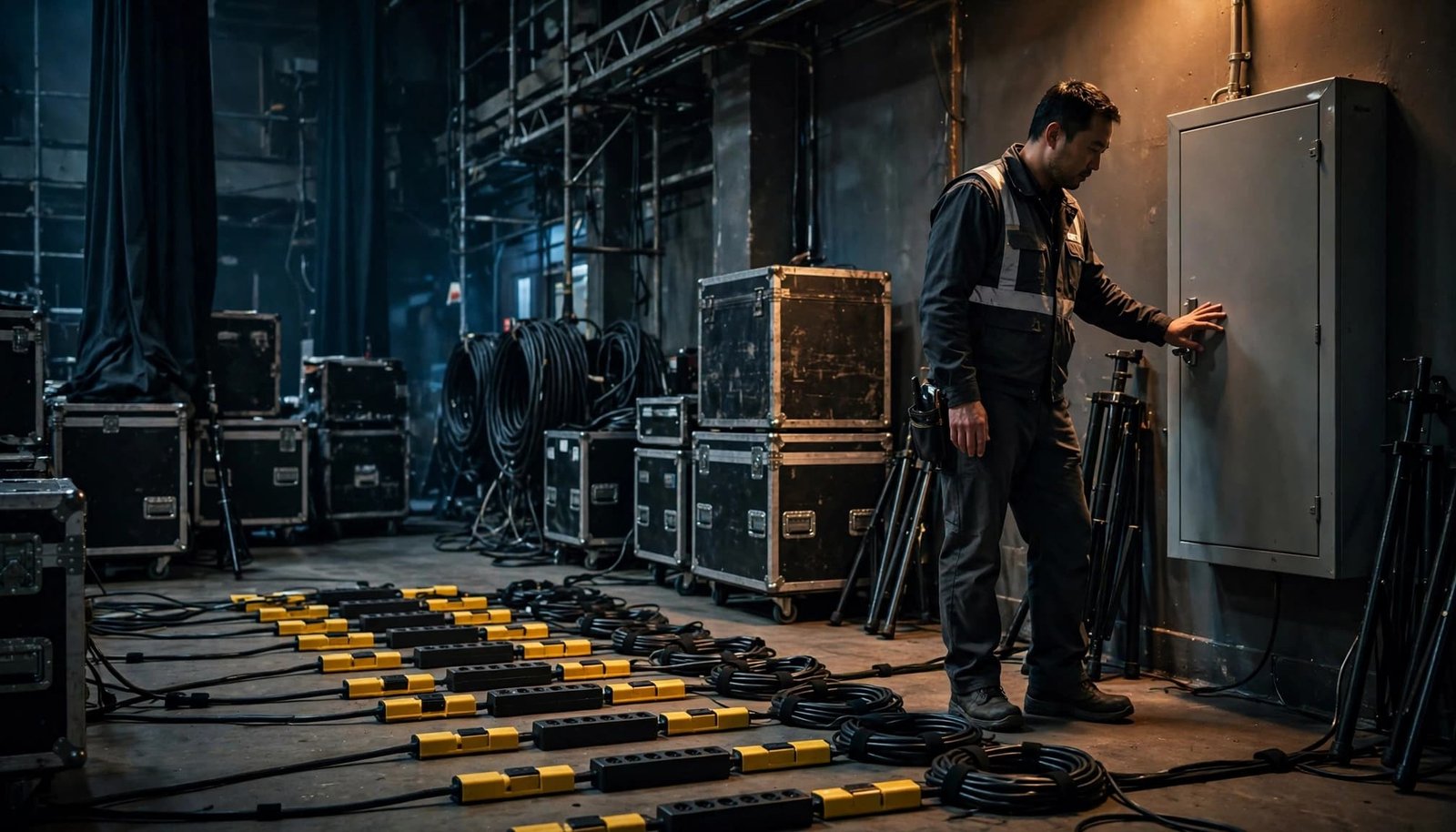
The DJ or production provider should document the expected load. Facilities staff or a qualified electrical professional must verify circuits, shared building loads, and breaker access. Wattage estimates don’t authorize anyone to open panels, alter breakers, add outlets, or make other electrical changes.
Keep connected audio equipment together on the same approved source when practical. The mixer, controller, laptop, wireless microphone receiver, and primary gear often work best as one coordinated system. Put uplighting and high-draw effects on verified separate circuits when available.
Local electrical, fire, building, and accessibility requirements take precedence over generic circuit guidance.
Avoid Daisy Chains and Improvised Fixes
Don’t connect extension cords end-to-end or stack power strips to reach more outlets. A surge protector can help guard equipment from a voltage spike, but it doesn’t create extra circuit capacity.
Use commercial-quality power distribution and grounded cords matched to the load. PowerTemp’s public-event electrical checklist is a useful reminder that temporary power deserves the same attention as the speakers and music.
Power up the system in stages. Listen for hum, crackling, dropouts, or tripped breakers, then stop and contact facilities if any problem appears. Don’t improvise a repair. Test microphones and announcements before doors open, and keep the breaker-panel location and facilities contact information available throughout the event.
Protect Capacity, Egress, and Chaperone Coverage
A safe event works best when it supports the room’s full safety plan. A clear dance floor doesn’t replace approved capacity limits, exits, or adult supervision.
Use the School’s Approved Occupant Load
The planning committee may use ticket sales to forecast attendance, but the school must follow its approved venue capacity, occupant-load documentation, district procedures, and local authority requirements. Ticket sales never authorize an overcrowded room.
The National Fire Protection Association discusses crowd-management density figures for certain large assembly occupancies, but those figures aren’t a simple formula for a school dance floor. The building layout, exits, fixed seating, tables, decorations, and school policy all matter.
Budget management should cover supervision, accessible routes, exit access, cable protection, and appropriate staffing, not only entertainment equipment. This approach helps the school community support a safer event without overlooking essential resources.
Keep the dance floor clear of bags, tables, decorations, and equipment throughout the event.
Assign Clear Supervision Zones
Chaperone coverage should include the entrance, dance floor edges, refreshment area, hallways, restrooms, and any seating areas used during the event. The school decides staffing levels and emergency procedures based on its policies and the student group.
Facilities staff or the venue lead should verify room capacity and egress before students arrive. The DJ should maintain the approved equipment zone and follow the event’s safety protocols.
The DJ can make approved announcements clearly and keep music at a level that doesn’t drown out staff direction. School administration sets staffing and emergency procedures, while chaperones manage student supervision. The DJ doesn’t assume responsibility for discipline, crowd control, or occupancy decisions.
Budget the Sound System Without Cutting Safety
An affordable sound system isn’t always the lowest-cost collection of speakers and cords. Budget management should include cable protectors, approved power distribution, setup labor, backup playback, microphones, and contingency equipment.
A compact setup may use roughly 1,000 to 1,500 watts, while a full gym setup with subwoofers, moving lights, and effects can require much more. The right equipment depends on the room, expected attendance, school rules, and available circuits.
Ask every DJ or production provider about room walkthroughs, load calculations, cable routing, and backup plans. The planning committee should also compare the agreed music selection, not just speaker wattage or price. Schools planning music, lighting, and crowd flow can use these school dance and prom planning tips when building their timeline.
For New Hampshire events, DJ Steve Neff Entertainment LLC provides professional DJ services for school dances and proms with clean music, sound, lighting, and event coordination. Professional DJ Entertainment Since 1999 brings experience that supports a prepared, organized event night. Facilities approval and any required qualified inspection should still be completed before setup.
Keep Music, Lighting, and Entry Policies Clear
Clean, age-appropriate music and clear expectations help staff set the right tone. At least two weeks before the dance, the planning committee, school administration, and student council should agree on music selection, content boundaries, announcements, and safety policies. The school approves the content standards, while the DJ works within those boundaries and reads the room.
Student requests can be welcome without promising that every song will play. Ticket sales and budget management, including paid-event procedures and attendance communication, should remain with the school. These decisions support the school community but don’t change emergency access or supervision requirements.
Lighting should add atmosphere without making supervision difficult. The DJ should follow the approved lighting plan, keep emergency lighting and exit visibility clear, and follow all safety protocols. Facilities staff should approve any lighting, haze, cable, or room-layout change before event day.
Entrance searches, prohibited-item rules, discipline, and emergency procedures are school-directed responsibilities. School administration and chaperones should enforce those requirements, while the DJ makes only approved announcements and supports the event plan. Communicate entry policies in advance, then give staff the space to carry them out professionally at the door.
Key Takeaways for Event Night
- Confirm approved outlets, circuit ratings, shared loads, and breaker access with facilities staff before load-in.
- Keep cables around room edges whenever possible, and use approved cable ramps for unavoidable busy crossings.
- Inspect every cord, plug, power strip, microphone cable, and speaker connection before powering on the system.
- Keep emergency exits, first aid access, accessible paths, doorways, stairs, fire equipment, the dance floor, and chaperone sightlines clear.
- Test the full system before students enter, including backup music, microphones, lighting, and approved announcements.
- Follow local fire, electrical, building, and accessibility requirements first. Have a qualified professional inspect the setup, since this checklist isn’t a substitute.
Frequently Asked Questions
Can one circuit run a school dance DJ setup?
One circuit may support basic playback equipment, modest LED lighting, and a compact audio setup. It is rarely right for a full gym system with heavy bass, multiple lighting fixtures, effects, and extra audio equipment.
The DJ should provide an accurate equipment load and use approved cords and distribution equipment. The facilities team must verify circuit ratings, shared loads, and allowable connections.
Local electrical, fire, building, and accessibility requirements take precedence. A qualified professional should inspect any unresolved electrical concerns.
How early should the planning committee confirm school dance safety details?
The planning committee should confirm the room, load-in route, power needs, speaker placement, and facilities contact as soon as the event date is approved. A walkthrough several days before the dance gives the DJ and facilities team time to solve access, circuit, and cable-routing issues.
Complete the final inspection after setup and before students enter. Last-minute room layout changes should be approved by the event lead and facilities representative.
Who is responsible for school dance entrance safety?
School administrators and approved security personnel handle searches, discipline, prohibited items, and emergency decisions. The DJ keeps the entry area and equipment zone organized and makes approved announcements.
The DJ shouldn’t be asked to manage searches, discipline, or security decisions. Those duties belong with designated school staff and approved security personnel.
A Safe Setup Keeps the Night Moving
The strongest school dances are full of music, movement, and student energy, not loose cords or preventable interruptions. A safe setup includes approved power, protected routes, inspected equipment, a clear dance floor, and a shared walkthrough.
When the DJ and facilities team follow a clear cable plan, the night stays smooth and memorable for students, staff, and the school community. They should follow the approved plan, while local fire, electrical, building, and accessibility requirements, along with qualified professional inspection, take precedence over any general checklist.