Keep prom dinner lines moving with clear walking routes, coordinated table releases, and announcements that follow the catering team’s readiness. A dependable plan gives students a clear next step while keeping food service connected to the rest of the evening.
Long waits can interrupt conversation, delay formalities, and reduce time on the dance floor. With clear responsibilities and thoughtful preparation, your committee can support a relaxed dinner without rushing students through their meal. Start with the room layout, then connect service, communication, and entertainment around it.
Key Takeaways
- Give the buffet its own queue and return route, away from photos, drinks, and busy doorways.
- Assign one school decision-maker, one catering lead, and an agreed method for releasing tables.
- Arrange dietary meals and individual assistance privately before students arrive.
- Keep announcements brief and dinner music comfortable for conversation.
- Adjust the schedule around actual service progress rather than sending more students into a stalled line.
Design a Clear Route Through Dinner
A practical dinner layout accounts for students approaching food, carrying plates, returning to their seats, and moving around occupied tables. The route should remain easy to follow after chairs are pulled out and the room fills.
Separate the Queue From Other Activities
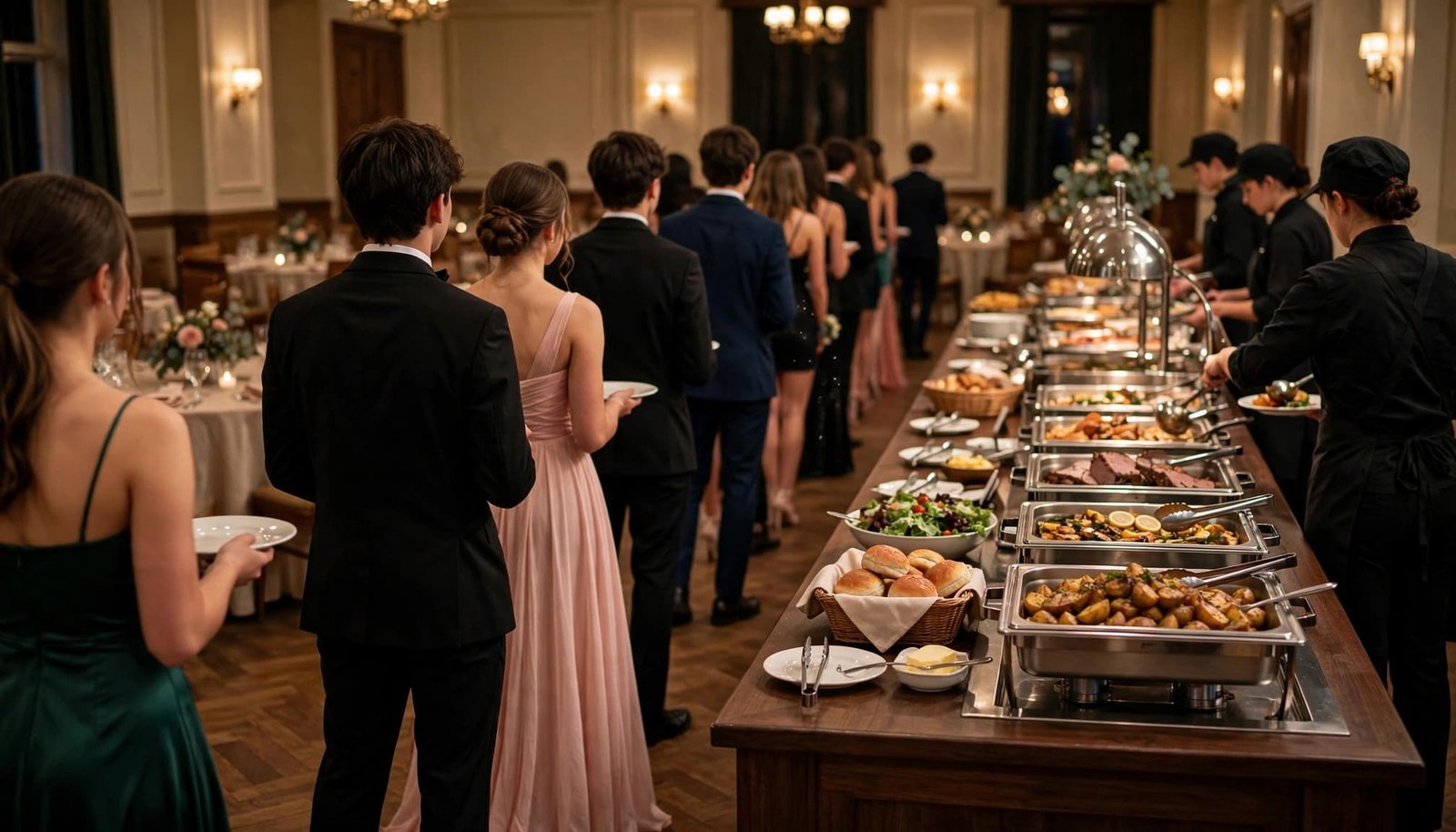
Place the buffet where students can wait without blocking entrances, restrooms, or accessible routes. Keep photo backdrops and other gathering points outside that waiting area so students aren’t crossing through a food line to reach another activity.
Your prom floor plan for dinner and dancing should include the full service footprint, including the space needed behind buffet tables. Speakers, stands, and cables also need positions that leave meal-service routes open.
Walk the Route With Furniture in Place
Before students arrive, have adults follow the planned route while carrying trays or plates. Include the approach to the buffet, the return to seating, and the path catering staff will use.
A route that requires people to turn sideways or wait behind a chair needs attention before service begins. Keep required exit and accessibility clearances intact; decorative tables, draping, and props shouldn’t reduce those routes.
Make Food and Drink Service Easy to Follow
Students move more comfortably when they understand where service begins, what choices are available, and where to go next. Clear placement reduces repeated questions without making the meal feel rushed.
Use Additional Stations Only When They Can Operate Properly
Two buffet stations can divide demand when the room has enough space and the caterer can staff, supply, and replenish both. A second table won’t solve a delay if both stations depend on the same overextended service point.
Set the arrangement around the caterer’s actual service plan. Students should know which station to use without walking between lines to compare options, and staff should be able to direct them without blocking the queue.
Keep Drinks Out of the Food Queue
Give beverages a separate location with their own supplies and waiting space. Students getting water shouldn’t need to join the dinner line or reach across classmates carrying full plates.
Keep water accessible after dinner service ends. Position dessert and late-night refreshments with the same care so a new queue doesn’t block the room later.
Coordinate Prom Dinner Lines With One Shared Plan
A shared timeline connects the school, catering team, venue staff, and entertainment. It should identify the dinner window, table-release method, formal announcements, dessert, and the transition into dancing.
Give Each Team a Clear Responsibility
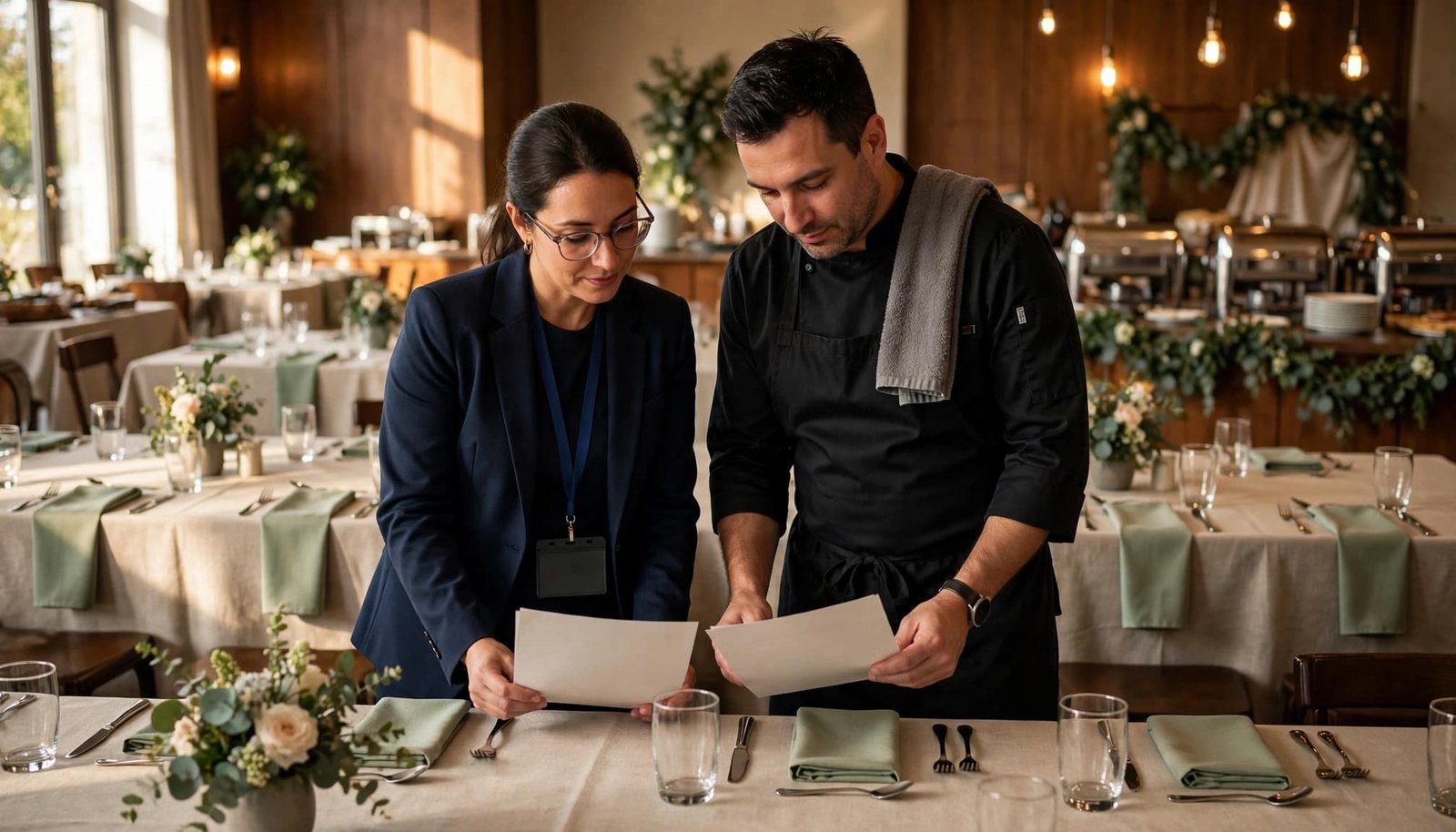
Choose one school representative who can approve timing changes and communicate them to the affected teams. The catering lead manages food-service readiness, replenishment, and closing; the DJ or MC handles agreed announcements and music cues.
Our DJ and MC role supports that coordination through clear communication and well-timed transitions. A prom announcement cue sheet gives the entertainment team the approved wording, sequence, and person responsible for each cue.
Keep a printed or school-controlled copy of the schedule available to the event lead. Dietary instructions belong with the appropriate school and catering staff, not on a widely shared entertainment timeline.
Wait for Readiness Before Opening the Line
The scheduled dinner time provides a target, but the catering lead’s readiness cue should trigger the invitation to eat. Students shouldn’t be standing at the buffet while staff finish arranging service.
A dinner time on the schedule isn’t the cue to open the buffet. The catering lead’s readiness signal comes first.
Agree on that signal during the staff walkthrough. A clear hand signal or direct message prevents an announcement from getting ahead of the food.
Release Tables With Brief, Helpful Announcements
Table releases work best when one agreed method guides the room. Venue staff can invite tables personally, or the DJ can announce them using the final seating chart. Either approach needs clear ownership so students don’t receive conflicting instructions.
If the DJ is making announcements, provide the exact table numbers or names displayed in the room. Decorative names should be recognizable and easy to pronounce. Introduce the process once:
“Dinner is ready. Please remain seated until your table is invited, and our staff will direct you to the buffet.”
After that, each invitation can stay short. Avoid repeated explanations or public updates about kitchen progress.
Release the next group when the serving area can accommodate it, rather than following a rigid countdown. Catering staff can see whether food is being replenished, students need assistance, or the queue needs time to clear.
Arrange Dietary Meals and Assistance Privately
Efficient service includes students who need a different meal, help carrying food, or less time standing. These arrangements deserve the same preparation as the main buffet.
Give Dietary Questions a Clear Contact
Collect dietary requests privately through a designated school adult, then share only necessary information with the catering lead. Plan how each meal will be prepared, identified, transported, and delivered to the correct student.
Keep an informed food-service contact available throughout dinner, dessert, and later refreshments. Dish labels are useful, but they don’t establish that preparation is suitable for a serious allergy. Shared utensils, surfaces, and serving containers can introduce cross-contact; students need accurate information rather than an unsupported promise.
Make Assistance Discreet and Practical
Ask students what support would help them participate comfortably. Some may prefer table service, help locating their meal, or a shorter standing period while staying with friends.
Arrange those details with the appropriate school staff before service. The DJ doesn’t need medical information to announce dinner, and personal needs don’t require a public explanation.
If an agreed dietary meal is missing, the school contact and catering lead should address it privately. Don’t replace it with an unverified dish to keep the schedule moving. A student receiving an accommodation should still have a suitable dinner, not a dessert-only substitute.
Use Dinner Music to Support Communication
Music helps maintain a welcoming atmosphere while students wait, eat, and talk. Familiar, upbeat selections at a conversation-friendly level keep the room engaged without competing with service instructions.
Plan music for prom dinner and formalities around the actual event sequence, including arrivals, photos, dinner, court recognition, and open dancing. The energy can build as service wraps up, with the strongest dance selections saved for when the room is ready.
Lower the music for announcements so instructions are clear without shouting. Then return to the dinner level rather than leaving long gaps between table calls.
Comfortable sound also helps staff answer questions and communicate across the service area. Students shouldn’t need to leave their seats or move closer to understand a simple dinner instruction.
Respond to Delays Without Crowding the Buffet
When prom dinner lines stop moving, the first response should be a direct update between the catering lead and school decision-maker. Identify whether the issue is replenishment, a blocked route, a service question, or too many students approaching at once.
Pause additional table releases if the queue is already full. Keep the explanation calm and brief; students don’t need a microphone account of the problem.
If dinner runs behind, adjust the next announcement or formal presentation through the approved school contact. Avoid starting court recognition while students are collecting food or staff are handling heavy service activity.
Food-holding and buffet-closing decisions remain with the catering team. The DJ should announce final access only after the catering lead approves it, rather than extending service independently because students request more time.
Frequently Asked Questions
Does the DJ Have to Release Every Table?
No. Some venues use staff-led releases, while others prefer microphone announcements. Assign the responsibility beforehand and give the person handling releases an accurate seating chart. Staff-led invitations can reduce interruptions, while microphone calls need to be audible throughout the dining area.
What Should Happen if a Student Misses Their Table Call?
Include late arrivals and missed calls in the staff briefing. Give a designated adult responsibility for directing those students to the appropriate service point. This avoids repeated announcements and lets students get help without explaining their situation across the room.
When Should Dessert Open?
Put dessert on the shared timeline as its own service moment. The catering lead should approve readiness, including any dietary alternatives, before students are invited over. Keep the dessert queue clear of active dinner service and the route to the dance floor.
Keep Dinner Moving Without Rushing the Evening
Smooth prom dinner service depends on coordinated decisions, clear routes, and students knowing what to do next. A dependable plan allows catering staff to serve properly while the entertainment supports the evening’s pace.
Use the final staff walkthrough to connect the floor plan, release method, and announcement cues. When each team understands its responsibility, dinner can feel relaxed and organized, with a comfortable transition into the celebration students came to enjoy.