Prom dinner has a different job than open dancing. The right prom playlist keeps the room warm, polished, and social while students eat, take photos, find friends, and wait for the next formal moment.
A high school prom needs balance between energy, conversation, and formal announcements. A playlist that starts too hard can wear out the room early. One that stays too quiet can make the evening feel flat. The best approach builds energy in stages, gives the MC room to communicate, and keeps the formal program moving without awkward silence.
Key Takeaways
- Start with familiar, upbeat tracks at a conversation-friendly volume, then increase energy as dinner wraps up.
- Organize music around the actual prom schedule, including entrances, photos, court recognition, dinner, open dancing, and the final song.
- Build a varied selection of clean prom songs from current pop music, throwbacks, disco favorites, clean hip-hop, and sing-alongs.
- Collect student requests early, but treat them as input rather than a fixed playlist.
- Review full clean edits and song themes with school staff before prom night.
- Keep one school representative available to approve last-minute announcements and program changes.
How to Build Prom Dinner Music That Works
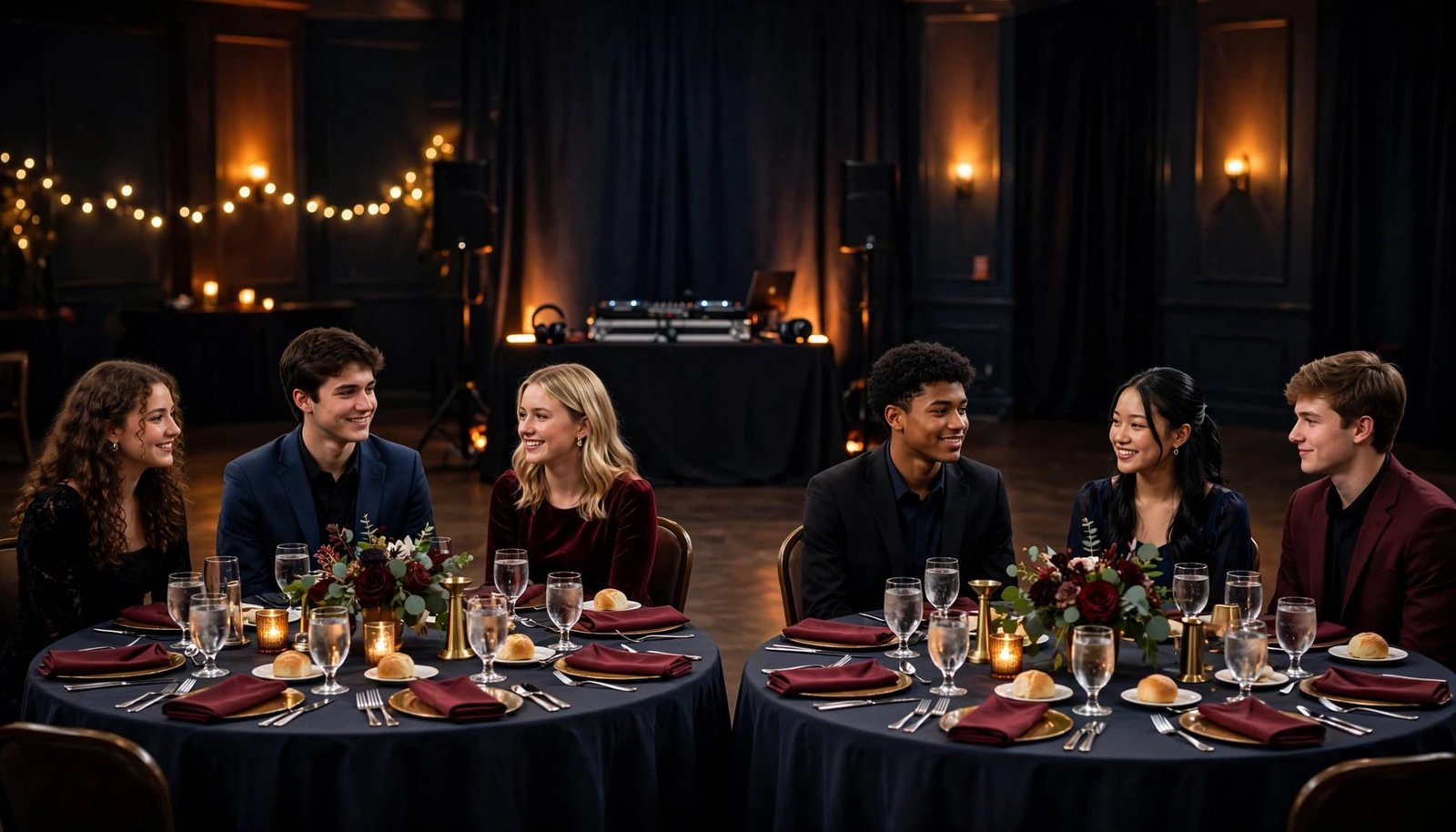
Dinner music should support conversation, not compete with it. Students are meeting at tables, checking out the decor, taking group photos, and settling into the night. A professional DJ can keep recognizable songs in the room without making every table lean in to hear each other.
Keep the First Hour Social
Choose familiar pop, light dance-pop, polished throwbacks, and recognizable prom songs with an easy feel. The goal isn’t to build a party playlist before students have finished eating. It is to make the room feel active and welcoming.
Songs with a comfortable groove work better than tracks with aggressive bass drops or explicit themes. A few upbeat selections can invite early dancing, but they should not take attention away from dinner service or conversation.
The best dinner playlist feels intentional. It gives students something they know, but it leaves room for the night to grow.
Build Energy Without a Sudden Jump
Once most students have arrived and dinner is winding down, increase the pace gradually. Move from relaxed background music into songs with brighter choruses, stronger beats, and more group appeal.
A familiar song such as “Levitating” by Dua Lipa can signal that it’s time to start dancing when the school has approved the version. “Can’t Stop the Feeling!” by Justin Timberlake and “September” by Earth, Wind & Fire are also useful examples of broad, upbeat songs that can fit a school setting.
The first dance floor invitation should feel like a natural next step, not an abrupt switch from dinner to a nightclub.
Organize the Prom Playlist by Moment
A four-hour prom is not a four-hour sprint. Students arrive at different times, spend time at the photo backdrop, eat, socialize, and slowly decide whether they’re ready to dance. A sectioned music playlist gives the DJ flexibility while protecting the important moments.
Use Music Blocks Instead of One Long List
Create loose music blocks for each stage of the night. The prom songs can change based on student response, but the event flow stays organized.
| Prom Moment | Music Direction | DJ Focus |
|---|---|---|
| Arrival and photos | Familiar, upbeat background music | Welcome students without overpowering conversation |
| Dinner | Mid-tempo pop, throwbacks, light dance tracks | Maintain atmosphere at a controlled volume |
| Post-dinner transition | Brighter choruses and recognizable beats | Invite students toward the dance floor |
| Open dancing | High-energy current music, throwbacks, group songs | Keep momentum and vary genres |
| Formal announcements | Short instrumental beds or clean cues | Make names and instructions easy to hear |
| Closing | Meaningful sing-along or approved final slow song | Give the night a clear finish |
This structure prevents the playlist from becoming random. It also helps the DJ save the biggest hype songs until the room is ready.
Leave Room to Read the Crowd
A planned timeline is helpful, but it shouldn’t become rigid. If students are ready to dance early, the DJ may extend the upbeat set before moving into a slower formal moment. If students are still finishing dinner, a high-energy set can wait.
Professional DJ experience dating back to 1999 has shown that school crowds are never identical. One senior class may want current pop and clean hip-hop. Another may respond better to 1990s throwback songs, country crossovers, disco anthems, or big group choruses.
Student preferences matter, but the room decides what comes next.
Use Prom Dinner Music to Connect Different Groups
A strong prom playlist does not stay in one genre for too long. Students come to prom with different music tastes, comfort levels, and expectations. Variety gives more people a reason to join the dancing at some point during the night.
Add Throwbacks and Shared Sing-Alongs
Classic hits can bring together students who might not usually dance to the same music. Songs remembered from teen movies can also create shared recognition when the school approves them.
Disco anthems and 1980s favorites can work well because the beat is easy to follow and the chorus is often familiar. ABBA’s “Dancing Queen” is a group-friendly example, especially after dinner or following a formal announcement when the DJ needs to bring the mood back up.
The point is not to play a nostalgia-only set. It is to give the night range.
Balance Current Pop and Clean Hip-Hop
Current music helps prom feel connected to the students in the room. Still, current hits need review. A radio edit may remove explicit language while leaving themes or repeated phrases that do not fit the school’s standards.
Clean hip hop tracks and pop songs can be effective in shorter runs, especially after a few broad dance songs have already brought students into the dancing. Romantic love songs can work selectively during slow dancing. Then return to familiar, upbeat material so the overall prom pace does not stall.
Avoid playing one style for too long. Switch between pop, hip-hop, dance music, throwbacks, and sing-alongs before one group starts to drift away.
For help developing a school-appropriate mix with music requests, announcements, sound, and lighting in mind, explore school-friendly DJ and MC services.
Give Formalities Their Own Music Cues
Formalities do not have to stop the party. With the right cues, they can feel polished, brief, and connected to the overall prom atmosphere.
Lower the Music for Clear Announcements
The DJ should reduce music volume before a welcome, photo reminder, prom court recognition, transportation update, or closing message. Microphone levels should be checked before students arrive, not while the advisor is standing at the podium.
A welcome can be simple: “Good evening, everyone, and welcome to prom. Please help us keep the night fun, respectful, and safe for all.” Once the announcement ends, bring the music back up cleanly and give students a clear next step.
For example, after dinner: “The dance floor is open. Let’s make this a great night.”
Keep Court Recognition Short and Organized
Prom court recognition works best with short walk-up clips, usually 10 to 15 seconds. Each clip should come from one of the school’s approved prom songs. Confirm the order of names and pronunciation with the school before the program begins.
A brief celebratory instrumental or drumroll can add excitement before the prom royalty announcement. The DJ should fade room music, raise the microphone level, wait for the advisor’s final cue, and return to dance music once the recognition is complete.
For grand march details, entrances, and other schedule ideas, these school dance event planning guides can help committees prepare the full event flow.
Treat Requests as Input, Not Promises
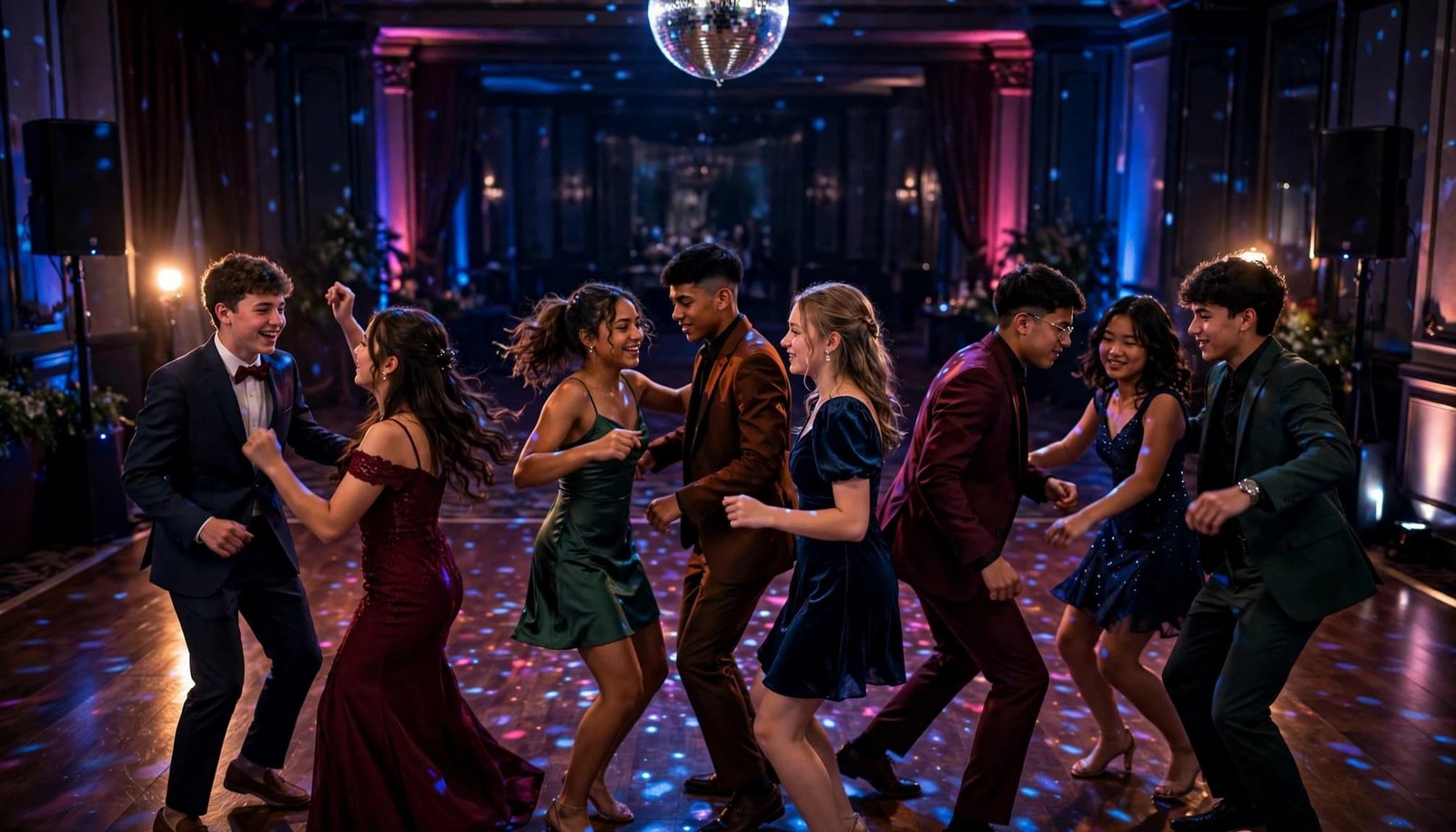
Student requests help planners understand the crowd. They also create a better sense of ownership before prom. A simple Google Form can ask for a song title, artist, preferred version, and a short reason for the request.
Set Boundaries Before Collecting Songs
Before sharing the form, confirm the school’s standards for explicit lyrics, song themes, edited versions, and genres or artists to avoid. Decide who has final approval, how late requests can be submitted, and whether requests will be accepted during the event.
A clear policy prevents confusion. Students can make suggestions, but the DJ and designated school representative decide whether a song fits the timing, school rules, and energy in the room.
A requested song may be popular with one group but still be too slow, too niche, or poorly timed for the event.
Review Every Version Before Prom Night
Review every requested prom song, including its opening, chorus, verses, and any remix or edit. Streaming services can offer different versions of the same track, so identify the exact approved version in advance.
Download approved music and prepare backup playback devices, cables, and power supplies. Weak Wi-Fi should not interrupt the event or a planned formal announcement.
Schools should also review their music permissions. NFHS guidance on public performance licensing explains that music played outside certain educational exemptions may require a public performance license. Requirements can depend on the event and school arrangements, so committees should confirm their own policy before prom.
Match Sound and Lighting to the Music
Music selection matters, but sound quality and room atmosphere affect how the playlist lands. Weak speakers can make a favorite song feel thin. Poor microphone setup can make an important announcement hard to understand.
Use stable speaker placement, clear sightlines, and volume that fits the room. During dinner, the system should sound full without overwhelming tables. During open dancing, the DJ can raise energy while maintaining clean, comfortable sound for students and chaperones.
Lighting also changes how the room feels. Elegant uplighting can support the formal dinner setting, while dance floor lighting can build excitement after dinner. The transition should feel planned and professional, not like someone flipped a switch.
FAQ
How many slow songs should a prom include?
One or two slow songs usually gives couples and friends a chance to reset without slowing the night too much. Follow a slow song with a familiar mid-tempo sing-along or an upbeat dance track to bring energy back.
Should dinner music include current hits?
Yes, but use approved versions and balance them with familiar throwbacks. Current prom songs can make the event feel relevant when paired with familiar favorites and approved edits. Older songs often create the group moments that bring more students onto the floor.
Can formal announcements happen during the dance portion?
They can, but keep them short and planned. Lower the music, make the announcement clearly, and return to a strong song quickly so students do not lose momentum.
Who should make last-minute music decisions?
The school should name one advisor, administrator, or committee representative to work with the DJ. That person can approve program changes, requests, and announcement timing without creating mixed directions.
A Better Prom Night Starts With the Right Pace
The best music during dinner isn’t background filler, and it isn’t a race to play every big song early. It’s a carefully paced part of the evening that keeps students comfortable, supports formalities, and prepares the room for more students dancing.
With clear music guidelines, student input, and clean approved tracks, prom can feel polished from the first welcome through the formalities. A DJ who adjusts to the crowd can keep more students dancing through the final song and help them dance the night away.