A polished arrival means more when families know exactly how students will get home. When planning safe transportation, confirm the vehicle, total cost, supervision, and return trip.
The right questions help your committee compare providers confidently and avoid surprises after a deposit is paid. Start by confirming who controls the transportation plan, then review the details that support a comfortable, organized prom night. Choosing a prom bus rental starts with clear answers.
Key Takeaways for Prom Transportation
- Confirm the assigned vehicle, passenger limit, accessibility features, and seat-belt availability before signing.
- Compare complete written quotes, including waiting time, overtime, gratuity, and cancellation terms.
- Review carrier records, school requirements, supervision responsibilities, and backup arrangements.
- Give approved adults one final itinerary covering pickup, authorized stops, venue arrival, and the return handoff.
Is Transportation School-Sponsored or Family-Arranged?
This decision sets responsibility for the group transportation plan, including who approves the provider, signs the contract, manages payments, and communicates with families. Ask the administrator whether transportation is included in the school-sponsored event or arranged independently by parents.
For school-sponsored travel, confirm district purchasing procedures, insurance requirements, approved supervision, and accessibility expectations before requesting reservations. When coordinating homecoming and prom calendars, committees should also verify applicable school requirements. Student committee members can compare options; an authorized adult should handle contractual commitments.
For family-arranged travel, the school should communicate arrival procedures, guest requirements, dismissal times, and pickup locations. A private reservation doesn’t automatically become part of the school’s transportation program.
Ask who can approve changes on prom night and who will respond if a student needs to leave early. Transportation cost and access also deserve early attention; an inclusive prom planning approach helps committees address participation concerns before reservations limit their options.
Which Vehicle Fits the Group and Venue?
What Is the Limit for the Assigned Vehicle?
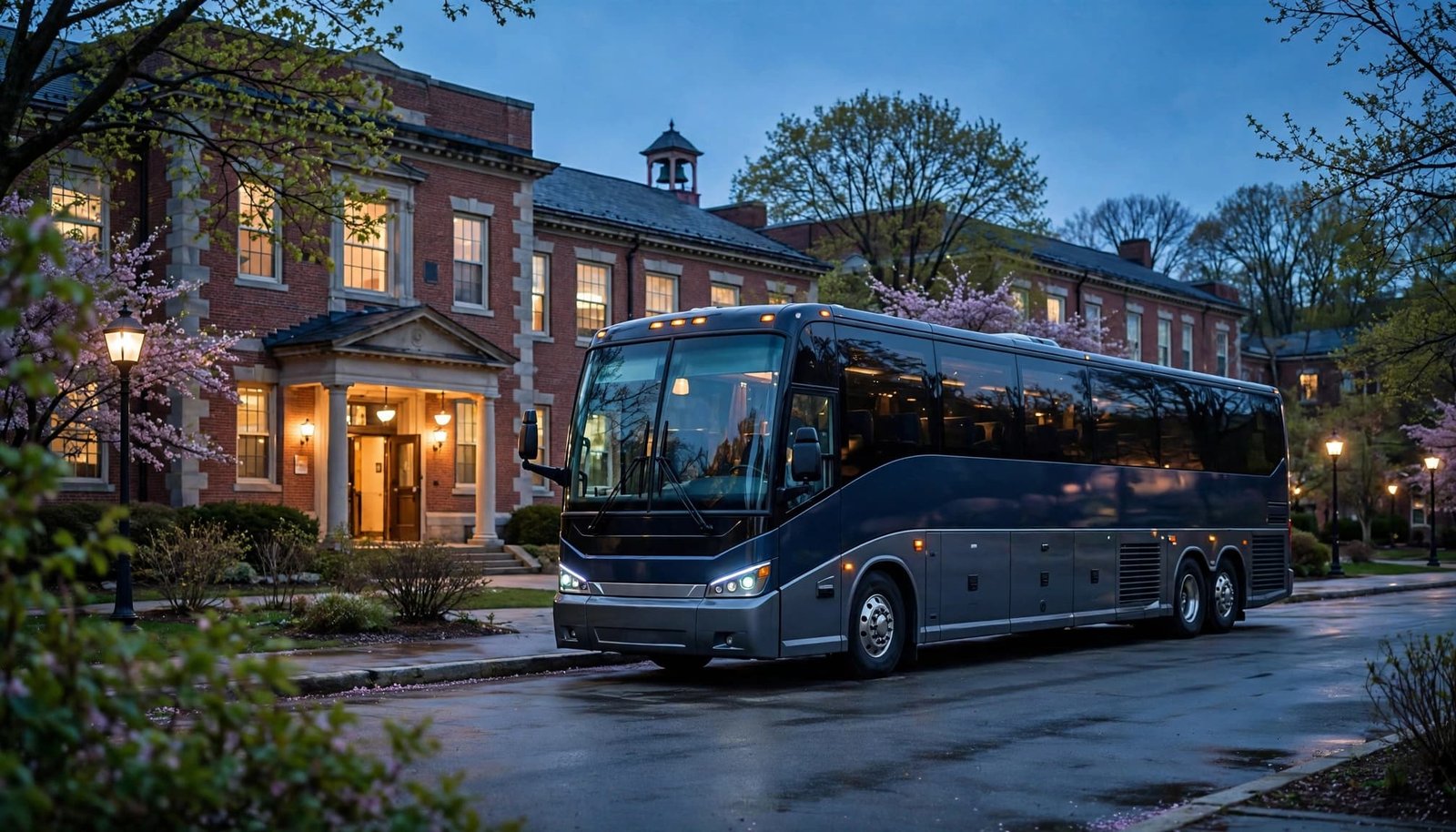
When comparing charter bus rentals, ask for the passenger limit of the exact vehicle being reserved, not a general fleet description. Count students, approved guests, and any adults riding with them. For a party bus rental, confirm the assigned layout and capacity. Don’t add extra passengers after the seating plan is confirmed.
Vehicle layouts influence comfort as much as advertised capacity. Request current interior photos and ask how passengers board, move through the cabin, and store belongings. For a sprinter party bus, verify its actual passenger capacity and boarding needs.
These options have different practical advantages:
| Vehicle | Layout Consideration | Question to Ask |
|---|---|---|
| Stretch limousines | Low entry and enclosed seating can complicate boarding in formalwear. | Can everyone enter and sit comfortably? |
| Party bus | Lounge layouts vary between vehicles. | What seating and restraints are provided? |
| Sprinter party bus | Passenger capacity and boarding needs depend on the assigned layout. | How many passengers can ride comfortably? |
| Charter coach | Row seating supports organized boarding and headcounts. | What storage and restroom facilities are available? |
| School bus | Features and availability depend on the assigned vehicle. | Does it meet the group’s travel and access needs? |
Choose the layout that fits the riders and route, rather than relying on exterior appearance. A luxury party bus label shouldn’t replace checking seating, access, and restraints.
What Comfort and Accessibility Features Are Confirmed?
Ask about heating, air conditioning, storage, leather seats, a sound system, a wet bar, and LED lights. Confirm amenities and their use comply with school and provider rules; don’t assume alcohol is permitted. Belongings shouldn’t crowd seats or obstruct aisles.
Confirm seat-belt availability and use policies. For accessibility needs, discuss boarding equipment, wheelchair securement where needed, and the unloading area with the provider and school. A general description such as “accessible transportation” needs vehicle-specific answers.
How Will the Committee Verify Transportation Safety?
Who Actually Operates the Bus?
Ask whether the reservation company owns and operates the vehicle or arranges transportation through another carrier. Request the operating company’s legal name, USDOT number when applicable, and current insurance documentation.
The Federal Motor Carrier Safety Administration’s passenger carrier search lets planners evaluate safety and registration information for interstate carriers by company name or USDOT number. Match the records to the company operating the trip.
For travel entirely within New Hampshire, ask the district which state and local requirements apply. Have the school business office or insurer review required coverage; don’t assume one insurance amount fits every operation.
What Driver and Inspection Procedures Apply?
Ask whether a professional chauffeur is included, who will drive, and how the provider checks qualifications and assigns drivers. Confirm when the driver’s contact information will be shared.
The driver should receive the approved itinerary and designated adult contact before arriving. Clear preparation reduces conflicting instructions at pickup.

Ask how the provider manages driving time, required rest, and any replacement-driver needs for a long evening. A charter bus compliance guide identifies these operational questions alongside maintenance and insurance checks. The provider should explain how they apply to your itinerary.
What Does the Prom Bus Rental Quote Include?
When Does Billable Time Begin and End?
Hourly rates show only part of the cost. Confirm the minimum rental period. Ask whether billing starts when the vehicle leaves its garage, reaches the first pickup, or begins passenger service.
Request an itemized written quote showing the minimum rental period, service rate, mileage, fuel charges, taxes, gratuity, waiting time, and overtime. Compare any online quote tool estimate with the written breakdown, and ask the reservation team to explain unclear fees. Confirm whether the driver waits at the venue or returns for dismissal.
Photo stops, dinner reservations, multiple pickup addresses, and late-night return service can affect the schedule and price. Share the full itinerary before comparing quotes.
Ask how overtime is calculated and rounded. A short delay may produce a larger charge than families expect if the contract bills in fixed increments.
How Will Families Share the Cost?
Compare party bus prices using the same date, route, passenger count, and service hours. Otherwise, the lowest quote may cover less transportation.
For a family-funded group, divide the confirmed total by committed riders rather than estimated interest. Decide when payments are due and how a rider’s cancellation affects everyone else’s contribution.
School-controlled payments should follow district procedures. Ask whether transportation assistance is available through an approved process so financial concerns can be handled privately.
Keep optional amenities separate from essential service. LED lights, flat screen tvs, a wet bar, and a sound system may add atmosphere, but confirm availability, added cost, and school-use rules. A wet bar doesn’t mean alcohol is permitted, so prioritize comfortable seating and dependable transportation.
Which Contract Terms Need Written Answers?
What Happens to Deposits and Payments?
Ask how much is due to reserve the vehicle, when the remaining balance is payable, and which amounts are refundable. Confirm the deadline and process for changing the passenger count, route, or service hours.
The agreement should address school cancellation, severe weather, rescheduling, provider cancellation, and unavailable vehicles. Have the authorized school representative review the terms before signing.
Clarify responsibility for cleaning, damage, and additional charges. Ask what documentation supports a charge and who receives the final invoice.
Can the Provider Substitute Another Vehicle or Carrier?
Confirm whether the contract identifies the vehicle or only a vehicle category. Ask which substitutions are permitted and whether the school can reject a replacement that doesn’t meet seating or accessibility needs.
If another carrier may operate the trip, request its information before departure. FMCSA’s company safety records resources explain available ways to review carrier information.
Ask for written confirmation of included amenities rather than accepting a fleet-wide promise. An onboard restroom, working climate control, or accessible boarding feature may matter more than decorative lighting.
How Will Pickup and Dismissal Work?
Are Stops and Loading Areas Approved?
Build one itinerary with pickup locations, approved photo stops, venue arrival, return pickup, and the final destination. Allow time for boarding, headcounts, traffic, weather, and photographs.
Ask whether the venue can accommodate the vehicle’s size and turning needs. Confirm designated loading areas, accessible unloading, parking arrangements, and restrictions near fire lanes.
A prom venue walkthrough checklist helps connect transportation questions with entrance access and venue operations. Check the actual loading location rather than relying on the street address alone.
Confirm who can authorize route changes. Students shouldn’t negotiate additional stops directly with the driver.
Who Supervises the Return Handoff?
Ask where students wait after prom, which adult monitors the group, and how riders are checked before departure. Driver responsibilities and chaperone responsibilities should be stated separately.
For after-prom travel, record the destination, supervising organization, receiving adult, and contact number. Confirm whether separate school approval or funding is required.
Coordinate dismissal announcements with the DJ, venue, and school contact so students receive consistent instructions. Assigned prom volunteer responsibilities help keep pickup monitoring and student supervision clear.
Share relevant itinerary details with families and approved staff. Keep student addresses, phone numbers, and medical information out of public posts or broadly shared chats.
What Happens If the Evening Changes?
Ask whether the provider’s dispatch contact or reservation team can be reached throughout the rental, including for late-night pickup. A driver’s phone alone may not provide sufficient support if the vehicle breaks down.
Confirm the provider’s process for delays, mechanical problems, driver illness, and missed pickups. Ask what replacement transportation is available, how quickly families receive updates, and how accessibility needs will be maintained.
The school should name one adult to approve routine changes and establish a separate emergency process under district policy. The driver, DJ, and parent volunteers shouldn’t issue school emergency instructions independently.
Put alcohol, substance, food, beverage, seat-belt, and unauthorized-stop expectations in writing. Ask how violations are handled without assuming a professional driver replaces adult supervision. A clear conduct plan helps families understand the boundaries before prom night.
Frequently Asked Questions
How Early Should Committees Compare Providers?
Begin comparing transportation during early prom planning, ideally six to nine months ahead when possible. This allows time for district review, budgeting, accessibility arrangements, and provider availability checks.
Ask each company about its reservation deadlines rather than assuming a universal booking window. Reconfirm the vehicle, route, count, and contacts two to three weeks before prom, then check changes during prom week.
Can Students Bring Drinks or Choose Onboard Music?
Ask the provider and school about permitted nonalcoholic drinks, food, cleanup charges, and conduct expectations. Don’t treat a cooler or bar-style fixture as permission to bring alcohol.
For music, confirm the available connection, volume rules, and clean-content expectations. Amenities should support an age-appropriate ride without distracting the driver or interfering with announcements.
Clear Answers Support a Confident Prom Night
A dependable prom bus rental begins with written commitments about the vehicle, complete cost, supervision, and return plan. Those details give families confidence and help the committee keep transportation connected to the evening’s schedule.
Before paying a deposit, have the authorized adult review the quote, safety information, and contract together. A well-prepared transportation plan leaves students free to enjoy the celebration while adults know what happens next.