A new prom advisor shouldn’t have to rebuild the event plan by searching old emails and guessing which decisions are final. A well-organized prom advisor handoff binder gives your next school team clear contacts, reliable records, and a practical starting point.
For New Hampshire schools, that preparation supports continuity while keeping approvals, student information, and financial responsibilities with the right people. It also preserves the details that help prom feel polished, welcoming, and manageable.
Start with an organized record of what happened, what remains open, and what next year’s advisor needs to confirm.
Key Takeaways
A useful handoff connects planning decisions with the records and people behind them.
- Keep the final budget and supporting records together in the financial binder, along with signed agreements, the planning calendar, event timeline, and unresolved tasks.
- Separate general planning materials from confidential student records, with access controlled through school-approved systems.
- Review the binder with the incoming advisor and administrator so outstanding payments, future reservations, and approval responsibilities have clear owners.
Last year’s plan is a reference. Current district policies, vendor agreements, and school approvals still need review before the next event.
Build a Prom Advisor Handoff Binder That’s Easy to Use
The binder should help someone find an answer quickly, whether they’re reviewing a deposit or preparing a committee meeting. Use a cover page with the school, event year, outgoing advisor, incoming advisor, and last revision date.
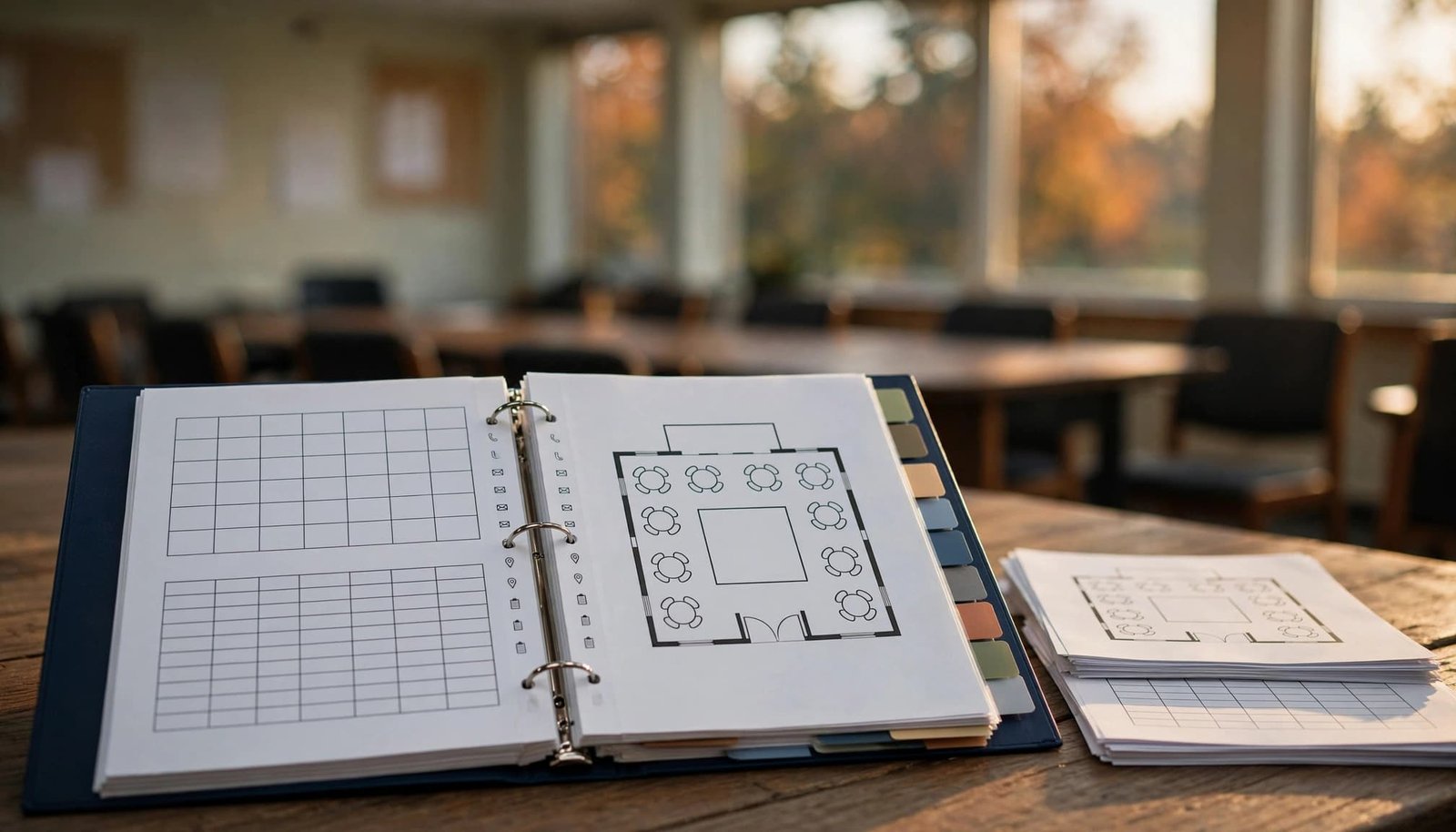
These sections provide a practical table of contents.
| Binder Section | What to Include |
|---|---|
| Start Here | Event summary, contacts, open tasks, approval responsibilities |
| Calendar and Committee | Deadlines, roles, meeting decisions, planning milestones |
| Finance | Budget, revenue, invoices, deposits, payment status |
| Vendors and Venue | Signed agreements, addenda, proposals, access instructions |
| Event Operations | Floor plan, run-of-show, staffing assignments, communication plan |
| Forms and Policies | Current policy references and blank approved forms |
| Closeout | Inventory, feedback, final totals, next-year recommendations |
Use matching binder dividers or custom printed tabs, along with digital folders, to keep the paper and electronic materials in one document set. A sturdy three-ring binder with pockets can hold quick-reference sheets. Avoid overfilling it with duplicate drafts.
Place a one-page event summary first. Include the actual attendance, ticket price, venue, event hours, and major decisions that shaped the celebration.
Preserve the Planning Calendar and Decision History
An incoming advisor needs the sequence of decisions, not simply a list of completed tasks. Save the working calendar alongside the actual completion dates so next year’s committee can see where additional time was needed.
Keep Deadlines Connected to Real Commitments
Record booking dates, purchase approvals, ticket deadlines, attendance guarantees, payment dates, and cancellation deadlines. Use your school’s existing commitments to set the schedule; venue reservations may need attention well before the final spring planning period.
The guide to prom date planning helps connect event scheduling with the school calendar. Preserve notes about testing, athletics, graduation activities, transportation, and other conflicts that affected the date.
Include the final-month vendor meeting, event-week confirmations, and post-prom closeout tasks. Each deadline should identify an owner and any required approval.
Save Decisions and Committee Responsibilities
Meeting notes should record the decision, its approval status, and the person responsible for the next step. Explain meaningful choices, such as why the committee selected a particular venue or limited a decoration purchase.
Keep student roles clear. Students can gather music preferences, develop themes, and support approved publicity; authorized adults retain responsibility for contracts, admission decisions, confidential records, and safety.
A brief weekly meeting can follow the same dependable pattern: completed work, pending approvals, and anything that could delay the event.
Leave Financial Records the School Can Reconcile
The financial binder should show both the event’s results and any remaining commitments. A final total without supporting records leaves the next advisor and business office with unnecessary questions.
Connect the Budget to Payments and Revenue
Retain projected expenses, actual expenses, funding sources, deposit amounts, remaining balances, and payment deadlines. Keep transaction documents together in one document set, including invoices, receipts, purchase approvals, ticket-sales summaries, deposit records, and refund documentation.
Record variance as actual cost minus projected cost. Explain meaningful differences so next year’s team can distinguish a one-time expense from a recurring need.
Organize the document set with clear support so designated school staff can reconcile the account through district procedures and keep the file audit ready. Mark unpaid invoices and disputed charges clearly; a vendor payment isn’t complete simply because it appears in the budget.
Carry Forward Sponsorship and Affordability Commitments
Document cash donations, in-kind contributions, promised recognition, and completed thank-you messages. Note whether support was limited to a particular expense or event year.
Keep school-funded ticket assistance within the approved financial process. Preserve the procedure and responsible office without placing students’ private circumstances in the general planning binder.
A sponsorship entry should show both what the school received and what it promised in return. Otherwise, next year’s committee may overlook an unfinished recognition commitment.
Record the remaining balance and who determines its future use under school procedures.
Keep Complete Vendor Agreements and Entertainment Plans
Reliable vendor coordination depends on complete records. Keep signed agreements and approved changes together, rather than leaving the incoming advisor to compare proposals with scattered email messages.
Preserve the Agreement and Its Approval Trail
For the venue, DJ, photographer, caterer, rentals, security, and transportation, record the primary contact, service details, arrival time, payment status, and school decision-maker.
Save cancellation and rescheduling terms, overtime rates, insurance requirements, setup responsibilities, and cleanup deadlines. Include floor plans and written addenda that affect the agreement.
Identify the district employee authorized to approve contracts or changes. The next prom advisor shouldn’t assume that inheriting the binder also grants purchasing or signing authority.
Record whether any next-year reservation is confirmed, tentative, or awaiting approval.
Document Music, Announcements, and Production Needs
The entertainment section should include the school’s clean-music expectations, request process, approved announcements, microphone needs, lighting preferences, and event timeline. Note who can approve schedule changes or additional service time.
DJ Steve Neff Entertainment LLC provides New Hampshire school dance DJ services with music planning, professional sound, lighting, MC services, and staff coordination. Steve Neff and business partner Jon Turgeon run the company, whose professional DJ experience dates back to 1999.
The business began in Maine and is now based in Concord, New Hampshire. Share relevant operational information with entertainment providers, while keeping private student records under school control.
Document the Full Prom-Night Operation
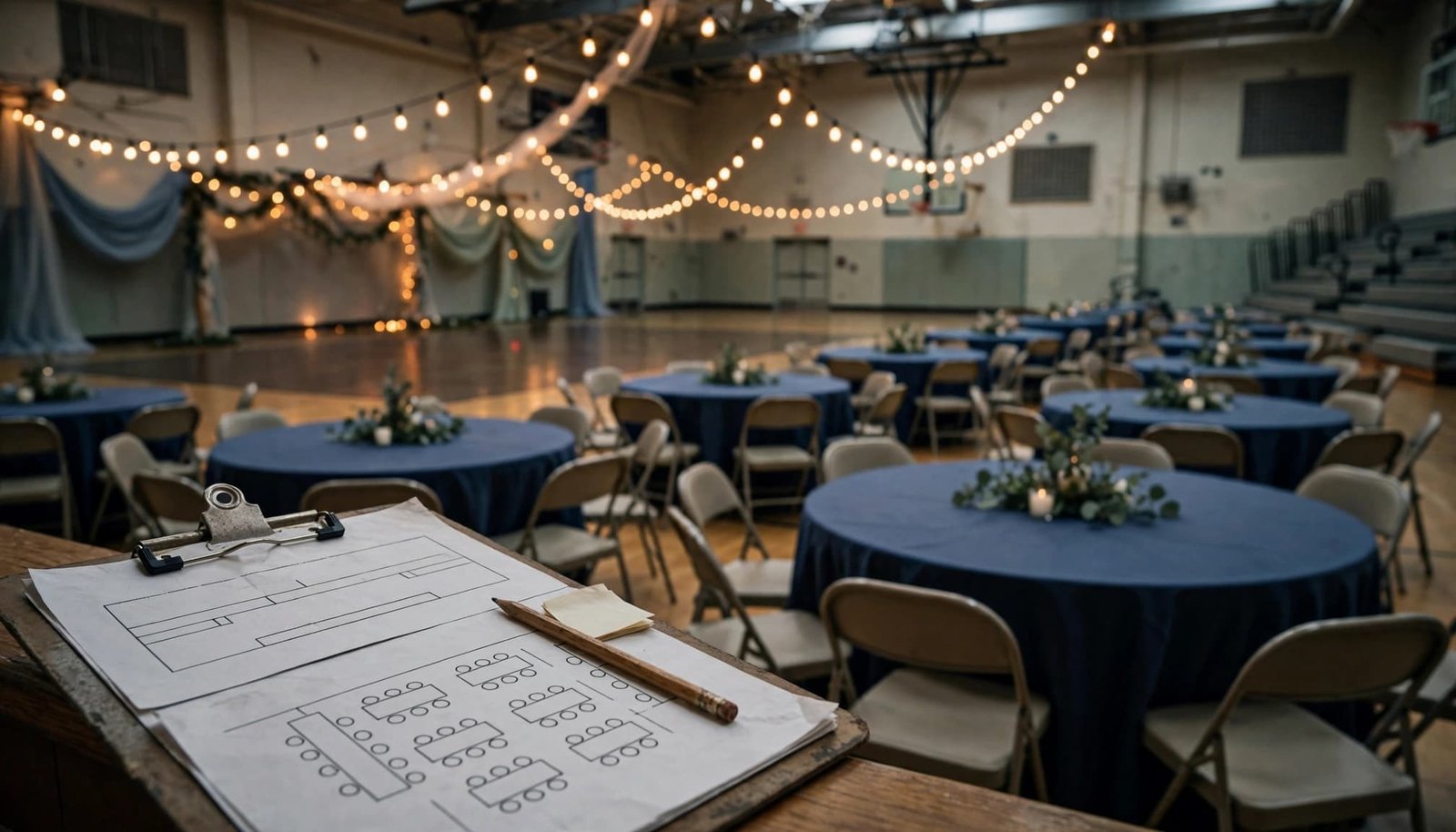
A clear run-of-show connects the venue, school staff, and vendors through one written schedule. Preserve the final version used on prom night, then note any changes that would improve next year’s event.
Record the Evening in Order
Include setup, vendor arrivals, staff briefing, check-in, food service, announcements, dancing, final song, departure, and teardown. Assign a responsible contact to each transition.
Keep the approved floor plan with accessible routes, check-in locations, chaperone posts, vendor areas, and pickup arrangements. Document unloading entrances, parking instructions, equipment-removal routes, and building-clearance deadlines.
Record announcement pronunciation notes and the adult who approves microphone messages. Those details help the evening feel professional without unnecessary interruptions.
Preserve the Approved Safety and Communication Plan
Keep current procedures for emergencies, early departures, weather decisions, and staff communication in the appropriate controlled location. If the school maintains a separate emergency binder, note its approved location and access process for the incoming advisor. Don’t copy sensitive or changing procedures into the handoff binder.
Identify who leads the response and who contacts families. Record the pre-opening walkthrough process, including exits, restrooms, lighting, check-in supplies, and pickup areas. Confirm next year’s staffing and procedures with administrators and the venue rather than copying old assignments automatically.
Student volunteers can welcome guests and provide directions. They shouldn’t enforce rules or supervise classmates.
Protect Student Information and Digital Access
A prom advisor handoff binder should be useful without exposing student records. Keep blank approved forms and instructions in the general binder; store completed permission forms, medical details, and family information in the school’s approved restricted system. If the school maintains a separate emergency binder, follow its approved process rather than duplicating sensitive records.
The prom permission slip checklist helps distinguish submission requirements from approval status. Note which office manages approvals and where authorized staff can find current records.
Use a school-controlled shared folder or approved platform. Transfer ownership and permissions through district procedures, and remove access outgoing staff no longer need. Don’t put passwords in the binder.
Keep editable planning files alongside a dated, searchable hyperlinked pdf with a linked table of contents. Label prior-year materials clearly so old deadlines or attendee lists aren’t mistaken for current information. Don’t assume every working copy is a permanent record.
Retention decisions also need local direction. Milford School District’s records retention policy illustrates how a district directs staff to its own retention schedule. Follow your school’s applicable schedule and approved storage arrangements.
Close Out Records Before the Advisor Leaves
Begin closeout within the first few days after prom, while invoices, borrowed items, and feedback are easy to locate. Return supplies, record inventory locations, and collect staff observations. Update the financial binder with final charges, then gather the closing documents.
New Hampshire’s records retention and disposition law requires school boards to establish a schedule for official district records. That doesn’t make the entire prom binder a permanent record.
Ask the designated records custodian which materials to retain, where they belong, and how approved disposal is documented. Follow the district’s schedule and any applicable audit or unresolved-matter requirements before removing records.
Finish with a handoff meeting involving the incoming advisor and appropriate administrator. Review transaction documents, including supporting invoices, receipts, and refund records. Cover unpaid invoices, pending refunds, future reservations, missing documents, and next deadlines.
For each open item, name the owner and approval path. Confirm that the incoming advisor can open the complete, organized document set. Make sure they can locate its supporting records before the outgoing advisor’s access changes.
Frequently Asked Questions
How Much Detail Should the Binder Include?
Include enough detail for a new advisor to understand decisions and act without reconstructing the event. Prioritize final agreements, financial support, approved procedures, contacts, and useful lessons.
Keep duplicate drafts and confidential records out of the general reference section. A short index can identify records stored elsewhere and the staff member who controls access.
When Should the Handoff Happen?
Schedule the handoff after initial closeout and before the outgoing advisor becomes unavailable. Don’t wait for every pending invoice if that would delay the transition.
Instead, transfer a dated status report with the remaining tasks and responsible contacts. Update the financial and closeout sections when those items are resolved.
Give the Next Advisor a Confident Starting Point
A strong prom advisor handoff binder preserves the decisions, records, and responsibilities that make planning dependable. It gives the next team a clear starting point while leaving room for fresh student ideas.
Organize the final documents, identify unfinished work, and review the handoff together. The next advisor can then focus on a memorable celebration instead of searching for answers that should already be available.