A memorable prom starts with students being able to arrive, participate, and enjoy the evening comfortably. Prom accessibility requires coordinated decisions about the venue, transportation, food, entertainment, and support throughout the night.
For students with disabilities, independent participation should guide decisions, while accounting for each student’s individual needs.
Start with student input, then build a practical plan that considers affordability and sensory-friendly options throughout the prom experience.
Key Takeaways
- Include students with disabilities in planning, and provide a private way to request individual accommodations.
- Design the complete student route, including parking, check-in, dining, dancing, photos, restrooms, and departure.
- Coordinate food choices, sound levels, lighting, trained supervision, and confidential financial assistance before prom night.
Begin Planning With Students
Student involvement makes accessibility planning more useful and personal. Invite students with disabilities to help choose the venue, entertainment, presentations, and peer promotions, and ask which accommodations work for them.
Ask what would help students participate comfortably rather than making assumptions based on a diagnosis or mobility device. Some students need seating near friends; others need shorter standing periods, help with food service, or a clear route to the photo area.
Gather individual accommodation requests privately through an appropriate school contact. The Section 504 coordinator, special education team, nurse, and facilities staff can help translate those requests into practical accessibility arrangements.
Keep responsibility with the adults coordinating the event. Students should influence the plan without becoming responsible for solving every accessibility problem.
An inclusive prom can support empathy, leadership, social awareness, community building, and confidence among neurotypical peers. Shared planning can build disability awareness, with adults guiding those conversations.
2. Choose a Venue Students Can Enter and Use
An accessible venue must support participation throughout the event. The main entrance should welcome all attendees, so students aren’t sent through a service entrance while classmates enter together.
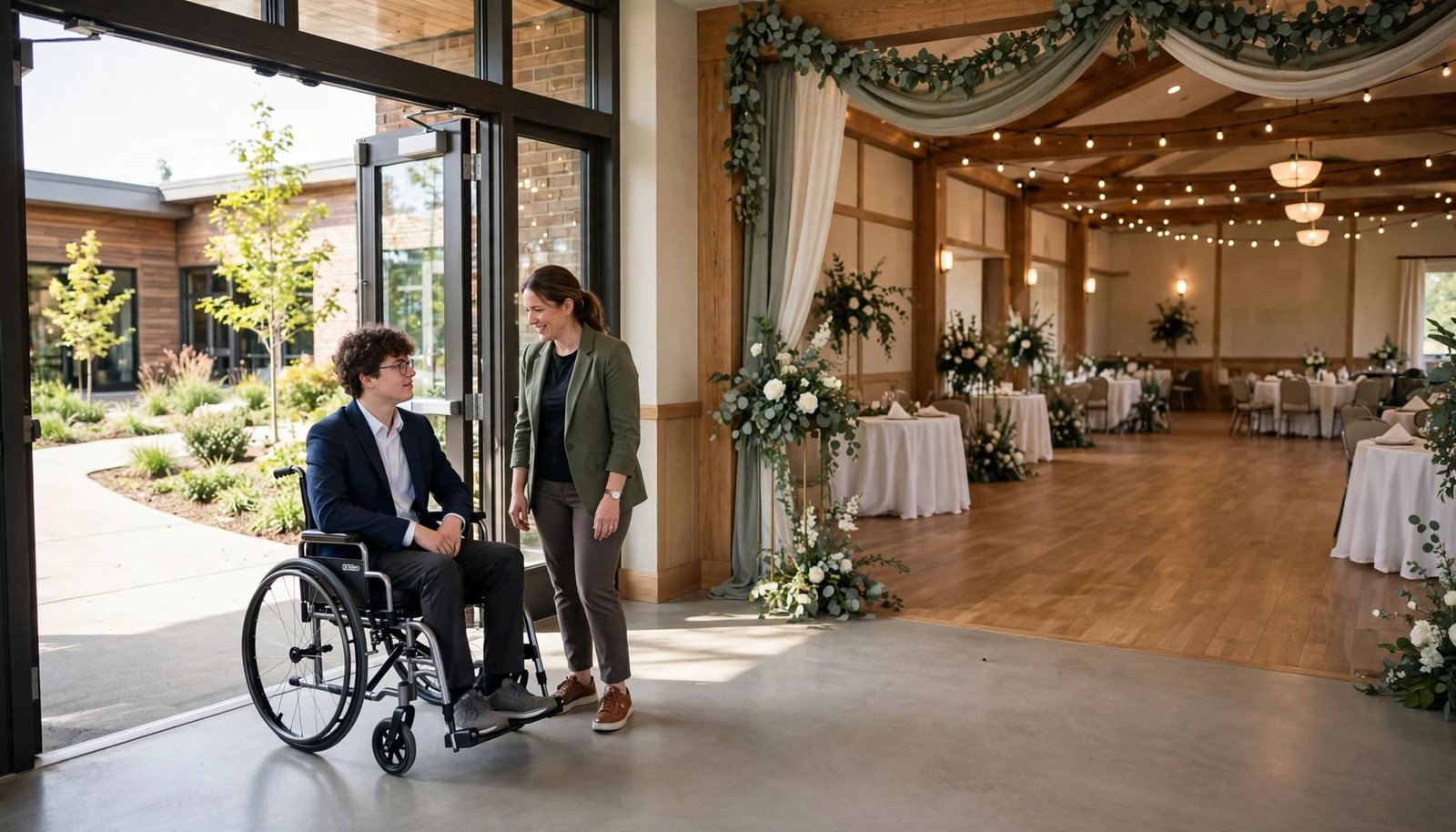
Ask Direct Questions About the Building
Use specific questions during the venue walkthrough:
- Are entrances, restrooms, and event spaces wheelchair accessible, with routes to every prom activity that avoid stairs?
- Where are ramps and stable railings, and will necessary elevators operate throughout the evening?
- How many accessible parking spaces are available, and where is the dropoff area?
Include doors, restroom turning space, dining access, and any raised stage in the discussion. A wheelchair-friendly entrance doesn’t resolve barriers elsewhere in the building.
Plan Parking and Dropoff Separately
The ADA’s accessible parking guidance explains requirements for parking facilities. Minimum counts depend on lot size: lots with 1 to 25 spaces require one accessible space, 26 to 50 require two, and 51 to 75 require three.
These are facility minimums, not a complete transportation plan for your attendance.
Provided passenger loading zones generally require at least one accessible zone per continuous 100 linear feet, or fraction thereof, subject to applicable exceptions. Keep the unloading area clear for mobility-device deployment, and prevent pickup queues from blocking parking or emergency access.
3. Build the Floor Plan Around Student Movement
Temporary furniture, decorations, and production equipment can create barriers in an otherwise usable room. Develop one floor plan for the venue that includes tables, check-in, food service, speakers, light stands, photography, and emergency exits.
Walk the Complete Prom Route
Follow the route through parking or drop-off, the entrance, check-in, seating, restrooms, food service, photos, dancing, and departure. Evaluate it with the actual furniture arrangement, not an empty ballroom.
Can a student using a wheelchair move without asking classmates to relocate? Is check-in reachable, with a seated option for students who can’t stand comfortably?
Keep buffet and photography queues away from busy intersections. Place accessible seating among other tables, with companion seating nearby. Make photo backdrops usable without a raised platform.
Protect Routes During Equipment Setup
Place speaker stands, light stands, equipment cases, and decorations outside travel paths. Audio and power cables must never cross emergency exits, doorways, staircases, or accessible routes.
Our school dance cable safety checklist outlines coordination between the DJ and facilities team. Route cables along approved room edges, and use approved protection wherever a permitted crossing is necessary.
A clear route on the floor plan can disappear when chairs are pulled out and photo lines form. Evaluate access under active event conditions.
Include a supervised indoor waiting area for late-night pickup, with an unobstructed route to transportation that can accommodate mobility needs.
4. Coordinate Music, Lighting, and Sensory Comfort
An inclusive prom needs a sensory-friendly environment that supports sensory comfort without losing the energy of the event. We provide customized music planning, clean selections, professional sound, stage illumination, and MC support for school dances and proms.
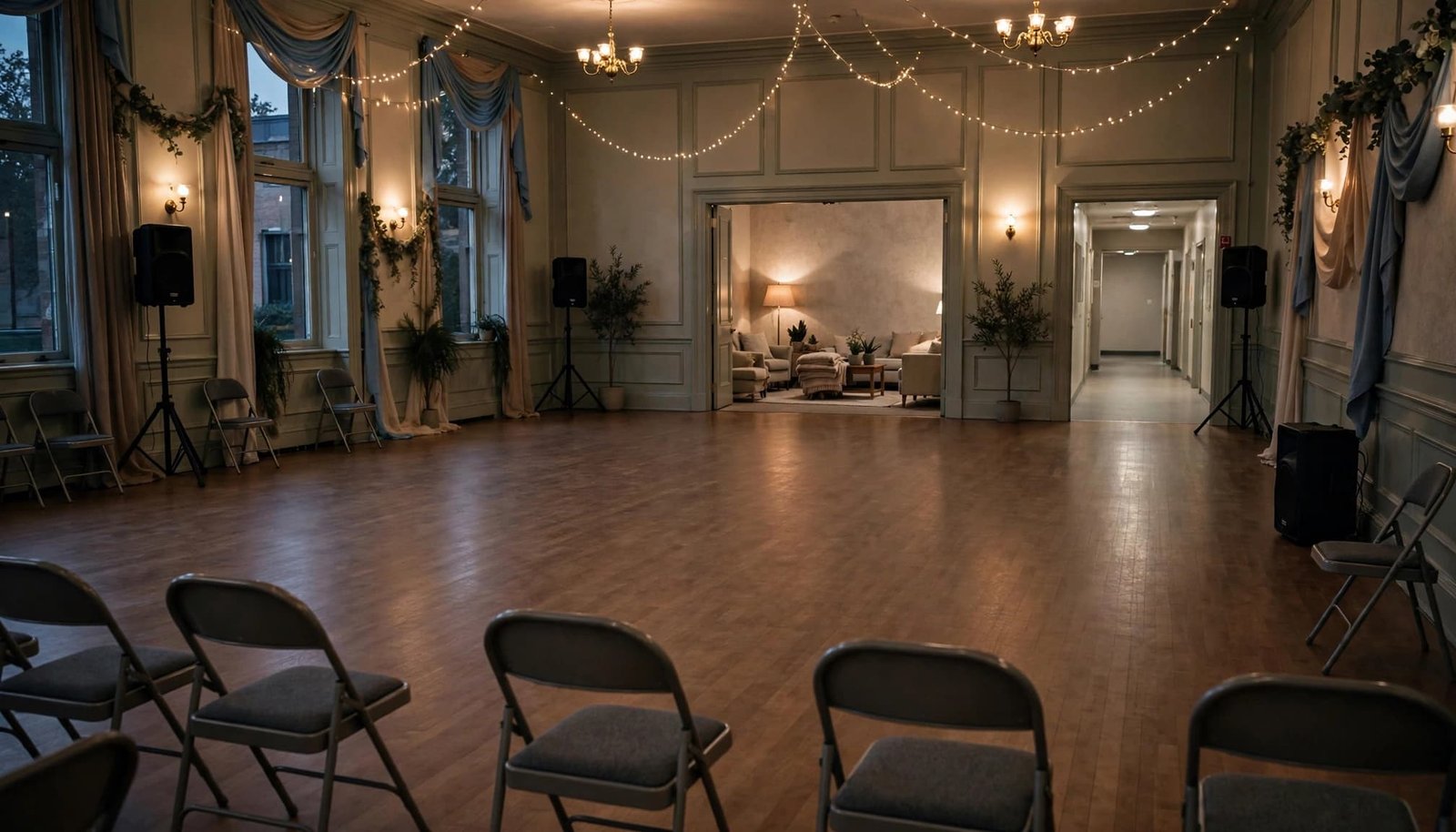
Give the DJ Clear Sound and Lighting Expectations
Alternate fast and slow songs to vary the pace and provide natural opportunities to rest. Keep volume within safe hearing standards, based on sound level and exposure time.
Place speakers to create quieter zones along the dance floor’s perimeter, and keep accessible seating away from loudspeakers. Test audio and microphone clarity at student tables, circulation areas, and seating locations.
Avoid flashing lights whenever possible. If effects are retained, schedule and communicate a block without them. This doesn’t replace an individual accommodation that requires no flashing throughout the event.
Keep restroom paths reasonably lit, and avoid sudden blackouts. Our prom sound and lighting guide provides additional room-planning considerations.
Make a Quiet Room Easy to Use
Provide a nearby, supervised, sensory-friendly quiet room with accessible seating, softer illumination, and water. Students should be able to enter and leave without a public explanation.
Keep this space away from subwoofers, and don’t use it for discipline, storage, or staff breaks. Utah Parent Center describes inclusive Utah proms that often offer adjustable illumination, sensory-friendly quiet rooms, flexible dress expectations, and disability-awareness-trained staff.
5. Provide Food Options Every Student Can Enjoy
Food access includes ingredients and service. Ask the caterer to offer meal choices that exclude gluten, dairy, nuts, soy, fish or shellfish, and eggs, based on students’ reported needs.
Every student should have suitable choices, even when no single dish meets every restriction. A dessert-only alternative isn’t an equivalent meal when classmates receive dinner.
Gather requests about dietary restrictions privately. Have the caterer document ingredients, food labels, and cross-contact precautions. Separate utensils and clear service procedures matter because an ingredient-free recipe alone doesn’t address allergy-related risk.
For mobility access, consider buffet reach, tray handling, crowded queues, and seating near companions. Offer discreet assistance or table service when needed, so students don’t have to carry food while managing a mobility device.
Assign one food contact and one school contact to handle questions. Coordinate allergy-related emergency arrangements with the nurse or appropriate school team.
6. Prepare Chaperones for Practical Support
Reliable supervision depends on clear roles and appropriate training. Chaperones should understand safe dance behavior, disability awareness, respectful assistance, and school procedures for medical concerns.
Include adults certified in first aid or CPR, and assign someone to escort a student using a wheelchair when requested. Escorting means providing requested support; staff shouldn’t move the chair or touch mobility equipment without permission.
Before doors open, assign coverage for arrival, the dance floor, quiet room, food service, restrooms, and departure. Name an event lead and backup contact so staff know where to route medical or accessibility concerns.
Document emergency assistance arrangements with the appropriate school and venue personnel. Don’t rely on improvised lifting or carrying during an evacuation.
Announcements should be brief and understandable, with music lowered when needed. Our prom announcement checklist helps school staff coordinate with the DJ.
7. Make Invitations and Ticketing Accessible
Students may avoid traditional proms because participation seems uncertain, support feels public, or invitations don’t explain available help. Clear communication reduces uncertainty before tickets go on sale.
Promote the Event Through Several Channels
Use banners, announcements, flyers, classroom visits, and accessible digital messages. Place banners near classrooms that host students with disabilities, while keeping outreach schoolwide.
Promotions can show students with disabilities alongside neurotypical peers and explain the event’s welcoming atmosphere. Publish arrival information, routes through the venue, food arrangements, quiet-room availability, dress guidance, and a private accommodation contact.
Flexible dress expectations should accommodate adaptive clothing, comfortable footwear, cultural formalwear, and religious practices. Explain the schedule so students know when dinner, announcements, and dancing will occur.
Support Ticket Booking
Digital information should be accessible, and ticket forms should meet WCAG 2.1 guidance for keyboard use, readable text, labeled fields, screen reader support, and clear instructions. Offer an accessible assisted booking option without an additional fee.
W3C’s WCAG 2.1 guidelines address website accessibility. Inn at the Prom states that its site conforms to WCAG 2.1 Level AA.
W3C hasn’t developed a certification program for WCAG 2.1 conformance claims. Website access and physical access require separate attention. A usable ticket form doesn’t establish that students can reach the dance floor or restrooms.
8. Address Financial Barriers Alongside Physical Access
Prom accessibility also depends on whether students can afford to attend. Tickets, formalwear, transportation, and other expenses can prevent participation before venue access becomes relevant.
Knight Life’s reporting on a prom at Western Michigan University’s Fetzer Center described a $60 ticket price and student concerns about attire costs. That figure belongs to the reported event, rather than a current or universal prom price.
Visa’s 2015 prom spending survey projected average total spending of $919 for a prom-going teen. It’s historical context, not a current budgeting estimate.
Offer confidential ticket assistance, clothing support, and transportation help through a counselor, family liaison, or activities office. Sponsor-a-ticket fundraising can support participation without identifying recipients publicly.
Prioritize required access, safe service, and student participation before decorative extras. Students shouldn’t need to explain their financial circumstances to classmates to receive support.
Frequently Asked Questions
How can schools check whether a prom venue is accessible?
Walk the full route students will use, including parking or drop-off, check-in, dining, photos, dancing, restrooms, and departure. Check routes with the planned furniture and equipment in place, and confirm that necessary elevators and accessible restrooms will be available.
How should schools collect accommodation requests?
Offer a private way to contact an appropriate school staff member, such as the Section 504 coordinator, nurse, or special education team. Ask students what would help them participate comfortably rather than making assumptions based on a diagnosis or mobility device.
What sensory accommodations can a prom offer?
Provide a nearby, supervised quiet room with accessible seating, softer lighting, and water. Keep speakers and subwoofers away from the room, and communicate when any flashing-light effects will occur.
How can prom food accommodate students with dietary restrictions?
Ask students about dietary needs privately, then have the caterer document ingredients, labels, and cross-contact precautions. Plan service so students can reach food and sit with companions, with discreet assistance or table service when needed.
How can schools help students who can’t afford prom costs?
Offer confidential assistance with tickets, clothing, and transportation through a counselor, family liaison, or activities office. Fundraising for sponsored tickets can help students attend without publicly identifying who receives support.
A Prom Experience Built for Participation
Thoughtful prom accessibility planning gives students more freedom to enjoy the evening with their neurotypical peers. Student input, clear routes, coordinated entertainment, and prepared staff support inclusion and make participation more dependable.
Build accessibility into the plan before tickets are sold or equipment is installed. Shared preparation helps create an inclusive prom where students can participate with comfort, confidence, and dignity.