A company event can have a familiar soundtrack and still leave part of the room feeling overlooked. Thoughtful multilingual event music gives employees and guests more opportunities to hear something meaningful while supporting the professional atmosphere your event needs.
The strongest plan combines audience input, appropriate song selections, clear announcements, and reliable production coordination. Start with the people attending, then build a soundtrack that supports conversation, recognition, and celebration without putting anyone on display.
Key Takeaways
- Plan multilingual event music around employee and guest preferences, not assumptions about their backgrounds. Optional surveys can gather preferred languages, artists, genres, and selections to avoid.
- Match music and volume to each event moment, and review the exact recording, lyrics, themes, and cultural context before approval.
- A multilingual playlist doesn’t replace translation or interpretation for speeches and instructions. Plan announcements, interpretation, sound, and guest comfort alongside the music.
- Document permissions, staffing responsibilities, approved tracks, request rules, and fallback choices in a shared event brief for the production team.
Plan Multilingual Event Music Around Your Audience
Inclusive planning starts with preferences, not assumptions about nationality, age, or appearance. Employees with similar backgrounds may enjoy different genres, so neither appearance nor heritage predicts what they’ll prefer.
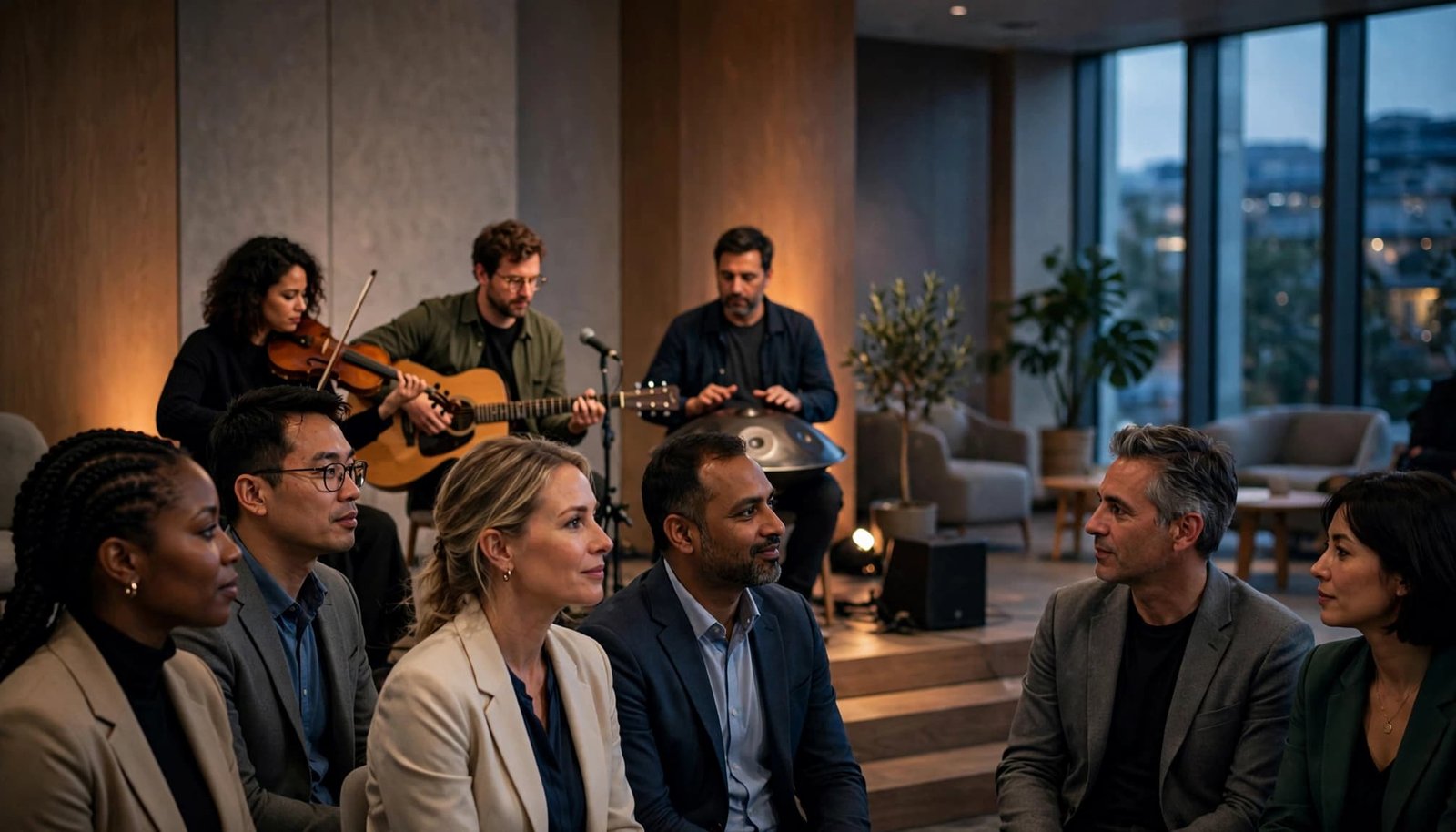
Gather Preferences Without Assigning Cultural Roles
A short, optional employee survey can reveal preferred artists, languages, genres, and selections to avoid. Include space for accessibility or comfort preferences, without asking people to explain their heritage or why a particular selection matters.
Keep responses separate from attendance records when possible, and explain who can access them. Anonymous suggestions give employees a comfortable way to contribute. Requests should guide the playlist, not promise that every selection will be played or make one employee responsible for representing an entire culture.
Define the Atmosphere and Decision-Maker
Choose three to five words that describe the occasion, such as welcoming, polished, upbeat, and celebratory. Add the audience profile, event schedule, approved styles, and restrictions to a written brief.
Our corporate event music brief helps organize those details into practical direction. Name one final approver so the DJ, HR team, and event lead aren’t working through conflicting instructions. This keeps personalized planning manageable when executives, clients, employees, and families share the room.
Understand What Bilingual Performance Adds
Words in different languages can carry emotions that disappear in translation. For planners, that connection helps explain why multilingual music deserves thoughtful selection rather than a few token additions.
Some Feelings Are Hard to Express in English
KAINA’s trilingual “Could Be A Curse,” from her debut album Next to The Sun, uses Spanish and English to discuss depression and family. In DJBooth’s interviews on bilingual performance, she explains that she writes in Spanish for accurate expression of her emotions.
Sen Morimoto’s Japanese verse includes “Shō ga nai.” He describes it as “There’s no point,” with a positive sense of surrender that no single English phrase fully captures. These choices shape the song’s emotional meaning rather than simply expanding its audience.
Multiple Languages Support Identity and Connection
CRIMEAPPLE’s Medallo, made with DJ Muggs and recorded in Colombia, moves between English and Spanish within the same bar. That approach reflects personal heritage without dividing the track into distinct sections.
The artists discuss fans who connect with music that reflects underrepresented experiences. KAINA describes first-generation Latinx fans using her music to explore their identity, while other fans can bring their own experiences to it. Restricting a set to English can make an artist’s work feel incomplete and reduce its personal meaning for both artist and listener.
For corporate events, these examples encourage respect for authentic choices made in English or other languages. They aren’t automatic playlist recommendations; lyrics and event context still need review.
Discover Music Across Cultures Without Stereotypes on world music day
Songs with mixed language lyrics can alternate between Spanish and another language, include collaborations, or move among musical traditions. A varied program can include bilingual sets and offer recognition and discovery without turning cultural differences into novelty moments.
Use Mixed-Language Labels as Discovery Terms
Franglish is an informal label for combinations of French and English; Espanglish describes Spanish and English combinations.
These labels describe language mixing, not a consistent genre, tempo, or mood. Manu Chao’s Próxima Estación: Esperanza, often shortened to Esperanza, offers a range of combinations across its tracks. “Eldorado 1997” is another musical example associated with Portuñol, a mixed language combination of Portuguese and Spanish. These discoveries expand the listening pool, but each selection still needs a workplace-appropriate review.
Draw Inspiration From Shared Musical Celebrations
World music day is celebrated annually on June 21. The first Fête de la Musique celebration took place in France on June 21, 1982. Corporate planners can use world music day as a reference when planning a festival.
Shared participation also appears in footage of the 14th annual Music Unites the World Festival, where students, clinicians, and ensembles perform together in Los Angeles. The students participate in a school-focused setting, unlike a corporate event. Students have an active role in the footage; corporate planners can adapt its shared format at a corporate festival without requiring guests to sing, dance, or perform.
Match the Soundtrack to Each Event Moment
Music is often called a universal language, but rhythm and melody don’t connect every listener in the same way. They can support relaxation, reduce stress, and help some people focus, depending on preference, context, and volume.
Corporate planners should turn those possibilities into clear choices for each part of the schedule.
| Event Moment | Music Direction | Production Priority |
|---|---|---|
| Arrival | Welcoming selections from approved multilingual playlists | Keep registration conversations clear |
| Networking and meals | Lower-energy tracks with varied styles | Maintain conversation-friendly volume |
| Presentations | Silence during spoken content | Protect speech and interpretation clarity |
| Awards | Short, approved walk-up cues | Follow the presenter and stage timing |
| Open dancing | Familiar favorites mixed with varied selections | Adjust energy to guest response |
The schedule should guide both song selection and volume. A popular employee request may suit open dancing but interrupt an awards presentation.
Our corporate event run-of-show guidance connects music changes, announcements, and formal moments in one timeline. During open dancing, short runs of two or three songs with a similar feel can build momentum before shifting style.
Avoid long blocks that leave one group waiting for its turn. Multilingual event music works best when varied selections feel like one coordinated program.
Review Lyrics and Cultural Context for Every Song
An upbeat sound doesn’t mean a song’s lyrics suit a workplace event. Apply the same standards to familiar favorites, guest requests, remixes, and short entrance cues.
Review the exact version planned for playback. A clean edit may remove profanity but keep sexual, violent, drug-related, or discriminatory themes. Machine translation can flag concerns, but slang, double meanings, and regional expressions need review by someone who understands the words and context.
Use a short approval process:
- Review the lyrics, themes, and intended event moment.
- Ask the designated reviewer to assess uncertain cultural references or wording.
- Approve the specific recording and add it to the final event brief.
Avoid religious, national, or political references as joke cues. Don’t introduce a selection by drawing attention to an employee’s background unless that person has agreed to participate.
A clean edit doesn’t automatically make a song suitable for work; the meaning still matters.
Keep a do-not-play list and request policy available to the DJ so live decisions follow the same standards.
Coordinate Language Access and Clear Sound
A multilingual playlist doesn’t replace translation or interpretation for speeches, instructions, or recognition. Guests need to understand the formal program as well as enjoy its soundtrack.
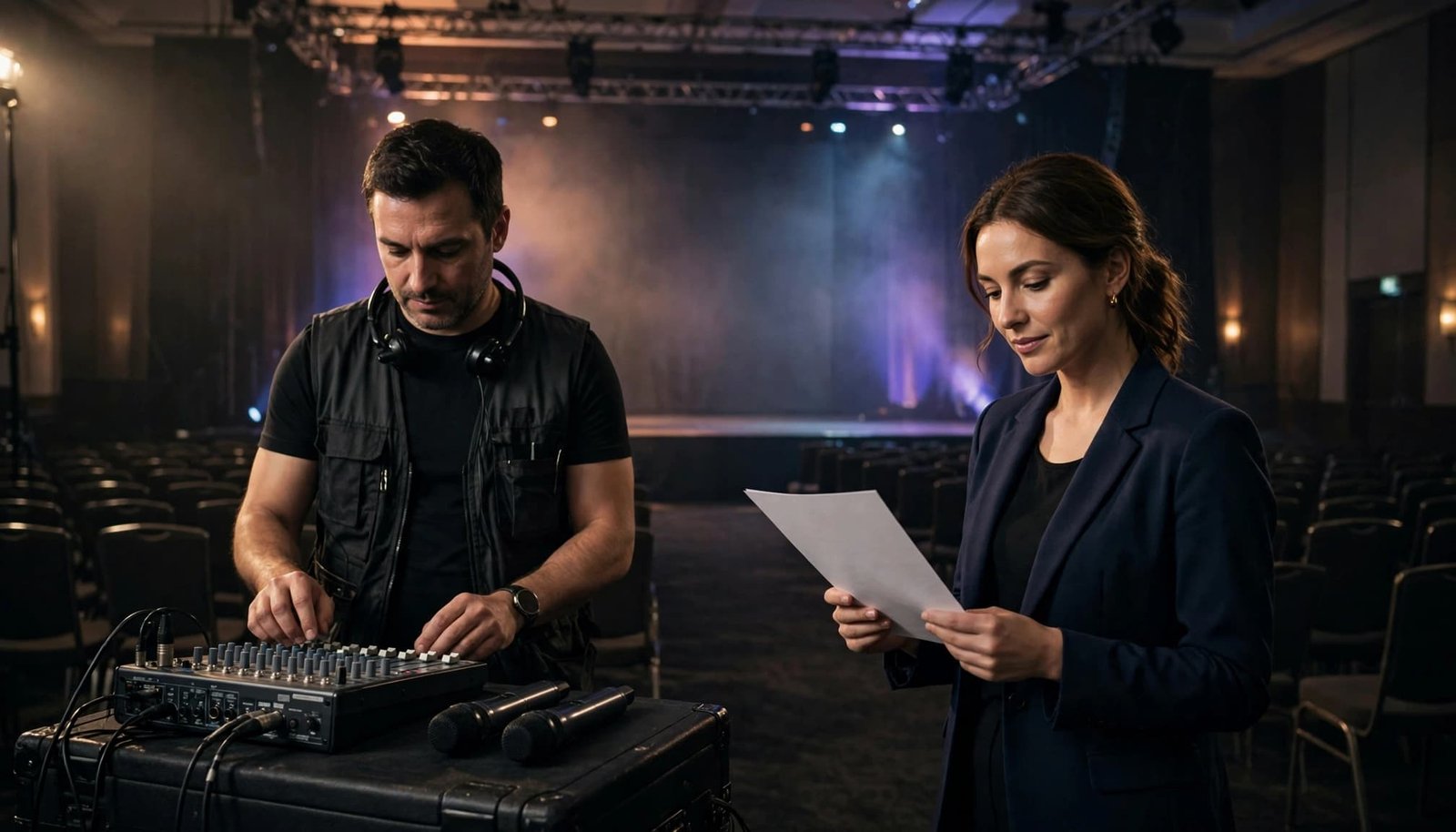
Prepare Announcements and Interpretation Together
Identify announcements that need translation, then prepare approved wording, names, titles, and pronunciation guidance. A bilingual MC may deliver planned announcements, but fluency alone doesn’t establish professional interpreting qualifications.
For presentations, distinguish consecutive interpretation, which requires speaking pauses, from simultaneous interpretation delivered through a separate listening channel. Language-access event planning guidance offers a useful framework for planning access needs early. Share the agenda and relevant terminology with interpreters, and include their timing in the program rather than treating interpretation as an unexpected addition.
Protect Speech Clarity and Guest Comfort
Pause the playlist during speeches and interpretation. Coordinate microphone handoffs, audio routing, captioning inputs, and listening equipment as production responsibilities.
Our DJ and AV coordination checklist helps align the entertainment team, venue, and production provider. The soundcheck should cover every speaking position and listening area, not only the dance floor.
Provide a lower-volume space where guests can step away and rejoin the event. Give advance notice of strong lighting effects, and keep participation optional. Reliable sound management supports access and a comfortable professional atmosphere.
Assign Rights, Staffing, and Final Handoff Responsibilities
Planning also includes permissions and delivery. A personal Spotify or other standard streaming subscription doesn’t automatically authorize organizational public performance, livestreaming, or recorded video use.
Treat public performance, synchronization, master-use, and broadcast permissions as separate items where applicable. Record the responsible party and applicable permissions in the event file. Permission for room playback doesn’t automatically cover a recap video.
Staffing responsibilities should be equally clear. Identify who handles song approval, translations, MC scripts, interpretation, technical cues, and last-minute changes. Don’t assume a DJ or employee handles every translation or interpretation task.
We offer customized music planning, DJ and MC services, sound, and lighting for corporate events in New Hampshire. A written scope connects those services to the specific program.
Before soundcheck, distribute the final brief to the DJ, MC, venue, AV provider, and internal event lead. Include approved tracks, restricted selections, cue points, request rules, and fallback choices for schedule or playback changes. One shared document reduces conflicting instructions and keeps the production team prepared.
Frequently Asked Questions
What should an employee music survey ask?
Ask about preferred artists, languages, genres, and selections to avoid. Make the survey optional, provide space for accessibility or comfort preferences, and don’t ask employees to explain their heritage.
How can planners decide whether a song suits a corporate event?
Review the exact recording, lyrics, themes, and intended event moment. A clean edit may still contain workplace-inappropriate themes, so have a designated reviewer assess uncertain wording or cultural references.
How should music change during different parts of an event?
Use welcoming selections at arrival, lower-energy tracks during networking and meals, silence during speeches, and short approved cues for awards. Adjust volume and energy to the schedule and guest response.
Does multilingual event music replace interpretation?
No. Guests still need translation or interpretation for speeches, instructions, and recognition, so plan language access alongside the soundtrack.
What should the final event brief include?
Include approved tracks, restricted selections, cue points, request rules, fallback choices, and responsibilities for approvals, translations, interpretation, technical cues, and last-minute changes. Record applicable permissions too, since room playback permission doesn’t automatically cover a recap video.
Build a Celebration That Welcomes the Whole Room
Inclusive music planning gives guests familiar moments while respecting different preferences and comfort levels. Thoughtful preparation helps the celebration feel welcoming without making anyone responsible for representing a culture.
Plan music around the audience, and give guests room to enjoy the event in their own way. A considerate plan helps everyone feel comfortable taking part.