Planning an interfaith wedding ceremony starts with agreement about what the music should honor. Choosing interfaith wedding music is easier when you first discuss religious expectations, family traditions, and the atmosphere you want to create.
Your selections can recognize both backgrounds while keeping the ceremony personal and comfortable for everyone involved. Clear preparation also gives your officiant, musicians, and DJ the direction they need for smooth timing.
Start with the decisions that shape your ceremony before building the playlist.
Key Takeaways
- Agree on the traditions and personal preferences that matter to each partner before requesting song suggestions.
- Confirm music restrictions, translated lyrics, and ritual timing with your officiant and venue before finalizing selections.
- Give every entrance, musical performance, and exit a clear cue; share the same plan with your DJ, musicians, and coordinator.
What Should Your Interfaith Wedding Music Honor?
Personalization starts with a focused conversation between partners. A song may connect one person to family celebrations while carrying little meaning for the other. Understanding those connections helps you make thoughtful choices together.
Identify Each Partner’s Priorities
As interfaith couples, discuss whether you want the ceremony to feel religious, cultural, mostly secular, or a combination. Those choices aren’t interchangeable. A family folk song may celebrate heritage without expressing religious belief; a hymn may carry a clear statement of faith.
Each partner should identify the music or tradition they would most like included, along with anything that would feel uncomfortable. Decide whether sung religious language feels appropriate for both of you.
You don’t need matching preferences. You need a shared understanding of what each selection means.
Set Expectations With Family Members
Invite family input after you have agreed on your priorities. Ask relatives which songs matter to them and why, rather than opening the wedding playlist to requests.
A parent may value a particular language, a familiar melody, or the presence of a live singer. Learning how a request connects to cultural wedding traditions creates more options for a respectful compromise.
Confirm that final decisions belong to the couple, within the officiant’s and venue’s requirements. This keeps advice helpful and prevents competing instructions reaching your entertainment team.
What Will Your Officiant and Venue Approve?
Ask your wedding officiant about music approvals and restrictions during an early ceremony consultation. Some houses of worship require music appropriate to their services; others allow broader choices during guest arrival or after the formal ceremony.
Send the exact song, artist, arrangement, and lyrics for review. A title alone doesn’t identify whether you mean a vocal recording, a piano cover, or a live performance.
Ask whether both traditions can have separate musical contributions, whether guest performers are permitted, and who approves changes. If two officiants are involved, request one agreed ceremony order.
Reform Judaism’s guide to Jewish wedding rituals provides useful context for conversations about the chuppah, blessings, and other customs. Your officiant should confirm which practices belong in your service.
Don’t assume removing lyrics automatically makes a selection acceptable. A melody associated with worship may still require approval.
For a civil ceremony, confirm requirements with the officiant and relevant local authority. Resolve these questions before printing programs, arranging performances, or paying for custom music.
Which Ceremony Moments Need Music or Silence?
Build your music plan around the ceremony order. Entrances, readings, rituals, and departures have different needs, and continuous background music can make important words harder to follow.
Our ceremony music timeline offers a useful starting point for planning wedding ceremony music. Many ceremonies involve five to seven musical cues, rather than five to seven complete songs.
Plan Entrances Around People and Rituals
Confirm who enters, in what order, and with whom. Family seating, wedding party entrances, and the couple’s arrival can share wedding processional songs or have separate cues.
Walk the aisle during rehearsal and allow for children, mobility needs, and pauses. The arrangement should accommodate the entrance without making anyone feel rushed.
If your ceremony includes circling beneath the chuppah, ask the officiant when it happens and how long to allow. During the chuppah ceremony, decide whether the music continues, changes, or stops before the next spoken portion.
Protect Spoken Words and the Final Cue
Vows, readings, prayers, and blessings generally benefit from silence unless music is an intentional part of the service. A dedicated vocal performance deserves its own space rather than competing with a reader.
Confirm the final sequence before scheduling the recessional. Chabad explains the meaning of breaking the glass as celebration tempered by remembrance of the Temple’s destruction.
Agree on what follows that moment and who signals the recessional music. The DJ shouldn’t have to guess whether another blessing or announcement remains.
Which Songs Deserve a Place on Your Shortlist?
Choose interfaith wedding music by listening together, reviewing the words, and considering the actual arrangement. Familiarity helps, but a popular wedding title doesn’t automatically fit your beliefs or ceremony.
Review Religious and Cultural Selections Together
Selections of traditional Jewish wedding music worth discussing include “Dodi Li,” “Erev Shel Shoshanim,” “Ma Navu,” “Ose Shalom,” and “Siman Tov U’Mazel Tov.” These are possibilities to review, not a required playlist of Jewish wedding songs.
Ask a Cantor, rabbi, or knowledgeable musician to explain the text, pronunciation, and translation of Hebrew wedding music. Share translations with both partners so everyone understands what guests will hear. Ask about the lyrics and meaning of Siman Tov.
Apply the same care to a Christian hymn or music connected to another tradition. Check the complete text, including verses absent from a familiar recording.
A Cantor or vocalist can help assess whether an arrangement suits the ceremony and performers.
Compare Shared Favorites and Historical Associations
A shared shortlist of modern wedding songs and romantic love songs might include Pachelbel’s “Canon in D,” Etta James’s “At Last,” John Legend’s “All of Me,” or The Beatles’ “Here Comes the Sun.” Listen to vocal and lyric-free versions before deciding.
Other possibilities include Stevie Wonder’s “Signed, Sealed, Delivered (I’m Yours)” and Natalie Cole’s “This Will Be (An Everlasting Love).” Explore our wedding ceremony song ideas for more ceremony music ideas.
Discuss Wagner’s “Bridal Chorus,” commonly called “Here Comes the Bride,” with particular care. Wagner’s antisemitism is documented in scholarship cataloged by the National Library of Israel. That history can make the selection uncomfortable for couples and relatives.
It is a different composition from Mendelssohn’s “Wedding March.”
How Can You Give Both Traditions Meaningful Space?
A balanced ceremony doesn’t require equal numbers of songs or frequent switches between styles. Give each contribution a clear purpose and enough space to be understood.
These approaches offer different ways to organize your selections.
| Approach | How to Organize the Music | What to Confirm |
|---|---|---|
| Separate contributions | Give each tradition a distinct musical moment. | Placement, introductions, and whether silence should follow |
| Shared musical sound | Use one ensemble across selections from both backgrounds. | Appropriate arrangements and performer familiarity |
| Shared favorites with religious performances | Use mutually meaningful music alongside approved sacred selections. | Lyrics, service requirements, and transitions |
Choose the approach that supports your ceremony order and feels comfortable to both partners.
For a Jewish-Christian ceremony, discuss each proposed Hebrew selection and hymn individually. Jewish wedding traditions and Christian worship music may have different expectations.
For ceremonies involving other faiths, distinguish religious practice from cultural entertainment. Bollywood, regional folk music, and family favorites aren’t substitutes for asking about Hindu ceremony requirements. Customs vary among communities, and the same distinction matters in other faiths.
A short introduction or program translation can help guests appreciate an unfamiliar selection without interrupting the service.
Who Will Perform and Manage Ceremony Audio?
Live musicians, recorded music, or a combination can support personalized wedding ceremony music. The right choice depends on your venue, budget, musical priorities, and timing needs.
Choose Performers for the Actual Repertoire
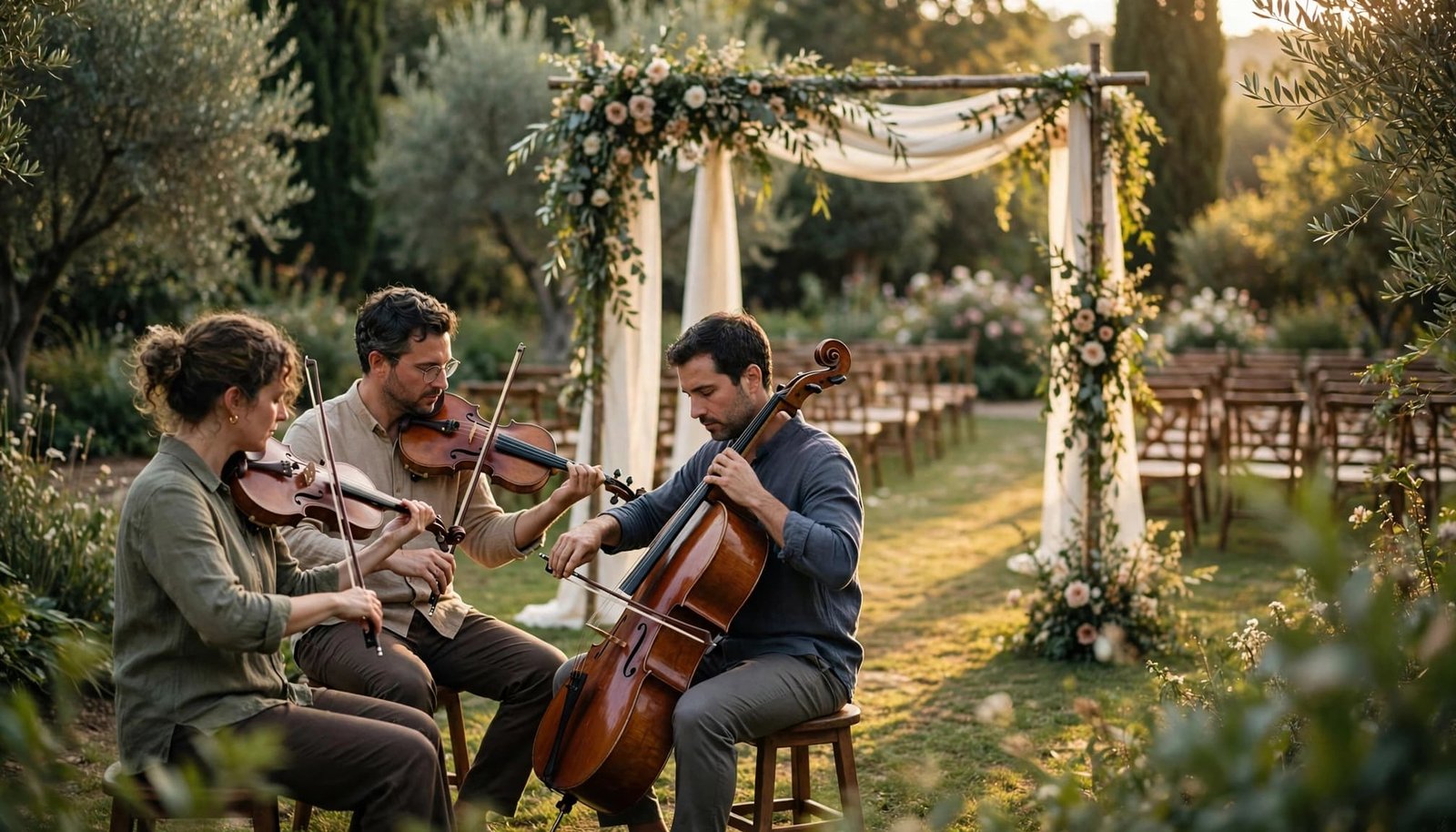
A string quartet, pianist, guitarist, or vocalist brings a distinct sound. Ask whether performers know your selections, need new arrangements, or have experience with the required language.
Live musicians can often repeat a passage if an entrance takes longer. Confirm how they handle timing changes, since not every arrangement allows that flexibility.
Recorded music offers consistent versions and a wider selection. A combined plan can work well too, as long as everyone understands the handoffs.
Request quotes that identify performance time, ceremony audio, rehearsal attendance, custom arrangements, and additional setup charges.
Assign Cues and Confirm Sound Responsibilities
Create one cue sheet with the exact recording or arrangement, start point, stopping instructions, and the person authorized to signal each transition.
If a singer performs between recorded selections, confirm microphones, connections, sound-check time, and who controls the volume. Our wedding ceremony sound checklist covers these practical details.
Keep approved recordings available offline, with backup playback ready. For outdoor ceremonies, discuss power, wind, weather protection, and the indoor backup location.
DJ Steve Neff Entertainment LLC provides music planning, professional sound, and event-flow coordination for New Hampshire celebrations, with professional DJ experience dating back to 1999. Confirm the ceremony’s performance and audio responsibilities during your consultation.
Frequently Asked Questions
Can We Include Contemporary Songs in an Interfaith Ceremony?
Yes, when your officiant and venue permit them. Review the full lyrics and exact version before approval.
A piano or string arrangement may suit the atmosphere, but it still needs to meet ceremony guidelines. If a favorite doesn’t belong within the service, consider it for cocktail hour or the reception.
Do Both Partners Need Their Own Entrance Music?
Separate selections are optional. One piece can create a unified entrance, while different selections can give each partner a personal moment.
Consider the aisle length and number of people entering. Several changes during a short walk can feel abrupt, so test the sequence at rehearsal.
What If Our Families Disagree About a Song?
Ask what the requested selection means to each family, then compare that concern with your shared priorities.
You may find an approved arrangement, a different placement, or another meaningful selection. Give the final decision to your DJ and musicians in writing so family requests don’t change the plan on the wedding day.
Build a Ceremony That Feels Personal and Prepared
Thoughtful interfaith wedding music begins with shared priorities, approved selections, and respect for each tradition. A well-organized plan gives meaningful music room to be heard without competing with vows or rituals.
Finalize the ceremony order with your officiant, then confirm versions, performers, and cues with your entertainment team. Reliable coordination helps everyone follow the same plan and lets you enjoy a ceremony that feels personal, welcoming, and well prepared.