Plan the music around the procession, the groom’s arrival, and the handoff to the wedding ceremony. Baraat customs and music preferences vary by region, family, and community. Check family preferences and ask your priest or wedding planner about ritual timing.
Give each moment its own musical direction, then assign clear cues so your DJ, musicians, and coordinator can follow the celebration’s actual pace.
A personalized selection balances family traditions, favorite recordings, and the energy guests bring to the procession. The strongest plan starts with the wedding sequence, before anyone builds a playlist.
Key Takeaways
- Separate dancing music, arrival music, the Jaimala or Vermala entry, and religious chants in your plan.
- Choose live performers, recorded tracks, or a combined approach based on the atmosphere and timing you want.
- Share exact recordings, start points, do-not-play preferences, and family traditions that should guide your selections.
- Coordinate the DJ or musicians with the procession route and timing, and assign one person to communicate transitions to welcomes or prayers.
Give Each Wedding Moment Its Own Music
A baraat and a ceremony entrance have different musical needs. Separating those decisions helps the celebration feel organized without limiting its personality.
Procession and Groom’s Arrival
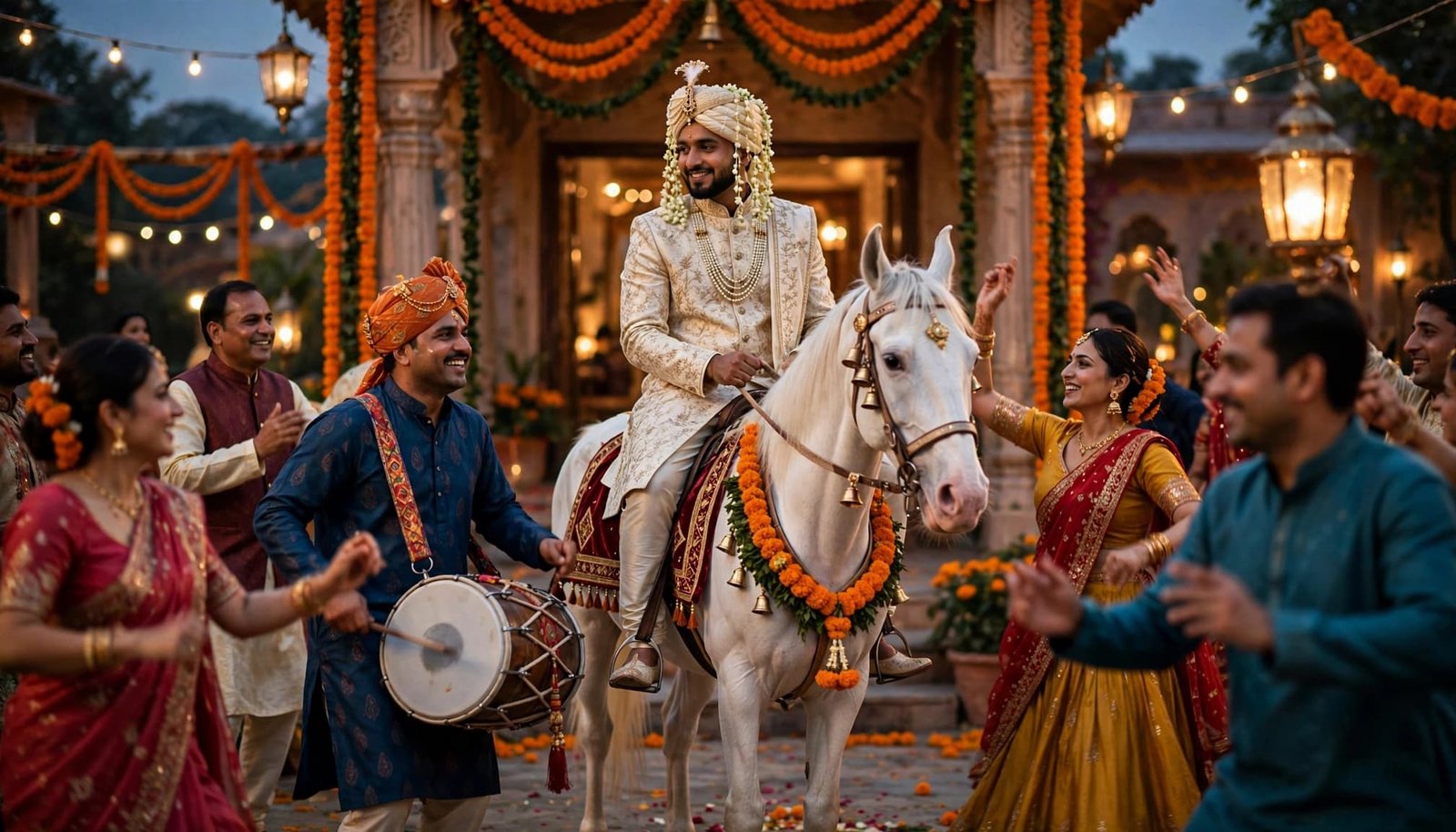
The baraat is the groom’s celebratory procession with family and friends. Paperlust’s guide to Indian wedding traditions describes dancing accompanied by dhol music, a useful starting point for couples choosing a percussion-led atmosphere.
Choose procession music that reflects the couple and both families. Leave room for dancing, pauses, greetings, and route changes.
Ask relatives about family preferences, and consult the priest or wedding planner when appropriate. Customs vary among families and communities.
Save a distinctive selection for the groom’s arrival if you want that moment to feel separate. A recognizable musical opening gives guests a clear signal that the procession has reached its destination.
Jaimala, Vermala, and Ceremony Music
Jaimala refers to the garland exchange. The Hindu American Foundation’s Hindu wedding primer explains that exchanging garlands symbolizes the couple’s acceptance of one another.
An entry song can accompany the couple’s approach to that moment. Religious chants belong to their own planned place in the ceremony, rather than automatically continuing beneath every ritual.
Ceremony customs and sequences differ among families and communities. Our wedding ceremony music timeline can help organize separate entrances, pauses, and transitions.
Choose a Live, Recorded, or Combined Baraat Sound
The performance format affects the atmosphere and coordination required. Start with your priorities: live percussion, a particular recording, family participation, or a combination.
Live Music for Personal Energy
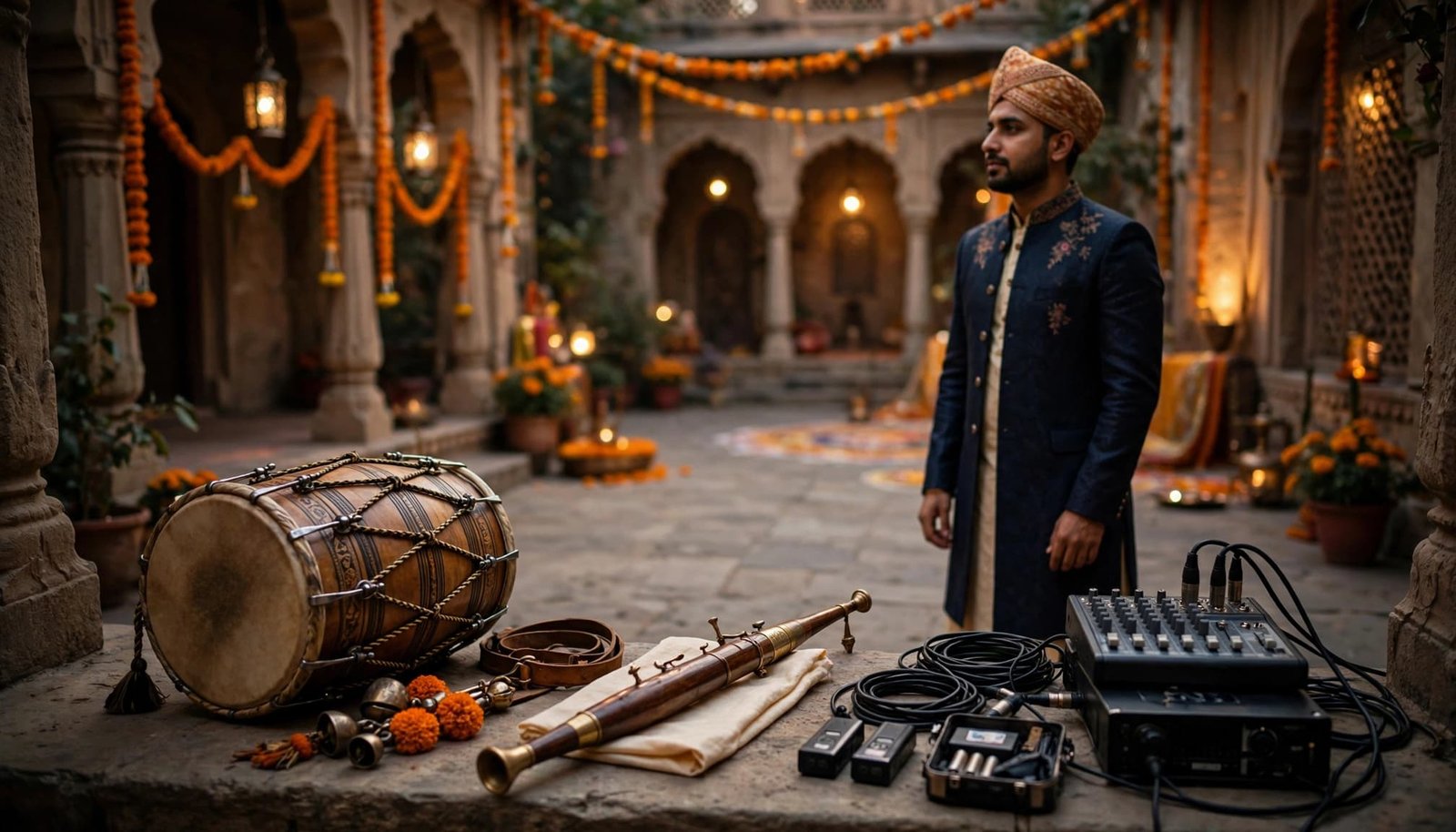
Live dhol can give a procession a strong rhythmic focus. A performer can respond to the movement and engagement around them.
Share the procession route, start time, planned pauses, and arrival cue with the DJ or live band. One coordinator should communicate any changes during the procession.
Allow space for natural interaction, but make the stopping cue clear. Guests may still be dancing when the coordinator needs to begin the welcome.
Recorded Tracks and Combined Performances
Recorded music provides a consistent arrangement, familiar vocals, and precise starting points. It also helps when a family wants a particular version associated with an important memory.
A combined approach can pair live percussion with selected recordings. Agree on starts, transitions, and endings so competing rhythms don’t overwhelm the music.
Identify which performer leads each section and who controls the overall volume. When comparing entertainment proposals, distinguish music playback, live performance, procession sound, and ceremony audio so responsibilities are clear.
Hindu Baraat Music to Preview by Wedding Moment
A useful shortlist gives each recording a purpose. These examples of Indian wedding songs offer devotional entry and ceremony references, not a required procession playlist.
Devotional Options for an Entry
A live performance featuring a Bride Groom jaimala entry connects music with the couple’s entrance around the garland-exchange celebration. Its repeated “Ram Ram Jai Raja Ram” and “Jai Sita Ram” phrases establish a devotional character.
For another listening reference, Suresh Wadkar’s Ram Ram Jai Rajaram Dhuni is listed under a longer title with differing transliterations. Spellings such as Sitaram can vary, so share the exact recording link to avoid confusion.
Use these references to decide whether devotional repetition fits your entry. Music suited to a focused entrance may need different placement than music for sustained procession dancing.
Wedding Songs and Chants for Ritual Moments
Mangal Parinay by Dhwani presents sacred wedding songs, mantras, and chants with live musicians. It offers a ceremony-focused reference alongside the entry performance above.
Its wedding vocabulary includes Vivah, meaning marriage; Granthi Bandhan, the knot-tying bond; and janm-janmantar, referring to lifetimes. Mangalik means auspicious, and Shanti means peace, terms to confirm with family or the officiant when deciding ritual placement.
The blessing “Sarve grahah shantikara bhavantu” expresses a wish for the planets to bring peace. Both performances also include Badhai, or congratulations, language, which helps distinguish celebration from prayers with a focused ritual purpose.
Let the officiant lead decisions about sacred placement. A wedding-themed recording doesn’t automatically belong beneath every ceremony activity.
Build a Cue Sheet That Follows the Procession
A cue sheet turns music preferences into usable directions. Share it with the DJ or musicians and the coordinator, and name one person to communicate transitions.
Use this structure for the procession and arrival.
| Wedding Moment | Music Direction | Cue to Record |
|---|---|---|
| Family gathering | Welcoming selections at conversational volume | Coordinator signals that gathering begins |
| Procession starts | Opening dance selection or live percussion | Group is assembled and ready |
| Procession continues | Flexible sequence of family favorites | Named cue-giver communicates route changes or delays |
| Groom arrives | Featured arrival selection, if desired | Groom reaches the agreed entrance point |
| Formal welcome begins | Fade or stop as planned | Welcome leader is ready to speak |
| Couple’s entry or Jaimala | Separate entry selection, if used | Couple and ceremony team are ready |
The important detail is who gives each cue, not how many complete songs appear on the page. The cue-giver should also coordinate the handoff to the welcome or ceremony team.
For each featured recording, include the artist, version, starting point, and ending instruction. Listen to the opening passage you’ll use, since a long introduction may need a later start.
Prepare additional music for delays without assigning a fixed procession length. Your route, guest movement, and welcome sequence determine how much flexibility is needed.
Keep essential requests separate from optional favorites. A short do-not-play list gives your DJ useful boundaries while leaving room to respond to guests. Our wedding ceremony music checklist helps carry that same planning into the service.
Plan Outdoor Sound and the Ceremony Handoff
Outdoor procession sound needs its own plan. A system positioned for seated ceremony guests won’t necessarily provide useful coverage along a moving route.
Map the gathering area, full procession route, arrival point, and ceremony location before deciding where speakers and equipment belong. Keep speakers and cables outside walking paths, and protect equipment from the weather.
Give the sound team a plan for power, playback, and the rain location. Downloaded recordings and backup playback reduce reliance on a mobile connection during an important entrance. Share sound preferences and any cultural or ceremony considerations with the relevant vendors in advance.
Keep Music Comfortable for Guests
Set levels according to where guests will stand and move. A clear rhythm can support dancing without placing speakers beside people’s ears.
Allow relatives who prefer conversation or lower volume to stand away from the strongest sound. Once greetings begin, reduce the level so families can hear one another comfortably.
Make the Final Transition Deliberate
Plan a clear finish for the arrival and garland-exchange entrance. Agree whether the last selection ends naturally, fades beneath a brief announcement, or stops before a spoken welcome.
Keep prayers and instructions clear rather than carrying procession music underneath them by default. If the entertainment team must move between spaces, our wedding DJ logistics guide addresses the timing and setup responsibilities that need attention.
If the same person must move equipment and operate the next musical cue, the schedule needs room for both tasks.
Frequently Asked Questions
What Kind of Music Is Traditional for a Baraat?
Dhol-led celebration is one familiar approach, but Hindu wedding customs aren’t identical across communities. Family traditions, regional preferences, and the couple’s tastes should guide the selection. Treat Bollywood, Punjabi, bhangra, regional music, and devotional material as distinct choices rather than interchangeable labels.
Can We Use Music Without Vocals?
Yes. An arrangement without vocals can support movement or an entrance while keeping attention on the people involved. Choose the arrangement for its rhythm and opening passage, not its title alone. Leave spoken prayers and instructions free of background music when clarity requires silence.
Is a Baraat Song the Same as a Vermala Entry Song?
They serve different moments. Baraat selections support the procession and dancing, while a garland-exchange entry selection accompanies an entrance associated with the garland exchange. One favorite may suit both, but separate cue instructions help the DJ manage each use appropriately.
How Many Songs Should We Choose?
There isn’t a universal number. Provide featured selections for important entrances, a flexible group of procession favorites, and separate ceremony choices. Music coverage should follow the planned route and event sequence, with additional material available if movement takes longer than expected.
A Music Plan That Supports the Celebration
Thoughtful Hindu baraat music gives the procession its energy while protecting the meaning of the moments that follow. The strongest preparation combines personal selections with clear responsibility for timing, sound, and transitions.
Start with the wedding sequence, assign each musical moment a purpose, and share one coordinated plan with everyone involved. That preparation leaves more room for your families to enjoy the celebration together.