Plan a Greek wedding dance set around the couple’s traditions, a clear invitation to participate, and enough uninterrupted time for guests to enjoy the music. Choose the dances that matter to you, identify experienced relatives who can lead, and give your DJ the exact recordings and announcement cues.
A well-prepared dance plan helps Greek and non-Greek guests celebrate together without turning the reception into a lesson. Start with the place these traditions will hold in your evening, then shape the audio around the people joining you.
Start With Family Traditions and Reception Timing
Greek dancing is central to celebrations, including weddings and informal tavern gatherings. Your reception can reflect that communal spirit while still accommodating dinner, speeches, photography, and other entertainment preferences.
Identify the Moments That Matter
Ask relatives which dances carry personal or regional meaning, who would enjoy leading, and whether any moment needs a particular introduction. Separate the couple’s priorities from general suggestions so the dance program remains focused.
There isn’t one required sequence for every Greek wedding. A circle dance led by relatives, an emotional solo, and a late-night group favorite each need different preparation. Identify those needs before filling the schedule with optional activities.
Protect Time for Dancing
Place cultural dances within your reception timeline with music cues, alongside dinner, formal dances, and announcements. Define the couple’s entrance cue and coordinate it with dinner, speeches, and other scheduled moments. Give the DJ, planner, photographer, and caterer the same schedule and audio cue responsibilities. Group traditional Greek selections and contemporary favorites into compatible blocks instead of switching styles after every track.
As a planning allowance, protect at least 90 minutes for dancing at a four-hour reception. Five- or six-hour celebrations benefit from two hours or more. Greek dance sets share that time with other entertainment; repeated interruptions can make both feel rushed.
Kalamatianos: Welcome Guests Into the Circle
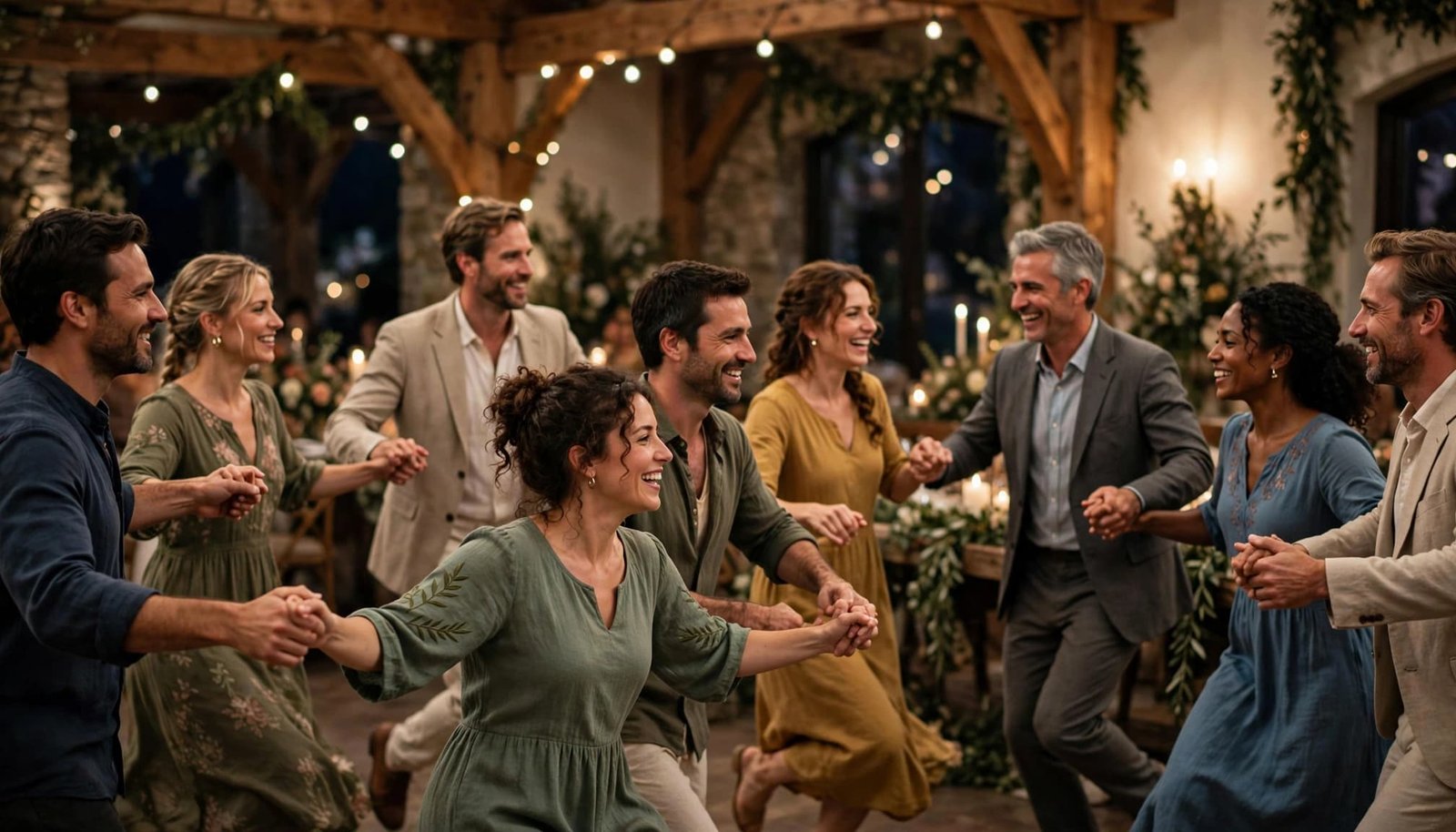
Kalamatianos is a lively Greek circle dance in a 7/8 rhythm, often included among the first dances that bring wedding guests together. Its repeating pattern gives newcomers a steady rhythm to follow.
Understand the Leader’s Role
Dancers form an open circle, usually holding hands, though some groups use a shoulder hold. One dancer leads at the end of the formation while everyone follows the shared sequence.
The leader guides the direction and may add individual flourishes. Guests farther along the formation can maintain the basic pattern without copying every variation. The relationship between Kalamatianos and syrtos also helps explain why similar group formations can have different names and rhythms.
Make Joining Comfortable
Invite an experienced relative to establish the formation on the dance floor before encouraging everyone else to join. Newcomers can join near an experienced dancer, away from the leading end, after making eye contact and allowing room.
A short MC introduction is enough: guests can follow the dancers beside them and participate at their own comfort level. Avoid pulling someone into the group or expecting beginners to perform the leader’s decorative movements.
Tsifteteli: Leave Room for Individual Expression
Tsifteteli is often described as the Greek version of belly dance. It’s a free-form solo dance or couples dance, with expressive hip movements and relaxed hand movements rather than a shared sequence of steps.
This makes Tsifteteli a useful change of atmosphere after linked group dancing. Guests can move independently, dance with a partner, or enjoy the music without learning a circle pattern.
Participation should remain comfortable and voluntary. The MC doesn’t need to turn Tsifteteli into a competition or call reluctant guests forward.
For your Tsifteteli selection, identify whether it’s a featured moment for someone or part of open dancing. That tells the DJ whether to make an introduction, preserve a spotlight, or let the floor develop naturally.
Sirtaki: Plan for the Musical Build
Sirtaki’s choreography was created for the 1964 film Zorba the Greek. Although it’s a familiar party favorite, it isn’t an ancient folk dance. University of Iowa research on Sirtaki and the film’s score discusses how the dance combined elements of Greek folk traditions.
Dancers stand in a line or curved formation with arms across one another’s shoulders. Slow movements give way to faster steps as the rhythm builds, often finishing with cheers and laughter.
Choose the recording before the wedding so its development suits the available time. Your DJ needs to know whether guests will follow a knowledgeable leader or watch a prepared group.
Allow room for the formation to expand, and keep drinks outside the dancing area. Guests who prefer the slower section can step away comfortably before the pace becomes demanding.
Zeibekiko: Give the Solo Its Own Moment
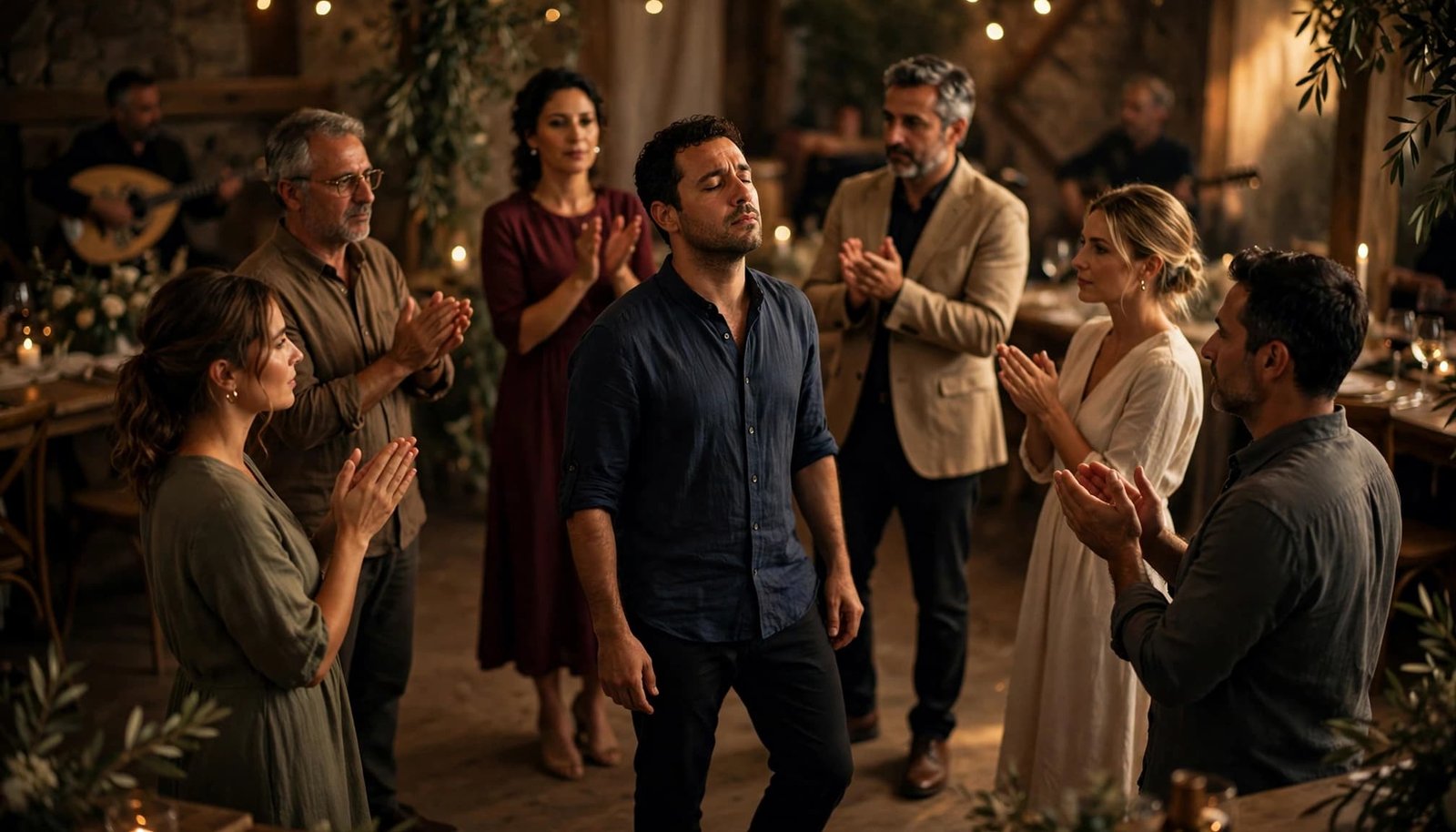
Zeibekiko is a soulful, improvised solo dance with no fixed sequence of steps, usually performed to a slow, passionate song. Its focus is personal expression rather than a group following one pattern.
Respect the Dancer’s Space
Traditionally associated with men, Zeibekiko is also danced by women. The dancer’s relatives clear an area around them and offer encouragement through clapping; some kneel or snap their fingers as a sign of respect.
These gestures support the solo rather than invite everyone into the center. Culture Trip includes this individual style in its explanation of traditional Greek dances.
Guests unfamiliar with the custom can watch the dancer’s loved ones and follow their lead. Keeping the center clear helps preserve the moment.
Give the DJ a Clear Cue
If someone has a meaningful Zeibekiko selection, include their name, the exact recording, and the intended introduction in the event plan. Avoid surprising someone with a public invitation unless they’ve agreed to it.
The photographer should know when the solo is expected, and the MC should understand whether the dancer’s loved ones want an announcement. Once it begins, let the performance carry the moment without commentary or an abrupt transition into another activity.
Ikariotikos: Build Toward an Energetic Finish
Ikariotikos takes its name from the Greek island of Ikaria. It’s known for energetic circle dancing and a pace that can test dancers’ stamina.
Party arrangements often begin slowly and accelerate, drawing the formation into increasingly lively movement. The pace varies with the arrangement, so the chosen recording should match the energy you want.
Ikariotikos can provide a joyful finish to a Greek dance set or the evening itself. Place it while the relatives who value it are still present, rather than assuming everyone will remain until the venue closes.
Keep the invitation open without suggesting that every guest must maintain the fastest pace. A welcoming celebration leaves room for enthusiastic dancers, comfortable participation, and guests who prefer to enjoy the atmosphere nearby.
Give Your DJ Clear Music and MC Cues
A successful Greek wedding reception dance program depends on preparation as well as song selection. Exact track choices, clear responsibilities, and thoughtful transitions reduce confusion when the celebration is underway.
Prepare a Focused Selection Brief
For each featured dance, provide the song title, artist, exact version, participating names, and any requested start or ending point. Similar titles can lead to different recordings, arrangements, or lengths.
Keep must-play selections separate from general suggestions, and include your do-not-play preferences. A shared wedding playlist can organize both partners’ choices without making every suggestion an automatic commitment. Decide how guest requests should be handled so family additions don’t unexpectedly replace planned moments.
Coordinate Announcements and Transitions
Name one point person who can authorize timing changes. If dinner runs late, the DJ needs a clear decision about moving a dance rather than receiving conflicting instructions from several relatives.
When a live band is involved, agree in advance who leads the traditional set, handles transitions, and makes announcements. Coordinate those cues with the DJ and point person.
For blended celebrations, multicultural wedding music planning helps give each tradition appropriate space. Short, compatible runs of selections help the dance floor develop more naturally than switching styles after every track.
Our wedding DJ and MC services connect selection planning with announcements and reception coordination. The goal is clear direction for guests and enough flexibility to respond to the room.
Key Takeaways for Your Dance Plan
- Choose the dances your relatives value, and identify willing leaders before the wedding.
- Give featured moments dedicated space, exact selections, and clear introduction cues.
- Protect uninterrupted dancing while keeping participation optional and comfortable for guests with different experience levels.
The most useful plan gives your entertainment team direction without requiring every minute of open dancing to follow a script.
Questions Couples and Guests Often Ask
What Is Greek Line Dancing Called?
Greek line dancing includes several distinct dances rather than one universal style. Sirtaki is a familiar example; Kalamatianos is another common wedding dance, usually performed in an open formation. These Greek dance styles and videos offer a visual introduction to their differences.
Do Guests Need to Know the Steps?
No. Many Greek group dances have repeating patterns that guests can learn beside experienced dancers. Experienced relatives are often happy to guide newcomers. Join where there’s room, watch the neighboring dancers, and keep movements comfortable rather than attempting advanced flourishes.
Are All Five Dances Required at a Reception?
No. These five dances offer different formations, moods, and participation styles, but they aren’t a mandatory program. The couple’s priorities, regional traditions, the guest mix, and your reception schedule should determine which ones belong. A smaller, meaningful selection can leave more room for everyone to enjoy dancing.
Bring Your Dance Plan Together
A thoughtful Greek dance set gives meaningful traditions enough time and gives guests a comfortable way to participate. Choose the dances your family values, prepare clear audio cues, and protect the floor once the celebration gathers momentum.
That preparation leaves room for kefi, the joyful spirit at the heart of a Greek celebration. The strongest reception plan supports that shared enjoyment while allowing the evening to feel natural, personal, and welcoming.