The shift from a wedding ceremony to a wedding reception can lose momentum in one awkward pause. Families may be waiting for different traditions to begin. The right multicultural wedding DJ builds confidence before the first announcement by learning what matters most to each family, not treating culture as a theme.
Your celebration may bring together diverse cultures, with different languages, faiths, regions, and ideas about what a great party sounds like. A thoughtful music and hosting plan lets every side feel recognized without turning the night into a rigid sequence of presentations. Start with family priorities, then choose a DJ who can carry the plan with calm, professional timing.
Key Takeaways
- Start with both families’ priorities, confirming which traditions, music, announcements, and permissions matter most.
- Choose a multicultural wedding DJ who listens carefully, prepares for unfamiliar customs, and can manage timing when plans change.
- Give the DJ 20 to 30 anchor songs, clear do-not-play guidance, exact versions, and freedom to read the room.
- Blend genres through short, intentional runs that invite everyone to dance instead of separating the reception into cultural blocks.
- Confirm the timeline, sound coverage, bilingual MC abilities, backup equipment, and itemized pricing before booking.
Start With What Each Family Wants Honored
Three cultural traditions do not require three separate mini-receptions. The best plans identify the moments that carry real meaning, protect time for them, and leave room for spontaneous dancing, conversation, and celebration. Your reception should feel shared, not divided into cultural segments.
Bring Family Input In Early
Invite voices from both families into planning early, but keep final decisions with the couple. Ask each side to share non-negotiable moments, preferred music, special requests, and anything that should never be announced or played. Note which moments need recorded tracks and which may involve live music.
A cultural wedding norms checklist can spark useful questions, though family members, not a generic online resource, define what each tradition means. One clear point person per family prevents conflicting instructions on the wedding day.
Confirm Meaning, Timing, and Permission
Before approving traditional music for a wedding ceremony, procession, or traditional dance, confirm its meaning with the people who understand it. Ask who leads each moment, when guests are invited to join, whether photography or recording is welcome, and what wording belongs in the announcement.
If a request is unfamiliar, a professional DJ should ask for an approved recording and a family contact. Guessing, using a random remix, or making a casual announcement can turn a meaningful moment into an uncomfortable one.
How to Hire a Multicultural Wedding DJ Who Listens
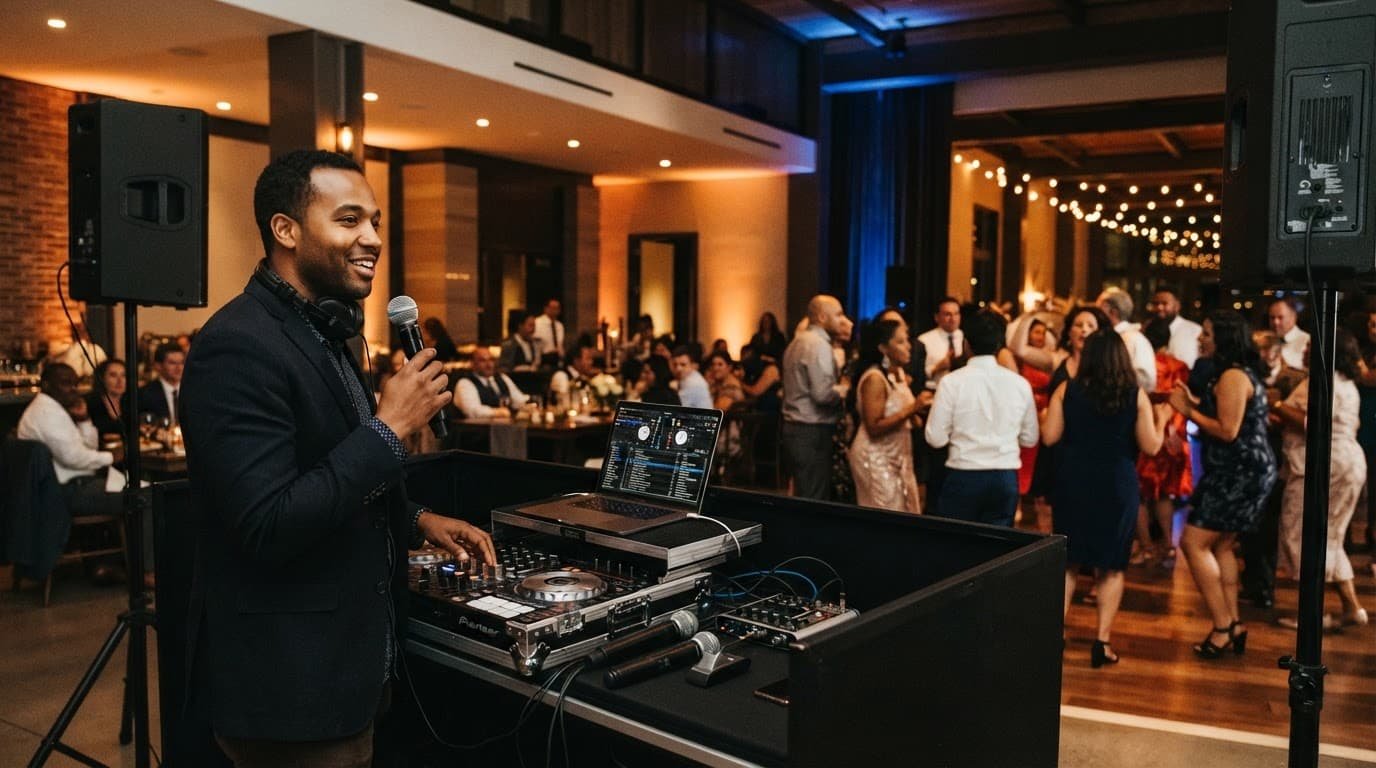
Music knowledge matters, but preparation is what makes a reception comfortable. Look for someone who asks about names, schedule changes, special dances, and room setup before discussing party hits. An experienced multicultural wedding DJ understands that a packed dance floor starts with clear communication.
Ask Questions That Reveal Real Preparation
During a consultation, ask questions that show how the DJ plans rather than simply what music they own.
- Ask what they need before the event to prepare unfamiliar songs, dances, or family customs. Ask how they coordinate timing when live music is also part of the event.
- Ask how they handle special requests that conflict with the couple’s do-not-play list.
- Ask whether they bring a backup sound system and separate audio support for the wedding ceremony, cocktail hour, and reception.
- Ask who tracks music cues for a grand entrance when formalities run late or the timeline changes.
- Ask how they move between different genres without creating dead air, losing dancers, or losing momentum.
A strong multicultural wedding DJ should be comfortable saying, “I need to learn more about that tradition.” That answer shows respect and professionalism. The next step should be a clear plan, not vague promises.
Choose Bilingual MC Support With Care
A bilingual DJ MC can make introductions, toasts, and key instructions easier for wedding guests to follow. Spanish, French, Portuguese, Mandarin, Hindi, Arabic, and many other languages may be available through individual DJs or MCs. Never assume a listed language guarantees full hosting fluency. Verify actual announcement fluency before booking.
Ask which language the MC can speak confidently for formal announcements, guest questions, and correct pronunciation. Provide names in writing, phonetic spellings, and voice notes when possible. A quick pronunciation practice session before the reception prevents awkward mistakes when the room is listening.
The MC should not use another language as a party prop. Clear, respectful announcements are far better than improvised jokes or phrases they don’t understand.
Build a Music Plan Both Families Can Enjoy
A custom playlist should give the DJ direction without locking the entire night into a fixed order. The goal isn’t equal minutes for every style. It’s giving each family authentic moments while keeping the reception moving.
Give Your DJ 20 to 30 Anchor Songs
Provide roughly 20 to 30 go-to songs that represent the couple, both families, and the atmosphere you want. Include special dance selections, songs for cultural traditions, a wedding ceremony processional, broad crowd favorites, and a short do-not-play list.
If live music is part of the plan, mark each handoff and timing cue for the DJ. Send the exact artist, version, and link when a recording matters so the final music selection is clear. A song title can have multiple remixes, live versions, and clean edits. The correct version matters even more when lyrics, a dance cue, or a family memory is attached.
Also give the DJ freedom to read the room. Guest requests are useful input, but they shouldn’t be automatic promises. A good DJ can hold a popular request for the right moment instead of playing every request in the order it arrives.
Blend Genres in Short, Intentional Runs
A fusion wedding may draw from several regional or cultural styles. South Asian wedding music may include Bollywood, Punjabi, bhangra, regional film music, or family favorites. Latin selections may center on salsa, bachata, merengue, cumbia, reggaeton, regional styles, or music from a particular country. These music genres are starting points, not assumptions about a family’s taste, so confirm preferences with each family.
A quality DJ uses short, high-impact runs instead of long genre blocks. Two or three songs in one lane can bring people forward and preserve party energy. A familiar chorus, compatible rhythm, or shared tempo can then open the room to another group. The transitions should feel natural, not like a forced lesson in music history.
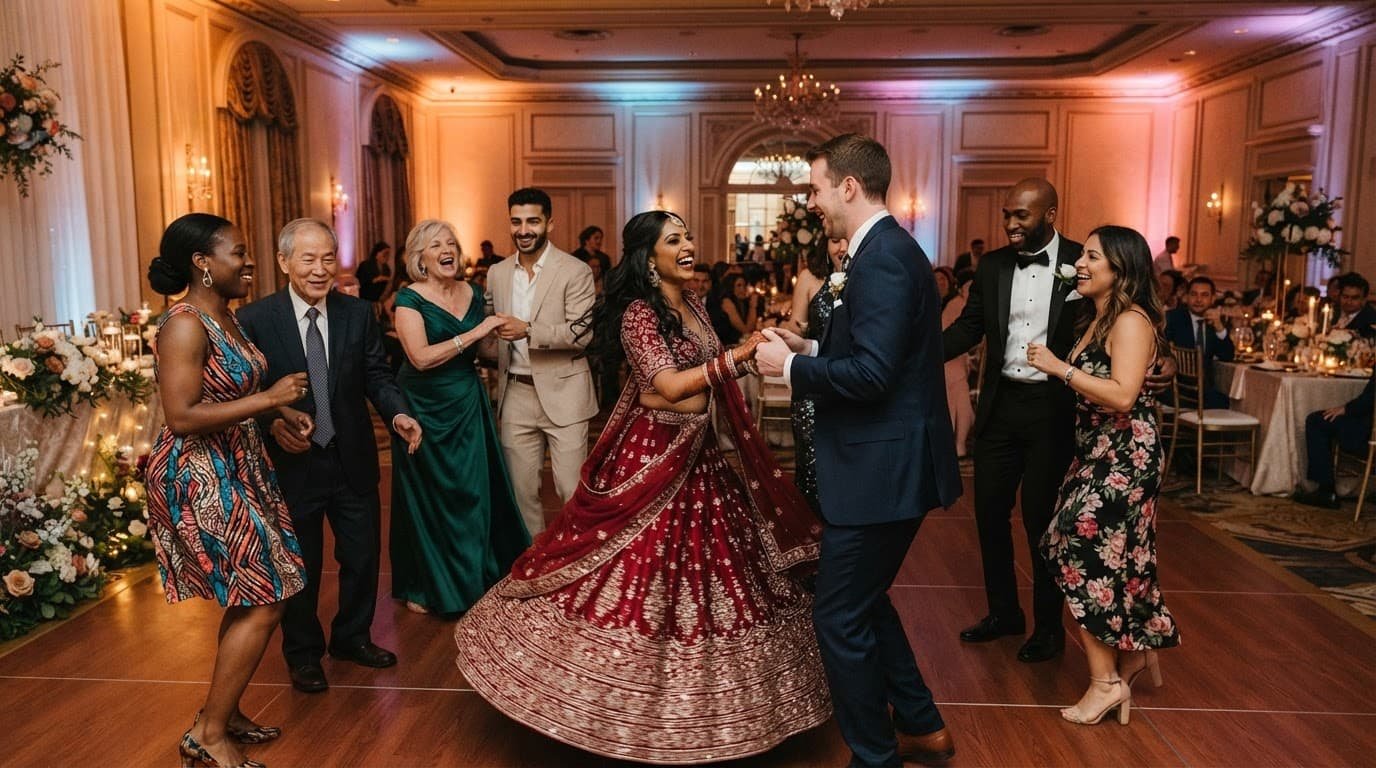
Fair does not mean giving every genre the same number of songs. It means giving every family an intentional moment and a genuine invitation to join.
A broad overview of wedding traditions and their histories can offer ideas for discussion, but the couple and their families should decide what belongs in their celebration.
Protect the Timeline, Sound, and Room Comfort
The best music plan still needs the right timing. Dinner, toasts, special dances, family traditions, and open dancing all compete for time. Give important moments their own cue points so no one feels rushed.
Keep Formal Moments Short and Clear
A grand entrance often works better with a focused 15 to 25-second music cue than a full song. The same approach can work for introductions, cake cutting, and quick transitions between speakers.
Build 15 to 30 extra minutes of cocktail hour and dinner music into the plan. Photos run late, meals take longer than expected, and guests should never feel like the event has stalled because the playlist ended.
Share a final timeline with the DJ, wedding planner if involved, venue coordinator, photographer, videographer, other wedding vendors, and anyone leading a family tradition. Everyone doesn’t need the same detailed notes, but each person should know who is authorized to start each cue.
Match the Sound System to Each Space
Ask what the DJ’s lighting packages include, along with ceremony audio, wireless microphones, cocktail music, and reception speakers. Some entertainment services include these options, while others price them separately.
Volume should change with the event. All wedding guests need to hear the wedding ceremony vows clearly. During dinner, people should be able to talk without leaning across the table. Once open dancing begins, the energy can rise without making the room feel harsh.
Speaker placement matters as much as volume. A professional setup keeps sound directed toward the central dancing area and away from guests who need a quieter place to visit.
Book Early and Request a Clear Quote
A multicultural reception takes more planning than choosing a list of popular songs. Give yourself enough time to meet with DJs, discuss family expectations, and make thoughtful decisions before the final month becomes busy.
Compare Scope, Not Just the Starting Price
Ask for an itemized wedding package that names coverage hours, sound systems, and wedding ceremony support. It should also list MC services, travel, lighting, setup time, and backup equipment. Ask whether it includes live music coordination for a band, musicians, or a handoff to the DJ.
A low starting price can look different once extra rooms, microphones, or added hours are included.
Confirm who will perform on the wedding day, who handles setup, and what happens if the timeline changes. For ideas on keeping family traditions personal while making them your own, consider these approaches to updating wedding traditions.
Give Yourself Time to Find the Right Fit
Start reaching out nine to 12 months before the wedding when possible, especially for a Saturday or peak-season date. If your celebration needs bilingual MC hosting, multiple sound locations, or detailed cultural preparation, earlier conversations give everyone more room to plan well.
The right fit is a multicultural wedding DJ who listens, communicates clearly, and prepares carefully. Your wedding reception deserves that level of preparation.
Frequently Asked Questions
How far in advance should we book a multicultural wedding DJ?
Start reaching out nine to 12 months before the wedding when possible, especially for a Saturday or peak-season date. Book earlier if you need bilingual MC hosting, multiple sound locations, or detailed preparation for cultural traditions.
What should we share with the DJ before the wedding?
Provide family priorities, special traditions, names with phonetic spellings, anchor songs, exact music versions, and a do-not-play list. Also share the final timeline, live music handoffs, cue points, and the contact information for one approved point person from each family.
Can one DJ handle music from several cultures?
Yes, if the DJ prepares with the couple and families rather than relying on assumptions about cultural music. Short, intentional genre runs and thoughtful transitions can recognize different traditions while keeping the dance floor connected.
Should we hire a bilingual DJ or MC?
A bilingual DJ or MC can make formal announcements, instructions, and introductions easier for guests to follow. Verify actual hosting fluency and pronunciation skills instead of assuming that a listed language guarantees confident MC support.
What equipment and services should be included in the quote?
Ask whether the package includes ceremony audio, reception speakers, wireless microphones, cocktail music, lighting, setup, travel, MC services, and backup equipment. Confirm who performs and sets up on the wedding day, along with any added costs for extra rooms or hours.
A Reception That Feels Like Yours
A memorable multicultural wedding reception does not need to follow a rigid formula. It needs a clear plan for family traditions, a respectful music strategy, and a DJ who knows when to guide the room and when to let the celebration unfold.
With the right preparation, the handoff from the wedding ceremony to open dancing can feel natural, so your dance floor can feel like a shared celebration, not a compromise between different sides of the family.