A company karaoke night works best when guests feel comfortable before anyone picks up a microphone. For New Hampshire businesses, corporate karaoke can bring energy to employee celebrations and other corporate events. It still leaves room for conversation, relaxed participation, and professional hosting.
The strongest format makes singing optional, gives the evening a clear schedule, and supports guests who prefer cheering over performing. Whether the occasion involves team building or simply brings colleagues together, singing shouldn’t be treated as a measure of company culture. Start with those priorities, then build the entertainment plan around your audience, venue, and agenda.
Key Takeaways
- Keep singing voluntary for team members, with duets, small groups, cheering, and socializing all equally welcome.
- Confirm karaoke capabilities separately from standard DJ services, including lyric displays and song availability.
- Plan sound, lighting, accessibility, and recording permissions before event day.
A reliable host and a manageable performance queue keep the celebration organized without putting employees under pressure.
Make Corporate Karaoke Welcoming for the Whole Room

Give Guests Control Over Participation
State in the invitation that performing is optional. Team members should feel equally welcome singing, enjoying refreshments, supporting coworkers, or chatting in a conversation area. Guests shouldn’t need to explain why they’re not joining the queue.
Duets and small groups offer a comfortable starting point, while any team building should remain voluntary. Managers can volunteer, but they shouldn’t nominate employees without permission or turn participation into a department competition. A professional MC can invite singers warmly, acknowledge every performance, and keep jokes respectful.
Treat the evening as a social celebration. Singing confidence doesn’t measure teamwork, commitment, or company culture.
Plan for Comfort and Access
Ask about access needs privately during registration, then review the room layout with the venue. Check routes to seating, restrooms, refreshments, and the performance area, including whether singers can participate without climbing onto a platform.
The ADA National Network’s accessible-event planning guidance addresses common barriers at temporary events. Apply that planning early, rather than waiting for a guest to encounter a problem.
Provide seating away from speakers and use comfortable stage lighting without surprise flashing effects. Clear lyrics, comfortable volume, and an easy route through the room help guests participate on their own terms.
Choose the Karaoke Format That Fits Your Event
Compare DJ-Led and Live Band Karaoke
A DJ-led karaoke format can include recorded backing tracks, scrolling lyrics, hosting, and music between performances. Confirm those features directly. Professional DJ service doesn’t automatically include karaoke.
Live band karaoke brings professional musicians and the atmosphere of performing with a band. It also requires coordination around arrangements, available songs, breaks, equipment, and performance space.
Ask each provider how singers manage song selection, access lyrics, and get help starting at the right moment. For either format, an attentive host can encourage nervous guests and keep transitions organized.
Consider a Separate Karaoke Booth
Karaoke booths may suit a corporate party where guests prefer a smaller performance setting away from the main room. If recording is included, confirm how clips are created, delivered, and deleted.
Don’t assume every karaoke booth is soundproof or includes video capture. Ask about the venue requirements, including space, power, access, and staffing, and find out how much sound reaches the surrounding room.
A booth can add another entertainment option, but it still needs guest instructions and a practical queue. Keep the main gathering comfortable for people who aren’t using it.
Use a Clear, Guest-Friendly Evening Schedule
For a 90-minute corporate party entertainment segment, alternate singing with time to settle in and reconnect.
| Segment | Suggested Time | Purpose |
|---|---|---|
| Arrival and background music | 15 minutes | Welcome guests and explain song requests. |
| Host welcome and opening performance | 10 minutes | Introduce the format with willing volunteers and familiar crowd favorites. |
| First karaoke block | 20 minutes | Offer individual, duet, and group turns. |
| Conversation break | 10 minutes | Allow refreshments and reset the queue. |
| Second karaoke block | 25 minutes | Continue performances at a comfortable pace. |
| Closing music and thanks | 10 minutes | Finish clearly without rushing the final singer. |
This schedule gives karaoke a defined place in the evening without taking over every conversation.
Choose opening volunteers beforehand, and keep the first invitation simple. The host should explain how requests work, where singers wait, and how guests can withdraw a request.
Start with one song per person before offering repeat turns. Announce when requests will close, and avoid promising a performance slot after the remaining time is filled.
Keep dinner service, leadership remarks, and awards outside the singing blocks. Thoughtful event planning and music and event-flow planning help coordinate these transitions with catering, venue staff, and the entertainment team.
Plan Sound, Lighting, and Room Flow
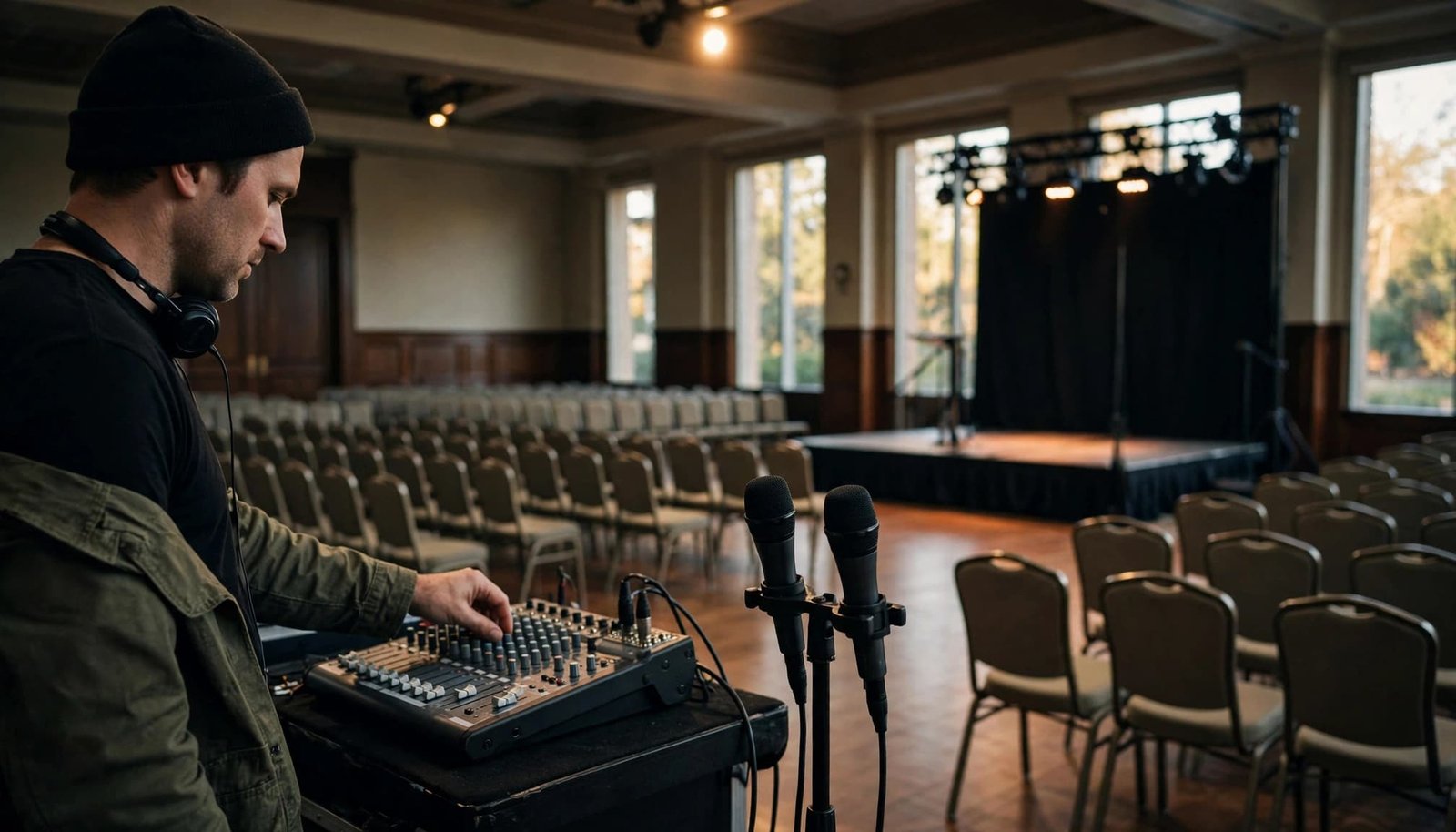
Confirm Equipment and Responsibilities
A karaoke setup needs clear vocal sound, backing-track playback, and lyrics singers can follow. Confirm who supplies and operates the sound system, microphones, speakers, playback equipment, lyric display, cables, and any singer monitoring needed. Check that the planned setup can deliver clear audio quality.
Ask who completes the soundcheck and handles microphone or playback problems. A soundcheck helps confirm audio quality before guests arrive. For live band karaoke, request written technical requirements from the professional musicians instead of assuming the venue’s equipment will be sufficient.
Stage lighting should make performers visible without washing out the lyrics. Decorative uplighting can support the atmosphere. Any additional fixtures or subwoofers should suit the room and be confirmed by the provider and venue.
Review the Actual Venue Layout
There isn’t one stage size that fits every karaoke event. Ask the provider for its required footprint, then have the venue confirm the venue requirements for layout, power access, equipment placement, and guest routes.
Position the lyric display where singers can follow scrolling lyrics without turning away from the audience. Keep cables protected and exits clear. Confirm stage lighting placement and, if the event uses multiple rooms, separate audio coverage and staffing responsibilities.
For a winter celebration in New Hampshire, review loading access, arrival time, and weather-related communication. A realistic setup window gives the entertainment team time to test everything before guests arrive.
Make Song Selection Easy and Workplace-Appropriate
Gather preferences for song selection before the event, then offer a manageable mix of decades and styles. Familiar pop, rock, country, and crowd favorites give guests different ways to join in. Provide scrolling lyrics so guests can follow along, though no song guarantees a full-room singalong.
Ask the provider to confirm song selection and available versions, especially for live band karaoke, where track availability and arrangements can vary. A familiar title may have different lyrics, arrangements, or running times across recordings.
Review both lyrics and song subject matter for your audience. Clean wording alone doesn’t make every song suitable for a workplace celebration. Give the host authority to decline inappropriate requests respectfully.
Before booking, confirm who handles applicable music permissions. ASCAP’s music licensing FAQs explain public-performance licensing; don’t assume that an invitation-only gathering or a paid entertainment package settles every permission question.
Handle Karaoke Videos With Care
Recording karaoke videos should be a separate choice from singing. Tell guests whether cameras will be used, what will be recorded, and where approved clips may appear. Obtain clear permission before recording and again before sharing a performance.
If you share karaoke videos through Slack or Microsoft Teams, choose a restricted event channel with access limited to the intended audience. Internal sharing still deserves care; employees may enjoy performing without wanting a lasting workplace recording.
Assign one person to manage approved clips, access requests, and deletion. Set a retention period, and explain how someone can ask for removal. Recording, livestreaming, and promotional reuse may also raise music-rights questions beyond the live performance.
Permission to sing doesn’t automatically include permission to record, share, or reuse the performance.
Keep an unrecorded participation option available throughout the event.
Book New Hampshire Entertainment With a Clear Scope
DJ Steve Neff Entertainment LLC provides professional DJ, MC, sound, lighting, and event entertainment for corporate events, with experience dating back to 1999. The business began in Maine and is now based in Concord, New Hampshire, where Steve Neff and business partner Jon Turgeon run it.
Its New Hampshire corporate DJ services include hosting, music planning, a professional sound system, wireless microphones, lighting options, and event-flow support. Service areas include Manchester, Nashua, Keene, Portsmouth, Dover, the Lakes Region, and the Seacoast.
For corporate karaoke, confirm whether your preferred format, lyric display, and song library are included or require another supplier. Ask whether live band karaoke requires a separate supplier or professional musicians, then confirm the actual inclusions in writing.
Compare proposals by included services, not total alone, when planning a corporate party or booking entertainment for private parties. A ballroom celebration with speeches and lighting has different needs than a small office gathering, so compare entertainment options that fit the event.
For smoother event planning, request a personalized DJ package and share your date, venue, guest count, schedule, and karaoke requirements early.
Frequently Asked Questions
Should Corporate Karaoke Include a Competition?
An open, supportive format is a dependable starting point for a mixed employee audience. If you include a contest, make entry voluntary and explain judging beforehand. Avoid department rankings or prizes that encourage managers to pressure employees into performing.
How Do You Prevent Long Waiting Times?
Limit repeat turns until other volunteers have performed, and let the host manage the queue. Include transition time when estimating capacity. Close requests before the final block is full so guests aren’t expecting performances the schedule can’t accommodate.
Can Karaoke Improve Workplace Productivity?
Karaoke can be a shared social activity that supports team building, but it doesn’t guarantee improved productivity. Meaningful workplace follow-through still requires clear decisions, assigned responsibilities, and project ownership. Don’t use participation to evaluate employees. Instead, assess the celebration through guest comfort and feedback.
A Professional Format Keeps the Focus on Guests
A welcoming corporate karaoke night gives guests choice, supports clear sound and comfortable access, and follows a schedule the host can manage confidently. Those details help the evening feel polished without making participation feel forced.
Build the entertainment plan around your New Hampshire venue, your audience, and the experience you want guests to have. With clear responsibilities and thoughtful preparation, corporate events can feel relaxed, organized, and memorable.