A new employee’s welcome celebration should make introductions easier, not leave guests competing with the music. A professional corporate event DJ provides welcoming event entertainment, clear announcements, and dependable coordination. That lets your HR team focus on people.
The strongest plan puts employee comfort first, with music and hosting tailored to the room, company culture, and schedule. Start by deciding how you want new hires to connect, then build the entertainment around that purpose.
Key Takeaways
- Choose conversation-friendly music, workplace-appropriate requests, and hosting that makes new employees feel welcome.
- Confirm sound coverage, microphones, venue access, and technical responsibilities before signing a contract.
- Compare complete written proposals and share a final schedule with the DJ, venue, catering team, and company host.
Design a Welcome Celebration That Supports Connections
An onboarding celebration serves a different purpose from many corporate events, especially a dance-focused corporate party. New employees need opportunities to meet colleagues, recognize their managers, and feel comfortable asking questions.
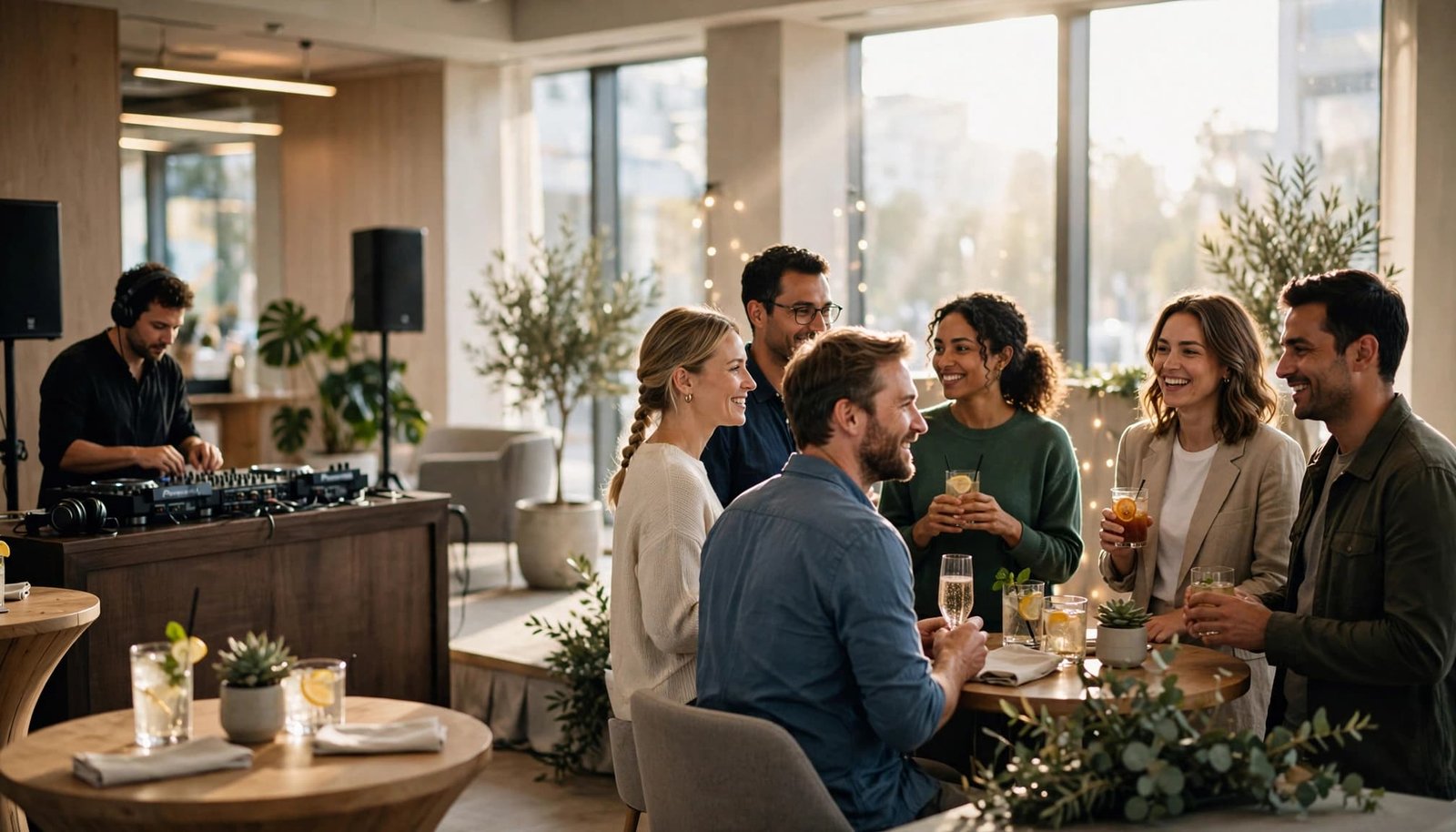
Choose a format that supports those interactions. A welcome lunch may need background music and brief remarks; an evening reception may include introductions, refreshments, and optional dancing.
SHRM’s onboarding and culture guidance connects onboarding with the broader employee experience. Your celebration should complement orientation, manager support, job training, and team building rather than replace them.
Invite established employees who can help conversations begin, and give managers a clear role in welcoming their new team members. Keep participation flexible so guests can mingle, sit, or enjoy the entertainment without pressure.
If employees attend across shifts or locations, explain who is invited and whether another welcome opportunity will be available. Clear expectations help the celebration feel thoughtful and accessible.
Choose Music That Fits Your Employees
A personalized music brief gives the DJ useful direction without requiring HR to create an entire playlist. Describe the desired atmosphere, approved styles, content restrictions, and any meaningful company themes.
Keep Conversation at the Center
During arrivals and refreshments, music should support the room without making introductions difficult. Ask the DJ to check levels where guests will actually gather, including seating areas and refreshment tables.
If live music is also planned, coordinate its set length and volume with the DJ. That helps it complement conversation and announcements.
Funk, soul, instrumental selections, and familiar pop can provide useful starting points, depending on employee preferences. Share representative songs, but leave room for professional adjustments as the room fills.
Don’t assume a younger workforce wants loud dance music or that longtime employees prefer one genre. A brief, optional preference survey provides better guidance than age-based assumptions.
Define Workplace-Appropriate Requests
Agree on clean music standards before the event. A radio edit may still include themes that don’t fit your company’s expectations.
Provide a short do-not-play list and discuss how requests will be handled. The DJ should know who can approve a questionable selection and whether certain genres need advance review.
For a culturally varied workforce, invite optional suggestions without asking individual employees to represent an entire culture. Include preferences naturally across the program rather than turning them into an announcement or spotlight moment.
Give Your Corporate Event DJ a Clear Hosting Plan
A combined DJ and MC can manage music changes, introduce speakers, and guide guests through scheduled activities. Confirm those responsibilities in writing; hosting isn’t automatically included in every proposal.
Prepare Announcements and Introductions
Provide approved wording, speaker titles, pronunciation notes, and the name of one company contact authorized to make changes. Keep employment policies and onboarding instructions with HR.
New-hire introductions should also respect personal preferences. Confirm whether employees are comfortable being named publicly, and avoid surprise speeches or mandatory microphone participation.
Short announcements work well for directing guests toward refreshments, explaining the next activity, and introducing leadership. The host’s tone should remain warm and professional.
Build a Shared Run of Show
Your run of show should identify each moment, its owner, and the required music or microphone action.
Use a simple format that makes responsibilities clear.
| Event moment | Responsible contact | DJ or audio action |
|---|---|---|
| Guest arrival | HR host | Start approved background music |
| Welcome remarks | Company speaker | Lower music and activate microphone |
| Employee introductions | Approved host | Follow confirmed names and order |
| Optional dancing | Event planner | Change music and lighting as agreed |
Add actual times, handoff signals, and contingency notes before distributing the final version. Custom music fills, short selections used between program moments, can cover transitions when requested and approved.
Allow a small buffer around presentations and food service. When the schedule changes, one designated contact should communicate the revised cue.
Match Sound and Lighting to the Venue
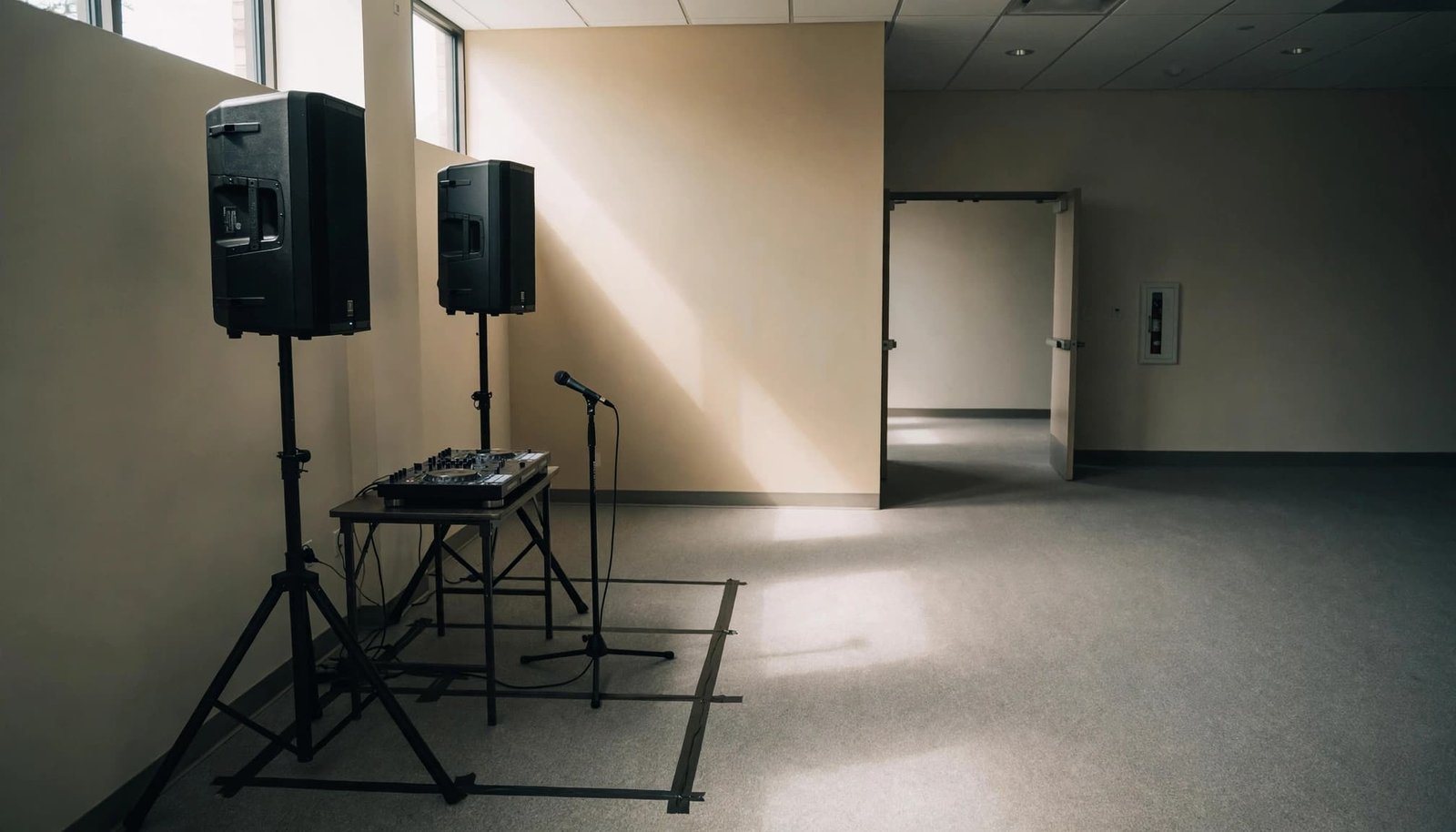
Equipment planning should begin with the room layout and program. Guest count matters, but it doesn’t determine the complete setup.
Prioritize Clear Speech and Comfortable Coverage
A welcome lunch in one room may need modest background sound and a microphone. A reception spread across several spaces requires a different coverage plan.
Share room dimensions, seating arrangements, presentation locations, and expected attendance. Ask how the proposed system will reach guests without overwhelming nearby conversations.
Event lighting should fit the activity. Subtle lighting can support networking, while dance lighting may suit an optional closing celebration. Confirm accessibility concerns and avoid surprise flashing effects.
For separate orientation sessions or overflow spaces, review breakout room audio planning and confirm each room’s requirements with the venue and sound provider.
Assign Technical Responsibilities
Decide who handles microphones, presentation audio, screens, video playback, and any remote attendees. A DJ’s sound service doesn’t automatically include projection or livestream production, so confirm whether those are part of the audio visual services.
Review power access, loading rules, service elevators, setup restrictions, and cable routes for the AV equipment before booking. Include the DJ area and guest traffic paths on the room diagram.
Ask what happens if a microphone, cable, or playback source fails. Confirm available backup arrangements and who will respond; don’t accept a general assurance without understanding the plan.
Compare DJ Proposals by Scope and Reliability
A useful quote explains what the event needs and what the provider will deliver. Comparing performance hours alone can overlook important differences in preparation, equipment, staffing, and hosting.
Request an Itemized Package
Ask each provider to identify music planning, setup, soundcheck, breakdown, travel, microphones, lighting, MC duties, and any additional room coverage.
Optional services, such as a photo booth, should be priced separately and confirmed with the provider. They shouldn’t displace clear speech or reliable sound in your budget.
There isn’t one dependable price that applies to every onboarding celebration. Request an event-specific proposal, then compare equivalent scopes.
Review overtime charges, parking costs, payment dates, cancellation terms, and rescheduling policies. Ask about liability insurance and whether the venue requires a Certificate of Insurance or additional insured wording.
Look for Relevant Experience
When assessing experience with corporate events, ask whether the provider has handled formats such as holiday parties, awards ceremonies, or a product launch.
Ask professional DJs about their experience with corporate clients, including leadership remarks and workplace-appropriate requests. Relevant references and clear answers about delayed speakers, food-service changes, and schedule shifts are more useful than an impressive song list.
DJ Steve Neff Entertainment LLC provides New Hampshire corporate DJ services, with music, professional sound, wireless microphones, lighting options, and event-flow support among its entertainment services.
Run by Steve Neff and business partner Jon Turgeon, the company has provided professional DJ entertainment since 1999. The business began in Maine and is now based in Concord, New Hampshire.
Discuss the exact services your celebration requires rather than assuming every available option belongs in your package.
Book Early and Confirm the Final Details
Contact providers once your date, venue, and basic format are known. Popular dates and programs with several technical requirements need more coordination; availability varies.
Early booking also gives HR, the venue, catering team, DJ, and AV provider time to resolve shared responsibilities. There isn’t a universal setup window, so request an arrival and testing schedule based on your venue and equipment needs.
Before the final planning call, assemble the information everyone needs:
- Share the final guest estimate, room diagram, vendor contacts, and schedule.
- Confirm music standards, announcements, pronunciation notes, microphone handoffs, and who approves changes.
- Review equipment responsibilities, backup arrangements, access times, soundcheck, and the agreed finish time.
Assign one person to own the final presentation test, including any video audio. Test microphones where speakers will use them.
For a New Hampshire celebration, you can request a personalized DJ package based on your event size, schedule, sound needs, lighting, and travel requirements.
Frequently Asked Questions
Does an Onboarding Celebration Need Dancing?
No. A professional DJ can support a welcome lunch, networking reception, or introduction program without a dance floor. Background music, microphone support, and brief announcements may be the complete entertainment plan.
If dancing fits your culture, make it optional and schedule it after formal remarks. Employees should still have a comfortable place to talk.
Can a DJ Help New Employees Feel More Connected?
A DJ can support introductions and conversation through appropriate volume, welcoming music, and clear hosting. Managers and colleagues remain responsible for making personal connections.
Gallup’s employee-experience guidance identifies early relationships and clear expectations as parts of effective onboarding. Entertainment should support those priorities without making promises about retention or employee performance.
Who Handles Presentation Audio and Video?
Assign responsibility before event day. The DJ, venue AV team, or outside production company may handle different parts of playback and sound.
One named contact should own the final test and troubleshooting response. Confirm connections using the actual presentation files, and agree on what the host will do if playback fails.
A Thoughtful Welcome Starts With a Clear Plan
A successful onboarding celebration gives new employees room to connect and keeps important moments organized. Appropriate music, dependable microphones, and clear responsibilities provide a reliable foundation.
Choose a DJ who understands your workplace, compare the complete service scope, and confirm the schedule before guests arrive. Your team can then focus on the purpose of the celebration: welcoming people into the company.