Successful corporate family day ideas combine flexible activities, comfortable gathering spaces, and entertainment that welcomes several generations. Pair drop-in stations with a short, professionally hosted program so families can participate at their own pace.
Employees should have time to connect while children enjoy activities suited to their ages. Thoughtful coordination makes that balance possible without filling every minute.
Choose corporate family day activities for your guests, then pick a family day theme and plan the layout and schedule.
Key Takeaways
- Combine active games, creative stations, and shared entertainment rather than expecting one attraction to engage everyone.
- Plan age-appropriate zones, accessible routes, comfortable seating, and a quieter space alongside the main attractions.
- Give entertainment providers clear responsibilities, an agreed schedule, and an itemized scope before event day.
Corporate Family Day Ideas for Active Families
1. Carnival and Funfair Games
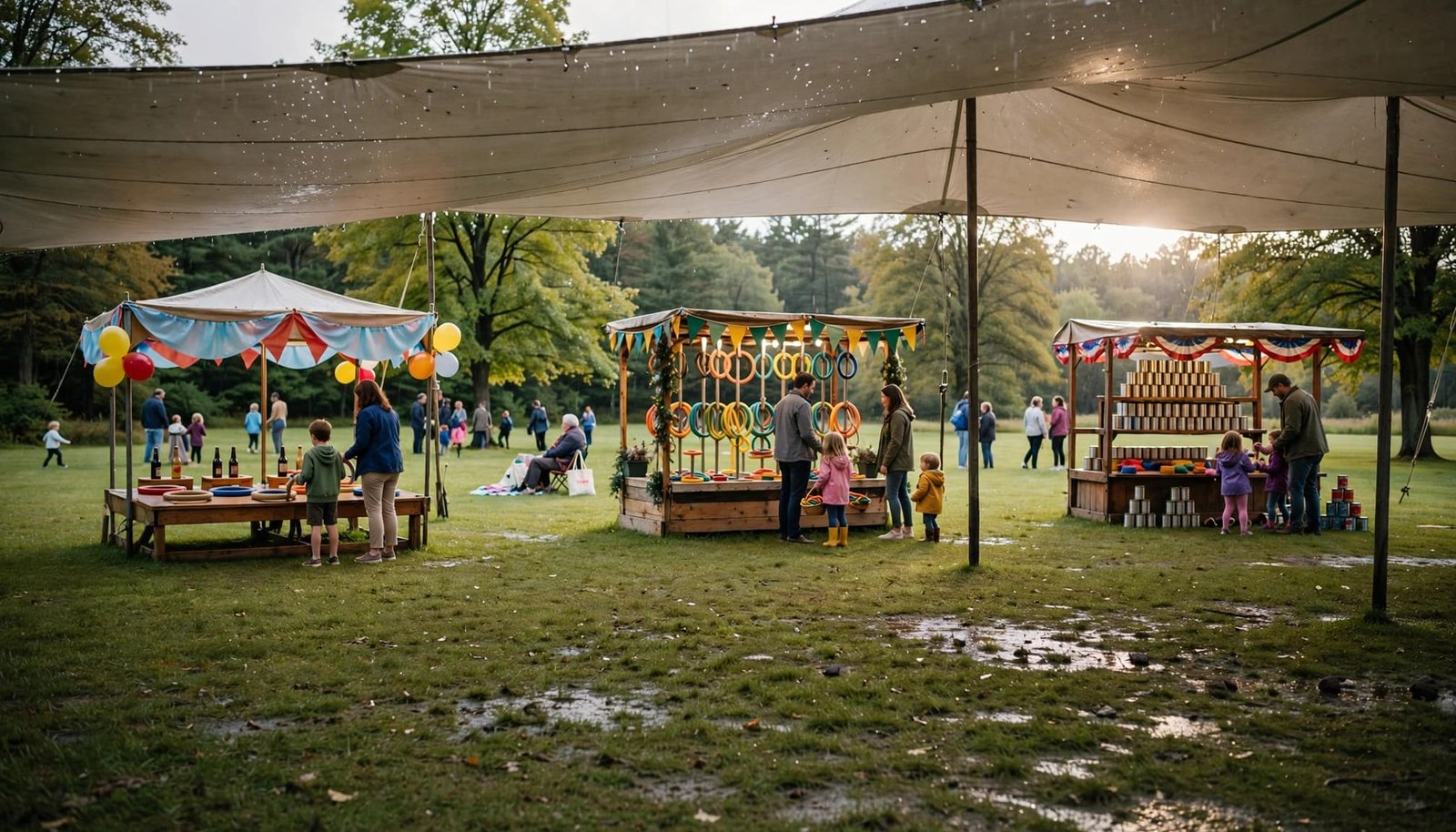
Carnival games such as ring toss, hoopla, tin can alley, and splat the rat offer approachable competition across generations. Adjust throwing distances and target heights so younger children can participate alongside adults. Keep traditional balloon darts in an adult-operated area, with a dart-free alternative for children.
2. Inflatables and Giant Obstacle Courses
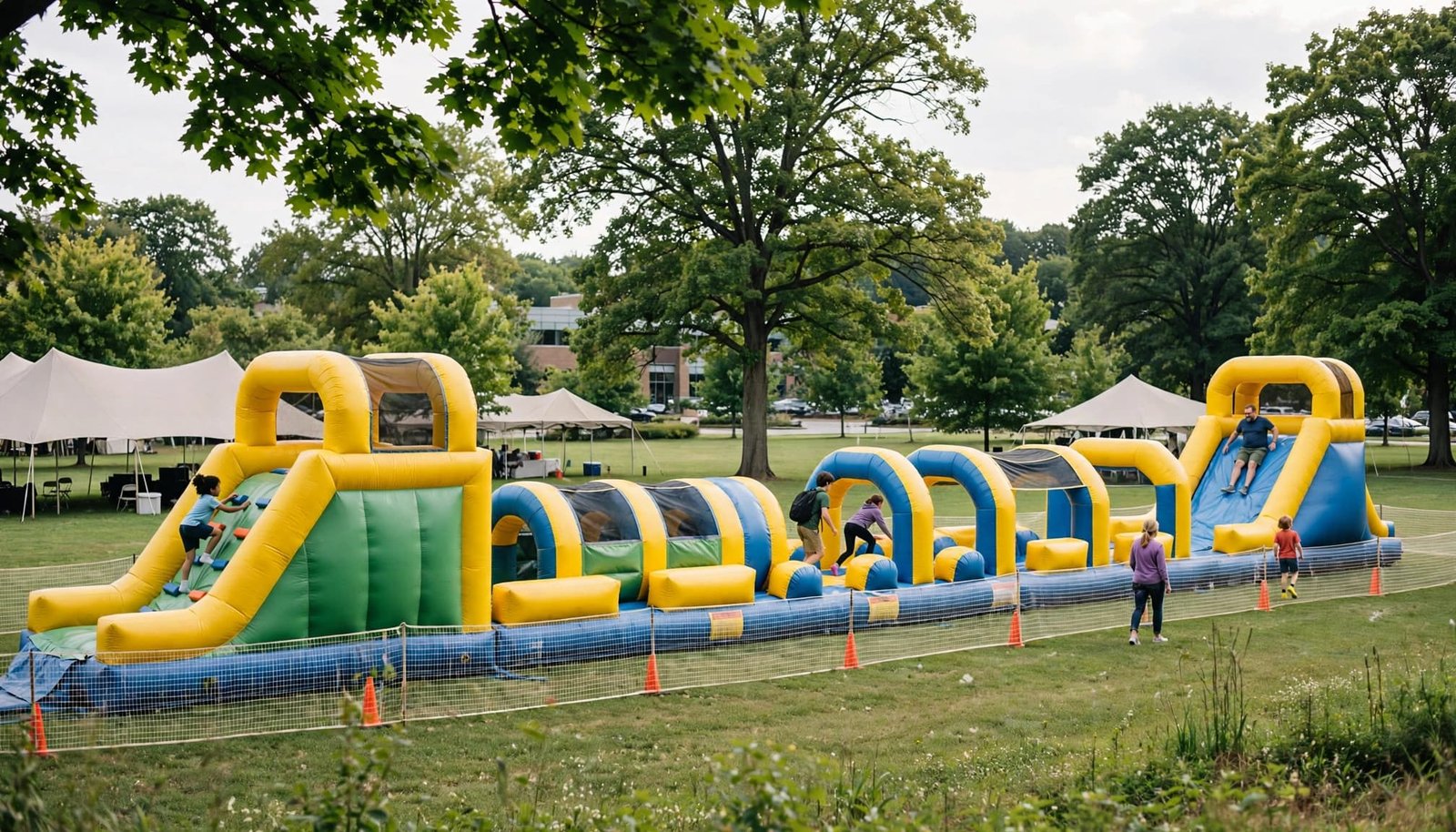
Inflatables provide a visible centerpiece and an energetic activity for children, teens, and participating adults. Choose attractions rated for their intended users, with trained attendants and separate sessions by age and size. A toddler bounce area shouldn’t share traffic with a competitive obstacle course.
3. Family Team Games
Sack races, three-legged races, tug-of-war, giant Jenga, and Minute To Win It challenges encourage friendly interaction and team building. Offer several ways to contribute, including scorekeeping and seated tabletop games. Short rounds help families join without committing their entire afternoon to a tournament.
4. Scavenger and Treasure Hunts
A treasure hunt encourages families to explore the venue together. Combine picture clues for younger children with puzzles for older participants. App-based GPS hunts suit larger grounds; printed alternatives include guests without smartphones. Keep routes accessible and away from vehicle access and vendor loading areas.
Creative Stations With Take-Home Keepsakes
5. Live Printing and Personalization
Live printing lets guests personalize tote bags, aluminium bottles, mousepads, and T-shirts on site. The Carlsberg Gastrobeats tote-bag example shows the appeal of a keepsake made during the celebration. Offer a limited design menu and a clear collection process to keep live printing queues manageable.
6. Themed Photo Booths
A photo booth gives employees and their families a shared memento, with digital delivery or prints produced on site. Choose a themed photo booth backdrop, easy-to-use props, and enough room for multigenerational groups. Keep participation optional and explain how photographs will be delivered or shared.
7. Craft and Workshop Stations
Painting, collage, and simple decorating activities provide a calmer alternative to races and inflatables. Offer age-appropriate materials and seated workspaces, with adults handling tools that require supervision. The Craft Paintery’s corporate paint event guide offers related planning guidance for a structured creative session.
Live Entertainment That Connects Generations
8. A Family-Friendly DJ and MC
A professional DJ can provide live entertainment with welcoming background music, clean radio edits, interactive games for all ages, and an upbeat closing dance session. MC support keeps meal announcements, activity changes, and prize drawings clear.
Our corporate event DJ services combine personalized music planning, sound, and hosting support around the audience and schedule. Share preferred genres, do-not-play requests, pronunciation notes, and announcement wording in advance.
9. Roaming Performers and Caricature Artists
Magicians, stilt walkers, and caricature artists bring entertainment into gathering areas without requiring everyone to follow a stage schedule. Give performers clear routes and suitable working space. Caricatures offer a seated option; close-up magic can engage adults and children waiting between activities.
10. Puppet Shows and Live Music
Puppet shows offer live entertainment for younger children, while a live band can create a welcoming atmosphere for the wider gathering. Schedule performances away from competing announcements. Provide nearby seating, clear sightlines, and room for families who prefer to watch without joining in.
Food, Themes, and Comfortable Participation
11. Picnic Areas and Food Stations
Popcorn, candy floss, slushies, and food trucks add a familiar festival atmosphere. Picnic areas give families somewhere to settle between activities. Canapés suit a reception-style gathering; a braai offers a shared barbecue format. Provide water, clear allergen information, and suitable dietary choices alongside treats.
12. Retro and Heritage Themes
A Retro Arcade and Game Show makes a familiar family day theme, pairing well-known games with friendly competition. For teams with Singapore connections, Kampong Heritage Carnival and Pasar Malam Night Market themes draw on shared local nostalgia. Singapore’s National Heritage Board describes pasar malam through its familiar snacks and varied market goods.
Choose references employees recognize, and keep costumes optional so participation doesn’t require extra spending.
13. Quiet Play and Conversation Areas
A quieter zone supports toddlers, grandparents, nursing parents, and guests who need a break from music or crowds. Include comfortable seating, simple toys, and easy access to restrooms. Position it away from speakers and generators, but keep it connected to the event through clear directions and written schedule information.
Remote Family Day Activities
14. A Virtual Scavenger Hunt
Use Zoom or Microsoft Teams for a household scavenger hunt with everyday objects and picture clues. Avoid tasks that require running or leaving home. Keep instructions visible as well as spoken so families can follow comfortably.
15. A Chef-Led Cook-Along
A cook-along gives remote employees a shared activity with their children. Send ingredients and substitution options ahead, and choose a simple recipe. Adults should manage heat and sharp tools while children handle age-appropriate preparation.
16. Virtual Bingo or Trivia
Family bingo and mixed-age trivia work well when questions include visual clues and varied difficulty levels. Send prize packs in advance for distribution during the session. Offer a separate remote program rather than expecting online families to watch an outdoor event broadcast.
Design the Venue Around Access and Weather
Create distinct zones for toddlers aged 0 to 3, children aged 3 to 8, older children and teenagers, and adult conversation. These are planning groups, not rigid participation rules; abilities and interests vary within every age band.
For outdoor events, shaded stretch tents support comfortable gathering areas. Singapore’s heat and afternoon showers make air-conditioned halls an attractive option; New Hampshire events also benefit from a defined indoor weather backup.
A shade tent provides comfort, but it isn’t a substitute for a severe-weather shelter plan.
Document entrances, accessible routes, food queues, first aid, restrooms, emergency access, and equipment locations on the floor plan. Yourope’s event safety guidance connects risk assessment, crowd management, and emergency preparation.
Large events need coordinated emergency-services and police planning where applicable. Include required agency approvals and Joint Operations Committee (JOC) sign-off in jurisdictions that use that process. A documented emergency plan should identify decision-makers, communication methods, and evacuation arrangements.
Build a Practical Schedule and Budget
Begin planning with the venue, expected attendance, age mix, and entertainment priorities. Announce the theme six to eight weeks ahead, giving families time to plan outfits and look forward to the event.
Digital invitations can collect RSVPs, children’s age bands, dietary needs, and accessibility requests. Wristbands help speed check-in and identify activity groups without lengthy explanations at each station.
A simple afternoon schedule leaves room for both shared moments and independent choices.
| Time | Program |
|---|---|
| 12:00 p.m. | Check-in, background music, and open stations |
| 12:30 p.m. | Lunch and relaxed activities |
| 1:15 p.m. | Hosted games and children’s performance |
| 2:15 p.m. | Family dance session and prize drawings |
| 3:00 p.m. | Closing announcement and departure |
Keep leadership remarks brief so the gathering stays focused on families.
Compare itemized proposals with providers for staffing, setup, travel, sound, microphones, lighting, activity materials, live printing, and overtime. A photo booth and additional equipment aren’t automatically included in every entertainment package. Confirm what’s covered with the provider.
Our corporate DJ booking guidance outlines how audience needs and event format shape the entertainment scope. Afterward, gather feedback on activity variety, queues, sound levels, and accessibility before planning the next family day.
Frequently Asked Questions
Which Activities Keep Children and Adults Engaged Together?
Choose activities with different roles and adjustable difficulty. Carnival games, treasure hunts, crafts, photo booths, and music-based games allow families to participate together without requiring equal physical ability. Offer optional competition, shared challenges, and places to watch comfortably. A successful family activity gives everyone a meaningful way to join.
How Should Activities Change With Guest Count?
Smaller gatherings can use a shared activity area and one host to guide transitions. Larger events benefit from duplicated popular stations, separate queues, scheduled performances, and designated zone leads. Capacity depends on how quickly each activity serves guests, not simply how many attractions appear on the booking list. Keep food and check-in queues clear of activity entrances.
Bring the Day Together With Clear Coordination
A memorable corporate family day gives employees room to connect while their families feel welcome, comfortable, and included. The strongest entertainment plan balances shared experiences with choices for different ages and energy levels.
Build around a manageable activity selection, dependable hosting, and clear coordination. When responsibilities and transitions are planned carefully, families can enjoy the celebration without feeling rushed through it.