A conference can sound polished on opening night and feel disconnected by the next morning without consistent entertainment planning. A professional corporate event DJ helps maintain that continuity through appropriate music, clear announcements, dependable sound, and well-timed transitions.
For multi-day programs, coordination with the venue and other vendors matters as much as song selection; each room and session needs a defined purpose. Start with the complete agenda, then build music, hosting, and production coverage around the experience you want guests to have.
Key Takeaways
- Plan coverage by day, room, and program segment, including periods when the DJ must remain available.
- Give the DJ, venue, and AV team one current schedule with clear responsibility for microphones, presentation audio, and cues.
- Compare complete proposals, including setup, staffing, MC duties, overnight arrangements, and backup coverage, rather than performance hours alone.
Plan Corporate Event DJ Coverage for Every Day
Multi-day entertainment should feel connected without repeating the same atmosphere throughout the conference. Corporate event DJs can tailor music and hosting to registration, networking, executive remarks, and evening celebrations.
Match Music to the Program
Welcome music should create an approachable atmosphere while allowing attendees to speak comfortably. Break music can add energy, while an evening reception may progress toward dancing after formal remarks.
Our guidance on conference music for arrivals and breaks covers these transitions in more detail. Share preferred genres, clean-music expectations, restricted artists, and company guidelines early so selections fit your audience.
Professional mixing also depends on musical structure. Pioneer DJ’s genre-specific mixing guidance shows why different styles need different transition techniques. A networking soundtrack deserves thoughtful handling, too.
Define Hosting and Staffing
Corporate DJs often provide MC services, including announcements, presenter introductions, and timeline support. Identify which duties belong to the DJ and which remain with your conference host.
Map simultaneous activities before assigning staff. One DJ can’t actively host awards in a ballroom while managing live introductions in another room.
The coverage plan should also identify meal breaks, daytime standby periods, and the person handling each evening reception. Consistent preparation helps every segment maintain a professional tone.
Build One Run of Show for the Entire Conference
A shared run of show connects entertainment with catering, presentations, sponsor recognition, and room changes. Use a master schedule with clearly separated daily sections, then distribute the current version to every production contact.
Give Each Cue a Clear Owner
Include doors opening, speeches, videos, award categories, breaks, and closing announcements. Each entry should name the person authorizing the cue and the team responsible for delivery, including presentation audio and sound reinforcement.
Music fills are brief selections, usually 15 seconds to one minute, played while presenters or award recipients approach the stage. Record the track, starting point, fade instruction, and expected duration beside each cue.
Provide phonetic spellings for names, approved titles, sponsor language, and scripted announcements. For multilingual programs, identify which introductions need another language and who will deliver them. These details reduce improvisation during formal moments.
Manage Changes Through One Contact
Designate one planner or show caller to approve live changes. The DJ, venue captain, host, AV lead, and other production vendors should be able to communicate directly.
Build five to ten minutes of flexibility around major transitions where the agenda allows. Delayed meal service or an extended speech is easier to accommodate when the team has agreed options.
End each day with a brief review of the next day’s schedule. Updated speaker orders, room assignments, and announcement wording should reach everyone before the next program begins.
Prepare the Venue for Sound and Daily Resets
Room access and technical preparation affect the entire conference schedule. Plan load-in, testing, room conversions, and breakdown alongside the guest-facing agenda.
Reserve Suitable Space and Power
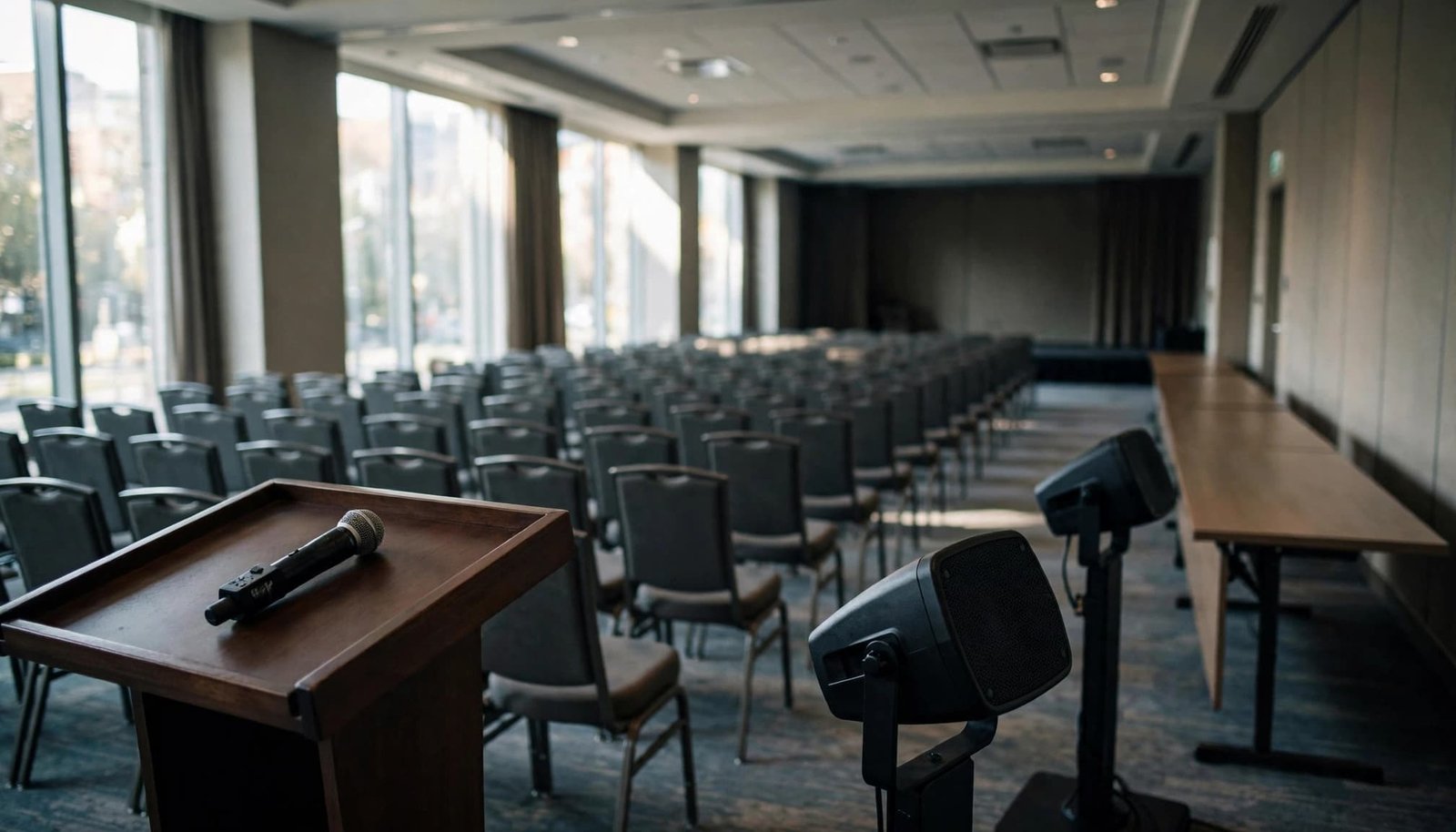
The equipment plan should specify table space, speaker positions, approved power, cable routes, and loading-area access. Keep guest pathways and accessible seating clear.
As a provider-specific example, MyDeejay requests a six-foot banquet table with linen and adequate power within 35 feet. For events under 250 guests, it generally arrives 90 minutes before the scheduled start.
A conference with multiple rooms, microphones, lighting, and presentation connections needs a schedule based on those requirements. Our corporate DJ setup planning guidance explains how access and production scope affect preparation time.
Test Every Audio Source
Complete a full soundcheck before attendees enter. Test microphones, music, presentation audio, and shared cues at realistic program volume. Listen from the back seating area as well as near the controls.
Assign ownership of every connection between DJ equipment and house AV. The AV lead should approve connections to installed systems.
Our wireless microphone planning guide covers presenter movement and microphone requirements. Include overnight equipment storage, room security, and morning retesting in the daily plan.
Large audiences require suitable sound reinforcement. MyDeejay reports in-house equipment and corporate capacity for up to 2,000 guests, illustrating why audience size belongs in the initial production brief.
Budget for the Full Multi-Day Service
Corporate DJ pricing should reflect preparation, availability, equipment, and program responsibilities. A conference quote needs more detail than a reception’s start and finish times.
Use Hourly Prices as Limited Benchmarks
Bark’s national DJ pricing guide lists broad figures of $450 to $900 per event and $100 to $200 per hour. These are general DJ-hire benchmarks, rather than prices for a multi-day conference.
Published estimates also differ by provider. DJ C West’s pricing guide gives approximately $595 for three hours of corporate service. That estimate doesn’t establish a standard conference rate.
A one-hour appearance can still involve consultation, travel, loading, installation, and testing. Performance length alone doesn’t describe the work required.
Compare Proposals by Responsibility
An event package or day rate can accommodate long gaps between sessions while reserving the DJ’s availability. Separate active performance time, standby coverage, and additional staffing in the proposal.
These items deserve side-by-side comparison.
| Quote item | What the proposal should define |
|---|---|
| DJ and MC coverage | Daily hours, introductions, announcements, and standby time |
| Sound reinforcement and lighting | Equipment, room coverage, microphones, and operators |
| Logistics | Travel, parking, setup, breakdown, and overnight arrangements |
| Contract terms | Payment schedule, overtime, cancellation, and replacement coverage |
The strongest comparison uses matching service requirements. A lower total provides limited value when essential microphones, room coverage, or hosting duties are excluded.
Book Early and Document Backup Coverage
Large-scale corporate events are commonly booked several months to a year ahead. Smaller functions can be arranged on shorter timelines, but complex conferences benefit from securing entertainment when dates and site arrangements are established.
Reserve the full service period, including necessary setup access and final breakdown. November and December dates deserve additional lead time because holiday functions compete for availability.
The written agreement should define staffing, equipment, MC services, overtime, cancellation terms, and backup arrangements. Deposit and insurance requirements vary by provider and venue.
MyDeejay, for example, requires a 50% booking deposit for corporate events and prefers the remaining balance before the event. It also reports $2,000,000 in liability coverage per DJ and provides certificates of insurance on request. These are its policies, not universal industry terms.
Establish certificate requirements and any additional-insured wording early in the coordination process.
Backup planning should cover both equipment failures and personnel availability. MyDeejay’s Emergency DJ System stores event notes, paperwork, and custom music so a prepared replacement can take over.
For any multi-day program, replacement readiness depends on accessible schedules, scripts, cue files, and clear production responsibilities.
Choose Enhancements That Support the Agenda
Corporate events can include awards ceremonies, a holiday party, conference receptions, employee retreats, team-building events, grand openings, product launches, and charity galas. Those occasions don’t all require the same production package.
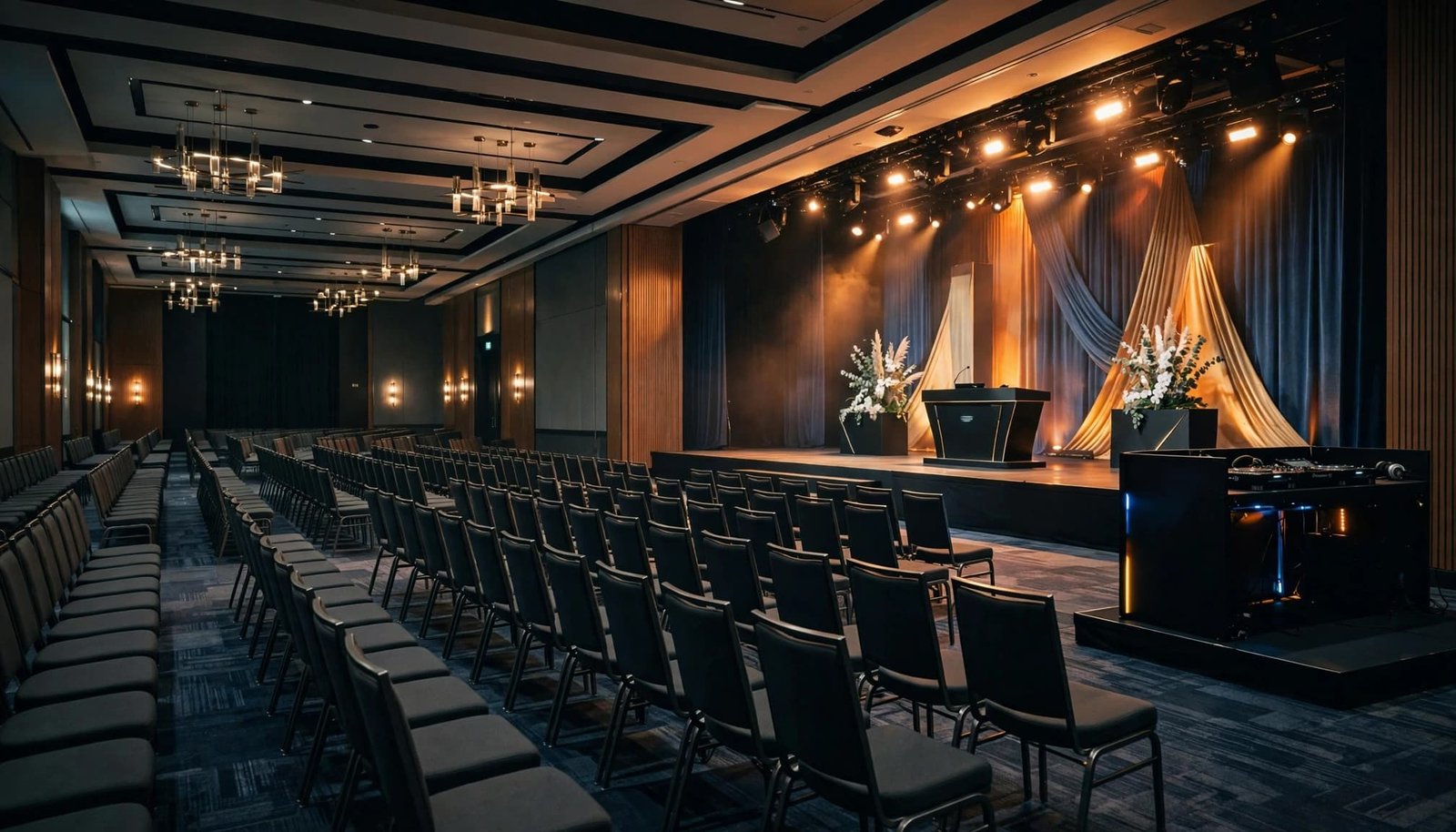
Common enhancements include event lighting, photo booth services, microphones, AV equipment, custom staging, and party rentals. Choose each addition for a defined presentation or guest-engagement purpose.
Service models differ. Hank Lane’s NY Tri-State events team helps clients determine their entertainment requirements. Epic Entertainment Boston promotes event lighting and savings when a photo booth is added to a DJ package.
Keep delivery, staffing, operating hours, and breakdown details for the photo booth and party rentals visible in the proposal. An enhancement should improve the conference experience without creating an unclear responsibility for your planning team.
Frequently Asked Questions
What Should a Corporate DJ Wear?
The dress code should match the event’s formality and company culture. A conservative business suit is appropriate for many awards dinners and executive functions; polished business attire may suit daytime receptions.
Include attire expectations in the brief so the entertainment team fits the setting throughout the conference.
Does a DJ Provide Complete Conference AV?
DJ services may include professional sound, wireless microphones, lighting, and emcee support. Projection, cameras, livestreaming, staging, and presentation playback can belong to the venue or a separate production company.
Assign one owner to every system and final test. This prevents gaps when several vendors contribute to the program.
What Is the Rule of 32 in DJing?
The rule of 32 is a phrase-mixing guideline that helps DJs align transitions with musical structure. VibesDJ’s explanation of phrase-aligned transitions describes matching phrase boundaries so tracks progress naturally together.
Phrases vary by song and genre. This guideline isn’t a conference timing rule, and it doesn’t determine the length of speaker cues.
What Information Starts the Booking Process?
Provide dates, venue, attendance, room assignments, daily service hours, and the preliminary agenda. Add microphone needs, hosting responsibilities, music direction, and production requirements.
For New Hampshire programs, our corporate event DJ services include sound, lighting, MC support, and personalized entertainment planning.
Keep Every Conference Day Connected
Reliable multi-day entertainment starts with a complete service plan, clear production responsibilities, and music that supports each part of the agenda.
Give every day its own coverage schedule while keeping the conference’s overall tone consistent. With shared cues, suitable sound, and prepared backup coverage, guests can focus on conversations, presentations, and celebrations instead of the production behind them.