A corporate event can look polished to guests while dozens of small details work behind the scenes. Corporate DJ setup time affects sound quality, speaker confidence, event pacing, and your planning team’s peace of mind once the doors open.
A corporate event DJ who arrives shortly before guests leaves little room for a proper sound check, room adjustments, or coordination with your venue and AV contacts. Adequate preparation gives your program the professional foundation it needs.
What Corporate DJ Setup Time Actually Includes
This preparation involves planning the room, testing audio, reviewing the schedule, and preparing for moments when music, microphones, or announcements matter. A corporate event DJ reviews the room layout and program to anticipate each cue.
For a smaller company gathering with background music, one sound system, and one wireless microphone, the planning may be fairly simple. A conference with keynote speakers, awards, video playback, lighting, and multiple event spaces requires a more detailed production plan.
Load-In, Equipment Placement, and Cable Management
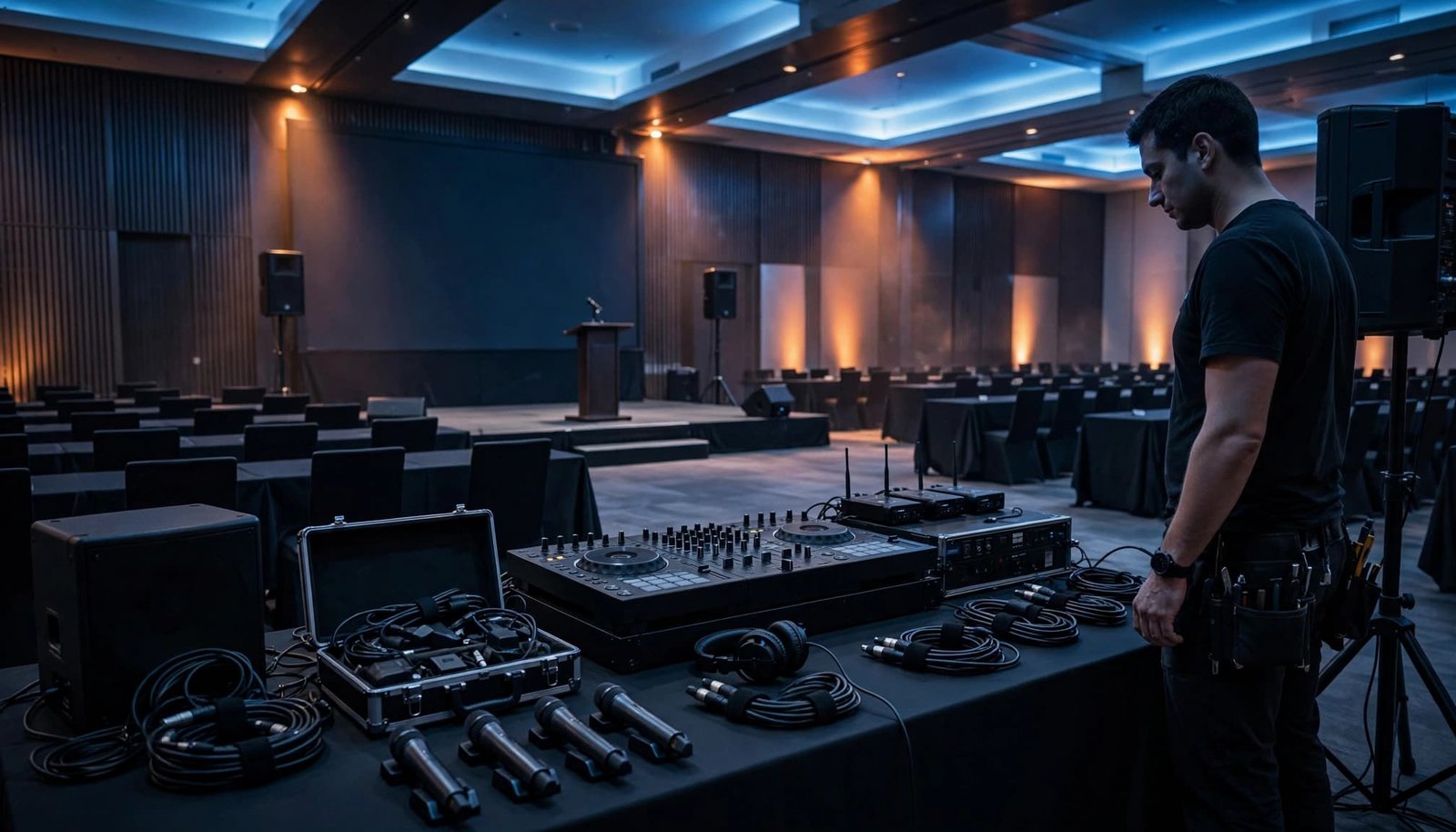
Equipment setup begins before the first speaker is plugged in. The DJ needs venue access, nearby parking or a loading entrance, a clear route into the room, and enough time to bring everything in safely.
The quantity and layout of professional equipment can affect how much room and planning are needed. A site survey can verify access, room dimensions, power, and equipment placement before event day.
Once inside, the DJ position should have a clear view of the stage, main speaking area, and dance floor. That sightline helps with walk-on music, award cues, announcements, and schedule changes.
Power access also matters. The team should confirm approved outlets, cable paths, and venue restrictions before equipment is unloaded. Cables should stay secure and away from doorways, emergency exits, and guest walkways.
Sound Checks Are About More Than Volume
A sound check is not simply turning on a microphone. The DJ should test every planned microphone where it will be used, then listen for feedback, weak coverage, echo, or volume that’s too high for conversation.
Ballrooms, breweries, renovated mills, restaurants, and tented outdoor events can all sound different. High ceilings, glass walls, hard floors, and room size can change how clearly guests hear speeches.
An event audio setup guide recommends allowing early access for sound checks and troubleshooting. For larger conferences or events with complicated AV, setup the day before may be the right choice.
A room can sound perfect while empty and change completely once guests, tables, and conversation fill the space.
A Practical Corporate DJ Setup Timeline
There is no universal setup window that fits every corporate event. The right timeline depends on the venue, equipment scope, guest count, access rules, and the number of program elements involved.
Your corporate event DJ should provide an event-specific arrival and setup plan after reviewing the details. The event planner and key venue or AV contacts should receive and review it.
Before the Event Date
Preparation starts well before load-in. Music preparation should include reviewing the event schedule, key contacts, music preferences, pronunciation notes, room diagram, and expected responsibilities.
A corporate event DJ may also prepare walk-on music, background playlists, award stings, and clean music options for different age groups. If the DJ is providing MC support, they should confirm speaker names, job titles, and the exact order of introductions.
Send a final run of show once the program is close to complete. Include arrival, doors open, meal service, speakers, awards, presentations, breaks, and planned end time.
For planning purposes, a small one-room event may need roughly 60 to 90 minutes. A medium event with several microphones may need 90 minutes to two and a half hours. Larger multi-zone events may require two to four hours. These are approximate planning windows, not guarantees.
During Load-In and Setup
For a simple event, the DJ may only need one sound system and a compact setup area. Larger rooms may need additional speakers, more microphones, lighting, or separate sound coverage for cocktails and dinner.
Build in time for unloading, equipment placement, equipment setup, cable management, and testing. Avoid scheduling setup during vendor congestion, room flips, or the final minutes before catering staff begins service.
A planner-friendly example might look like this:
- 2:00 p.m.: Load-in begins
- 2:30 p.m.: Equipment setup and cable management
- 3:15 p.m.: Sound check
- 3:45 p.m.: Event-ready time
- 5:00 p.m.: Guests arrive
- 9:30 p.m.: Teardown begins
If the venue has strict load-in times, stairs, long hallways, or limited parking, tell the DJ before the contract is signed. Those details affect both timing and staffing needs.
Final Testing Before Guests Arrive
The last part of the event schedule should be protected for testing and adjustments. The DJ, planner, host, venue representative, and AV contact should know how to reach one another directly.
Confirm the opening music, first announcement, microphone locations, and the cue that begins the formal program. A short final check can prevent the uncomfortable moment when a speaker is ready but the microphone is not.
Five to 10 minutes of buffer around major transitions is useful. It gives the team room to respond to normal delays without making guests aware of them.
Coordinating the DJ, Venue, and AV Team
Corporate events often use more than one production partner. The corporate event DJ may handle music and microphones, while an audio visual partner manages screens, projection, livestreaming, staging, or presentation playback.
Clear roles keep good intentions from becoming crossed wires. A broader corporate AV solutions guide explains that business event production can include sound, screens, lighting, streaming, staging, and technical direction.
Give Every Cue a Responsible Person
Your run of show should list the time, cue, person responsible, and DJ or AV action for each important moment. The event planner should confirm who signals an award entrance, who confirms presentation playback with the av team, and who can adjust the schedule.
The venue, caterer, DJ, and AV contact should share timing changes promptly. This is especially helpful when leadership speeches run long or dinner service changes. The DJ can extend background music, hold a cue, or adjust the next transition without creating dead air.
Plan Speaker and Award Transitions
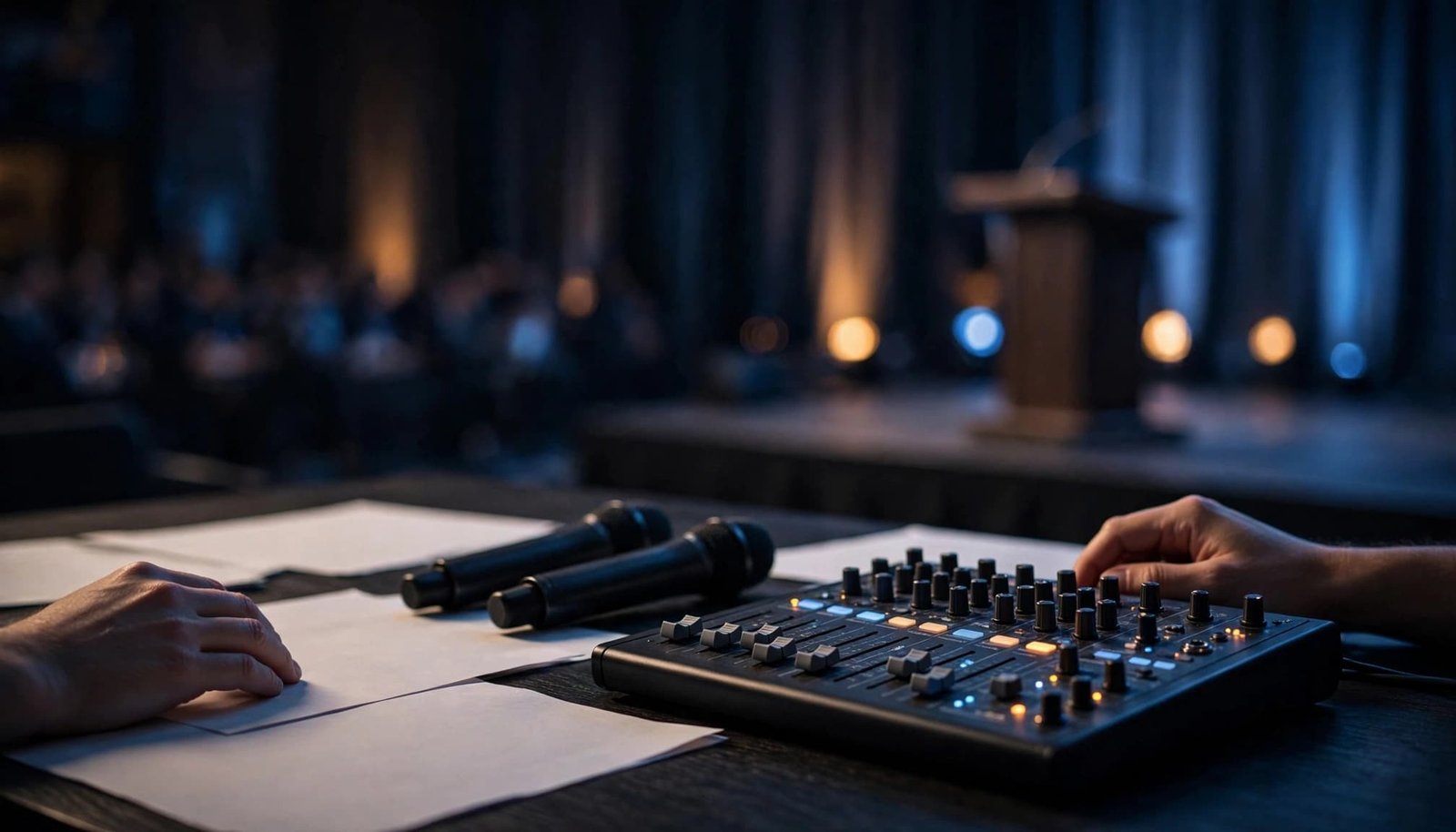
Walk-up music for awards is usually brief. A 10 to 20-second music cue can add energy while keeping the program moving. The DJ should know when to start, fade, and stop each cue.
For keynote sessions, music should lower before the host speaks. Microphones should be ready before the introduction begins, not passed around while the room waits.
A capable corporate DJ stays polished and low-profile during formal moments. The focus remains on your leadership team, employees, clients, and honorees.
What Can Change the Overall Event Timeline
The same corporate event DJ may need different setup windows for two corporate events with the same guest count. Event logistics are usually the reason.
Venue Access and Room Layout
An easy load-in with nearby parking and ground-floor access saves time. A downtown hotel with a shared service elevator, a long walk from the loading dock, or a late room release requires more planning.
A room diagram and site survey help verify the room, access route, power, and equipment placement before event day. Mark the DJ area, stage, tables, bar, entrance, power outlets, screen locations, and guest traffic paths. This gives the DJ and venue team a chance to solve placement issues before event day.
Equipment Scope and Event Format
More equipment means more setup and testing. Additional wireless microphones, lighting, multiple speaker zones, video audio, or a second room can all expand the timeline.
A networking reception may need conversation-level music in one room and a separate sound system for awards in another. Holiday parties may need background music early, then dance floor lighting later in the evening.
Don’t assume in-house audio will cover every need. Confirm who provides microphones, who controls presentation audio, and what backup options are available.
Corporate DJ Pricing Should Reflect the Full Scope
Corporate DJ pricing should never be judged only by performance hours. Corporate DJ services may include music planning, travel, early arrival, equipment setup, sound checks, emcee support, lighting, breakdown, and communication with your planning team.
A day rate can make sense for a multi-day conference or event with long gaps between program segments. For multi-day conferences, a day rate reserves the DJ’s availability and covers production responsibilities beyond active music. Providers may quote by event, package, hourly rate, or day-based availability, so ask how their pricing structure works.
Ask What Is Included, Not Only What It Costs
A lower quote may leave out equipment, extra microphones, lighting, travel, overtime, or planning support. A higher quote should also clearly explain what you are receiving and how it fits your talent budget.
Compare proposals side by side, including any day rate and the services it covers. Confirm the event hours, expected arrival time, setup and breakdown windows, included sound equipment, microphone count, emcee duties, lighting, travel fees, and overtime policy.
For New Hampshire corporate event DJ services, the equipment and setup plan should reflect your venue, audience, and program, not a one-size-fits-all package.
Experience Is Part of the Value
Corporate event experience matters because business events have different expectations than casual parties. Compared with a wedding DJ, your DJ may need to introduce executives, pronounce names correctly, support a formal schedule, and shift the music without pulling attention away from the room.
Professional DJ experience dating back to 1999 gives DJ Steve Neff Entertainment LLC a strong foundation for events that need dependable sound, polished hosting, and thoughtful coordination. Steve Neff and Jon Turgeon provide DJ, MC, sound, lighting, and event entertainment services for corporate events across New Hampshire.
Questions to Ask Before Signing a Contract
The best questions focus on planning, communication, and backup preparation. Price matters, but it’s only one part of a successful event.
Ask these questions before committing to a corporate event DJ:
- What arrival, setup, sound check, and breakdown times do you recommend for our venue and program?
- What sound equipment, wireless microphones, lighting, and emcee support are included in the proposal?
- Is a site survey recommended or included for our venue?
- How will you coordinate with our event planner, venue contact, and AV team?
- Do you bring backup gear, including spare microphones, cables, and music playback options?
- How do you handle speaker introductions, title confirmations, and phonetic pronunciation notes?
- Who controls video audio, house sound, and presentation playback if those elements are part of the event?
- Does the proposal use a day rate when the event requires extended availability?
- What happens if the event runs late or the schedule changes during the program?
- Does the contract include travel, parking, overtime, liability insurance, deposits, cancellation terms, and rescheduling details?
A detailed agreement gives your internal team a clear record of expectations. It also makes the final planning call more productive because basic responsibilities are already defined.
For more ideas on music choices, event flow, and planning conversations, browse these corporate event planning tips.
Key Takeaways for a Smooth Event Day
- Confirm venue access, load-in timing, room placement, cable management, sound checks, and final program review in advance.
- Share the run of show, assign cue ownership, and allow buffer time for announcements, awards, and presentations.
- Have the venue, DJ, planner, host, and AV team confirm equipment responsibilities before event day.
- Ensure the quote covers more than music, including microphones, setup, travel, MC duties, backup equipment, and schedule support.
- The right corporate event DJ helps the room feel organized, welcoming, and appropriate for your company culture.
Frequently Asked Questions
How much time does a corporate event DJ spend preparing for a major corporate event?
There is no fixed number because preparation depends on the program and venue. A major event may require timeline review, music planning, speaker notes, room coordination, equipment preparation, and conversations with the venue or AV team before event day.
What is the average setup and breakdown time for a corporate DJ?
There is no reliable average that applies to every event. A compact sound system in one room takes less time than a conference with multiple microphones, lighting, video audio, and separate event spaces. Ask for a setup and breakdown estimate based on your venue access and equipment needs.
Why should a corporate DJ have backup equipment?
Backup gear, including spare microphones, cables, and playback options, can prevent a small technical problem from interrupting the program. Backup planning may not be exciting, but it protects the moments your company cannot afford to lose.
How early should we book a corporate DJ?
Book early when your event has a popular date, a complex program, or specific production needs. Holiday parties often need even more lead time because November and December dates can fill quickly.
A Well-Planned Setup Creates a Better Event
The best corporate DJ setup is rarely noticed by guests because everything sounds clear, cues happen on time, and the room stays comfortable. That is exactly the result a business event needs.
Give your DJ early access, a clear run of show, direct contacts, and honest details about the venue. Corporate DJ setup time then becomes part of a reliable plan, not a last-minute concern.