An investor meeting can look polished on paper and still feel disorganized when microphones fail or transitions drag. A professional event DJ supports clear presentations, appropriate background music, and coordinated announcements without distracting from the business agenda.
For investor relations teams, preparation matters more than dance-floor energy when planning entertainment for the formal program. Background music should support conversation and stop before remarks, voting, or shareholder questions begin. Reception music can take a more social tone.
Start by defining who controls the agenda, who handles sound, and where entertainment belongs.
Key Takeaways for Corporate Planners
- Give the meeting chair authority over formal business and assign one person to authorize production cues.
- Separate DJ, emcee, and AV responsibilities in the written proposal.
- Budget for preparation, equipment, setup, and travel alongside performance hours.
- Document microphone coverage, replacement arrangements, and the transition into the reception.
Choose the Right Corporate Event DJ Responsibilities
A professional DJ booking starts with a clear scope. An investor presentation, shareholder meeting, and evening reception may share a venue, but each needs different support.
Music and Emcee Duties
The DJ manages music selection, playback, volume, and agreed transitions. A host introduces speakers, makes announcements, and guides attendees through the approved program.
One professional may handle both roles. Nufusion Productions, for example, says its corporate DJs can also handle emcee duties, announcements, and the event timeline.
For shareholder events, introductions should use approved names, titles, and wording. The meeting chair should retain responsibility for motions, voting procedures, and substantive investor questions.
When Full AV Production Is Needed
DJ sound equipment can support playback and microphones within its agreed coverage. Hybrid participation, presentation screens, recording, captioning, and multiple speaking positions require additional planning.
Choose a DJ service when another team owns microphones and presentations. Add host support when the program needs introductions and event announcements.
Full production support is appropriate when the meeting depends on coordinated audio, video, remote participation, or several rooms. Assign responsibility for each system rather than assuming the production team manages everything.
Plan Sound Around the Investor Meeting Agenda
Protect Formal Remarks and Voting
The formal meeting requires a different atmosphere than a company celebration. The SEC’s annual meeting guidance explains that proxy rules require certain disclosures to shareholders through a proxy statement.
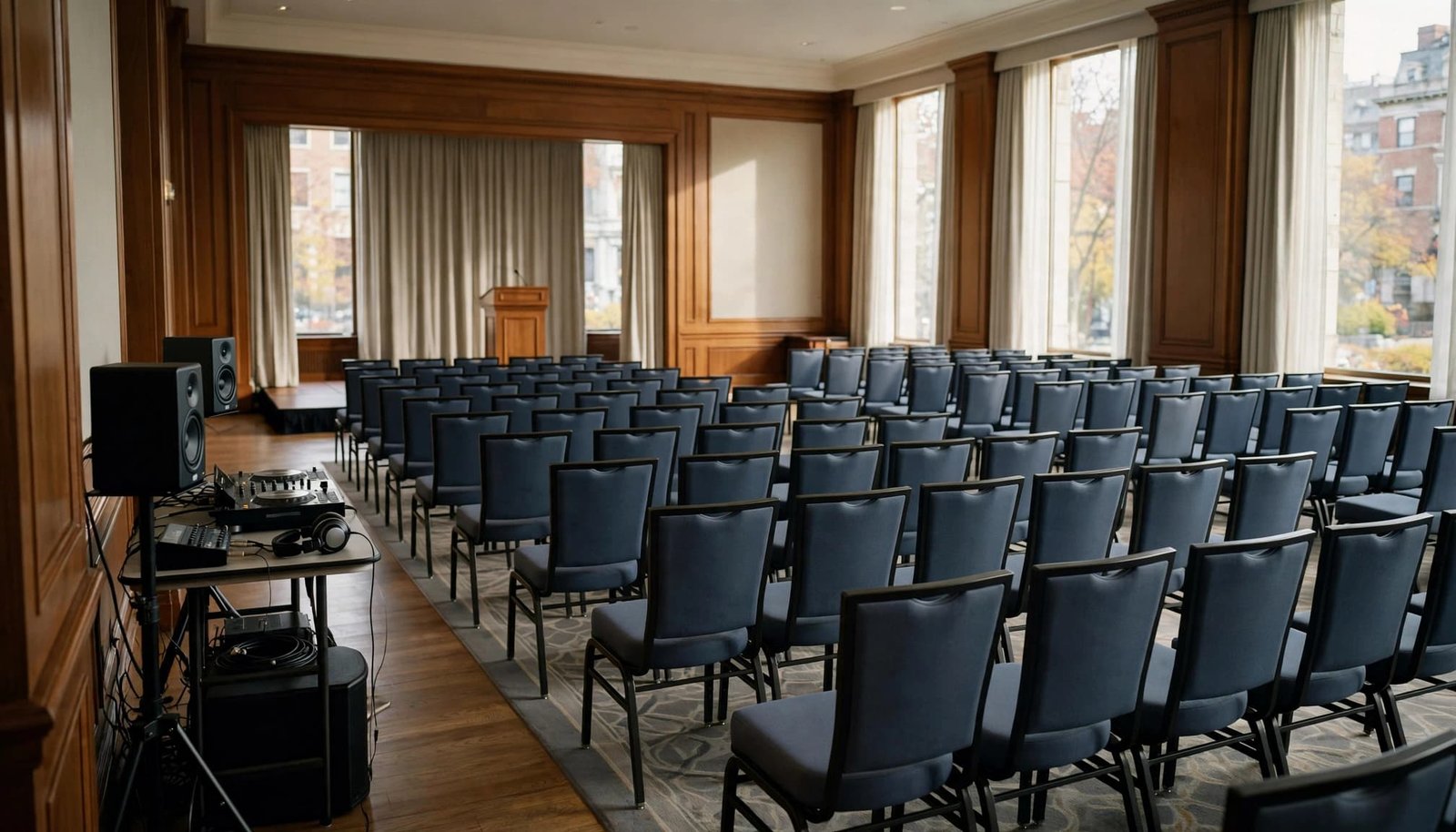
Keep the sound plan separate from that business process. The DJ should follow the approved agenda, stop music before remarks, and wait for an authorized cue before restarting it.
A clear pause supports attention during financial presentations, voting, and questions. Avoid spontaneous remarks outside the approved agenda.
Make Questions Easy to Hear
Plan microphones for the lectern, panel, and audience questions. A roaming microphone needs an assigned handler; a fixed question station needs a clear route.
At the venue, test speech intelligibility at the back and sides of the room, not only beside the sound setup. For hybrid meetings, the AV team must also test the remote audience’s audio.
Include captioning and assistive-listening arrangements in the initial production plan. Clear sound should support participation throughout the room.
Match Music to the Meeting and Reception
Personalized music planning starts with the event’s purpose, audience, and desired atmosphere. Investor arrivals and networking usually benefit from restrained instrumental selections or unobtrusive, clean background music.
Prepare a do-not-play list covering explicit lyrics, unsuitable themes, and distracting novelty songs. Guest requests should follow the company’s approved boundaries.
Music fills are short selections, usually 15 seconds to a minute, played while speakers or award presenters approach the stage. Use them only where the agenda allows; end the fill before the speaker begins.
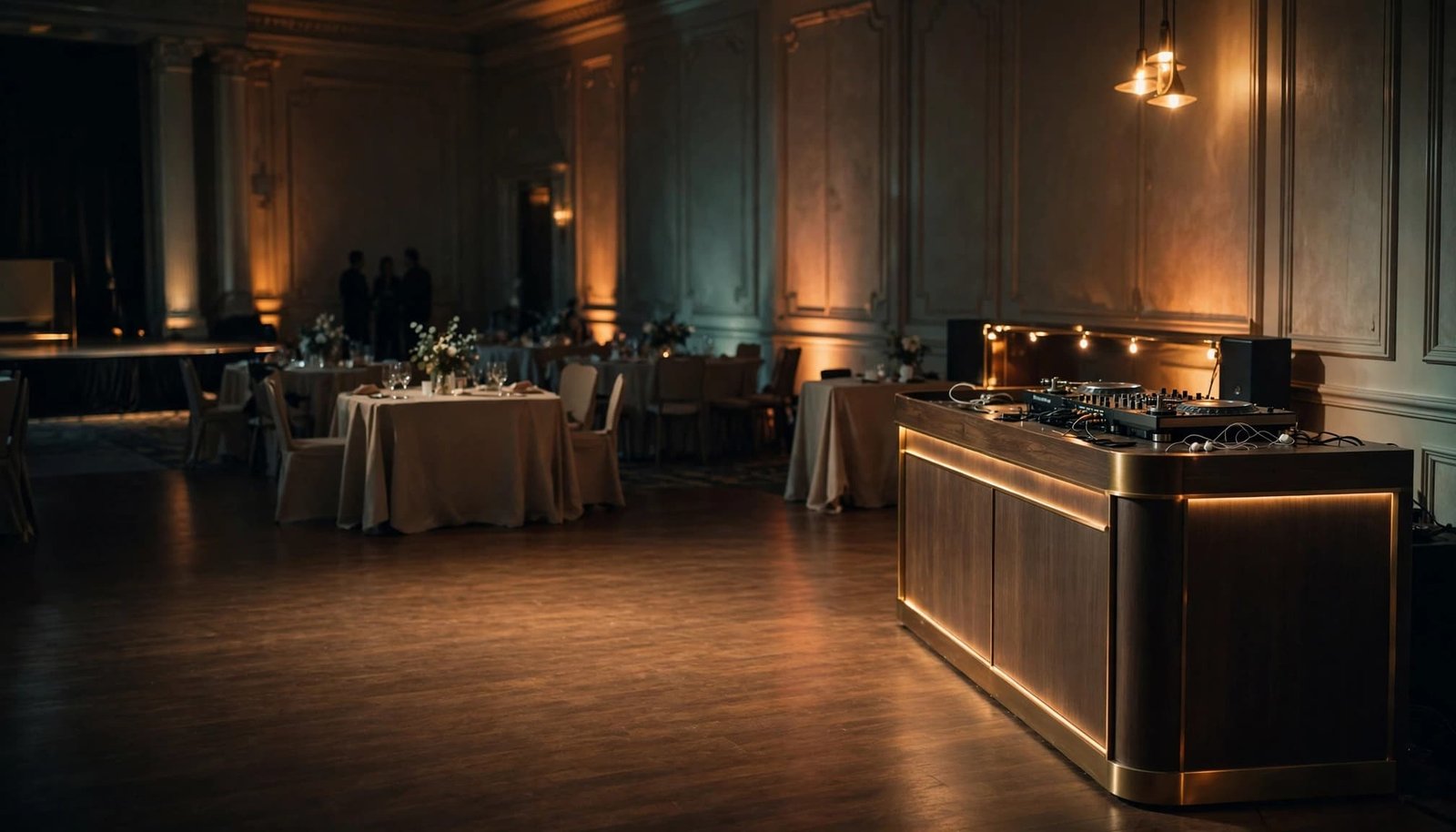
After adjournment, music can become more social while remaining comfortable for conversation. Dancing belongs in the plan only when the reception includes it.
Corporate attire is at the client’s discretion. MyDeejay suggests a conservative business suit as its usual default, a useful reference for formal shareholder gatherings.
Budget for Corporate Event DJ Services
Corporate DJ pricing reflects more than the hours guests hear music. Preparation, hosting responsibilities, equipment coverage, travel, and venue access all affect the total.
For preliminary planning, a $150 to $400 hourly allowance provides a starting calculation. It isn’t a universal corporate rate, a guaranteed package price, or our company pricing.
Here is how that allowance translates into performance time.
| Performance time | Preliminary allowance |
|---|---|
| One hour | $150 to $400 |
| Three hours | $450 to $1,200 |
A short booking may still carry a minimum package charge because transport, setup, and preparation remain necessary. These calculations don’t establish the complete event budget.
The proposal should itemize planning, performance hours, sound equipment, microphones, emcee duties, setup, breakdown, and travel. Additional rooms, video audio, lighting, extended hours, and dedicated technical staff can change the scope.
Compare proposals by included responsibilities rather than total alone. A reception-only music booking isn’t equivalent to a formal meeting requiring several microphones and presentation support.
Our corporate DJ pricing guide explains how duration, venue layout, sound coverage, and hosting affect New Hampshire event budgets.
Build a Booking-to-Load-Out Timeline
Company events such as holiday parties, awards galas, product launches, and retreats are commonly booked several months to a year ahead. Early scheduling also gives investor meetings time for venue and production coordination.
Prepare the Program Before Event Day
Share the date, venue, attendance, service hours, room layout, and formal agenda during booking. Identify the person authorized to approve announcements and schedule changes.
Proxy statements provide information for shareholder voting decisions, as FINRA’s proxy statement primer explains. Production staff should work with the company’s approved agenda, not interpret meeting documents or improvise business announcements.
Useful selection questions include:
- Who handles speaker introductions and audience microphones?
- Which equipment, staffing, travel, and overtime charges belong in the proposal?
- How will a replacement receive the approved script, music, and production notes?
- Who communicates delays or changes to the DJ and technical team?
Our corporate DJ booking timeline provides additional planning guidance.
Coordinate Arrival Through Departure
Schedule vendor access before guests arrive, with time for unloading, setup, microphone tests, and presentation-audio playback. New Hampshire winter weather and restricted hotel loading areas call for extra arrival time.
During the program, one planner should communicate cue changes. Speakers, catering staff, and technicians shouldn’t issue competing instructions.
Set the final music time and load-out window in advance. Equipment removal should follow the site’s access rules and avoid active guest departure routes.
Put Setup, Insurance, and Backup Standards in Writing
Operational details make a proposal useful. Specific requirements help coordinators prepare the room and clarify each party’s responsibilities.
Room Access and Equipment Placement
MyDeejay has served the Baltimore and Washington DC area since 2003, covering Washington DC, Northern Virginia, Baltimore, and Annapolis.
For events with fewer than 250 attendees, it arrives about 90 minutes before the scheduled start for setup and sound check. Its requirements include at least one six-foot banquet table with linen and power within 35 feet of the setup.
Those are provider-specific standards, not universal requirements. Your event plan should state the actual access window, setup footprint, power location, and cable routes. Larger rooms or more complex programs need their own production schedule.
Payment and Replacement Arrangements
For business bookings, MyDeejay requires a 50% deposit and doesn’t bill clients after the event. It carries $2,000,000 in liability insurance for each performer and provides a certificate on request.
Its emergency replacement system stores each performer’s notes, paperwork, and custom selections so a prepared substitute can step in.
A replacement plan needs more than an available performer; it needs the approved agenda, announcements, selections, and technical instructions.
Written agreements should define payment timing, cancellation terms, insurance documentation, and replacement responsibilities. Backup equipment and replacement personnel address different problems, and both deserve attention during planning.
Match the Provider to Your Region and Scope
Service models vary by region and production needs. Hank Lane’s DJs and MCs cover the NY Tri-State area, including Manhattan, Long Island, New Jersey, Greenwich, Newport, The Hamptons, and Philadelphia.
Its in-house AV and rental inventory includes lighting, staging, microphones, plasma screens, video walls, and photo booths. That broader production model differs from a music-focused DJ booking.
DJ Maestro has served company events in Los Angeles, Denver, and San Diego since 2011 and offers photo booths and live bands alongside DJs. VOX DJs has offices in Los Angeles, Orange County, San Diego, and Arizona; it says its DJs train in music and crowd reading.
Common corporate formats include mixers, dinners, holiday parties, milestone celebrations, conferences, workshops, seminars, award ceremonies, retreats, and charity events. Experience with celebrations doesn’t automatically define the technical scope for an investor meeting.
Based in Concord, we provide New Hampshire corporate DJ services with music, MC support, professional sound, wireless microphones, and lighting options. The right combination depends on the room, audience, and program.
Bring the Business Agenda Into the Entertainment Plan
A well-prepared shareholder event gives presentations, questions, and conversation the sound support they need. Clear responsibilities keep music, hosting, and technical production aligned with the meeting’s purpose.
Share the agenda, room layout, and reception goals when you start your corporate event booking. Careful preparation creates a professional atmosphere without drawing attention away from the reason guests gathered.
Frequently Asked Questions
Does a Corporate DJ Also Act as an MC?
Many do, but the roles need a defined scope. An MC can introduce speakers and guide transitions; the meeting chair remains responsible for formal shareholder business. A separate host may be appropriate for a demanding program.
What Is Included in the Price?
Corporate packages commonly combine music programming, planning, sound equipment, and performance time. Microphones, hosting, lighting, travel, setup, and breakdown depend on the package. Video production and hybrid-meeting support are separate responsibilities unless expressly included.
What Happens If the Assigned DJ Cannot Attend?
The provider’s replacement arrangements determine the response. MyDeejay’s documented system preserves event notes and custom music for a prepared substitute. A useful contingency plan also identifies who contacts the planner and how the replacement receives technical instructions.
What Is the Rule of 32 in DJing?
The rule of 32 is a phrase-based mixing guideline. In common 4/4 music, eight bars contain 32 beats. DJs use musical phrases to time transitions; shareholder presentation cues should follow the agenda and speaker readiness rather than a beat count.