A historic mill can give your company celebration a distinctive atmosphere, but brick walls and open ceilings need thoughtful sound planning. A corporate event DJ should support clear communication, comfortable networking, and well-timed entertainment without overpowering the room.
For New Hampshire planners, the strongest approach connects music, microphones, lighting, and venue logistics before the event begins. Start with the room and your program; those details shape the entertainment.
Key Takeaways
- Plan sound around the room layout, reflective surfaces, and presentation area, rather than guest count alone.
- Build one shared schedule for announcements, awards, meal service, music cues, and dancing.
- Budget for preparation, equipment, hosting, load-in, and backup arrangements; allow extra planning time for holiday dates and larger productions.
Plan Around the Layout and Character of Historic Mill Spaces
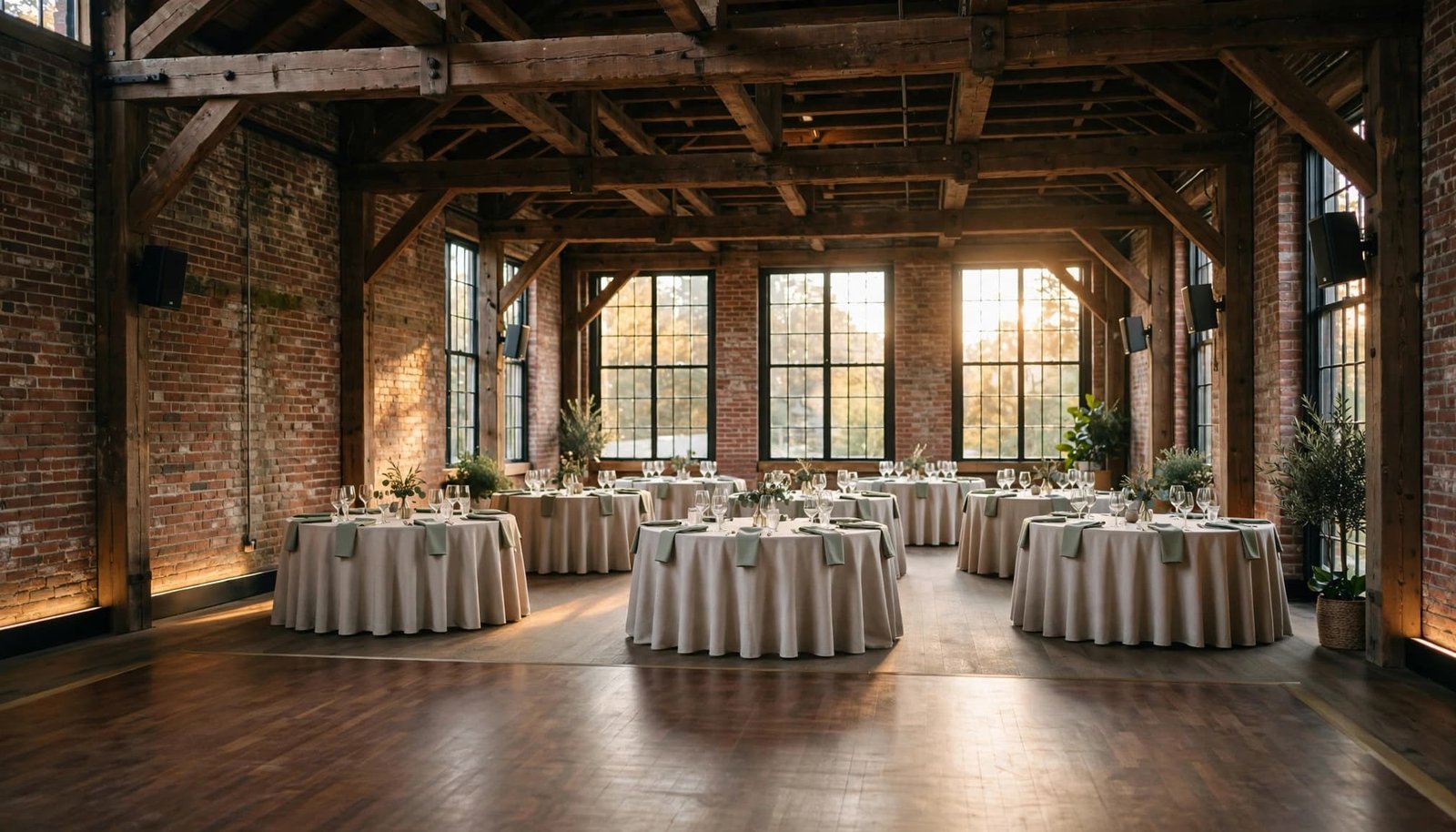
Historic mill spaces have architectural character that suits corporate gatherings. Their layouts also influence where guests mingle, how presenters are seen, and how sound reaches each seating area.
Match the Room to the Program
Begin with the event’s purpose. A client reception needs comfortable conversation, while an awards dinner needs clear sightlines and reliable microphones. A holiday party may need both, followed by a dedicated dance area.
The floor plan should show tables, structural columns, entrances, catering stations, the presentation position, and the DJ setup. Keep the entertainment area connected to the activity without placing equipment in service routes. An attractive open room still needs a defined focal point for announcements and formal programming.
Consider Real New Hampshire Mill Spaces
Belknap Mill’s event spaces in Laconia accommodate corporate gatherings and other celebrations in a historic mill setting. Newmarket Millspace, at 55 Main Street in Newmarket, is another local event space in a mill environment.
Neither location should be treated as a standard ballroom. The selected room, seating arrangement, and program determine the production plan. A museum-style reception and a dance-focused celebration require different equipment placement, even when both take place in restored industrial buildings.
Prioritize Speech Clarity Before Dance-Floor Volume
Exposed brick, glass, and other hard surfaces can reflect sound. In a tall or open room, those reflections may make announcements harder to understand.
Professional sound planning addresses coverage and clarity before increasing volume.
Give Every Seating Area Clear Audio
Speaker placement should follow the seating plan and presenter locations. Columns, long room dimensions, and separate gathering areas may need additional coverage instead of one louder system.
During the sound check, listen at the rear tables and beside structural obstacles. A microphone that sounds clear near the DJ booth may sound less distinct elsewhere. Test presentation audio too, especially when the agenda includes a company video or remote speaker. This preparation helps guests hear announcements without excessive volume.
Use Lighting to Support the Architecture
LED color washes can bring warmth to brick walls and define the celebration area without covering the building’s character. Presentation lighting has a different purpose: guests need to see speakers clearly.
Keep dance lighting away from screens and seated audiences during formal programming. Equipment placement should also respect displays, original finishes, and approved mounting locations. A tailored lighting plan supports the evening’s atmosphere while keeping attention where it belongs.
Organize Load-In, Power, and Setup Space
Historic architecture doesn’t automatically mean outdated infrastructure. However, access routes and electrical arrangements vary by location, so the production plan needs room-specific information.
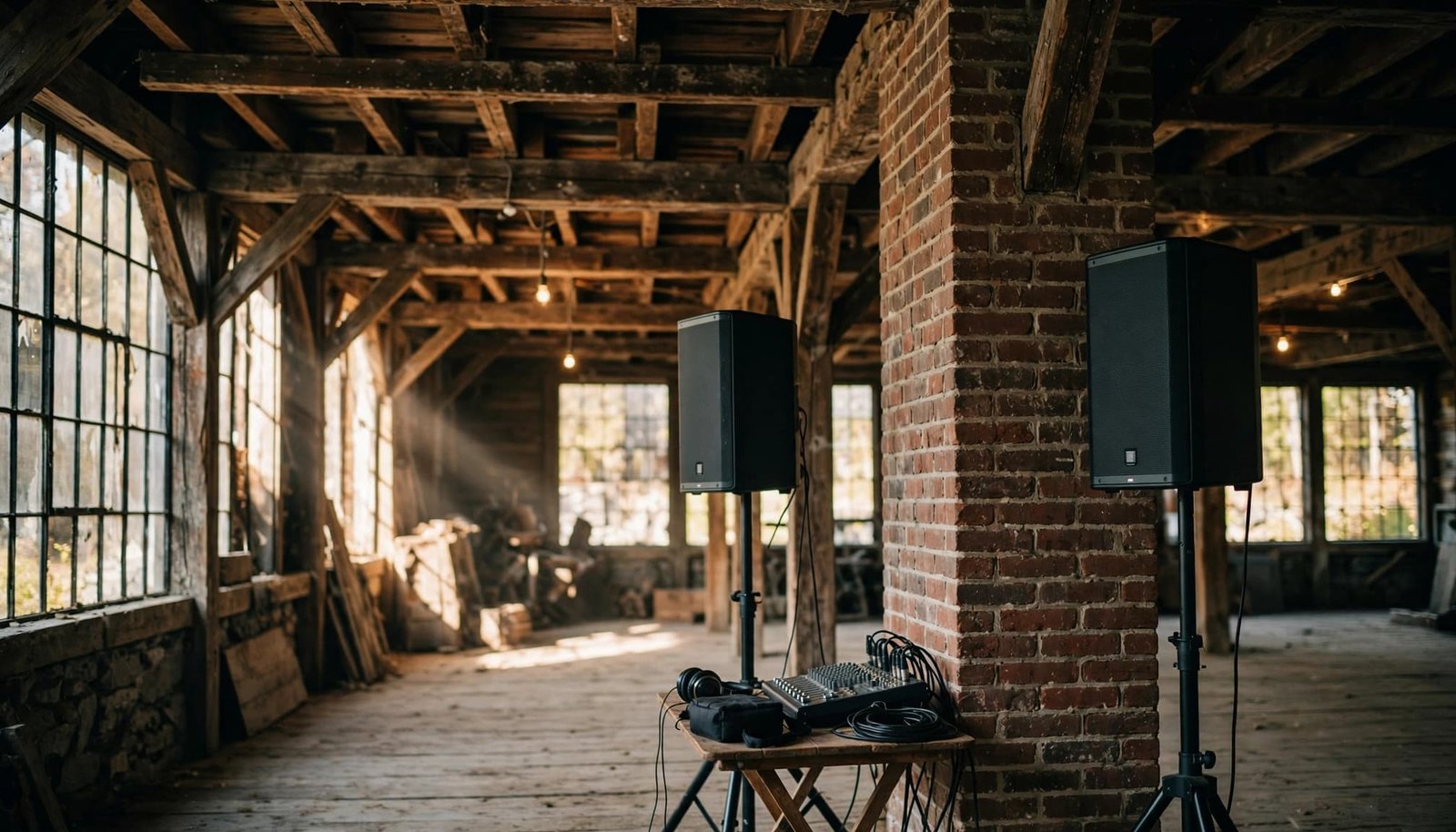
Provide a setup area with a stable, level surface, adequate working space, and access to approved power. Some DJs bring a booth; others need a provided table. A riser is useful only when the layout requires visibility and the platform is suitable for the equipment.
Load-in planning should identify the delivery entrance, parking location, elevator access, and available setup window. Equipment moving through narrow corridors or shared service areas takes longer than unloading beside a ballroom door.
Our venue power planning guidance covers the relationship between sound and other electrical demands. There isn’t one circuit count that fits every event; the equipment plan determines the requirements.
Cable routes should stay clear of entrances and accessible pathways, with suitable protection wherever cables cross walking areas. Power distribution work belongs with facility or qualified electrical personnel.
Historic rental arrangements also involve more than floor space. The Manchester Historic Association’s rental information illustrates the importance of venue-specific event arrangements. Include insurance documentation, equipment access, and breakdown timing in the planning file alongside the entertainment schedule.
Define the Corporate Event DJ and MC Responsibilities
At corporate events, corporate DJs may also host as an emcee, supporting the program as well as the music. Clear responsibilities help presenters feel prepared and give the planner one coordinated point of contact for entertainment cues.
Our corporate DJ and MC services include professional sound, wireless microphones, music, lighting options, and hosting tailored to the event.
Build a Complete Awards Script
An awards ceremony script should contain presenter names, pronunciation notes, titles, award categories, recipient information, and approved sponsor acknowledgments. Include the speaking order, walk-on cues, microphone handoffs, and any photography pauses.
Identify whether the emcee reads each introduction or hands the program to an executive. Sensitive announcements and award results need clear handling instructions. One designated company contact should authorize changes, so the DJ isn’t balancing conflicting directions during the ceremony.
The script and schedule should use the same sequence. That consistency reduces missed introductions and gives each presenter a clear place in the program.
Use Music Fills With a Purpose
Music fills cover movement between program moments, such as a presenter walking to the stage or an award recipient approaching the microphone. Each music fill should match the action, with a clear fade when speaking begins.
Choose approved tracks with suitable openings and no distracting lyrics during announcements. The DJ should distinguish a short transition cue from background music needed during a longer delay.
A scheduled walk-on cue should follow the presenter’s readiness, not play automatically because the printed timeline says it’s time.
A shared run-of-show gives the planner, DJ, venue, and AV team the same reference for entertainment cues and schedule decisions.
Personalize Music for a Professional Audience
Audiences at corporate events often include employees, leadership, clients, and guests with different musical preferences. A personalized playlist supports that variety while respecting the company’s tone.
Networking music should allow comfortable conversation. Dinner selections can maintain a welcoming atmosphere. Brief music fills can bridge formal moments before the dance set builds energy. Clean or radio-edited versions are useful when lyrics need to meet workplace or family-friendly expectations.
Provide must-play selections, do-not-play songs, preferred genres, and guidance on guest requests. These choices give the DJ direction without requiring every track to be scheduled.
Our approach to corporate event music and hosting connects audience preferences with the evening’s pace. For a reception without dancing, engagement may mean relaxed conversation and guests staying comfortably through the closing remarks. The music should support that goal rather than push a dance-party format.
Budget for the Complete Entertainment Plan
For early budgeting, roughly $700 to $2,500 is a broad planning range for a conventional local DJ booking. This isn’t a corporate-event average. Larger productions and detailed presentation support can require a higher investment.
These planning allowances help distinguish different levels of service.
| Event scope | Planning allowance |
|---|---|
| Small company party | $900 to $1,500 |
| Mid-size corporate celebration | $1,500 to $2,800 |
| Gala or conference celebration | $2,800 to $5,000 or more |
Treat these figures as budgeting guidance, not fixed packages. Room coverage, performance hours, microphones, lighting, travel, staffing, and hosting responsibilities determine the final scope.
A historic mill may add labor if equipment needs elevator transport, separate room coverage, or tightly scheduled access. These requirements matter more than the building’s age alone.
Compare proposals by the services they include. The written agreement should identify preparation, setup, breakdown, equipment, overtime terms, and any separate AV responsibilities. List a photo booth, staging, or video production as a defined service rather than assuming it’s included.
Book Early and Make the First Conversation Useful
As a practical planning target, allow three to six months for most company events. For a large conference, formal galas, and high-demand holiday dates, six to twelve months provides more room for production planning.
You don’t need a finished playlist to begin. The first inquiry should give an event planner useful details: the event date, venue, expected attendance, access times, event hours, and program outline. Add whether the evening includes speeches, awards, video playback, dancing, or multiple rooms.
The booking conversation should establish how the DJ handles emcee duties, presenter cues, workplace-appropriate requests, and coordination with outside AV. Ask corporate event DJs how they plan for historic spaces and formal programs. Discuss equipment backup and the procedure for an unavailable performer as part of the agreement.
Our event planning with a DJ guidance connects those early decisions with the final timeline. Our professional DJ experience dates back to 1999; organized preparation remains central to matching entertainment with each event’s needs.
Frequently Asked Questions
What Happens if the Scheduled DJ Becomes Unavailable?
The agreement should describe the replacement procedure, responsibility for arranging coverage, and how the replacement receives event information. A dependable contingency includes access to the approved music direction, script, site requirements, and latest schedule. Equipment backup and performer replacement are separate arrangements; both belong in the plan.
How Much Setup Time Does a Mill Space Require?
There isn’t a universal setup time for historic mills. Multiple sound areas, elevator access, lighting placement, and presentation testing require different allowances. The schedule should separate unloading, installation, sound checks, rehearsal, and guest arrival. Formal programming benefits from a completed technical rehearsal before guests arrive.
Can the DJ Handle Every Presentation and AV Requirement?
DJ and MC services can support announcements, awards, music cues, and microphone use. Projection, livestreaming, complex video playback, and multi-presenter conferences may require a separate AV team. Assign responsibility for each function in the proposal, including who controls presentation audio and who handles technical problems during the program.
Bring the Mill Setting and Program Together
A historic mill gives a corporate event character; thoughtful entertainment planning makes the setting comfortable and organized. Clear sound, steady pacing, and coordinated hosting help guests enjoy the occasion without unnecessary interruptions.
Build the plan around the room and the complete program, then request a proposal that reflects both. With well-defined responsibilities, your team can focus on the people and accomplishments the event is there to celebrate.