Two schools can share a dance floor, but different calendars, budgets, and rules need attention before tickets go on sale. Successful combined school prom planning for a high school prom starts with shared decisions, clear responsibilities, and an event plan both administrations approve.
A joint prom gives students a larger senior class celebration while allowing schools to coordinate resources and professional entertainment. With dependable preparation, the evening can feel welcoming for students and manageable for staff.
Use a prom planning checklist to track shared decisions and responsibilities.
Key Takeaways
- Give every participating school a meaningful voice in planning a shared high school prom, with written approval procedures and clearly assigned adult responsibilities.
- Begin planning nine to 12 months ahead when possible; confirm costs, access needs, and vendor requirements before committing funds.
- Use one coordinated plan for ticketing, music standards, supervision, transportation, and emergency communication.
Establish Shared Leadership Before Choosing Details

Give Each School Meaningful Representation
Build a prom planning committee with student representatives and adult advisors from every participating school. Agree whether voting representation will be equal or reflect enrollment; don’t leave that decision to the first disagreement.
Assign focused leads for finance, venue coordination, decorations, entertainment, communications, and student access. A prom decorations committee is another option, provided each task has one accountable owner.
The student leadership team should help shape the theme, activities, and music preferences. Administrators retain responsibility for contracts, spending approval, eligibility, and safety policies. Clear boundaries give students genuine ownership without placing adult responsibilities on them.
Document Authority and Approval Procedures
Create a short written agreement naming the lead school, authorized contract signer, financial custodian, and event-night decision-maker. Identify which decisions require approval from every district.
Compare guest eligibility, conduct expectations, prom dress code rules, re-entry, and early-departure procedures before publishing event information. If either school has a student-recognition tradition, such as prom king and queen, agree whether to share, adapt, or omit it. Resolve policy differences through the participating administrators rather than letting volunteers interpret conflicting requirements.
Keep one shared task tracker and decision log. Each meeting should end with assigned owners and deadlines so vendors receive consistent instructions.
Build a Combined School Prom Planning Timeline
Begin event timeline planning nine to 12 months before prom, if possible. Treat this as a recommendation, not a guarantee of vendor availability.
Check each school’s calendar for testing, graduation activities, athletics, and major events before selecting dates. The school prom planning timeline offers additional guidance on calendar and vendor coordination.
Use a shared countdown and prom planning checklist to keep decisions moving.
| Planning Window | Shared Priorities |
|---|---|
| Nine to 12 months before | Form the committee, estimate attendance, compare dates, establish approvals, and begin accessibility planning. |
| Six to nine months before | Confirm the venue, entertainment, transportation needs, contracts, and preliminary budget. |
| Three to five months before | Develop the theme, fundraising, communications, guest procedures, and ticket support. |
| Six to eight weeks before | Finalize music standards, floor plans, food arrangements, supervision, and transportation details. |
| One to two weeks before | Confirm attendance, vendor access, emergency contacts, announcements, the prom day schedule, and event-night assignments. |
| After prom | Reconcile expenses, return supplies, and record feedback for the next committee. |
Review progress regularly. Resolve outstanding approvals before they delay deposits or ticket sales.
Set a Shared Budget and Fair Ticket Policies
Agree on Cost-Sharing Before Signing Contracts
Build the budget using written quotes for the venue, food, entertainment, transportation, security, insurance requirements, and decorations. Include service charges, setup costs, overtime terms, and a contingency reserve.
Make prom budget management a shared process by deciding how schools will divide expenses. Per-attendee contributions can address different enrollment sizes; another approach is sharing fixed costs and allocating attendance-dependent charges separately.
Use conservative attendance estimates rather than assuming every eligible student will buy a ticket. Document who pays deposits, approves additional spending, and receives invoices.
Combined school prom planning also needs an agreed process for unused funds. Record whether remaining money returns to each school or supports an approved student activity.
Protect Participation Alongside Revenue
Set prom ticket pricing after calculating confirmed expenses and secured fundraising revenue. Unconfirmed sponsorships shouldn’t support commitments the schools cannot otherwise afford.
School-approved fundraising ideas for prom include bake sales, student fundraisers, and local business sponsorships. Assign adults to track receipts and follow each district’s financial procedures.
Offer confidential ticket assistance through designated school staff. Explain eligibility, guest coverage, deadlines, and refund terms before families make other purchases. Coordinate prices, deadlines, assistance, and family communications across schools through a shared ticket sales strategy and prom marketing campaign.
If early-purchase pricing is used, give families adequate notice and a private support option. Students awaiting assistance shouldn’t face a higher price because approval takes longer.
Compare Venues for Access and Student Flow
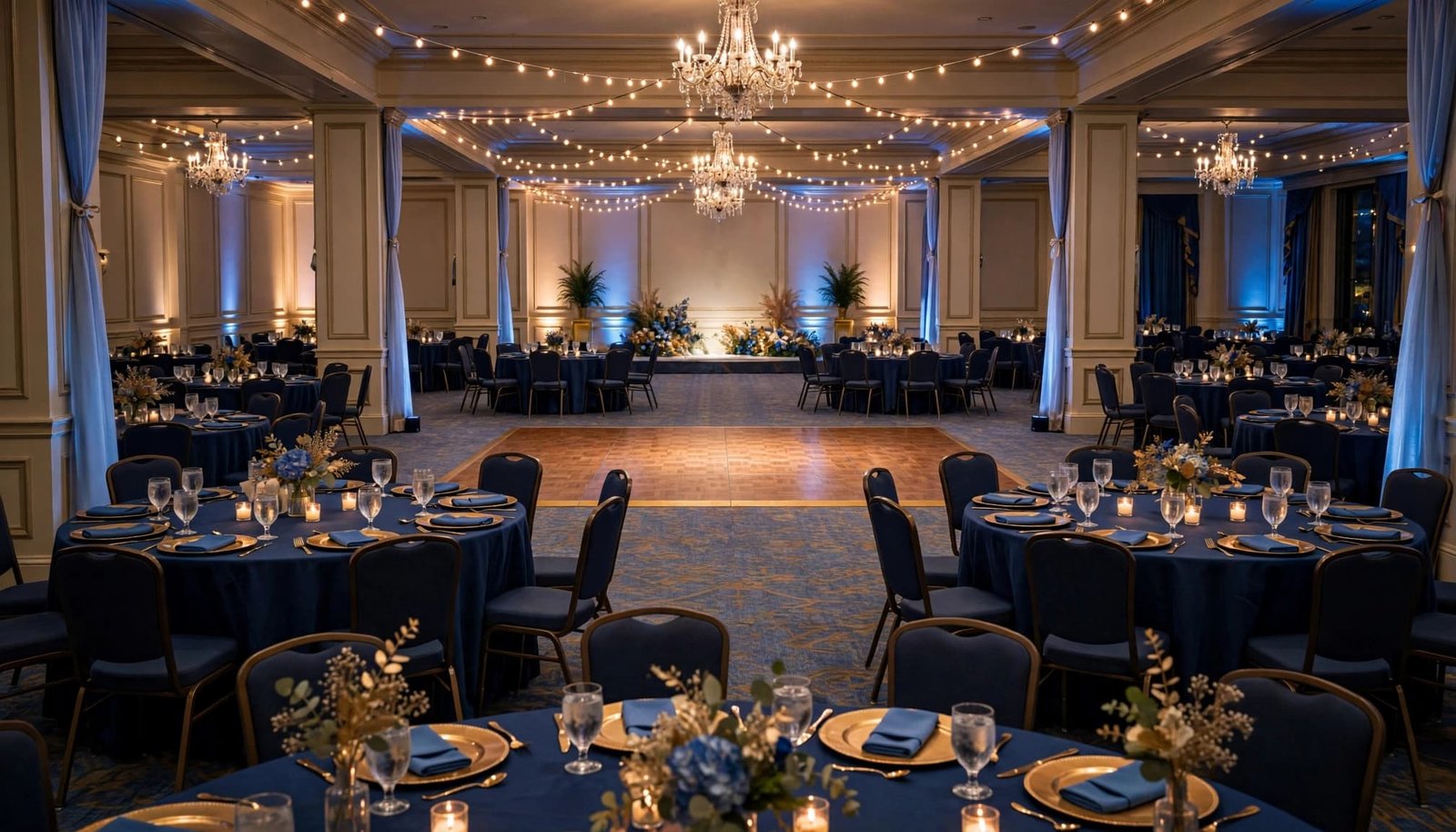
Confirm the Layout, Not Just the Headcount
For prom venue selection, compare school gyms, hotel ballrooms, and event centers using the same attendance estimate and operating requirements. Ask for the approved occupant load with tables, dancing, food service, and equipment in place for the high school prom.
Advertised capacity alone doesn’t establish whether the layout works. Confirm applicable permits and fire-safety requirements with the venue and local authority before committing.
Review loading access, power availability, setup windows, sound restrictions, closing time, and cleanup responsibilities. These details affect vendor pricing and whether setup can finish comfortably before students arrive.
Walk the Complete Student Route
Check accessible parking, transportation drop-off, entrances, restrooms, seating, food service, dance areas, and photo spaces. Verify after-hours elevator access where needed.
The ADA National Network’s accessible temporary-event planning guide provides a useful framework for reviewing participation throughout the venue.
Consider travel time for both school communities, including late-night pickup. Arrange an indoor waiting location for poor weather, and keep vehicle queues clear of accessible spaces and emergency access.
A joint walkthrough helps both schools evaluate the same conditions before signing.
Create a Welcoming Experience for Every Student
Inclusive prom planning means reflecting both student communities without making participation depend on a date, expensive clothing, or enthusiasm for dancing.
Invite input privately as well as through committee meetings. Students may be more comfortable discussing sensory needs, cultural preferences, or financial concerns with an advisor.
Plan Comfortable Ways to Participate
Include a supervised quieter space away from speakers, with seating and clear access back to the celebration. Discuss volume, lighting changes, and restrictions on flashing effects with the DJ and venue.
Gather prom theme ideas from both schools, then choose a direction everyone can support. Concentrate decorations around the entrance, photo area, and main room. Keep pathways open and review installation rules before purchasing supplies.
A photo booth, supervised games, or a relaxed conversation area can give students enjoyable options beyond the dance floor. If either school has a prom king and queen tradition, make sure it feels welcoming and aligns with both schools’ policies.
Coordinate Food and Individual Support
Gather dietary and accommodation requests through designated adults rather than public student spreadsheets. Involve the nurse, Section 504 coordinator, or appropriate support team when individual arrangements are needed.
Review catering and food options with the caterer and school staff. Confirm ingredients, cross-contact precautions, food labeling, and emergency procedures. School planning for food allergies explains how individualized support can fit school arrangements.
Publish a private contact for assistance, with enough notice to resolve requests before prom.
Plan Professional Entertainment With Shared Expectations
Combine Student Input With Clear Music Standards
Collect suggestions from every school, then give the DJ one approved music policy and do-not-play list. Clean versions still need review against school expectations; an edited track may retain unsuitable themes.
Discuss how requests will be handled, who approves exceptions, and which announcements belong in the evening. Confirm how any school-specific traditions will receive balanced attention.
A professional prom DJ should manage pacing, read student response, and coordinate transitions without interrupting the celebration unnecessarily. Ask about school-event experience, insurance documentation, backup arrangements, and venue requirements when comparing quotes.
Schedule a Planning Call Before Prom Week
Bring the lead advisor, DJ, and venue contact together to review load-in, equipment placement, microphones, lighting, power, and the final schedule. Give vendors one authorized school contact for changes.
DJ Steve Neff Entertainment LLC provides New Hampshire prom DJ services with clean music, professional sound, lighting, MC support, and event coordination. Steve Neff and business partner Jon Turgeon run the company.
Its professional DJ experience dates back to 1999. The business began in Maine and is now based in Concord, New Hampshire.
When comparing prom entertainment options, compare complete service packages rather than headline prices. Event length, travel, attendance, lighting, setup access, and optional entertainment all affect the scope of a quote.
Coordinate Safety, Transportation, and Event-Night Responsibilities
Approve One Supervision and Emergency Plan
Put shared security and safety protocols in writing, including each district’s supervision requirements and venue expectations. Don’t assume one universal chaperone ratio applies to every combined-school prom.
Assign chaperone responsibilities for check-in, dancing, food areas, quieter spaces, exterior access, and pickup. Approved adults should handle eligibility decisions, student records, medical concerns, and policy exceptions.
Use New Hampshire school safety planning guidance when reviewing emergency communication and response procedures. Identify who contacts emergency services, directs evacuation, and communicates with families.
Provide staff with current floor plans. The NH School Safety Resource Center identifies up-to-date plans as useful support for law enforcement and fire response.
Confirm Arrival, Departure, and Vendor Coordination
Use one controlled guest list with a school affiliation for each attendee. Establish check-in, approved guest verification, early-departure recording, and procedures for students who need their own advisor.
Confirm bus schedules, accessible transportation needs, pickup locations, and the adult responsible for the final departure. If schools pursue after-prom party ideas, document supervision and transfer arrangements separately.
Give chaperones and vendors a final schedule covering setup, doors opening, food service, announcements, dancing, and closing. If both schools choose to recognize prom king and queen, include the approved announcement on the run sheet. Brief the team before students arrive.
Before doors open, use a prom planning checklist to verify final assignments and emergency contacts.
The DJ can support announcements and event flow, but administrators and assigned staff retain responsibility for supervision and student safety.
Frequently Asked Questions
What Happens If One School Withdraws?
Address withdrawal before deposits are paid. The written agreement should explain notice deadlines, nonrefundable costs, responsibility for committed expenses, and how remaining schools approve a revised plan. Ask district business staff to review these terms alongside vendor cancellation policies.
Can Schools Use Separate Ticket Systems?
Yes, provided the systems produce one reliable event guest list. Agree on required information, reconciliation deadlines, approved access, and how corrected records reach check-in staff. Each school’s ticket process should follow the same published admission and refund policies.
Bring Both Schools Together With a Clear Plan
A memorable joint prom begins with clear coordination: shared authority, fair financial arrangements, accessible participation, and dependable event-night preparation. Those decisions give students room to enjoy the celebration while staff understand their responsibilities.
Before committing funds, bring participating advisors together to approve the working plan. For entertainment coordination, request a personalized DJ package based on the shared attendance, venue, schedule, and school expectations.
When both schools work from the same plan, the celebration can feel like one welcoming event.